
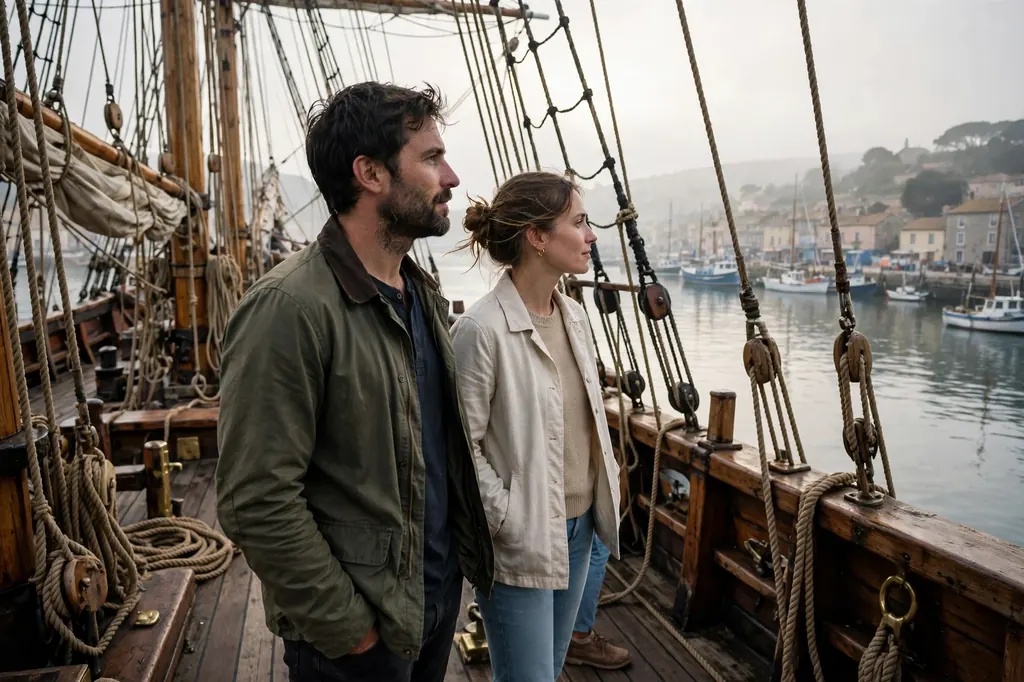
The Maritime Museums USA List That Took Me From Boston to San Diego
I have climbed through engine rooms, stood under 16-inch guns, and eaten lunch on a flight deck with a city skyline behind me. The ships these maritime museums USA keeps afloat are the best kind of history: you walk through it, you touch it, and you leave with salt air in your hair. This list runs from Boston to San Diego, ten museums built around real ships, ranked by the visit, not by the brochure.
The Carriers: Midway, Intrepid, Yorktown
Aircraft carriers are cities that float, and the three museum carriers in the United States each tell a different era of that story.
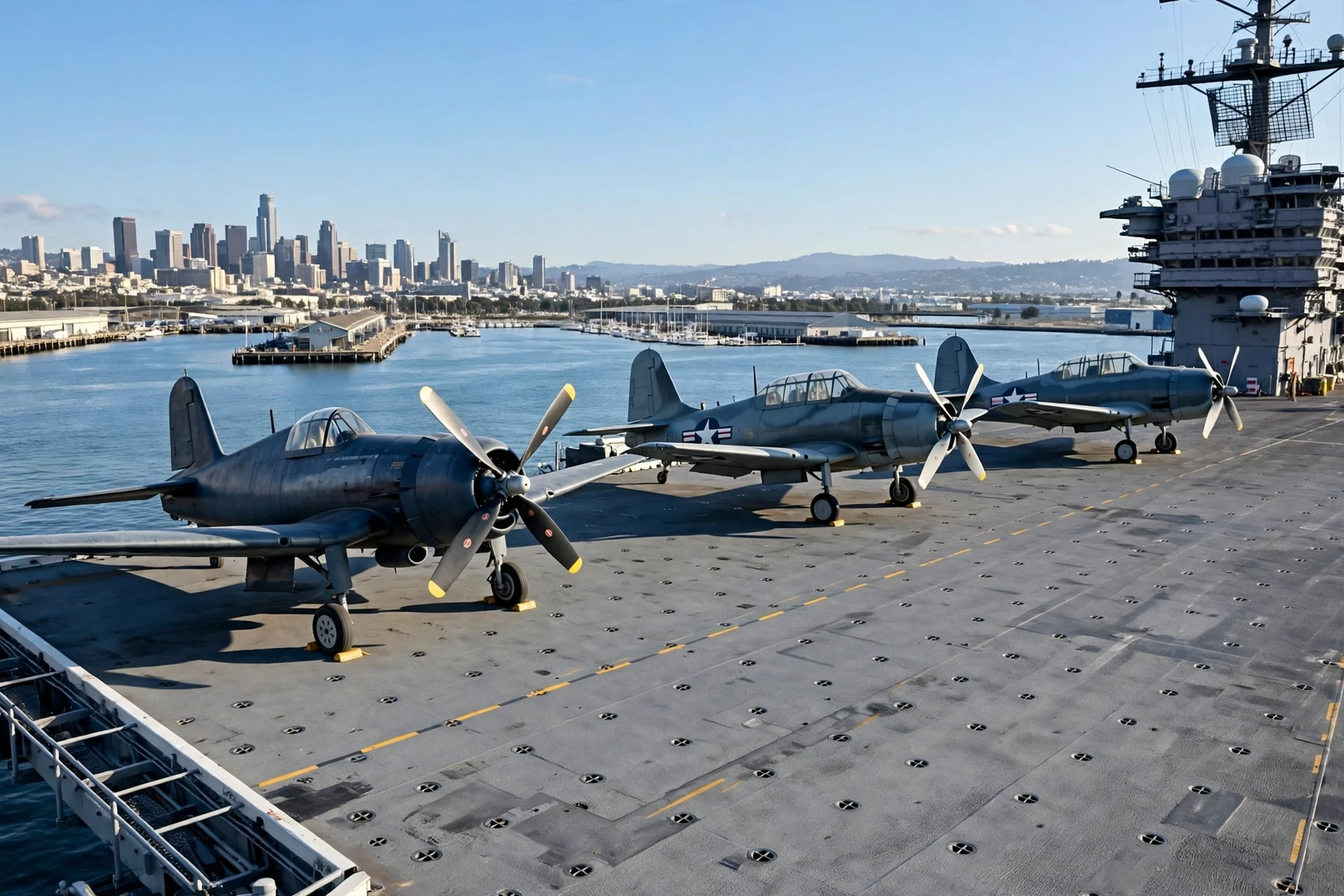
The USS Midway in San Diego is the biggest and the easiest to love. Commissioned in 1945, just after the Second World War ended, she served 47 years, longer than any carrier before her, and the museum opened in 2004. The flight deck holds more than two dozen restored aircraft, and the hangar deck below runs through the ship’s working life, from the galley to the brig. The view from the flight deck, with downtown San Diego behind the island, is the best museum view in the country. Give it a full morning. The audio tour, narrated by former crew, is worth the time it takes, and the docents are mostly veterans who served on carriers themselves.
The USS Intrepid in New York City sits on the Hudson River at Pier 86, and it carries the hardest history of the three. Launched in 1943, she survived kamikaze hits in the Pacific and went on to serve in Vietnam and as a NASA recovery ship. The museum opened in 1982, and the Space Shuttle Enterprise now sits on the flight deck in a pavilion of its own, with a Concorde beside it. The Intrepid is the most crowded of the three, especially on weekends, so go on a weekday morning and start at the top, working down through the ship before the tour groups arrive.
The USS Yorktown at Patriots Point in Charleston Harbor is the quietest of the three, and my favorite. Launched in 1943, she earned ten battle stars in the Second World War and later recovered the Apollo 8 astronauts. The ship sits across the harbor from downtown Charleston, and the Medal of Honor Museum is aboard, which gives the visit a weight the other carriers do not have. The destroyer USS Laffey sits alongside, and the pair together makes a full day. Charleston itself is worth a second day, and the harbor view from the flight deck at sunset is the reason to stay for one.
The Battleships: New Jersey, Alabama, North Carolina, Wisconsin
Battleships are a different visit from carriers. They are narrower, darker, and more intimate, and the guns are the reason you come.
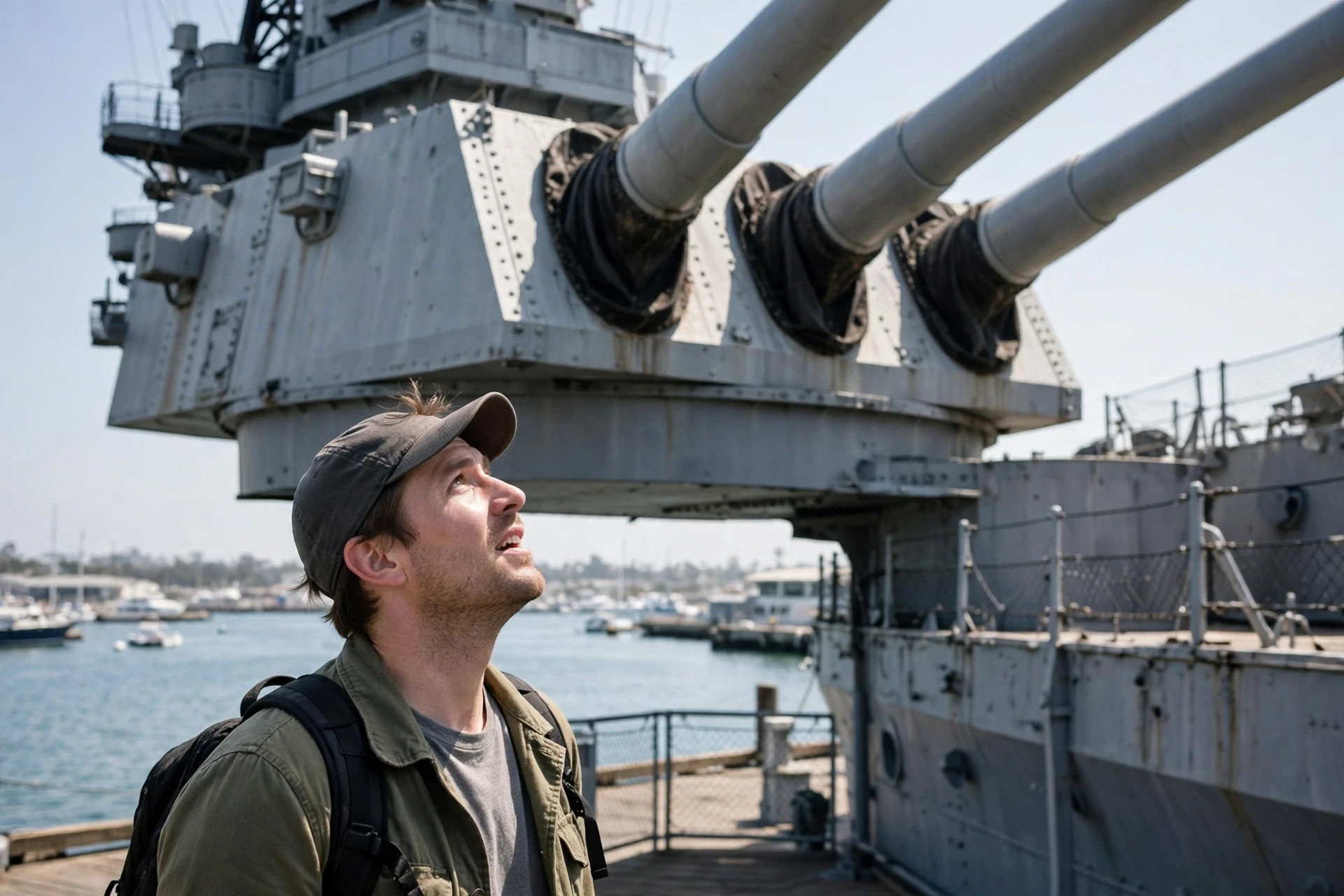
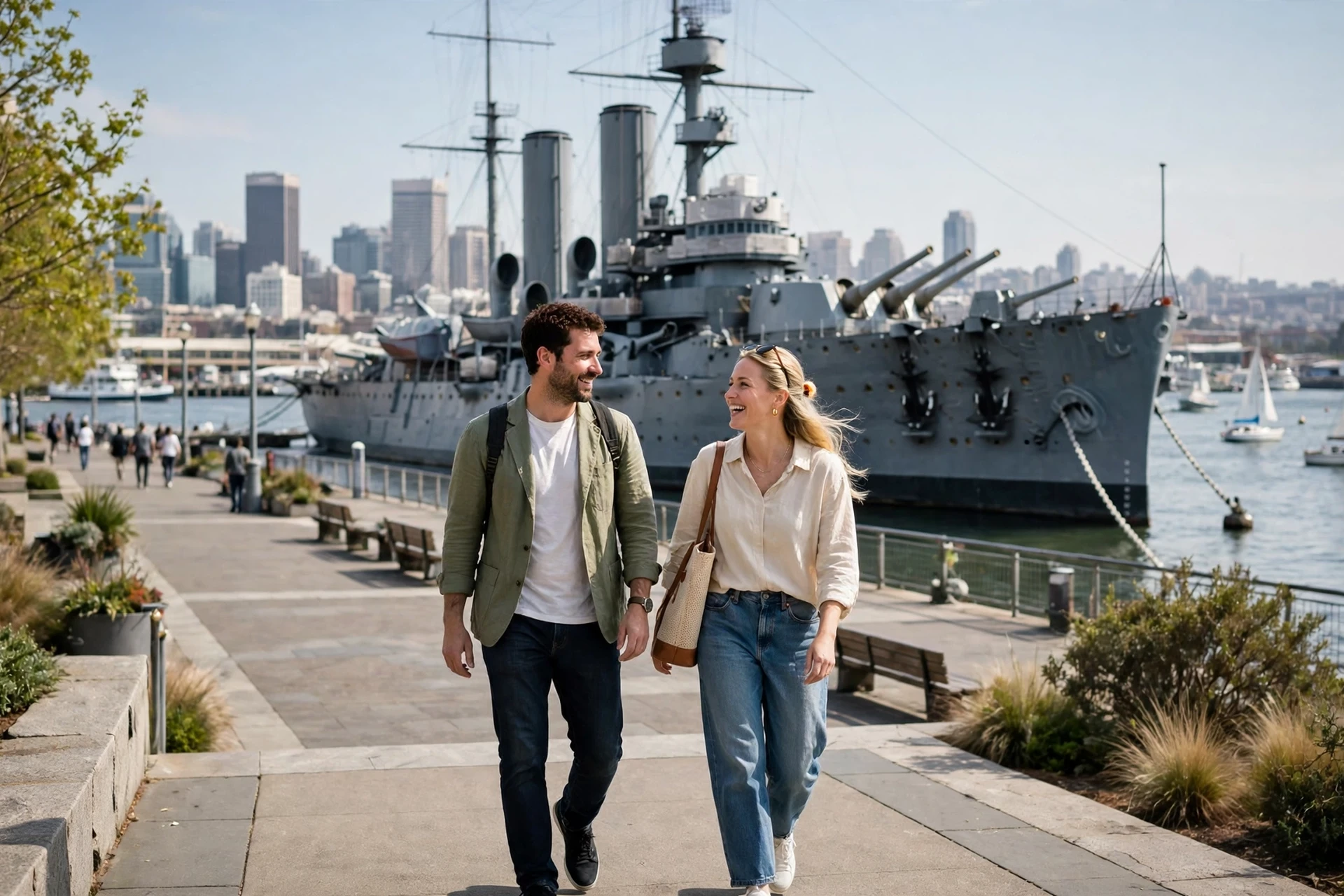
The Battleship New Jersey in Camden, across the river from Philadelphia, is the most decorated battleship in the Navy’s history, with 19 battle stars across four wars. Launched in 1942, she served in the Second World War, Korea, Vietnam, and Lebanon, and the museum opened in 2001. The tour takes you through the turrets, where the 16-inch guns still point over the river, and the fire-control rooms below. The ship feels like a machine that happens to have beds in it, which is exactly what it was.
The USS Alabama in Mobile sits in a park with the submarine USS Drum beside her, and the pair makes the best two-ship visit on this list. Launched in 1942, the Alabama earned nine battle stars in the Pacific, and the museum has run since 1965. The self-guided route runs through the whole ship, from the engine rooms to the bridge, and the Drum gives you the submarine half of the story in the same afternoon. Mobile is a good base for a slow weekend, and the park grounds are worth an hour on their own.
The Battleship North Carolina in Wilmington is the most complete of the four, because the ship came home to the state that built her and never left. Launched in 1940, she earned 15 battle stars in the Pacific, and the museum opened in 1961. The tour is self-guided and thorough, and the ship sits in the Cape Fear River with the Wilmington skyline behind her. The riverwalk in town makes a good evening after the ship, and the whole visit feels unhurried in a way the bigger-city museums do not.
The USS Wisconsin at Nauticus in Norfolk is the one people miss, and they should not. An Iowa-class battleship launched in 1943, she served in the Second World War, Korea, and the Gulf War, and she sits beside the Nauticus science center on the downtown waterfront. The ship and the center share a ticket, and the combination works well for families: the battleship for the adults, the hands-on exhibits for the kids. Norfolk’s naval base is the largest in the world, and the harbor is full of working ships, which makes the whole waterfront feel like part of the museum.
The Sailing Ships: Constitution, Morgan, Balclutha
The sailing ships are older, smaller, and stranger than the steel giants, and they ask more of your imagination.
The USS Constitution in Boston is the oldest commissioned warship still afloat anywhere, launched in 1797, and she still sails under her own power on ceremonial days. The ship sits at the Charlestown Navy Yard, and the museum beside her tells the story of the War of 1812, when the Constitution earned the name Old Ironsides because enemy cannonballs seemed to bounce off her live-oak hull. The ship is free to board, and the crew, active-duty Navy sailors, run the tours themselves. Go early, before the school groups arrive, and stand on the spar deck while the city wakes up.
The Charles W. Morgan at Mystic Seaport in Connecticut is the last wooden whaling ship in the world, launched in 1841, and the museum around her is the finest maritime village in the country. The Morgan sailed again in 2014, her 38th voyage, after a restoration that took five years. The seaport itself is a working village, with a shipyard, a ropewalk, and craftspeople doing the trades the ships needed. The Morgan is the centerpiece, but the village is the reason to stay all day. Mystic is a small town that rewards a slow evening, and the seaport’s own lodging, a pair of historic houses, puts you inside the story overnight.
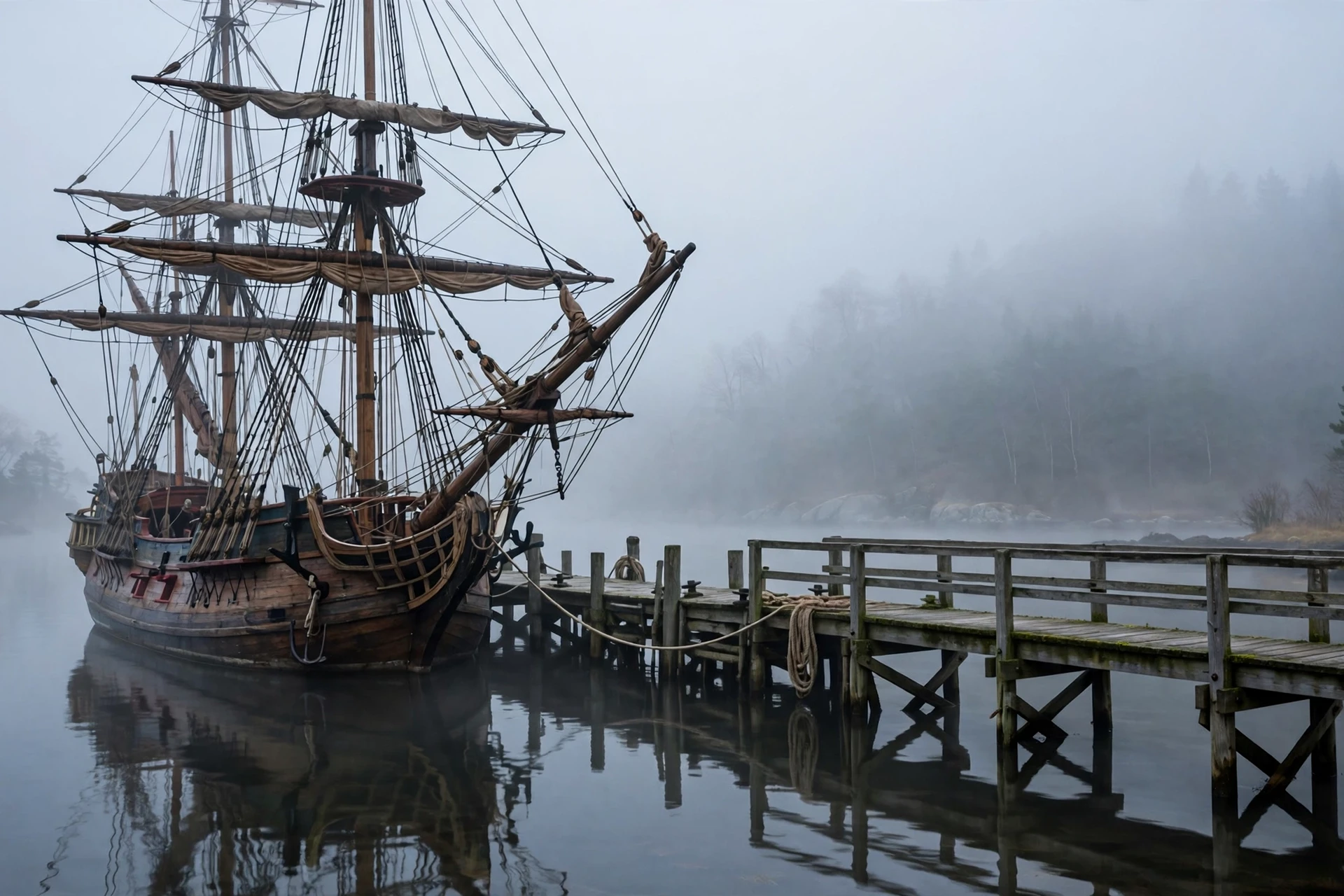
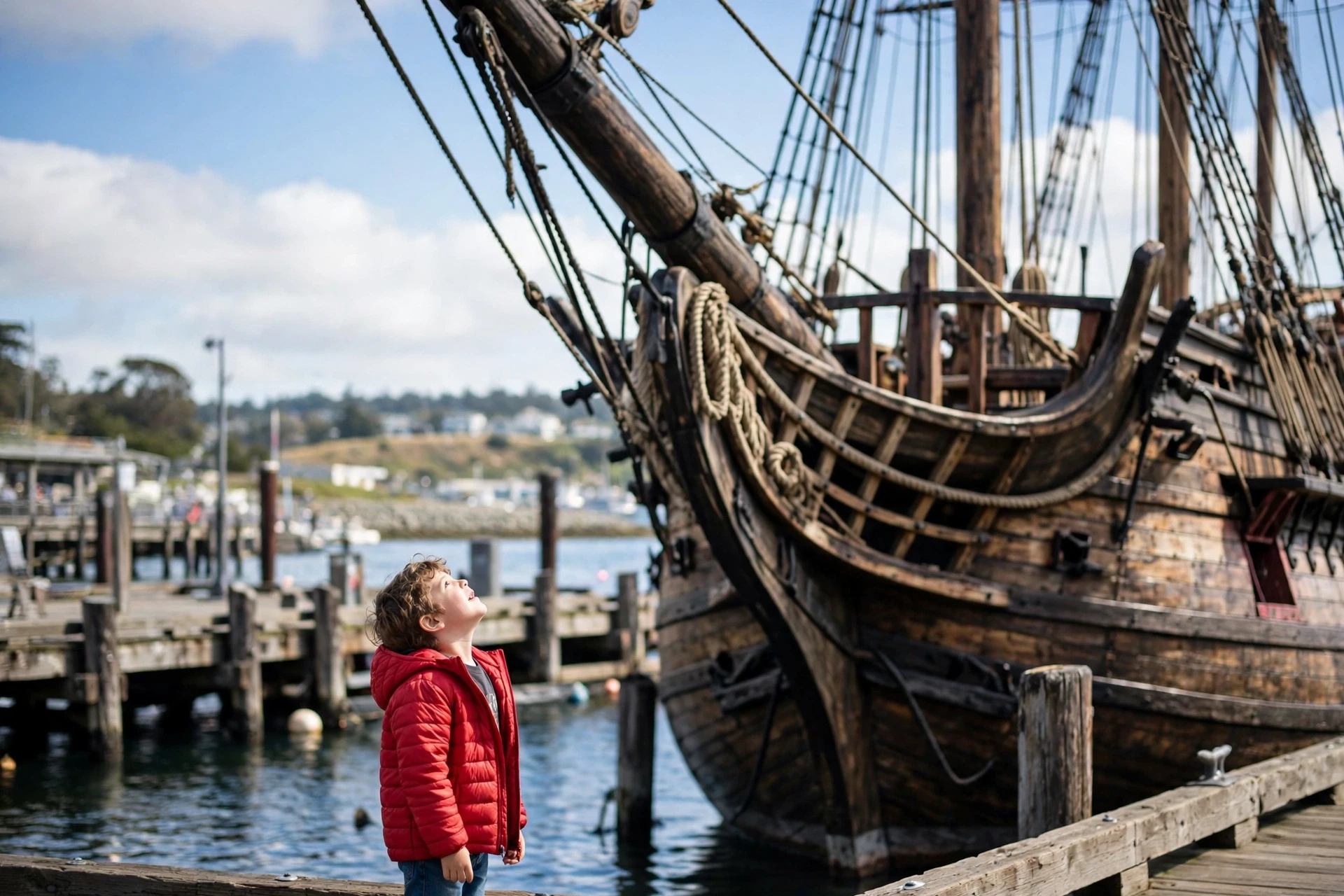
The Balclutha at the San Francisco Maritime National Historical Park is the third of the sailing ships, and the easiest to miss. An 1886 square-rigger, she sits at Hyde Street Pier with the ferryboat Eureka beside her, and the park is run by the National Park Service, which means the interpretation is careful and the admission is modest. The pier sits at the edge of Fisherman’s Wharf, and the contrast is the point: the tourist crowds on one side, the quiet ships on the other. Walk the pier in the morning fog, before the wharf wakes up, and the ships feel like they belong to another century.
Which Maritime Museums USA Pick Fits Your Trip
The right first pick depends on who is traveling and how much time you have. Families with kids should start with the Midway in San Diego or the Wisconsin at Nauticus, because both pair a big ship with hands-on exhibits and a waterfront that keeps younger visitors busy. History readers should start with the Constitution in Boston or the Yorktown in Charleston, where the interpretation runs deepest and the docents have the best stories. Photographers should start with the Balclutha in the morning fog or the Yorktown at sunset, when the light does the work for them.
If you are building a coast trip around one of these, the lighthouses make a natural second stop. The coasts around these museums are dotted with photogenic lighthouses, and a morning at a lighthouse pairs well with an afternoon on a ship.
The same logic holds for the towns themselves. San Diego, Charleston, Mobile, and Norfolk are all coastal beach towns worth a second day, and the museums sit close enough to the water that the beach is never far away.
Two museums in one day is possible in New York, where the Intrepid and the harbor ferries share the waterfront, but I would not try it anywhere else. These ships are big, the tours take three hours each, and the second ship blurs into the first. One ship, one day, and a slow evening in the town around it, is the pace that works.
The harbor itself is part of the visit at most of these stops. San Diego Bay, Charleston Harbor, the Hudson, and the Cape Fear River all run ferries and harbor cruises past the museum ships, and seeing a carrier from the water changes how big it feels. A harbor cruise in the late afternoon, after the ship tour, is the best way to end the day, and the tickets are usually cheaper than the museum itself. The ships look different from the water, lower and longer, and the cities behind them make sense in a way they do not from the pier.
What the Ticket Buys, and What to Skip
Prices vary by museum and by season, and I am not printing them here because they change. Check each museum’s site the week you go, and look for the combination tickets: several of these museums bundle the ship with a second attraction, and the bundle is usually the better deal. Most of them offer military discounts, and several are free for active-duty service members. The Constitution is free to board, which makes Boston the cheapest first stop on this list.
The skips are the same at every one of these museums. Skip the simulator upsells unless you have kids who will love them, because the ship itself is the experience. Skip the gift shop on the way in and save it for the way out, when you know what you want to take home. Skip trying to read every plaque. The ships reward walking and looking more than they reward reading, and the docents will tell you the good stories if you ask. The one thing not to skip is the engine room, which is the heart of every one of these ships and the part most visitors rush past.
Start With the Ship Nearest You
Here is the plan. Start with the ship nearest you, and let the maritime museums USA list grow from there. One ship, one day, and a slow evening in the town around it. The carriers first if you want scale, the battleships if you want the guns, the sailing ships if you want the oldest stories. The ships are still here, the museums keep them afloat, and the best time to walk one is before the crowds arrive in the morning. Pick the nearest, go early, and take the engine room slowly. Once you have done the ships, the top museums to visit in the USA are the natural next list to work through.




2 Comments