Why Ghost Towns American West Still Feel Like Walking Into Another Century
I first walked a real ghost town on a hot afternoon in California, and the quiet caught me off guard. No music, no crowds, no gift shop noise at the gate, just wind moving through empty window frames and a wooden boardwalk that creaked under my boots. That is the promise of ghost towns American West trips at their best: not a theme park version of the past, but a place where the past simply stopped and stayed put.
What Makes Ghost Towns American West Different From a Movie Set
A movie set is built to be looked at. A real ghost town was built to be lived in, and you can feel the difference in the first five minutes. The streets are too wide in some places and too narrow in others, because they grew around mines, mills, and rail lines rather than a designer’s plan. Doors hang at odd angles. A schoolhouse sits far from the saloon because that is where the families lived, not where a tour route would put it.
The best towns also show their ending. You see a half-finished building, a store with shelves still in place, a church with pews and no congregation. That unfinished feeling is what makes the visit land. You are not watching a story about the West. You are standing where people worked, argued, raised kids, and then left when the ore ran out or the railroad moved on.
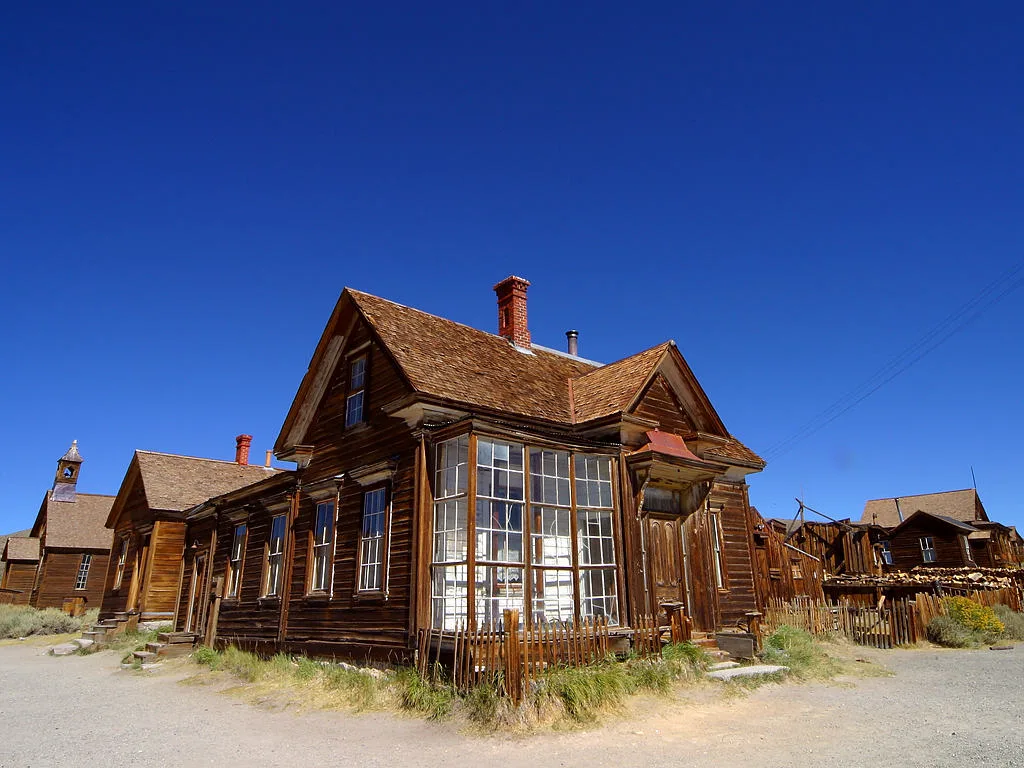
Bodie, California, and the Town Time Left Standing
Bodie, California, is the town I send first-time visitors to, and the one I warn them about in the same breath. It sits high in the hills east of the Sierra Nevada, and the last stretch of road in is rough dirt that shakes a rental car and tests a driver’s patience. Go slow, keep your tires in mind, and do not rush that final approach. The road is part of the visit, and it filters out the people who want a quick photo stop.
Inside the park, Bodie rewards patience too. California State Parks manages the site as a park in a state of arrested decay, which means buildings are stabilized but not restored to look new. Peeking through a dusty window, I saw a classroom with desks in rows, a kitchen table set as if someone had just stepped out, and a store counter with goods still on the shelves. I spent longer at those windows than I did walking the main street, because each one held a small, specific life. If you visit in late October, the empty streets carry the same mood as my guide to Halloween towns in America, though Bodie earns its quiet without any costumes or crowds.
Bodie is also the town that taught me to check conditions before I go. The park sits at high elevation, weather turns fast, and the dirt road can be a different trip after rain than it is on a dry day. I check the official California State Parks site before I set out, and I plan Bodie as a full morning, not a detour squeezed between two other stops. If the road or the weather looks wrong, I skip it without regret. Bodie will still be there, and a forced visit in bad conditions teaches you nothing.
The Southwest Loop I Drive When Friends Ask for One Big Trip
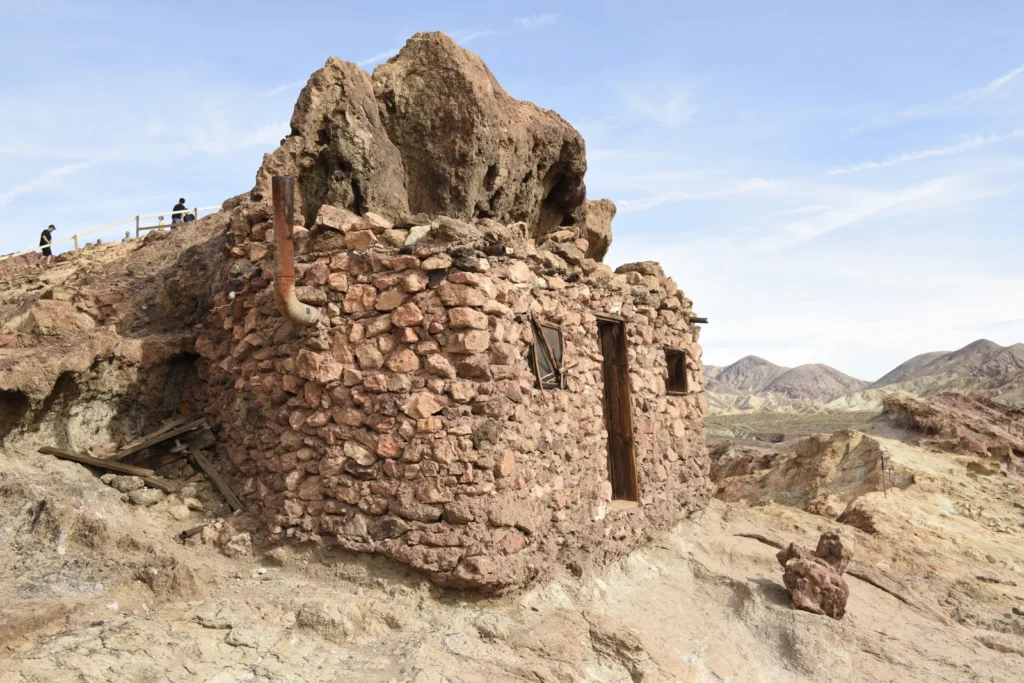
When friends ask for one loop that covers the Southwest, I point them to a route through California, Nevada, and Arizona that links very different kinds of towns. Calico, California, near Barstow, is the most rebuilt stop on that loop, and I say so plainly. Parts of Calico were reconstructed for visitors, and it feels like it: cleaner, busier, easier. I still stop there with kids, because the layout is easy to walk and the mining story is told clearly, but I do not pretend it feels like Bodie. It is a good introduction, not the deepest visit.
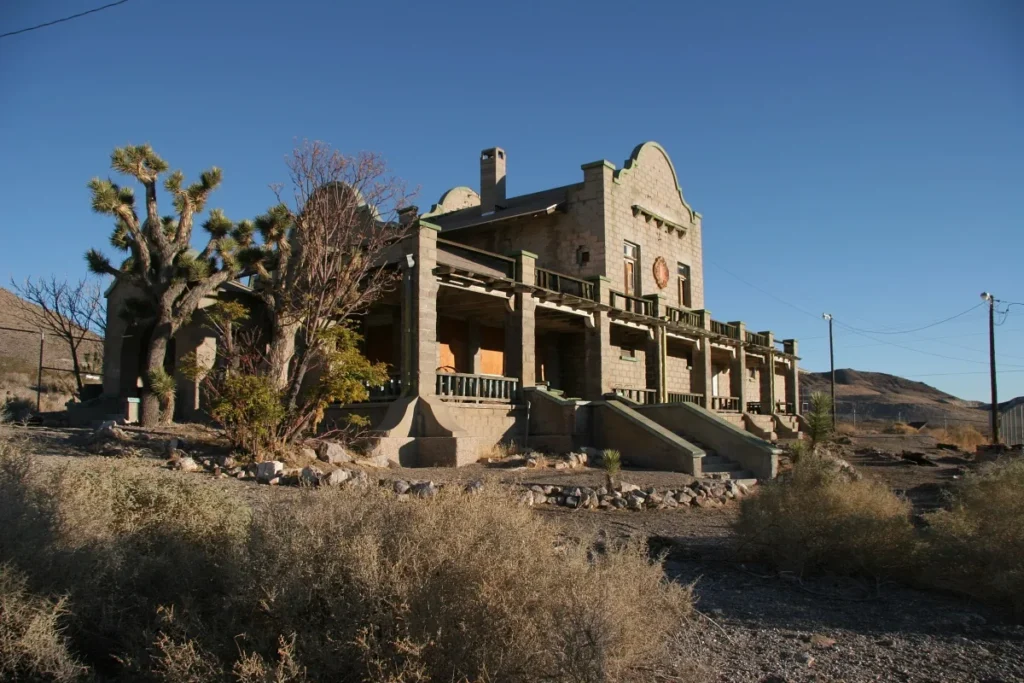
Rhyolite, Nevada, near Beatty, is the opposite. Almost nothing stands whole there. A bank shell, a bottle house, scattered foundations, and a wide empty desert around them. I like Rhyolite precisely because it asks more of you. You have to imagine the town from its bones, and the desert light does the rest. The land around Rhyolite is public land, and I check the official Bureau of Land Management guidance for the area before I go, because access and rules on public land can differ from a state park.
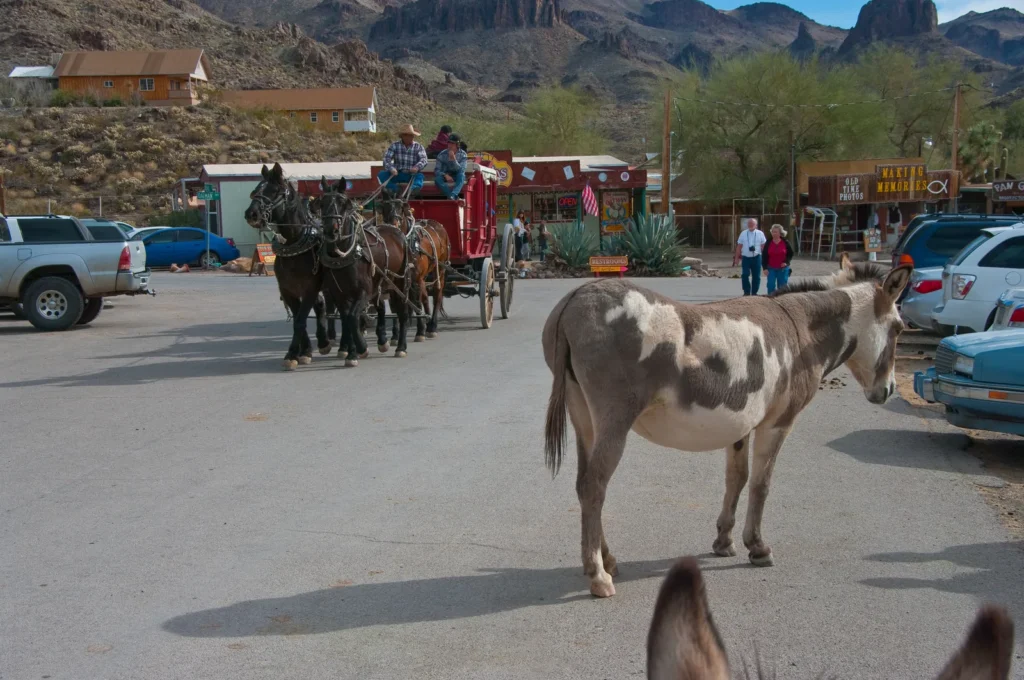
Oatman, Arizona, breaks the pattern again, because Oatman is not empty at all. Wild burros wander the main street, shops are open, and the town leans hard into its mining past. I enjoy Oatman for an hour, and I leave before the novelty wears thin. It belongs on a ghost town trip as a contrast, not as proof of what a ghost town is. A town with a working main street is a living town, however old its buildings look.
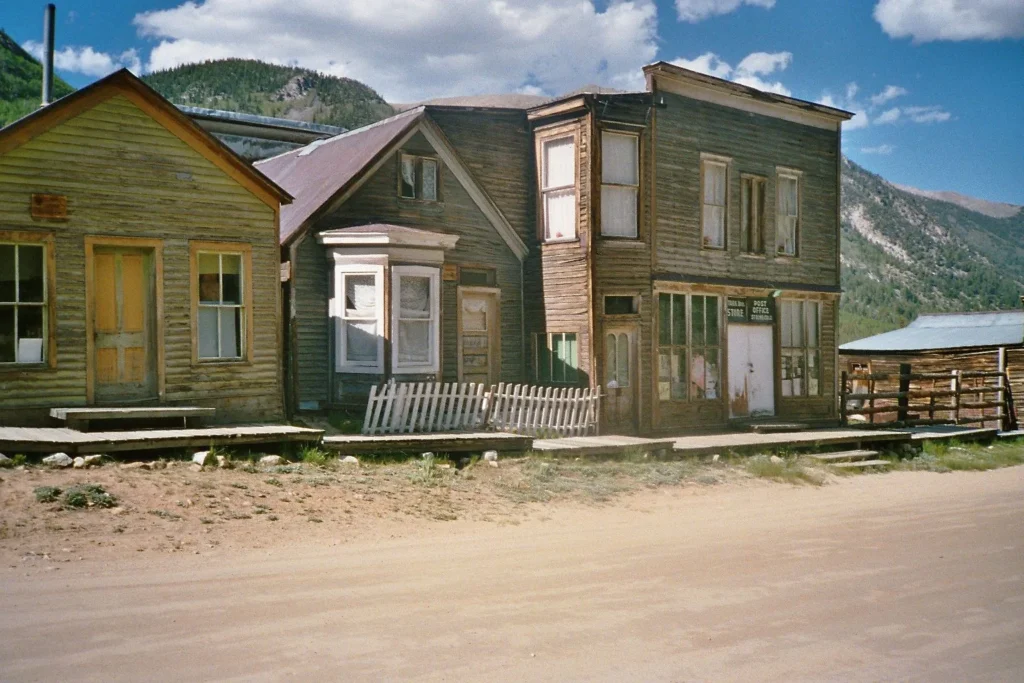
Goldfield, Nevada, sits between those extremes. It has residents, a courthouse, and long empty stretches where the boom clearly ended. I like Goldfield for lunch and a slow walk, because it shows what happens after the bust when a few people stay. Pair it with a desert park stop, and check the official Death Valley National Park site if your route runs near the park, since desert heat and road conditions change by season and the park site states them plainly.
For a desert trip built around warmth rather than mining history, my guide to warm winter vacations USA covers the same slow, small-town pattern in a different season.
The Northern Towns Most Visitors Miss
Most ghost town lists stop at the Southwest, and that is a mistake. Bannack, Montana, is a state park town with a main street, a hotel, a school, and a creek running nearby, and on a quiet weekday I had long stretches of it to myself. Montana Fish, Wildlife and Parks manages Bannack, and I check the official Montana Fish, Wildlife and Parks site before a northern trip, because seasonal access in Montana is a real planning factor and I do not want to drive a long way to a closed gate.
Garnet, Montana, is harder to reach and quieter still. The road in is rough, the town sits in the mountains, and the buildings feel less visited than Bannack’s. I rank Garnet above Bannack for atmosphere and below it for ease, and that tradeoff is the whole decision. If you want a gentle first northern visit, pick Bannack. If you want to feel far from everything, pick Garnet, and plan your vehicle and your daylight accordingly.
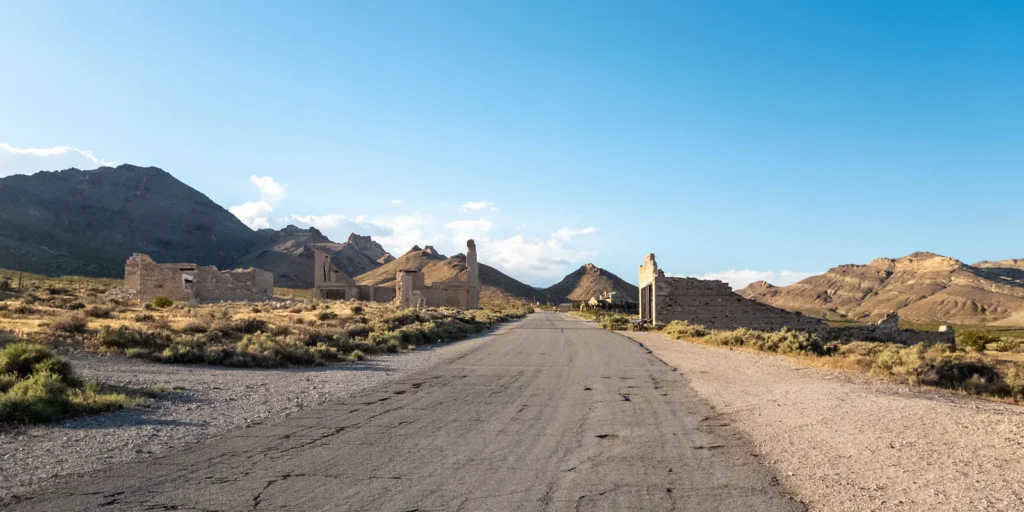
St. Elmo, Colorado, rounds out the northern set for me. It sits high in the mountains, the general store building still anchors the street, and the surrounding peaks make the town feel smaller than it is. I walked St. Elmo in the morning, when the light was soft and the town was empty, and that timing mattered. By midday, the same street felt like a different place, with more visitors and less quiet. Morning is my rule for mountain towns, and St. Elmo is why. For towns that hold up in the shoulder season, my guide to places to visit in November USA uses the same morning-first rule I follow here.
Are These Towns Safe to Walk?
Short answer: yes, if you treat them like old, fragile places instead of playgrounds. The buildings are old, floors can be weak, and some structures are closed for a reason. I never enter a closed building, never climb on a roof or a wall, and never step past a barrier to get a better photo. The photo is never worth a fall through a floor that has waited a century to give way.
Mines are the one hard rule. Never enter a mine opening, even one that looks stable and inviting. Old mines can hide bad air, sudden drops, and unstable rock, and no photo inside one is worth that risk. I admire mine structures from outside, I read the signs, and I keep kids well back from every opening. That rule holds at every town on this list, without exception.
The other safety questions are practical ones. Carry more water than you think you need in desert towns, because shade is scarce and the walk between buildings adds up. Keep your gas tank full, because services thin out fast on back roads. Tell someone your route when you head to a remote town, because cell service drops in mountain valleys and desert basins alike. And watch the weather: a desert town in summer heat and a mountain town in a sudden storm are two different trips, and both demand a change of plan if conditions turn.
Kids do well in ghost towns when the rules are clear before you arrive. Mine loved the open space, the boardwalks, and the game of guessing what each building had been. They did less well when I let them run ahead into a building I had not checked first. Now I set the rule at the car: we walk together, we look through windows, we do not open closed doors. It sounds strict, and it keeps the day calm.
The Ones I Skip, and Why
Honesty matters on this topic, because not every old town deserves your limited driving time. Tombstone, Arizona, is the skip I argue about most. Tombstone is famous, lively, and full of staged gunfights and costumed street scenes. It is also a living town built around tourism, not a place where time stopped. If you want a show, Tombstone delivers one. If you want the quiet of a real ghost town, it will disappoint you, and I would rather you know that before you drive there.
Jerome, Arizona, is a different kind of skip. Jerome is beautiful, perched on a mountainside, full of galleries and restaurants, and very much alive. I enjoy Jerome as a mountain town visit. I do not count it as a ghost town visit, and including it on a ghost town list muddies what the trip is about. Go to Jerome for art and views, not for emptiness.
Calico earns a qualified place, as I said above, because it is rebuilt and commercial. It is worth a stop with kids or as a first taste, but it should not be your only stop. If your whole trip is Calico and Tombstone, you have seen the commercial version of the West, not the abandoned one. Mix one rebuilt town with two preserved ones, and the difference will teach you more than any guidebook paragraph.
Questions I Get Before a First Ghost Town Drive
Which town should I visit first?
Bodie, California, if you can handle the dirt road, or Bannack, Montana, if you want an easier northern start. Both are managed parks with real buildings and clear rules, and both give you the quiet that makes the trip work. Pick the one closer to your route, and save the rougher towns for a second trip.
How long should I plan at each town?
Two to three hours at a preserved town, less at a ruins site like Rhyolite. The visit is not about covering ground. It is about standing still long enough for the place to register. I plan one town in the morning and one in the afternoon at most, with driving time protected between them.
Can I visit with kids?
Yes, with the rules set before you arrive: walk together, look through windows, never enter closed buildings or mine openings. Kids who know the rules enjoy the exploring. Kids who run ahead into old buildings do not, and neither do their parents.
Do I need a special vehicle?
For park towns on paved access, no. For Bodie, Garnet, and other towns on rough dirt roads, a higher clearance vehicle and good tires make the trip calmer, and I would not take a low car I cared about on the roughest stretches. Check the managing agency’s access notes before you commit to a remote town.
Is it worth visiting in summer?
Desert towns in summer heat are a morning-only trip, with water, shade breaks, and an early exit. Mountain towns in summer are far kinder. I pick mountain towns for summer trips and save desert towns for cooler months, and I have never regretted that split.
The Drive I Would Book Again Tomorrow
If I had one ghost town weekend and no constraints, I would fly into a gateway city, drive to Bodie for a slow morning, and then head south toward Rhyolite and Goldfield for a second day of desert emptiness. I would stay in a small town each night, eat dinner early, and keep the next morning open, because ghost town mornings, before other visitors arrive, are the best hours of the trip.
If I wanted a different flavor, I would pick Montana instead: Bannack first, Garnet second, with a night in a small town between them and no third stop forced into the day. The pattern holds either way. One preserved town, one rougher town, slow mornings, and respect for closed doors. Pick the region that fits your route, follow that pattern, and the West will do the rest.