Photogenic Lighthouses USA Reward the Photographer Who Comes Back
I went to my first lighthouse for the photo and stayed for the weather. The light changed three times in an hour, and the shot I drove for turned out to be the worst of the bunch. That is the pattern with photogenic lighthouses USA picks: the tower gets you there, but tide, fog, and timing make the picture. This list is the one I send friends, with the honest misses included.
Maine Gives You the Classics, If You Time the Tide
Portland Head Light in Cape Elizabeth, Maine, is the tower most people picture when they hear the word lighthouse. It stands at the edge of Fort Williams Park, white against dark rock, with open grass in front and the harbor mouth behind it. I have shot it at sunrise with the park nearly empty and again at noon with a wedding party, a school group, and three tripods lined up beside mine. The morning version wins every time, and not by a little.
The practical point is parking and ground. The lot fills on summer weekends, and the best angles sit on uneven rock at the waterline. Wear shoes with grip, not sandals, and expect spray on a windy day. I keep a cloth in my pocket for the lens, and I use it more here than anywhere else on this list.
I paired the lighthouse walk with a slow afternoon at Clearwater Beach.
I also spent a slow afternoon in Daytona Beach, where the wide sand gave me a different kind of Florida light.
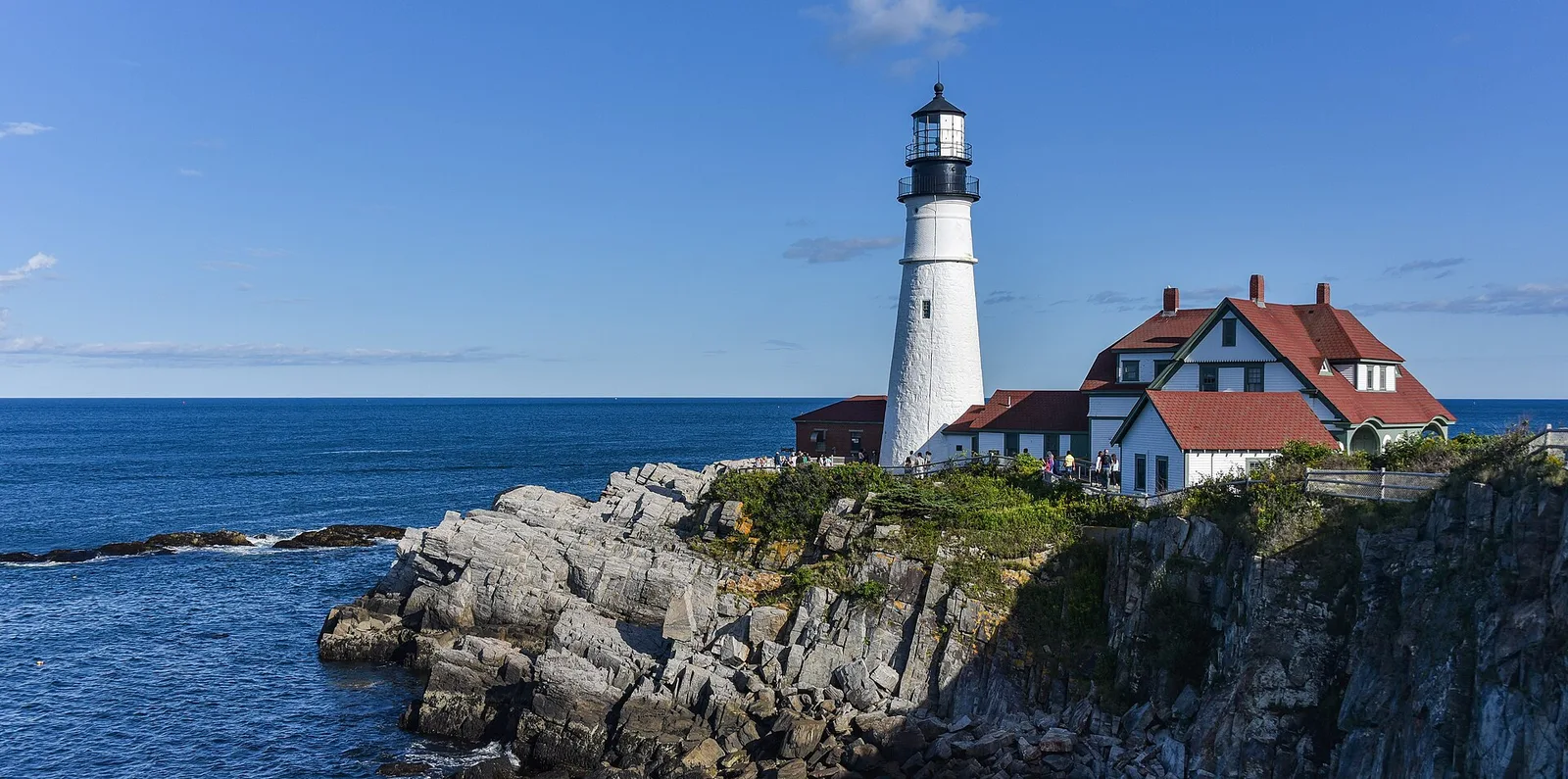
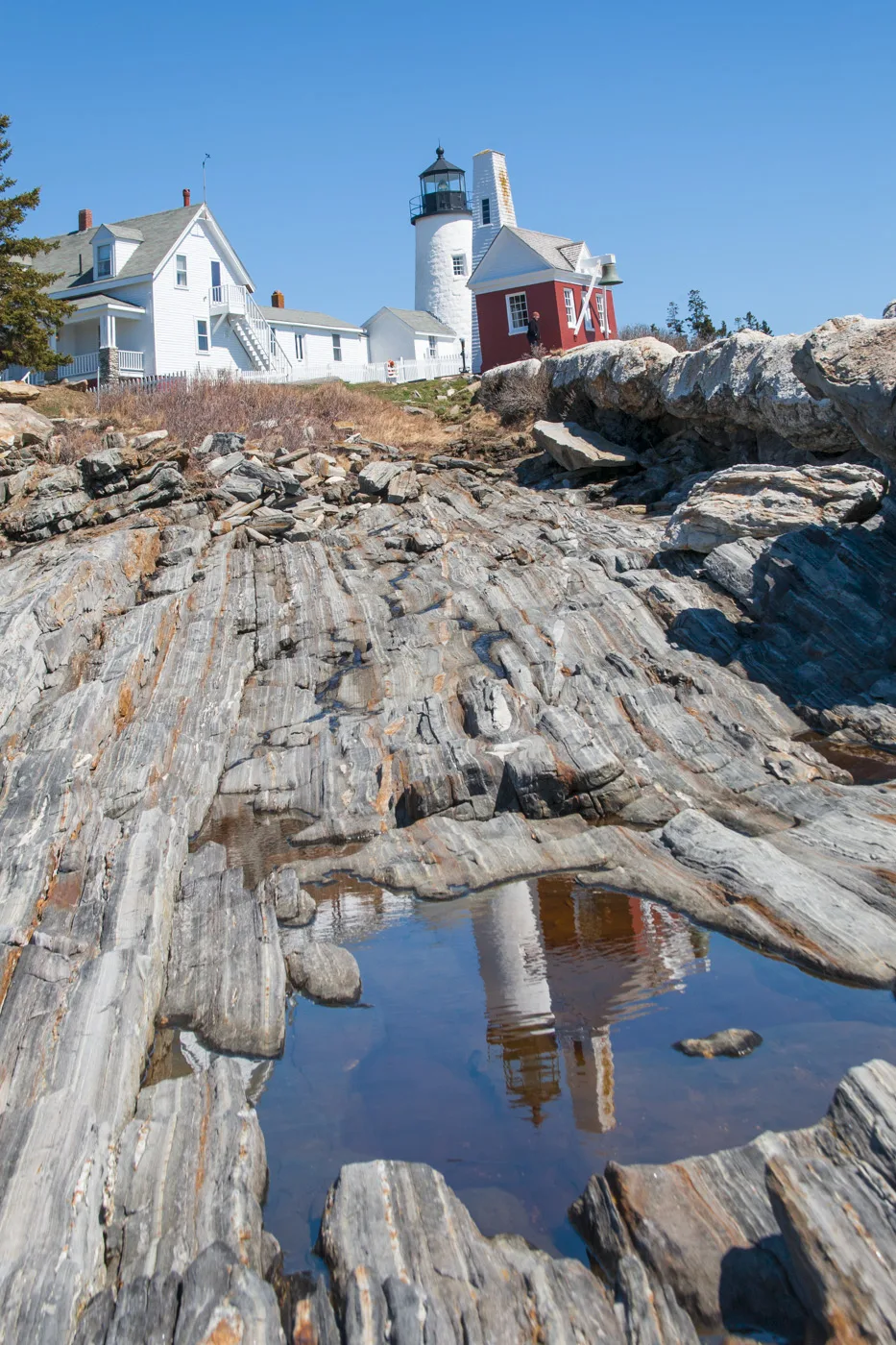
South down the coast, Pemaquid Point Light in Bristol, Maine, gives you a different kind of frame. The tower sits on tilted, layered rock that runs straight into the sea, and the lines in that rock do half the composition work for you. It photographs best at low tide, when the rock shelves open up and you can work along the shore instead of shooting from one crowded overlook. At high tide the water covers those shelves, and the scene tightens fast.
The honest negative here is the rock itself. It stays slick long after the rain stops, and I have watched visitors slide a few feet on a slope they thought was dry. Stay off the darkest, wettest slabs, and do not turn your back on a rising wave to check your screen.
Nubble Light in York, Maine, breaks the pattern. You cannot walk up to it, since it stands on Nubble Island just offshore, and you shoot it from Sohier Park across the water. That distance is the point. The little island, the white tower, and the red-roofed keeper’s house read as one tidy shape, and the frame works from almost anywhere along the park wall.
Nubble draws a crowd at sunset, and the park lot is small, so I go early or accept a walk from a side street. If you want the classic postcard frame, this is it. If you want solitude, pick Pemaquid instead.
The Maine coast pairs well with a slower drive through the region, and I usually fold these stops into a wider New England loop rather than racing between them in one day.
Coastal Maine works best as part of a longer New England drive, and my notes on small towns in New England cover the kind of overnight stops that keep this from turning into a windshield tour.
For statewide trip planning, the official tourism site is the place to confirm seasonal hours before you set out, since many coastal sites shorten their schedules outside summer.
You can check current seasonal information through Visit Maine before locking in a dawn start.
The Oregon Coast Rewards Fog, Not Sunshine
Heceta Head Light near Florence, Oregon, taught me to stop chasing blue sky. The tower sits on a high headland above a pocket beach, and on a clear day it looks handsome and a little plain. In fog, the white tower fades in and out of the mist, the trees behind it go dark, and the whole scene turns moody in a way no filter can fake. My favorite frame from Oregon came from a morning I nearly stayed in the car.
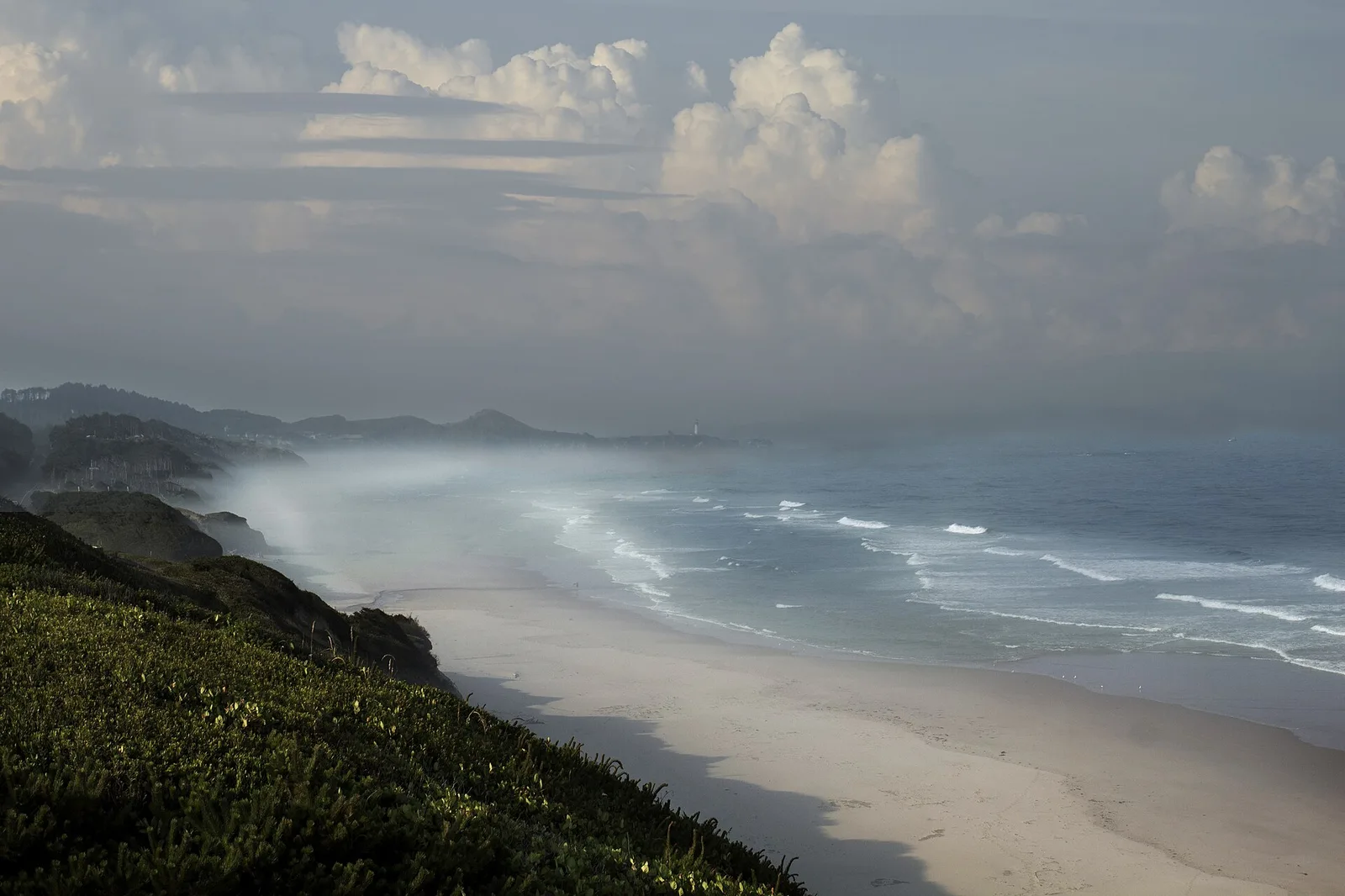
The walk to the viewpoint is a steady uphill path through forest. Bring a layer even in summer, because the headland wind cuts through a T-shirt fast, and the fog can roll in while you are still on the trail.
Yaquina Head Light in Newport, Oregon, is the more practical stop of the two. The headland has a proper visitor setup, the tower is tall and clean-lined, and the cobble beach below gives you foreground texture that most lighthouse sites lack. I shot it at low tide, with the rocks exposed, and the low tide frame had more depth.
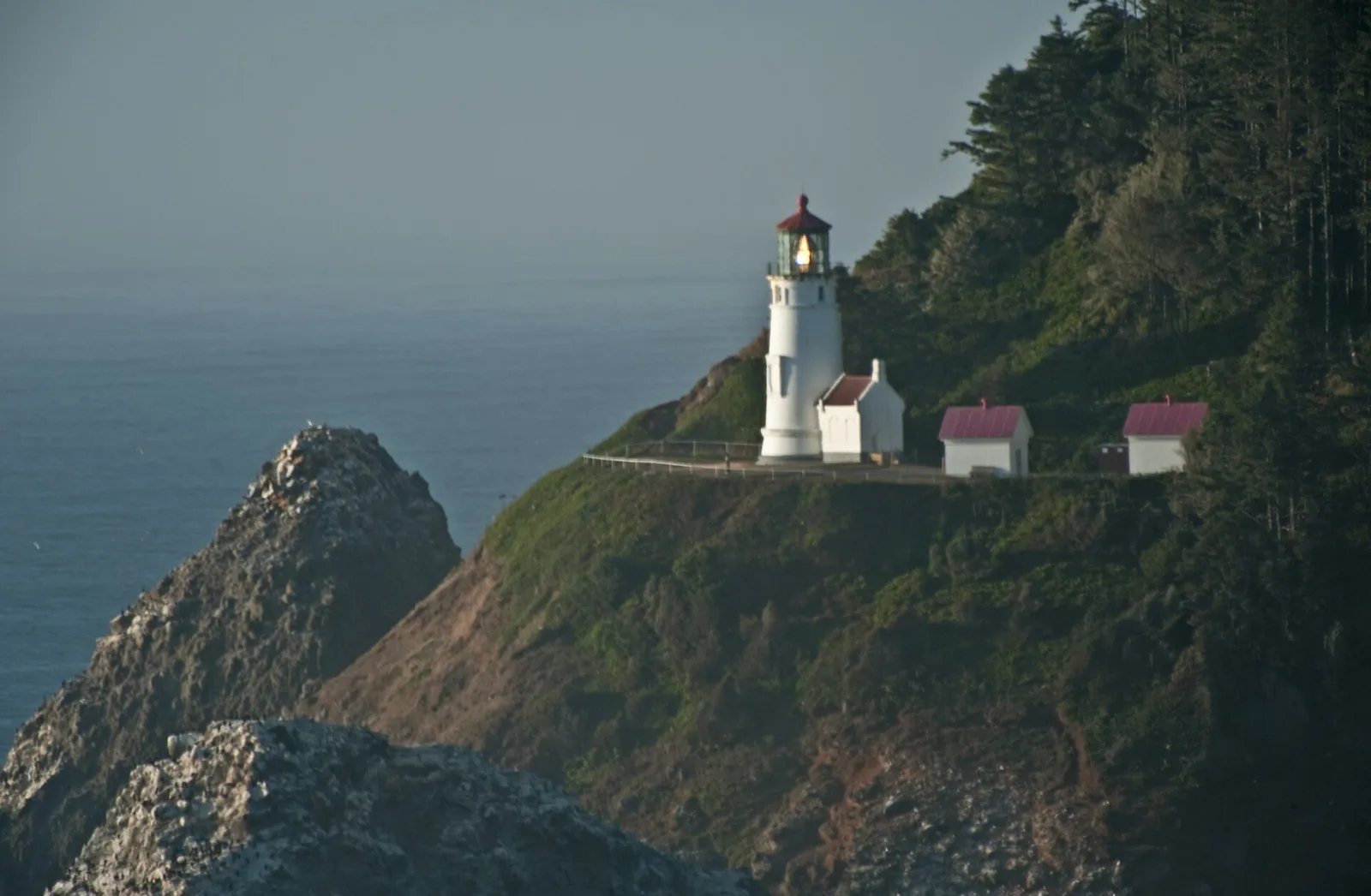
The honest negative for Oregon is simple: fog can hide the tower completely. I have driven to a headland, waited an hour in gray nothing, and left with pictures of a fence post. Check the marine forecast, not just the town forecast, and keep a backup stop inland so the day is not wasted if the coast stays socked in.
For current park conditions on the Oregon stop, the state parks site lists the headland park and its facilities, and it is worth a quick check before the drive out.
Oregon State Parks posts current information for Heceta Head and the surrounding coastal parks.

Where Photogenic Lighthouses USA Look Different at Dusk
California gives you two towers that could not be more different, and I like them for opposite reasons. Point Reyes Light in Marin County, California, sits on a narrow, windswept point inside Point Reyes National Seashore, and the approach alone tells you this is not a roadside stop. The last stretch of road winds through ranch land, the wind hits hard at the point, and the tower looks out over open Pacific water with nothing softening the frame. At dusk the light goes gold, then gray, then dark, and the tower holds its shape through all three.
This is a full outing, not a quick pull-off. I pack water and a wind layer, because the point can close the stairway in high wind, and I have been turned back once.
Pigeon Point Light on the San Mateo County coast, south of San Francisco, California, is the easier California stop. The tower is tall and white, the hostel next door keeps the grounds lived in rather than museum-still, and the cliff-top path gives you clean angles without a climb. I shot it at sunset with the fog bank sitting offshore like a wall, and the tower stood out against it in a way that needed no editing.
California’s coast rewards a slower pace, and I treat these two towers as anchors for a coastal drive rather than items to check off in one afternoon.
My notes on beautiful places in California cover the wider coastal stops I pair with these two towers.
The National Park Service page for the seashore is the reliable place to confirm whether the lighthouse stairs are open on the day you go, since wind closures change with conditions.
Check the Point Reyes National Seashore page through the National Park Service before making the drive out to the point.
The Outer Banks Tower You Photograph From the Ground
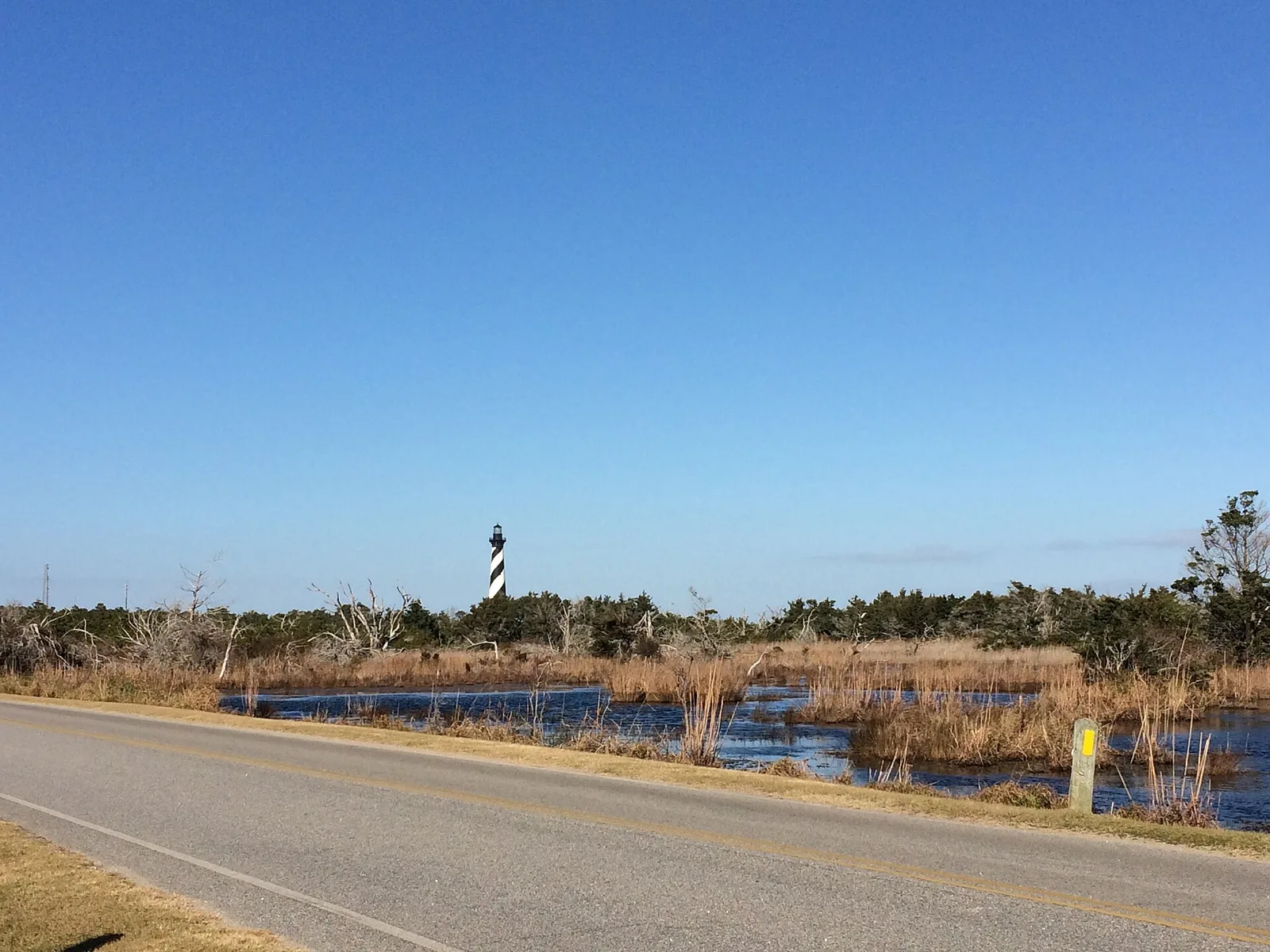
Bodie Island Light near Nags Head, North Carolina, sits inside Cape Hatteras National Seashore, and it breaks the usual lighthouse rule. Most towers look best from a distance, but Bodie Island rewards standing close, because the black-and-white horizontal bands give you a bold graphic shape even when the sky is flat. I shot it on an overcast morning and the stripes carried the whole frame.
The grounds are open and flat, which makes this the most forgiving stop on this list for anyone traveling with kids or with limited mobility. You can work the boardwalk, the marsh edge, and the tower base without scrambling over rock. The trade-off is midday light: under a hard summer sun the white bands blow out fast, so I shoot it early or late and skip the middle of the day entirely.
Cape Hatteras Light in Buxton, North Carolina, is the famous one, and fame brings a crowd. The tower is the tallest brick lighthouse in the country, and its spiral black-and-white pattern reads from a long way off. I like it, and I also skip it on peak summer weekends, when the parking area and the base path feel more like a queue than a shoreline. Go on a weekday, or go in the shoulder season, and the experience changes completely.
The National Park Service page for the seashore covers both towers and their seasonal schedules, and it is the source I trust over any third-party roundup.
The Cape Hatteras National Seashore page through the National Park Service lists current hours and climb information for Bodie Island and Cape Hatteras.
The Outer Banks works as a beach trip first and a lighthouse trip second, and that order keeps expectations honest.
My notes on coastal beach towns USA cover the beach-town side of an Outer Banks stop, which matters as much as the towers once the camera is back in the bag.
Climbing Changes the Shot, and Not Always for the Better
Climbing a lighthouse sounds like the main draw, and sometimes it is. From the top you get the coastline laid out in a way no ground shot can match, and the sense of height adds something real to the memory. But the climb itself is a narrow, winding stair in most towers, often with a small landing and a tight door at the top, and it is not comfortable for everyone. I have climbed towers where the view was superb and the photographs were worse, thanks to small, dirty windows.
My rule now is to climb for the experience and shoot from the ground. If a tower offers a climb, I take it when the line is short and the weather is calm, and I leave the camera in the bag on the way up unless the landing is wide open. The ground shots, with the tower, the keeper’s house, the rocks, and the sky in one frame, are the ones that end up printed.
Some towers close their climbs in high wind or for maintenance, and some never open them at all. Confirm before you drive, especially if the climb is the reason for the stop, and have a ground-level plan so the trip still pays off.
Late autumn is my favorite season for this kind of trip. The crowds thin, the light gets lower and warmer, and the coastal towns settle into their off-season rhythm.
My notes on places to visit in November USA cover the shoulder-season side of coastal trips, which fits lighthouse weekends well.
What I Pack and When I Bail
The kit is small, and that is deliberate. I carry a camera with a mid-range zoom, a tripod for low light, a lens cloth, a wind layer, and shoes with grip. I do not carry a long telephoto for lighthouses, because the best frames are usually wide enough to include the landscape around the tower, and a big lens just adds weight on a rocky shore.
Fog is the one condition that splits photographers. Some bail at the first gray wall, and some stay, and I have learned to stay for at least half an hour. Fog moves. A tower that is invisible at 7 a.m. can appear at 7:30, and the half-visible version is often better than the clear one. The exception is a forecast of steady rain with no break, and then I bail without guilt and go inland.
Safety outranks the shot, every time. Wet rock, cliff edges, and rising tides have hurt people who were looking through a viewfinder instead of at their feet. I set a rule before I start: no shot is worth a wet crossing, a slippery slab, or a scramble I would not do without a camera in my hands. That rule has cost me a few frames and saved me from at least one bad fall.
Timing matters more than gear. I check tide tables for rocky-shore stops, sunrise and sunset times for the direction the tower faces, and the marine forecast for fog. Picking the wrong end of the day for a tower’s facing is the most common reason a visit disappoints.
Questions I Get Asked at the Fence Line
Is sunrise or sunset better for lighthouse photos?
It depends on which way the tower faces and whether the shore is open in that direction. East-facing towers glow at sunrise, west-facing towers glow at sunset, and a tower on a headland can work at both ends of the day. I check the direction before I go and pick the end of the day that puts light on the face I want.
Can you climb every lighthouse on this list?
No, and you should not plan around it. Some towers open their stairs on a seasonal schedule, some close them in wind or for maintenance, and some are shore-view only by design. Treat the climb as a bonus, confirm it before driving, and make sure the ground-level views alone justify the stop.
Do you need a permit to use a tripod?
For personal photography at most of these sites, no special permit is needed, but rules vary by park and by site, and commercial shoots are a different matter. I check the managing park’s rules before setting up, and I keep the tripod off narrow paths when other visitors need the space.
Pick One Coast, Then Plan the Return Trip
If I had to pick one coast for a first lighthouse trip, I would pick Maine. The towers are close together, the towns between them are worth the stops, and the variety in a short drive is hard to beat. If I had to pick one tower for a return visit, I would pick Heceta Head in fog, because it is the one place on this list where the weather is not an obstacle but the subject.
Start with one coast, not all three. Give yourself two days, not one, and leave room for a second visit to the same tower in different light. That second visit is where the photographs get good, and it is the reason this list exists at all.