
Daytona Beach Florida Taught Me to Slow Down on a Beach Built for Speed
I came to Daytona Beach Florida for the first time with low expectations. I knew the speedway, the spring break stories, and the cars on the sand, and I figured a beach built for engines would feel loud from edge to edge. I was wrong in the best way. The beach is so wide that the noise thins out fast, and once you walk ten minutes from the nearest ramp, the whole place turns quiet, flat, and easy. This is a guide to doing Daytona slowly, on foot, with time to sit down.
The Beach Is the Reason to Come
Most Florida beaches make you pick a spot and stay put. Daytona does the opposite. The sand is hard-packed and flat, and the shoreline runs for miles without breaking into coves or points, so a morning walk can stretch as long as your legs hold out. I walked south from the Main Street Pier one morning and lost track of time: open sand, pale water, and room to spread out.
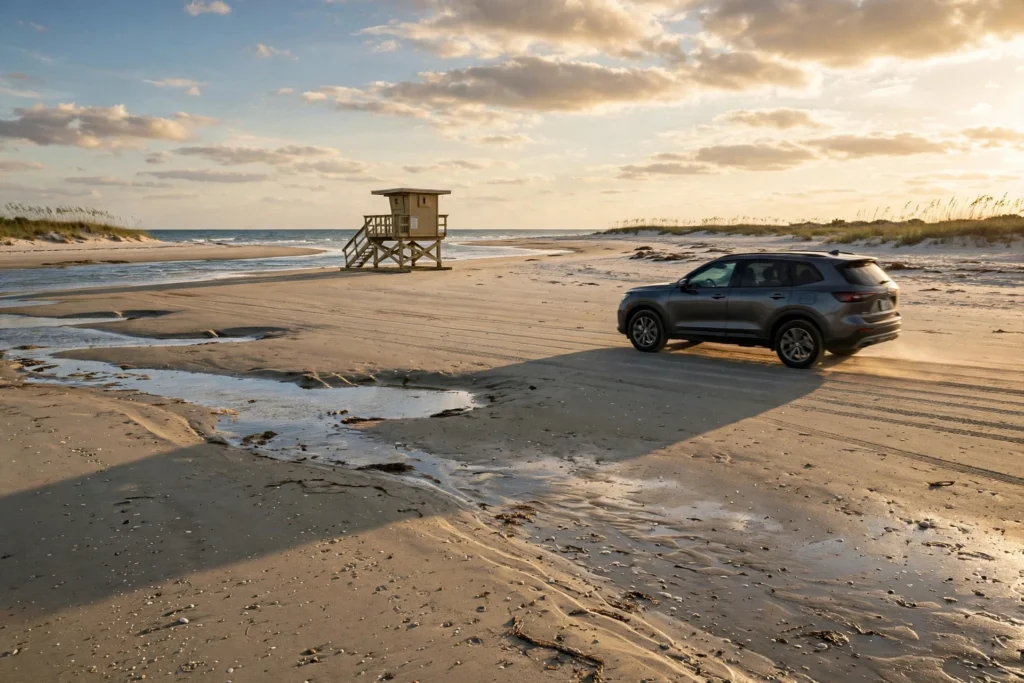
Cars are the part everyone asks about, so here is the plain version. Driving on the beach is allowed in marked zones, and it costs a daily fee that changes with the season, so check the current rate before you go. Cars move slowly, and the driving lanes sit closer to the dunes while walkers claim the wet sand near the water. On a summer Saturday some stretches feel more like a parking lot than a beach, so if that bothers you, walk south of the busiest ramps or come out before 10 in the morning, when the sand belongs to runners, dog walkers, and a few fishermen.
The water is warm from late spring through early fall, and the waves stay small most days, which suits waders and kids. Rip currents show up after storms, so I check the flags at the lifeguard stands before I swim, and I stay out when the red flag is up. Sunrise is the best hour here: the beach faces east, and the shoreline turns pink for about twenty minutes. Set an alarm for it at least once.
What Daytona Beach Florida Looks Like at Walking Speed
My slow weekend has a shape, and it works because nothing in it is far apart. I arrive Friday evening, check in somewhere along South Atlantic Avenue, and walk straight to the beach for sunset. No plan, no tickets, just sand under my feet and a look at how crowded the waterline is. Dinner comes from a casual spot along the strip, and I am back at the room by nine.
Saturday starts early. I walk the beach for an hour, then cross to the boardwalk area for coffee and a slow look at the pier. The middle of the day goes to one thing only, the speedway tour or Tomoka State Park, never both, because trying to fit both turns the day into a checklist. Late afternoon is for the water, then a long dinner and an evening walk. Sunday is the short version: one more beach walk, a late breakfast, and the drive home.
Nothing here needs a 6 a.m. alarm or a reservation made months ahead, except during race weeks.
The Boardwalk, the Pier, and the Rides Worth Your Money
The boardwalk sits at the center of the beachfront, and it tops most lists of things to do in Daytona Beach for a reason: it is the one place in town that feels like an old Florida postcard. The Main Street Pier stretches out over the Atlantic, and fishermen line the rails with rods and buckets while families walk to the end for the view back toward shore. It costs nothing to walk the pier, and it is the best free view in town.
The rides and arcades cluster near the boardwalk, and they are fun in small doses. A few dollars a ride is the going rate, and the games are the same ring toss and claw machines you remember from every boardwalk in America. I go for one loop and leave before the novelty wears off. Kids love it. Adults who expect a theme park will feel let down, so set the bar right: this is a seaside fair, not a destination in itself.
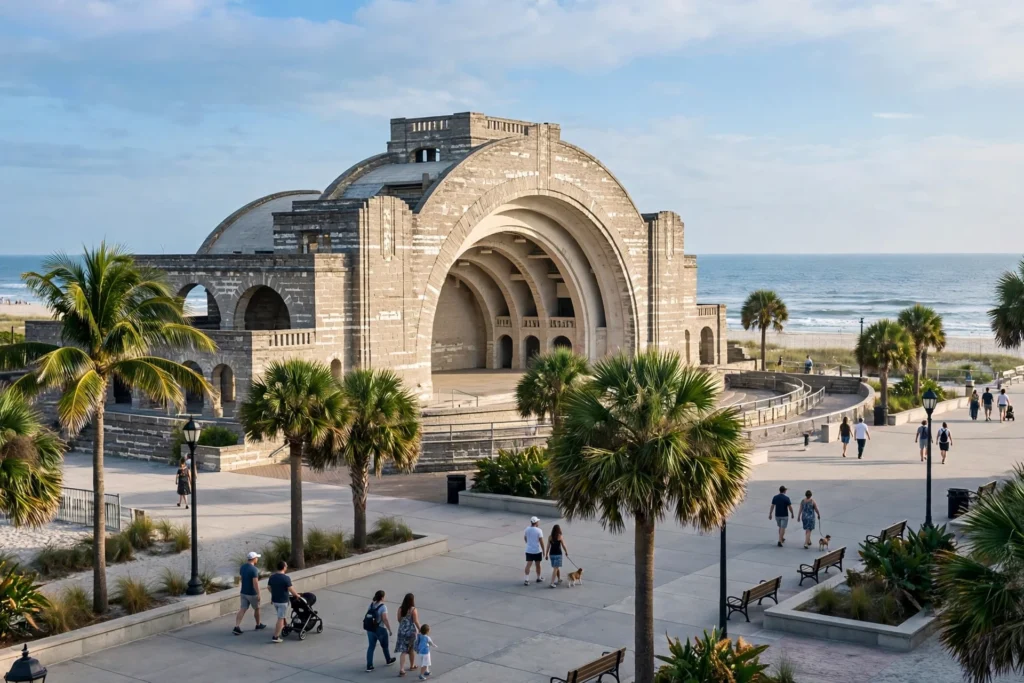
The Daytona Beach Bandshell hosts free concerts through the summer, and a Saturday night show with a towel on the grass is one of the cheapest good evenings on this coast. Check the schedule before your trip, since the lineup changes weekly. The shops along Ocean Walk Shoppes sell the usual beach gear and souvenirs, and the restaurants with ocean views charge for the view, so I eat one meal with a view and the rest a block inland.
Honest note: parts of the boardwalk area look tired. Some storefronts sit empty, and the paint peels in places. It has character, but if you want polished and new, this stretch will disappoint you. I skip the blocks that feel rowdy after dark.
The Speedway Is Worth Half a Day Even If You Do Not Follow Racing
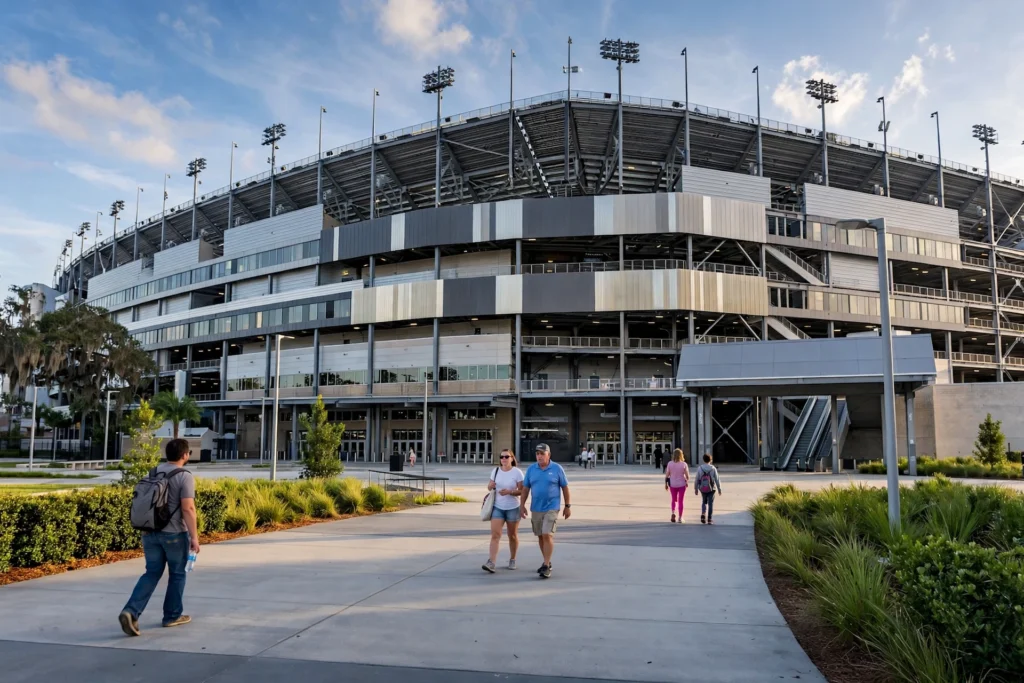
Daytona International Speedway sits a few miles inland on International Speedway Boulevard, and it is the one attraction here that justifies leaving the beach. The track tours run daily from 9:30 a.m. to 3 p.m., and they take you onto the 31-degree banks, through the garage areas, and into the Motorsports Hall of Fame of America, where the Daytona 500 champion car sits on display. Standing on the banking is the moment that sells it. The slope looks steep on television and feels steeper under your feet.
You do not need to love racing to enjoy the tour. The scale does the work: grandstands, infield, and pit road built for crowds of more than a hundred thousand. My guide told stories about the first races on the beach itself, back when drivers raced on the sand at low tide. Daytona was a racing town before it was a beach town, and the speedway is where that story lives.
Race weekends are a different trip entirely. The Daytona 500 runs February 21, 2027, and Bike Week takes over March 5 to 14, 2027, with the Rolex 24 At DAYTONA endurance race set for January 28 to 31, 2027. Prices spike, traffic backs up for miles, and the quiet beach weekend I describe here disappears. Book months ahead if you come for a race, and check the official schedule before you plan anything around an event date. Daytona International Speedway posts its calendar and tour times, and I check it before every visit.
Tomoka State Park and the Quiet Side of the River
When the beach crowds wear me down, I drive twenty minutes north to Tomoka State Park in Ormond Beach. The park sits where the Tomoka River meets the Halifax River, and it feels like a different county from the boardwalk. Admission is $5 per vehicle, and the park is open from 8 a.m. to sunset, 365 days a year. The address is 2099 N. Beach Street.
The half-mile nature trail runs through a hardwood hammock that was once an indigo field, and the park counts more than 160 bird species, with the best sightings during spring and fall migration. I have watched manatees from the riverbank here, slow gray shapes surfacing in the dark water, and that alone is worth the drive. Canoe rentals are available at the park store, and the boat ramp gives paddlers access to the river. The park also protects the site of Nocoroco, a Timucuan village, and the grounds of the old Mount Oswald Plantation.
Bring bug spray, especially in summer, and bring water, since the trails have no fountains. Tomoka State Park lists current hours, fees, and rental details on its official page. I pair Tomoka with lunch in Ormond Beach, quieter and cheaper than the Daytona strip, and I am back on the sand by mid-afternoon.
Daytona Beach vs Cocoa Beach: Which One Fits Your Trip
People ask me to pick between the two, and the honest answer is that they serve different trips. Daytona is wider, flatter, and built around driving on the sand, the speedway, and a real town with neighborhoods behind the strip. The beach is the main event, and everything else orbits it. Cocoa Beach is narrower and closer to Orlando, with a surf culture, a famous pier, and Kennedy Space Center a short drive away. If your trip is about space and rockets, Cocoa wins. If it is about the beach itself, Daytona wins.
The drives are similar. Daytona sits about an hour east of Orlando on Interstate 4, and Cocoa Beach sits about an hour east on State Road 528. Cocoa feels more compact, with a downtown that is easier to walk. Daytona feels bigger, and you will drive more between stops.
My tiebreaker is the season. In March, Daytona fills with spring break and Bike Week crowds, and Cocoa is the calmer pick. In the fall, Daytona empties out, the water stays warm into October, and it becomes the easy choice. I keep coming back to Daytona when I want a slow weekend, because the beach gives me room to breathe.
Is Daytona Beach Family Friendly? Yes, With a Few Ground Rules
Yes, it is, and the flat sand is the reason. Small kids can walk into the water without a sudden drop-off, and the beach is wide enough that a family can set up chairs, an umbrella, and a cooler without crowding the neighbors. Lifeguards staff the busiest stretches in the summer season, and the boardwalk rides give kids something to do when they tire of the waves. Daytona Lagoon waterpark sits a few blocks off the beach and covers the rainy afternoon problem.
The ground rules matter. Beach-driving zones mean cars share the sand, so I teach kids to look both ways before running toward the water, the same way I would on a street. Spring break weeks in March bring college crowds and late-night noise around Main Street, so families should pick a hotel a few blocks north or south of the pier during those weeks. And the boardwalk area gets rowdy after dark on summer weekends, so I take kids there in the daytime and keep evenings to the hotel pool or a quiet dinner.
Beyond those rules, Daytona is an easy family trip. The food is casual, the prices are lower than Miami or Key West, and nobody expects you to dress up. Pack sun protection, pack twice the water you think you need, and let the kids set the pace for a day.
Picking Your Dates: The Best Time to Visit Without the Crowds
The best time to visit Daytona Beach is late March through May, and again from September through November. Spring brings warm water, mild air, and long evenings, while fall brings the same warmth with thinner crowds and lower hotel rates.
Summer is the busiest and hottest season. Afternoon thunderstorms roll in most days, the humidity sits heavy, and hotel rates peak. The beach is still good, and the bandshell concerts make summer evenings fun, but I book a room with a pool, because some afternoons the beach is not the place to be.
Winter is mild and quiet, with daytime highs that usually reach the 60s and 70s, and the holiday lights at the speedway draw a different kind of crowd in December. The water cools off, so swimming is for the brave, but walking the beach in January is one of the best free things in Florida. If your dates are flexible, pick April or October.
The Money Part: What a Slow Weekend Runs Me
Daytona is one of the cheaper beach towns on the Florida Atlantic coast, and the costs stay simple. Beachfront hotels along South Atlantic Avenue run less than comparable rooms in Miami or St. Augustine, and the rates drop sharply once you move a block off the water or a few miles north into Ormond Beach. I book a basic oceanfront room and spend my money on food and one paid attraction.
Check current beach driving fees and parking rates before you go, since both change with the season. Daytona Beach Area Convention and Visitors Bureau keeps those details current, and I check it before every trip.
Questions I Get Asked Before Anyone Books
Can you drive on the beach at Daytona?
Yes, in marked zones, for a daily fee that varies by season. Cars use lanes near the dunes and pedestrians use the wet sand by the water. Walk south of the busy ramps or arrive before 10 a.m. for a car-free stretch.
Is the water safe for swimming?
Usually, yes, and lifeguards cover the busiest sections in summer. Check the flags at the stands before you get in, and stay out when the red flag flies. Rip currents appear after storms, so I ask a lifeguard on rough days.
How far is Daytona Beach from Orlando?
About an hour east on Interstate 4, depending on traffic. The drive is simple and flat, and the Orlando International Airport is the closest major airport.
Do I need a car?
Yes, for a full weekend. The beach and boardwalk are walkable, but the speedway and Tomoka State Park both need a drive. Parking is easy outside race weekends. Stay near the pier if you want to walk to everything, or look north toward Ormond Beach for quieter rooms and lower rates.
My Short List for Your First Slow Weekend
If you come to Daytona Beach Florida expecting noise and crowds, you will find them, but only in a few blocks and only on a few weekends. Walk ten minutes in either direction and the town hands you something else: a wide flat beach, a slow river, and a speedway that tells how this place began. Book a room near the pier, walk the beach at sunrise, give the speedway half a day, and spend one quiet morning at Tomoka. Skip race weekends unless racing is the point, and let the beach set the pace. That is the Daytona I keep coming back to, and it is worth the drive.
Beyond the beach, maritime museums in the US offer a quieter look at the ships and stories of Florida’s coast.