
California Redwood Trees History Starts With a Forest That Almost Vanished
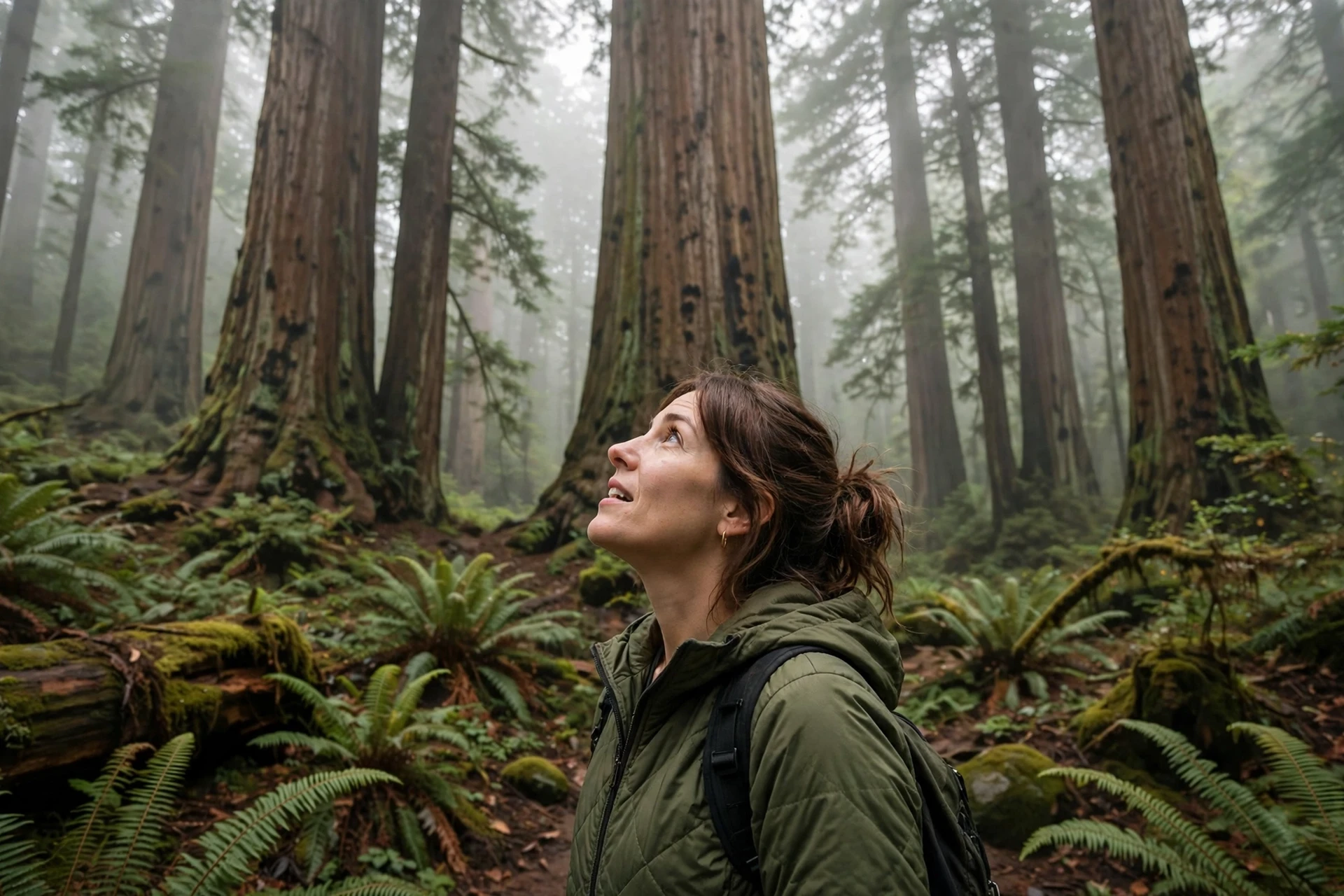
The first time I stood under a coast redwood, I did the thing everyone does: I leaned back, looked up, and lost the top of the tree in the fog. The trunk went up and up until it stopped being a trunk and became weather. California redwood trees history is the story of how close we came to losing that feeling entirely, and of the people who bought the forest back one grove at a time. It is a history written in stumps as much as in standing trees, and the groves you can walk today exist because a small group of people refused to watch the last of them fall.
Two Million Acres, Then the Saws Arrived
Before the Gold Rush, coast redwoods covered about two million acres along a narrow fog belt from southern Oregon to Big Sur, never more than about 50 miles from the Pacific. The trees were the tallest living things on Earth, some more than 2,000 years old, and they grew in forests so dense that the floor stayed cool and dark at noon. The first Spanish and Mexican settlers cut them for fences and beams. Then the Gold Rush brought mills, railroads, and a market that never stopped asking for lumber.
The cutting ran for a century, and it ran hard. By the 1960s, about 96 percent of the original old-growth forest was gone. What remains today is a scatter of remnants, and the four parks of Redwood National and State Parks hold about 45 percent of all the old growth left anywhere on the planet. The number is sobering in both directions: almost everything was cut, and what survived is still the finest old-growth coast redwood forest left on Earth.
The logging itself was a feat of stubborn labor. Fallers worked with crosscut saws and axes on trees wider than a car, and the logs were so heavy that mills built special railroads to haul them out. The stumps they left behind are still there in places, wide as kitchen tables, sprouting new shoots from their edges. Redwoods do that: a cut tree sends up sprouts from its base, and the ring of young trees around an old stump is a living record of the cut. Walk the trails and you will see those rings everywhere, history growing in a circle.
The League That Bought Groves One at a Time
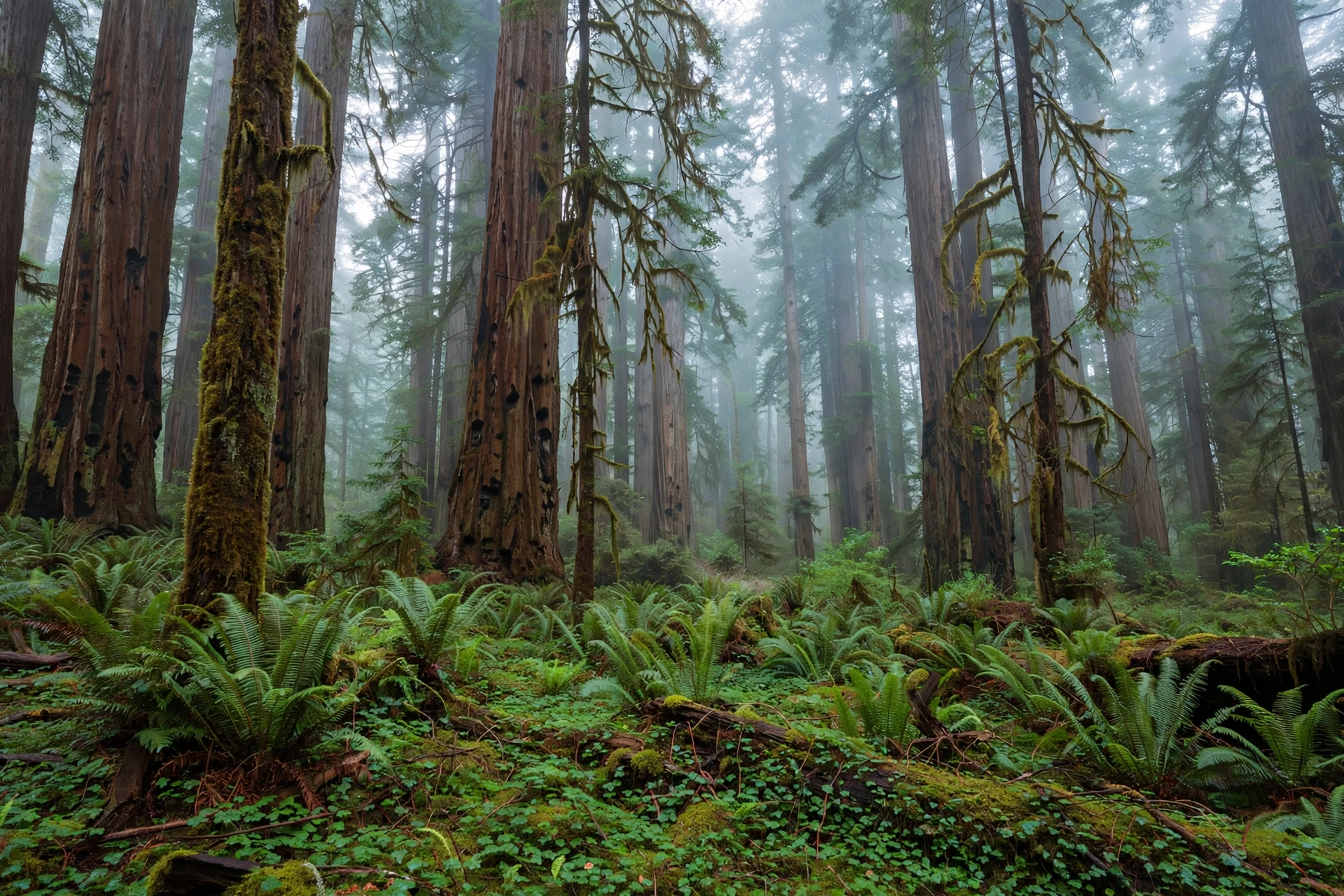
The rescue started in 1918, when a group of conservationists formed the Save the Redwoods League. The League did not wait for Congress. It bought groves one at a time, often as memorials, and handed them to the state. Prairie Creek Redwoods State Park came in 1923, Del Norte Coast in 1925, and Jedediah Smith in 1929. Each one saved a piece of forest that would otherwise have been cut in the decade it was bought.
The federal government arrived later, and only after a measurement forced its hand. A National Geographic expedition in 1963 and 1964 surveyed the unprotected timberland along Redwood Creek and found the tallest tree then known on Earth standing in a grove that was slated for harvest. The magazine put the discovery on its cover, and President Lyndon B. Johnson signed Redwood National Park into law on October 2, 1968. Congress expanded the park in 1978, adding 48,000 acres, much of it already cut over, because logging upstream was loading Redwood Creek with sediment that threatened the groves below. In 1994 the federal park and the three state parks were joined under one management unit, and UNESCO had already named the parks a World Heritage Site in 1980.
That timeline matters for a visit, because the parks you walk are not one park. They are one national park and three state parks, run together across about 139,000 acres, holding 38,982 acres of old growth. The names on the signs change as you drive Highway 101, but the forest does not care about the boundary. The history lives in the order the groves were saved: the state parks first, the national park last, and the expansion land still growing back from the cut.
Hyperion, and the Trees You Are Allowed to Stand Under
The tallest tree on Earth grows somewhere in the Redwood Creek watershed, and you will not find it. Hyperion, a coast redwood measured at just over 380 feet, was found in 2006 by naturalists Chris Atkins and Michael Taylor. The park does not publish its location, and since 2022 it has been forbidden to approach the tree, after visitors trampled the soil around its roots. The rule is easy to respect once you stand under any old redwood: from the ground, a 380-foot tree and a 350-foot tree are the same tree, and the one you can walk to is the one that matters.
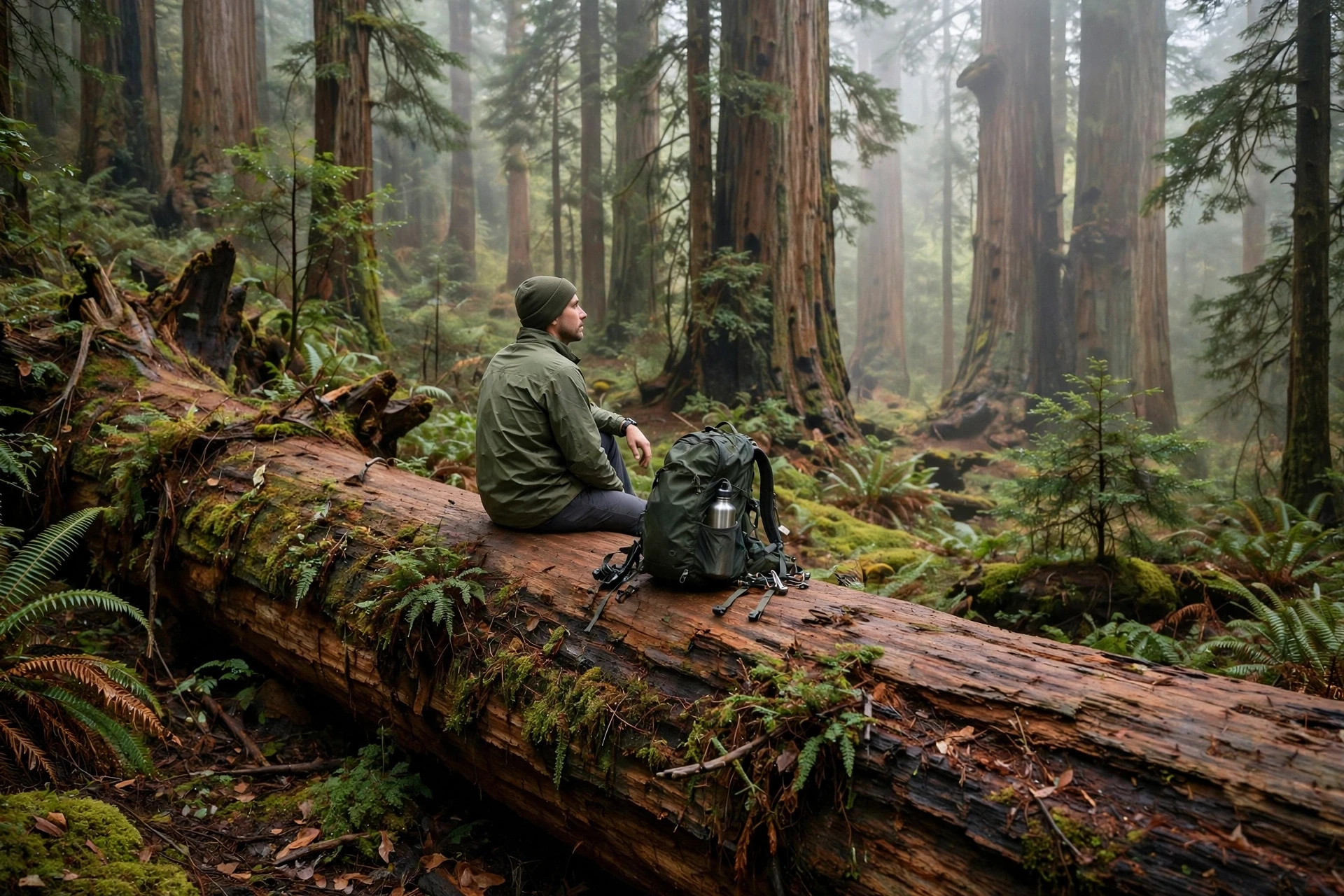
The trees you can stand under are everywhere, and each grove has its own character. The Tall Trees Grove, reached by a steep trail down to Redwood Creek, holds some of the tallest trees in the park, and it requires a free permit, which keeps the crowds thin. Lady Bird Johnson Grove is the easy one, a 1.3-mile loop through a cathedral of trunks that a first-time visitor can walk in an hour. The Avenue of the Giants runs 31 miles through Humboldt Redwoods State Park, past the Founders Grove and the fallen Dyerville Giant, which crashed to the forest floor in 1991 and still lies there, wider than a road, slowly returning to soil.
The coast redwood is not the only giant in California, and the difference matters. The giant sequoia, its mountain cousin, grows thicker and holds the record for the largest tree by volume: the General Sherman Tree in Sequoia National Park. Coast redwoods are the tallest. Giant sequoias are the most massive. They are different species, growing in different places, and mixing them up is the most common mistake in redwood country. The trees along Highway 101 are coast redwoods, tall and straight, drinking fog through their needles. The fat ones in the Sierra are sequoias. Both are worth a trip. They are not the same trip.
The California Redwood Trees History Most Visitors Get Wrong
The first wrong idea is that the forest is pristine. It is a recovering forest, and the recovery is part of the story. The second-growth stands along the roads grew back after the cut, and they look impressive until you step into an old grove and feel the difference: the light drops, the air cools, the trunks double in width, and the forest floor turns to fern and sorrel. Old growth is not just older. It is a different place.
The second wrong idea is that the trees need fire to survive, the way giant sequoias do. Coast redwoods tolerate fire and their thick bark protects them, but they do not need it the way the Sierra trees do. What they need is fog. The summer fog rolling in off the Pacific waters the canopy through the dry months, and the trees pull moisture straight from the air. A fogless summer stresses the forest more than a dry winter does, and the fog belt is the reason the range is so narrow.
The third wrong idea is that the parks are a single destination you can see in a day. You cannot. The parks stretch along 37 miles of coast and deep into the river valleys, and the drive between the groves takes real time on winding roads. The visitors who rush it see the roadside trees and leave thinking they saw the forest. The visitors who stay two nights, walk the Tall Trees Grove in the morning and the Avenue of the Giants in the afternoon, come home with a different story.
Where to Walk It, Grove by Grove
Start in Prairie Creek Redwoods State Park, in the south, where the trails are gentle and the Roosevelt elk graze in the meadows at dawn. The park holds some of the finest old growth in the system, and the trails through it are the easiest introduction to the forest. Fern Canyon, a short drive north, is a narrow gorge walled in ferns, and the walk through it is the single most beautiful short hike in the parks. Bring shoes you do not mind getting wet.

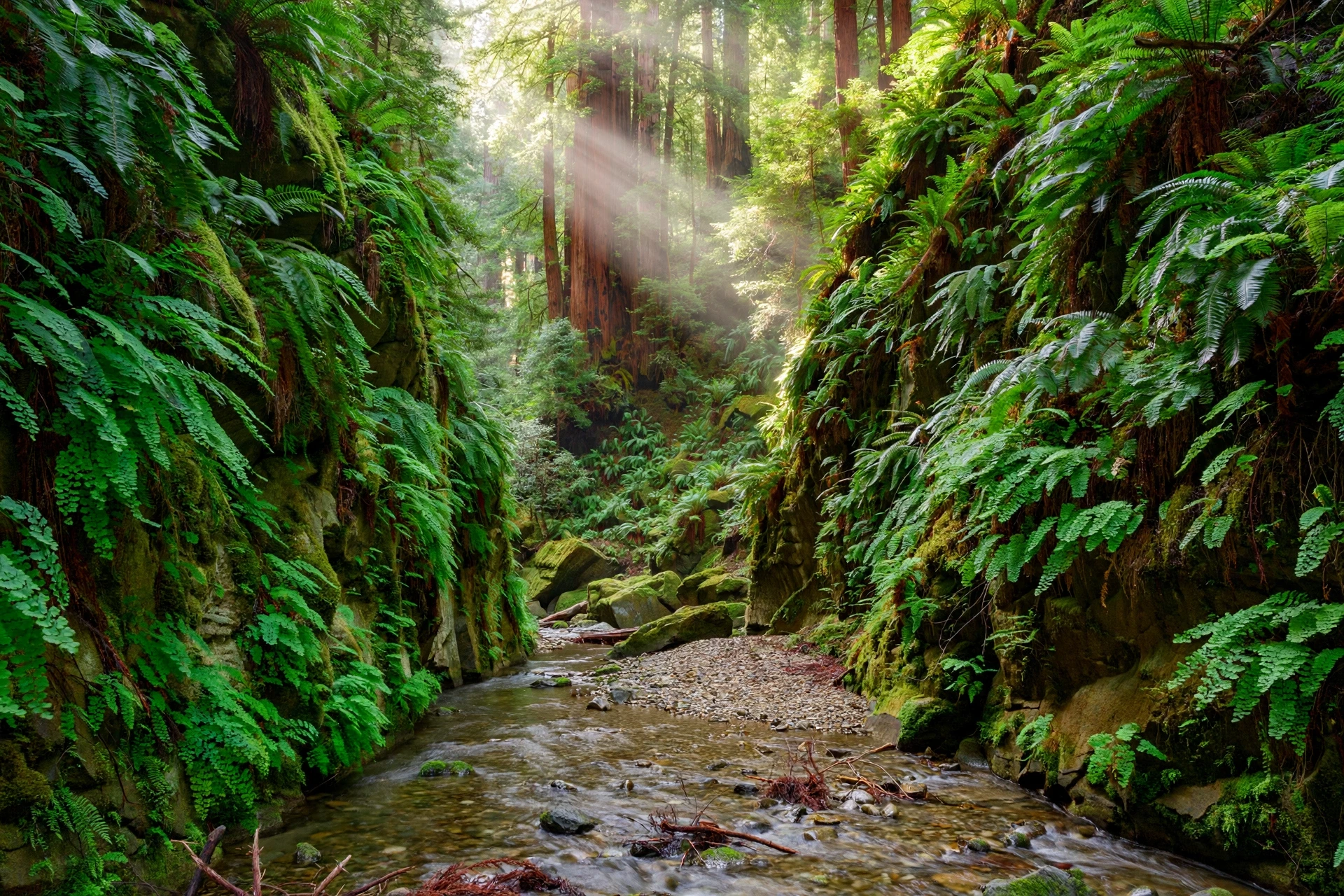
Drive north to Jedediah Smith Redwoods State Park on the Smith River, where the Stout Grove is the grove people describe when they say a forest felt like a church. The trees here are among the tallest and straightest anywhere, and the light on a foggy morning is the color of old paper. The Smith River itself is one of the cleanest rivers in California, and the water runs clear enough to see the bottom in the deep pools.
Between them, the Avenue of the Giants winds through Humboldt Redwoods State Park and the Rockefeller Forest, the largest remaining old-growth redwood stand in the world. The road is slow by design, and the pullouts are worth every stop. The Founders Grove and the fallen Dyerville Giant sit along it, and the road itself is the attraction, not the way to one.
Big Basin, the oldest state park in California, sits far south of the rest, and it is still recovering from the CZU fire of August 2020, which burned most of the park. The old trees survived better than the buildings did, and the park has reopened in part, but it is a different visit than it was before the fire. Check the current status on the California State Parks site before you go, and treat it as a place in recovery, not a place restored.
The honest downsides are part of the trip. Summer brings crowds to the roadside groves and fog that can sit all day, which is beautiful and cold at the same time. Rain falls hard in winter, and the trails turn to mud. Cell service disappears for long stretches, so download your maps before you leave Highway 101. The parks are not a quick stop between San Francisco and Oregon. They are a destination that asks for two days and rewards them.
Go in Winter, Bring a Rain Jacket, Look Up
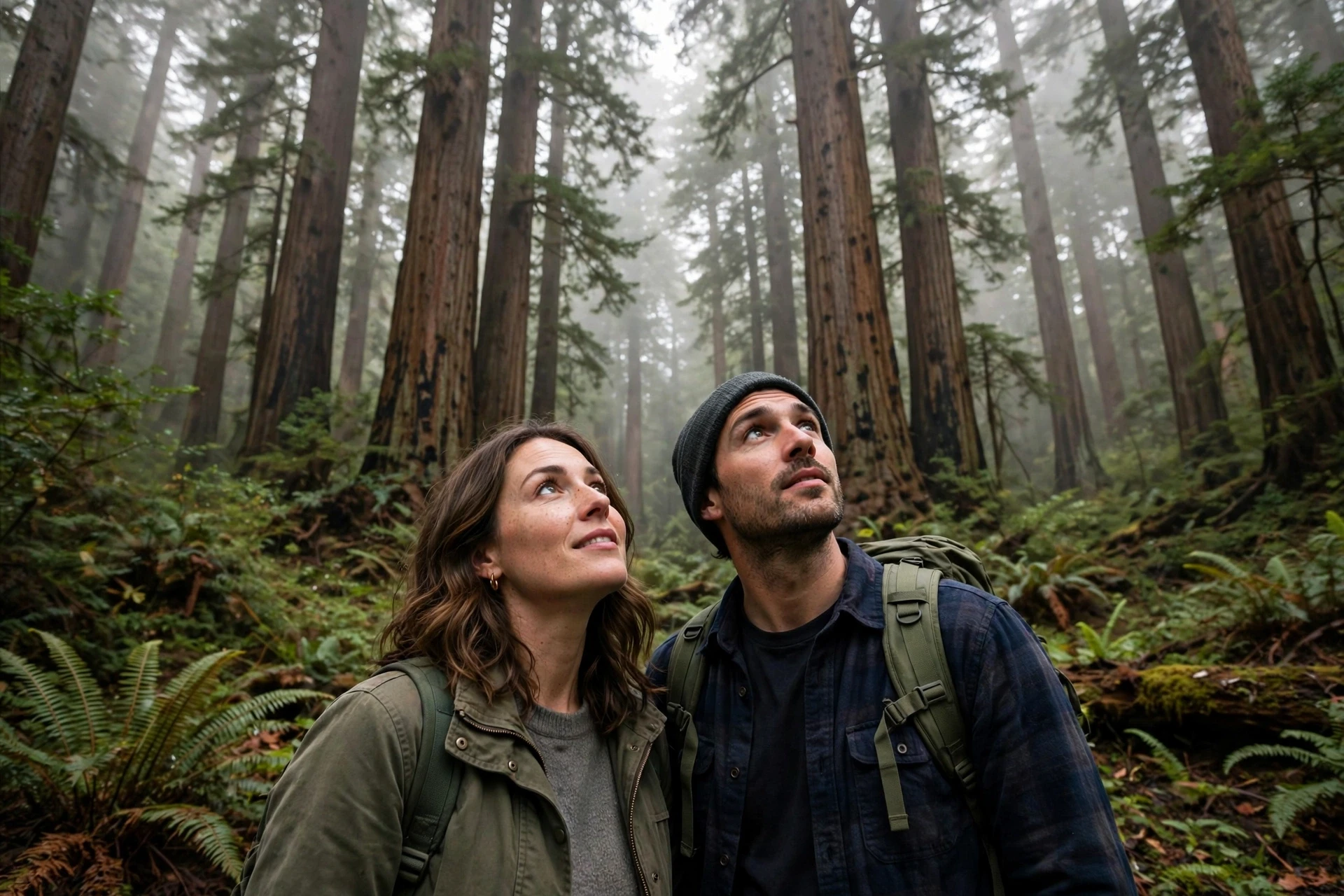
Here is the plan that works. Come in winter or late fall, when the crowds thin and the rain makes the forest smell like soil and cedar. Base in Crescent City or Eureka, and give the parks two full days. Walk the Tall Trees Grove in the morning with a permit, drive the Avenue of the Giants in the afternoon, and spend a morning in Jedediah Smith before you leave. Bring a rain jacket, shoes that can handle mud, and a paper map. Stand under a tree, lean back, and look up until you lose the top in the fog. The forest almost vanished. You are standing in the part that did not. If you are building a longer California road trip around the parks, the Visit California site is where I start for the wider picture.



3 Comments