

Which Small Towns in New England Are Worth the Long Drive? Six Coastal Picks, Plus Two to Skip
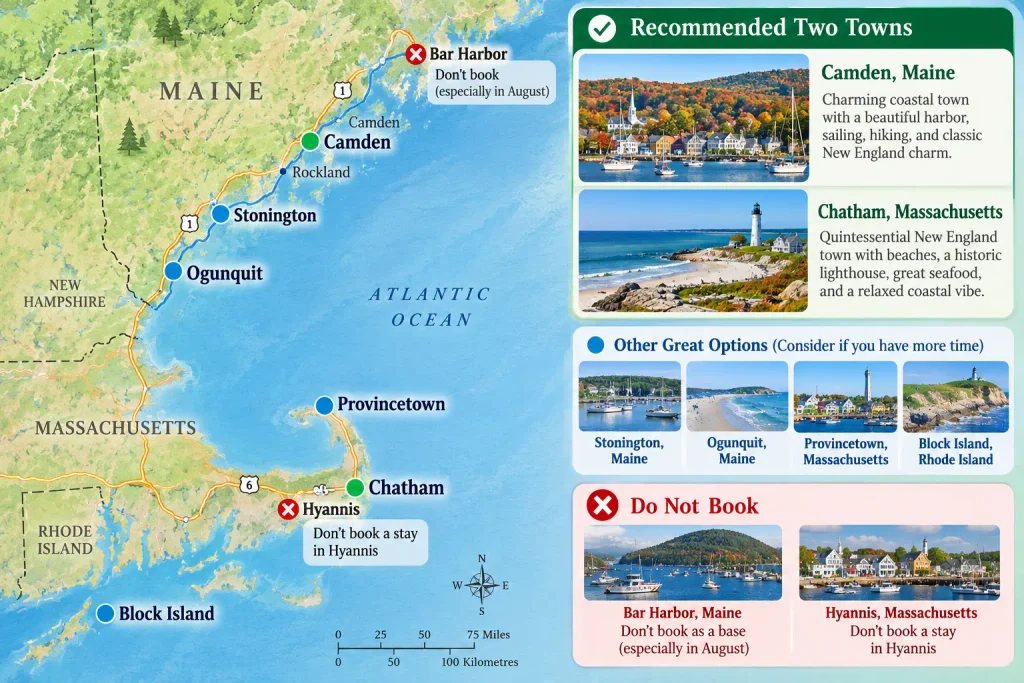
The best small towns in New England for the coast are Camden, Maine, Stonington, Ogunquit, Chatham, Massachusetts, Provincetown, Massachusetts, and Block Island, Rhode Island. Skip Bar Harbor, Maine, as a base in August, and don’t book a stay in Hyannis, Massachusetts. Pick two towns, not six. The driving between them will eat your trip.
The Six, in One Pass
- Ogunquit: the one true beach town here, with three miles of sand and a cliff walk, roughly 75 miles north of Boston, Massachusetts.
- Camden: a harbor town on Penobscot Bay with a small mountain at its back and schooners at the dock.
- Stonington: a working lobster port on Deer Isle, with no beach and no pretense.
- Chatham: the quiet, shingled elbow of Cape Cod, with seals offshore and a fish pier worth an hour.
- Provincetown: the loud, brilliant tip of the Cape, best reached by boat.
- Block Island: a ferry ride off the Rhode Island mainland, built for bikes.
Small Towns in New England With Real Beaches Are Rarer Than the Photos Suggest
Most postcard towns have no swimming beach at all. Camden and Stonington face rocky shorelines and working harbors. The Gulf of Maine stays cold enough that I’ve never gotten past my knees in August. Expect water in the 50s °F up there, maybe the low 60s after a long heat spell.
The warmer water is south. The Cape Cod Bay side of the Cape and the beaches facing Nantucket Sound usually climb into the low 70s by late August. Block Island Sound comes close. The open Atlantic side near Chatham is another story: bigger surf, colder water, and strong currents around the inlets.
That split decides the trip. If swimming matters, book Massachusetts or Rhode Island. If you want scenery and lobster, go to Maine and treat the water as decoration. If you’d rather skip the water altogether, browse the things to do in Woodstock, Vermont for an inland trip instead.
Maine: Midcoast Views, Down East Grit, and One Proper Beach
Ogunquit, Maine: Go Early, Walk the Cliffs, Skip the Route 1 Crawl
Ogunquit sits on U.S. Route 1 in York County. The Marginal Way runs about 1.25 miles along the cliffs from Shore Road to Perkins Cove, and I walk it first thing, before the day crowds show up. It’s paved, mostly flat, and takes about 40 minutes with stops.
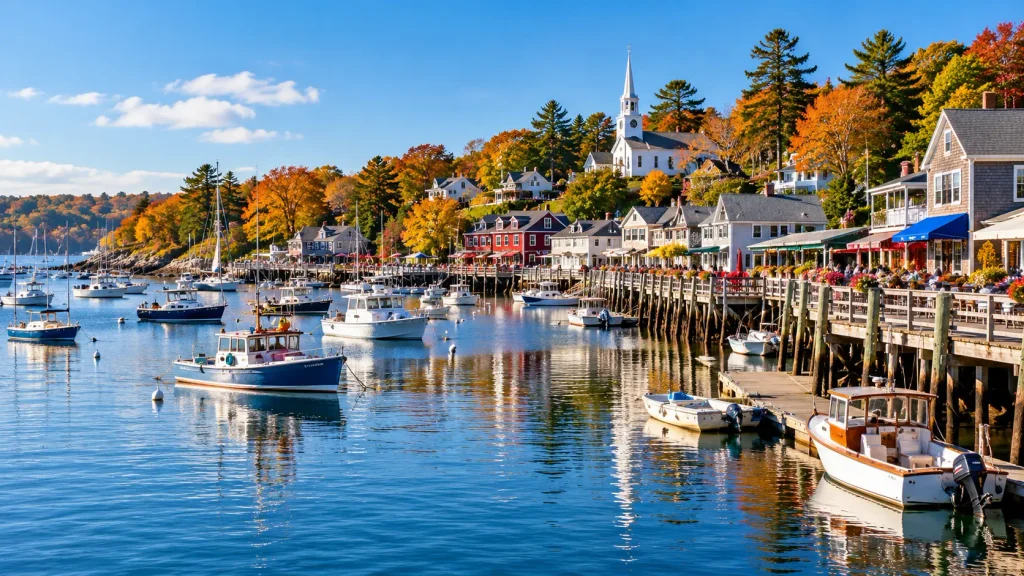
Perkins Cove has a pedestrian drawbridge, a few lobster shacks, and a wall of tourists by noon. Ogunquit Beach runs about three miles. On July weekends the lots near the beach fill by mid-morning, so arrive before 9 a.m. or ride the seasonal trolley. Route 1 through town is brutal after 4 p.m.
Camden, Maine: A Summit You Can Reach Before Lunch
Camden sits on Penobscot Bay, about 80 miles northeast of Portland, Maine. Camden Hills State Park starts at the edge of town. Mount Battie tops out around 800 feet, and the hike up is short enough to finish in under an hour, with a view over the harbor and the islands beyond. Drivers can take the summit road instead.
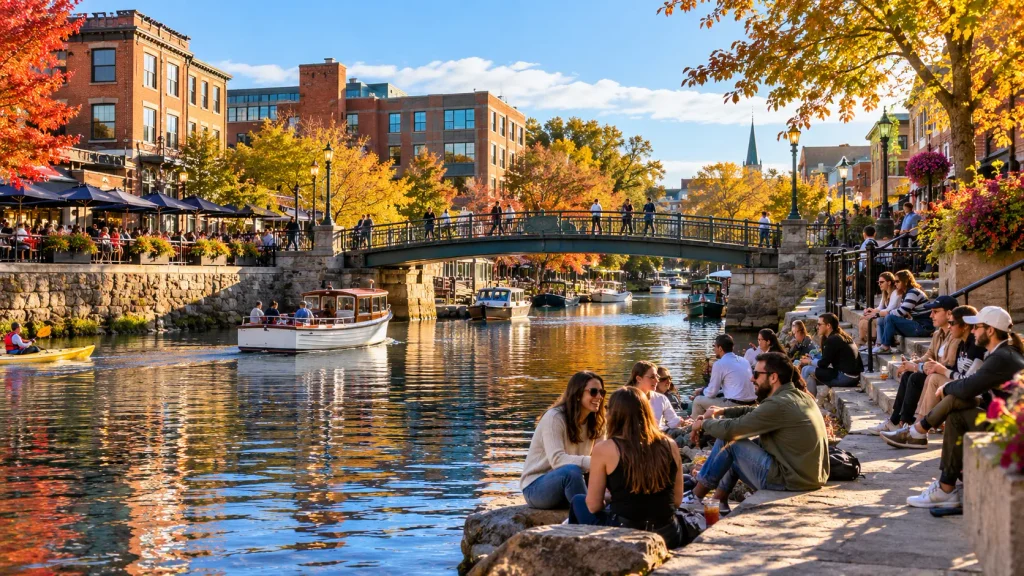
The harbor fills with windjammer schooners, and day sails leave from the public landing. Here’s the honest negative: Route 1 backs up through Wiscasset, Maine, on summer weekends. A drive that looks like an hour and 45 minutes on the map can run well past two hours. Leave Portland before 8 a.m. and you’ll skip most of it.
Stonington, Maine: A Lobster Town With No Beach and No Interest in Impressing You
Stonington is the end of the road on Deer Isle. You reach it from Ellsworth, Maine, in about an hour, crossing the Deer Isle-Sedgwick Bridge along the way. The lobster boats go out at dawn and come back by early afternoon, and you can stand on the working wharf and watch the crates come off.
From town, a small passenger ferry runs to Isle au Haut, where part of Acadia National Park sits. Plan the day around its schedule.
Stonington is thin on dinner options, and many places close early or shut for the season after Columbus Day. If you need nightlife, a swim, or a choice of restaurants, skip it. Beach-first travelers will have an easier time with small towns in Florida, where the water is warm all year. I’d still pick it over Camden for a second night.
Bar Harbor, Maine: See Acadia From Here, but Sleep Somewhere Quieter
Bar Harbor sits on Mount Desert Island and serves as the main gateway to Acadia National Park, which the National Park Service manages. In peak season, cruise ships can drop thousands of passengers onto a few downtown blocks in a single day. I’d stay in Southwest Harbor, Maine, on the quieter side of the island, and drive in for the park.

Cadillac Mountain rises 1,530 feet, and in peak season you need a vehicle reservation to drive the Cadillac Summit Road. Book it through Recreation.gov and check the current rules on the Acadia National Park site before you go.
If a summit is the real draw and the coast is secondary, mountain towns in the USA give you higher elevations with far fewer cruise ship crowds.
Cape Cod’s Two Ends: Chatham for Quiet, Provincetown for Everything Else
Cape Cod lies in Barnstable County, and only two road bridges, the Sagamore Bridge and the Bourne Bridge, cross the Cape Cod Canal to reach it. On a July Friday afternoon, those bridges can add an hour to your drive. Leave Boston before noon, or after 7 p.m.
Chatham, Massachusetts: Seals, a Fish Pier, and a Parking Lot That Punishes Late Starts
Chatham sits at the elbow of the Cape, roughly 90 miles from Boston and about two hours without traffic. Chatham Lighthouse Beach overlooks the Chatham Break, an inlet that opened after a 1987 storm. Seals loaf offshore, and boat trips to the Monomoy National Wildlife Refuge, run by the U.S. Fish and Wildlife Service, leave from town harbors.
Walk down to the Chatham Fish Pier in the afternoon and watch the boats unload. Then check the summer schedule for Friday evening band concerts at Kate Gould Park.
The downsides are real. Chatham lodging runs among the priciest on the Cape, Main Street leans toward gift shops, and the Lighthouse Beach lot is small and fills early.
Provincetown, Massachusetts: Take the Boat, Leave the Car
Provincetown sits at the tip of Cape Cod, about 120 miles from Boston. The last few miles of Route 6 jam badly in summer. So I take the fast ferry from Boston, which runs roughly 90 minutes, with seasonal service from operators including Bay State Cruise Company and Boston Harbor City Cruises.
Once you land, Commercial Street is the spine of town, and everything sits within a short walk. The Pilgrim Monument stands 252 feet tall. You climb 116 steps and 60 ramps to reach a view over Cape Cod Bay. Race Point Beach lies inside the Cape Cod National Seashore, and the National Park Service manages it. Rent a bike for the Province Lands Bike Trail, which loops through dunes for roughly five miles.
Expect crowds on Commercial Street in July and August, narrow sidewalks, steep parking costs, and inns that require multi-night stays on summer weekends. It’s still the most alive small town on this list.
Hyannis, Massachusetts: Pass Through, Don’t Stay
Hyannis is the Cape’s commercial hub and a ferry port. It’s useful for the boat to Nantucket, which you can book through the Steamship Authority. As a place to spend the night, it’s strip malls and Route 132 traffic.
Block Island, Rhode Island: A 55-Minute Ferry That Resets the Whole Trip
Block Island is the town of New Shoreham, about 13 miles off the Rhode Island coast. The Block Island Ferry leaves from Point Judith in Narragansett, Rhode Island, and the traditional boat takes about 55 minutes. A high-speed passenger boat cuts that to around 30 minutes in season.

Don’t bring a car. Vehicle spots sell out, and the island is small enough for bikes. Rent them near the ferry dock at Old Harbor.
The walk down Mohegan Bluffs is 141 wooden steps to a rocky beach beneath clay cliffs about 150 feet high. The climb back takes ten minutes of heavy breathing. Bring water.
The negatives: day-trippers flood Old Harbor by midday, mopeds are a hazard on narrow roads, and a windy day can cancel your ferry home. Book a return you can afford to miss.
Pairings That Don’t Waste a Day in the Car
- Camden plus Stonington: about two hours apart by road, enough for a four-night Maine trip.
- Chatham plus Provincetown: roughly 60 miles up Route 6, about an hour and a half in summer traffic.
- Ogunquit plus Camden: a little over two hours, and the easiest way to add a real beach to Maine.
- Block Island: stands alone. Give it two nights, minimum.
Don’t mix Maine and the Cape in one trip. Boston to Camden is a four-hour drive, and you’ll feel every mile.
September Beats July: Timing, Crowds, and What Each Month Costs You
Go the first two weeks of September. The water is at its warmest, crowds thin after Labor Day, and nearly everything is still open.
- Late June: cold water, short lines, and some seasonal businesses still waking up.
- July and August: peak prices, multi-night minimums, and full parking lots by mid-morning.
- Early September: my pick for every town here except Stonington, which works any time it’s open.
- Early to mid October: Maine foliage season and the last weekends before many shops close after Columbus Day.
Lodging is the biggest cost on any of these trips, so go Sunday through Thursday to save money and dodge crowds. Pack a fleece, even in August. Maine mornings and every ferry deck run cold.
Questions I Get Before People Book a New England Coast Trip
What’s the cutest small town in New England?
Camden, Maine, is the prettiest to me: a working harbor, schooners at the dock, and a state park summit overlooking downtown. Chatham is tidier, Stonington is rawer, and Provincetown is louder. Choose Camden for postcard looks and Stonington if you’d rather see an actual working fishing town.
Which New England beach towns have warm water?
Rhode Island and the Massachusetts bay side. Block Island and Cape Cod’s Nantucket Sound and Cape Cod Bay beaches usually reach the low 70s °F by late August. Maine’s Gulf of Maine stays cold, often in the 50s or low 60s, even at Ogunquit. Swim in Massachusetts or Rhode Island, and use Maine for scenery.
How far ahead should I book?
Book lodging four to six months ahead for July and August weekends in Provincetown, Chatham, and Block Island. Reserve ferries and any vehicle space as soon as schedules open, usually in spring. September and early October need only a few weeks’ notice, except for peak foliage weekends in Maine.
Can I visit without a car?
Provincetown, yes: fast ferries from Boston take about 90 minutes. Block Island works too once you reach the Point Judith dock, and bikes cover the island. Camden, Stonington, and Chatham need a car. Ogunquit has a seasonal trolley, but you’ll still want wheels for the Midcoast.
Which towns work best with kids?
Ogunquit and Chatham. Ogunquit Beach has three miles of wide sand, plus a tidal river behind it where shallow water warms up for small kids. Chatham adds seal spotting from Lighthouse Beach. Block Island suits kids over about eight who can bike. Stonington and Provincetown’s Commercial Street are better with teenagers or adults.
Pick Two Towns, Book the Ferry First, and Go After Labor Day
Choose one Maine pair or one Cape pair, not both. Reserve the ferry or the summit road first, since those sell out before rooms do. Then book lodging for a midweek stretch in early September. The best small towns in New England reward a slow four days far more than a rushed week.






2 Comments