Packing Light Winter Travel Taught Me to Stop Packing for Every Version of the Trip
I used to pack for winter trips the way I packed for fear: a coat for the coldest possible day, a sweater for every mood, and a backup for the backup. The bag weighed a ton, I still felt unprepared, and I spent the trip managing luggage instead of enjoying the cold. Packing light winter travel comes down to a system: one coat you trust, layers that mix, and a rule that every piece earns its place by working in at least two outfits. I pack this same bag for every one of my winter travel destinations, from snowy ski towns to warm beaches.
The Coat Decision Comes First
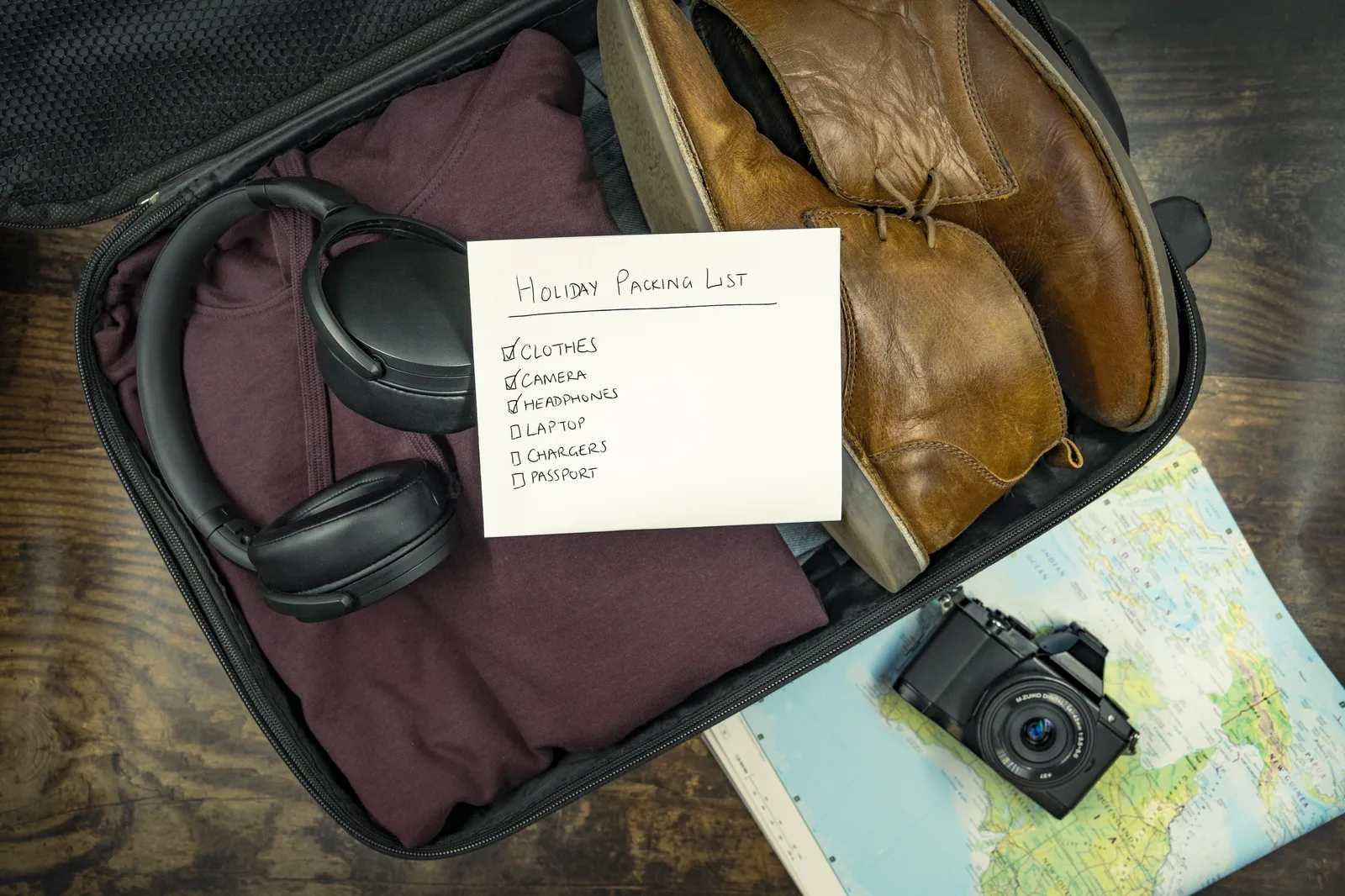
Every winter bag fails or succeeds on the coat. It is the biggest, heaviest, warmest thing you own for the trip, and it sets the size of everything else. I pick one coat, and I pick it for the coldest day I will spend outside, not the coldest day I can imagine. A coat rated for standing on a windy ridge is overkill for walking between museums, and overkill is what fills the bag.
My coat is knee-length, dark, windproof, and hooded, and it goes on my body for the flight, never in the bag. Wearing it saves more space than any folding trick I know, and it doubles as a blanket on cold planes. If your coat cannot do both jobs, it is the wrong coat for a light winter bag, no matter how warm it is at home.
Ski days change the math. I pack a shorter waterproof shell for the mountain and leave the city coat home, and I plan the rest of the bag around the resort town rather than the slopes. The resort notes in ski resorts USA helped me stop packing lodge outfits I never wore, because most ski evenings end in the same fleece I skied in.
What Packing Light Winter Travel Looks Like on a Real Trip
Here is the whole bag for five cold days in a city, and I have done versions of this trip enough times to know it works: one coat worn on the plane, three base layers, two mid layers, one pair of dark pants, one pair of jeans, boots worn on the plane, one pair of light shoes, gloves, a hat, a scarf, and a quart bag of toiletries. That is the list. Nothing else.
Day one wears the coat, a base layer, a mid layer, and the dark pants. Day two swaps the base layer and the mid layer and keeps the same pants. Day three swaps the pants, adds the scarf as the visible change, and repeats a base layer that still smells fine because merino forgives a second wear. By day five I have worn everything at least once, nothing has sat untouched, and I have not thought about my bag since I left the hotel.
The trick is deciding the outfits before you pack instead of packing clothes and hoping outfits appear. I lay out five outfits on the bed, photograph them if the trip is long, and then remove one piece and see if anything breaks. It never does, and that piece stays home.
Three Layers Beat Five Sweaters
My layering tips for winter trips start with a rule I learned the cold way: three thin layers beat one thick sweater, because you can adjust them as the day warms up and you walk into heated rooms, and because a single heavy sweater leaves you with exactly one temperature all day. The base layer sits against your skin and moves sweat away, so it should be merino wool or a synthetic knit, never cotton, which holds moisture and turns cold against you. The middle layer is the insulation, usually a fleece or a light down piece. The outer layer blocks wind and wet weather, and in most winter cities that job belongs to your coat.
Two base layers and two mid layers cover a week if you rewear the mid layers and rotate the bases. I pack one base layer in a dark color and one in a lighter color so the same mid layer reads as a different outfit, and I never pack a mid layer I have not worn at home first. A layer that itches, rides up, or needs adjusting every ten minutes will ruin a walking day, and no scenery makes up for it.
A Seven-Day Winter Capsule Wardrobe
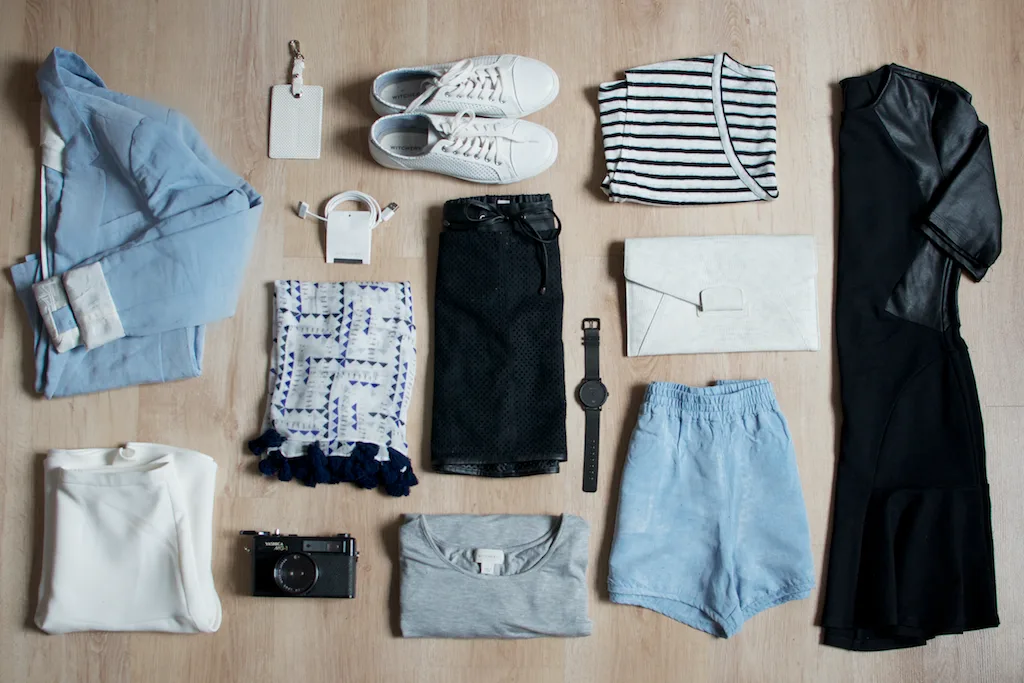
A winter capsule wardrobe for travel works when every piece matches every other piece, and the fastest way to get there is a tight color palette. Mine is navy, charcoal, and cream, with the scarf as the only bright color, which means the coat, the pants, and every layer combine without thought. Seven days come from about ten pieces, not twenty, because the combinations do the work that extra clothes used to do.
The kit, for seven days:
– 2 base layers
– 2 mid layers
– 1 coat, worn on the plane
– 2 bottoms
– 1 smarter layer for dinners
– Boots, worn on the plane, plus 1 pair of light shoes
– Gloves, hat, and scarf
The smarter layer matters more than people expect. One dark sweater or simple dress that looks right in a restaurant saves you from packing a separate evening outfit, and it is the piece I reach for on the night I want to feel like a traveler instead of a hiker. Skip the second smart layer. One is enough, and nobody at dinner knows you wore it two nights ago.
Outfit Formulas for Cold Mornings and Warmer Afternoons
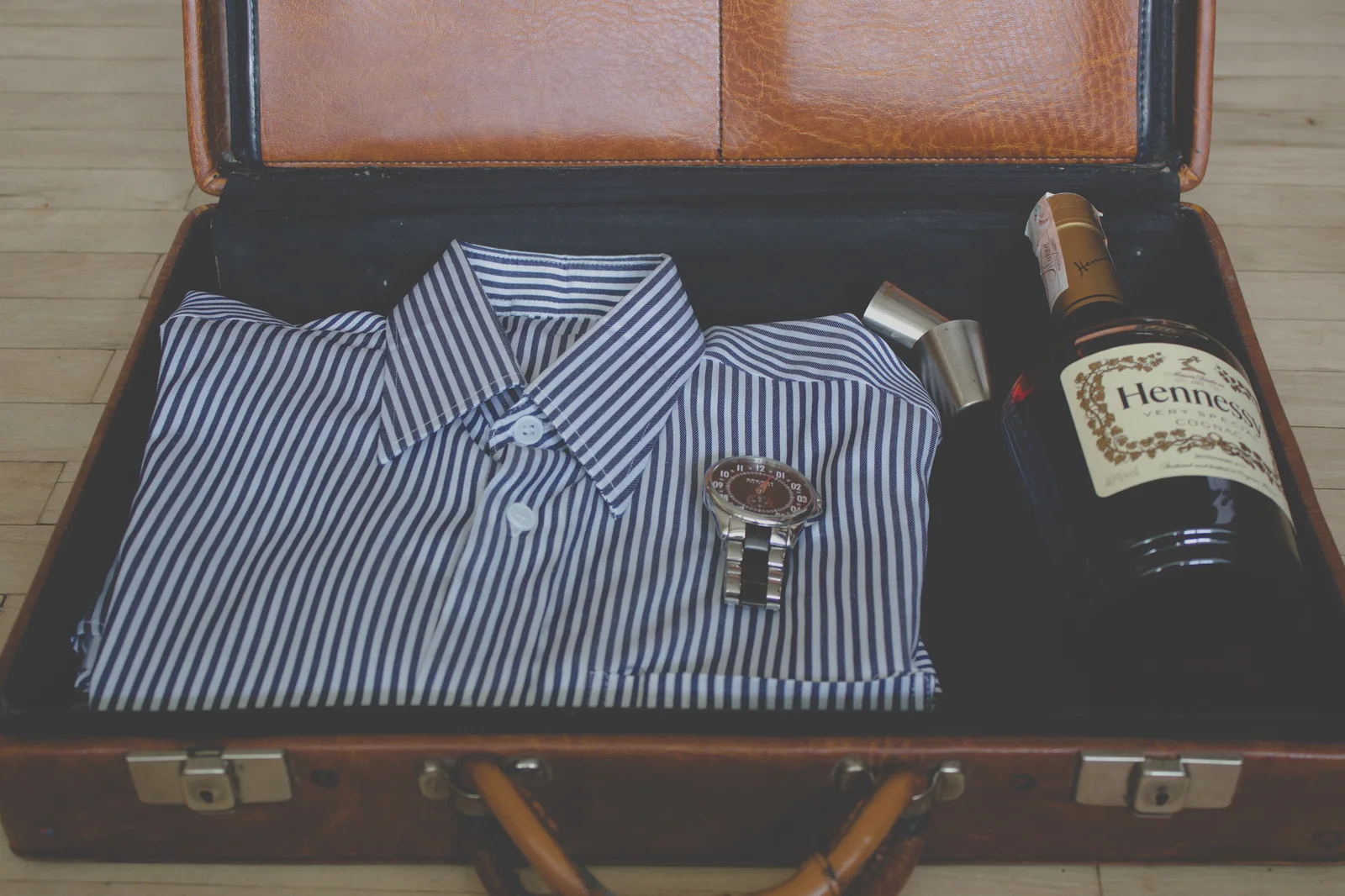
The best winter travel outfit formulas are boring on purpose, because boring means repeatable. Coldest morning: base layer, mid layer, coat, dark pants, boots, gloves, hat, scarf. Standard walking day: base layer, mid layer, coat, jeans, boots, scarf left in the pocket. Warmer afternoon or heated museum stretch: coat open or carried, mid layer doing the work, light shoes if your feet are tired of boots.
Afternoons are where winter bags usually fail, because people pack for the morning low and forget the afternoon high. A coat you can carry over one arm and a mid layer that looks fine on its own solve the whole problem, and they weigh nothing compared to the second outfit you almost packed. I check the afternoon high before I choose the mid layer, not the morning low, because I spend more of the day in the afternoon than in the dawn cold.
Getting a Bulky Coat Into a Carry-On
Packing bulky coats for travel is where most winter bags fail, so start with the honest answer: the best place for a bulky coat is on your body. That is the honest answer to how to pack winter clothes light enough for a carry-on: wear the biggest piece and let the bag hold the rest. Wear it through the airport, stuff the gloves and hat in its pockets, and treat it as your personal item’s best friend. A coat on your body is a coat that takes zero bag space, and it keeps you warm on the plane without asking the crew for a blanket.
If the coat must go in the bag, down and synthetic puffers compress well in a stuff sack, while wool coats do not compress at all and should be folded once around the other clothes like a blanket. Roll the soft layers, fold the structured ones, and put the coat in last so it sits on top and you can pull it out first at the hotel. Never vacuum-seal a down coat for a long trip. It comes out looking punished, and it takes a day to loft again.
Bag size decides all of this, so I measure against the strictest airline I fly. Delta Air Lines publishes a 22 x 14 x 9 inch carry-on maximum, and Delta’s carry-on page is the one I check before I buy a bag, since its sizer at the gate is the one that decides. Small regional jets sometimes take your roller at the gate anyway, so I keep my coat, documents, and one full outfit outside the roller in case it goes below.
Boots, Liquids, and the Gear That Breaks the System
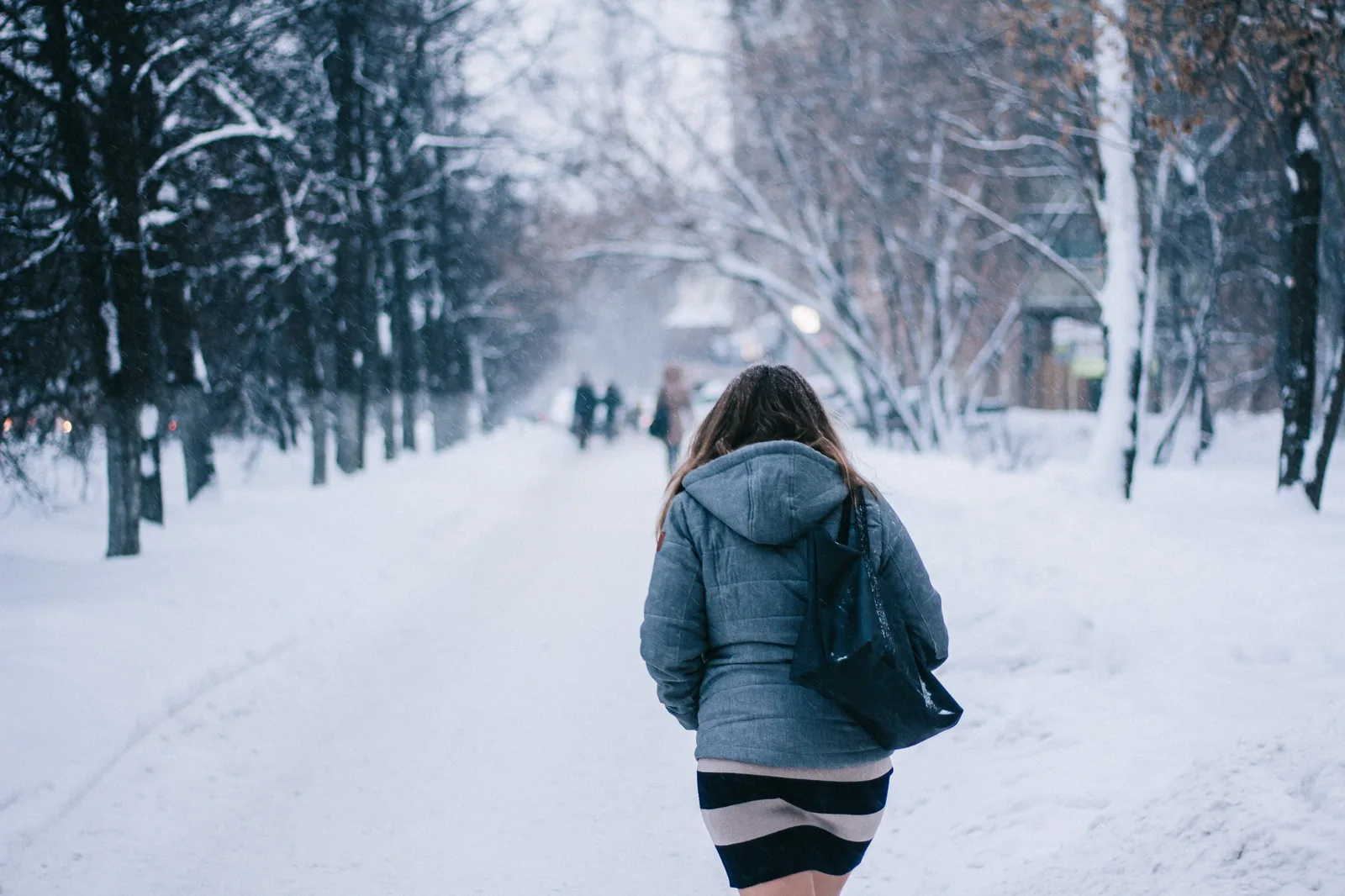
Boots break more winter bags than coats do, because people pack two pairs. Wear the heavier pair on the plane and pack one pair of light shoes, and stop there. A second pair of boots eats the space of three sweaters, and winter streets are hard on light shoes, so the boots you wear should be the ones you trust on ice, not the ones that photograph best.
Liquids are the second trap. The TSA liquids rule still limits carry-on containers to 3.4 ounces each inside one quart-size bag, and winter skin care makes that bag fill fast. I switch to solid versions where I can, a bar shampoo and a solid deodorant, because solids do not count against the bag, and I leave the full-size moisturizer home and buy a small one at the destination if I need it.
Forecasts are the third trap, because people pack for a month of weather instead of a week. I check the National Weather Service forecast for the destination two days before I leave, and I adjust one layer, not the whole bag. If the forecast shows a warm swing, I swap a mid layer for a lighter one. If it shows a cold snap, I add the heavier base layer. The bag stays the same size either way.
The same system travels well beyond winter. On warm winter vacations USA trips I keep the capsule idea and swap the insulation: lighter layers, the same palette rule, and the same one-bag limit. The system holds because the rule stays the same even when the weather changes.
November is the hardest test of this system, because one town can hand you sun, rain, and a cold snap in the same week. The towns in places to visit in November USA reward the layering approach more than any other month, since a coat plus two layers covers all three versions of the day and a single heavy sweater covers none of them.
What to Skip, Honestly
Skip the second coat. One coat, worn on the plane, beats two coats in the bag in every trip I have taken, and the second coat is always the thing I never wear. Skip the third pair of shoes for the same reason, and skip the full-size toiletries, which belong in a checked bag or at the destination store, not in your quart bag.
Skip the outfit you packed for a version of the trip that will not happen. The fancy dinner, the hike you will not take, the beach day in a winter city: each one costs space and none of them earns it. If an item only works in one imagined scenario, it stays home, and I have never once regretted leaving it.
Skip the packing gadgets you have not tested. Compression cubes help some people and slow others down, and a cube system you first try at midnight before a flight is a system that will fail at the hotel. Test the kit on a weekend trip first, when a mistake costs you nothing.
Questions I Get Before Every Winter Trip
Can I really do a week of winter in a carry-on only?
Yes, with two conditions: you wear the coat and boots on the plane, and you have laundry access once mid-trip. A sink wash for base layers on day four resets the kit, and most hotels and rentals offer laundry or a laundromat nearby. Without laundry, a carry-on week is possible, but it takes a third base layer and more rewearing.
What if the forecast changes after I pack?
Change one layer, not the bag. Swap a mid layer for a heavier or lighter one, add or drop the heavier base layer, and keep the coat and palette the same. The system survives a ten-degree swing either way, and it survives a surprise snow day if your boots are waterproof and your coat has a hood.
What about ski gear and boots?
Rent the skis and the ski boots at the resort and pack only your base layers, gloves, and goggles. Airline ski bags cost extra, rental gear has improved a lot, and the one thing worth owning is a base layer that fits under anything. Your boots stay home on a ski trip, and your ski boots never enter your suitcase.
Pack Tonight, Walk Out Light Tomorrow
Tonight, lay out five outfits, not a pile of clothes. Put the coat on a hanger by the door, the boots by the bag, and the quart bag where you can see it. Remove three items from the pile and see if any outfit breaks. It will not, and the bag you close tonight is the bag you will be glad to carry tomorrow.
Then stop. Pack for the trip you are taking, with everything you need and nothing you will resent carrying. That is a trip that starts light.