
Fall Foliage Road Trips Reward the Driver Who Slows Down
Pick one road, one base town, and three or four nights. That is the whole method, and it beats every checklist I ever made. I learned it the slow way, and fall foliage road trips have never disappointed me since. If you want places rather than routes, start with my fall foliage places in America.
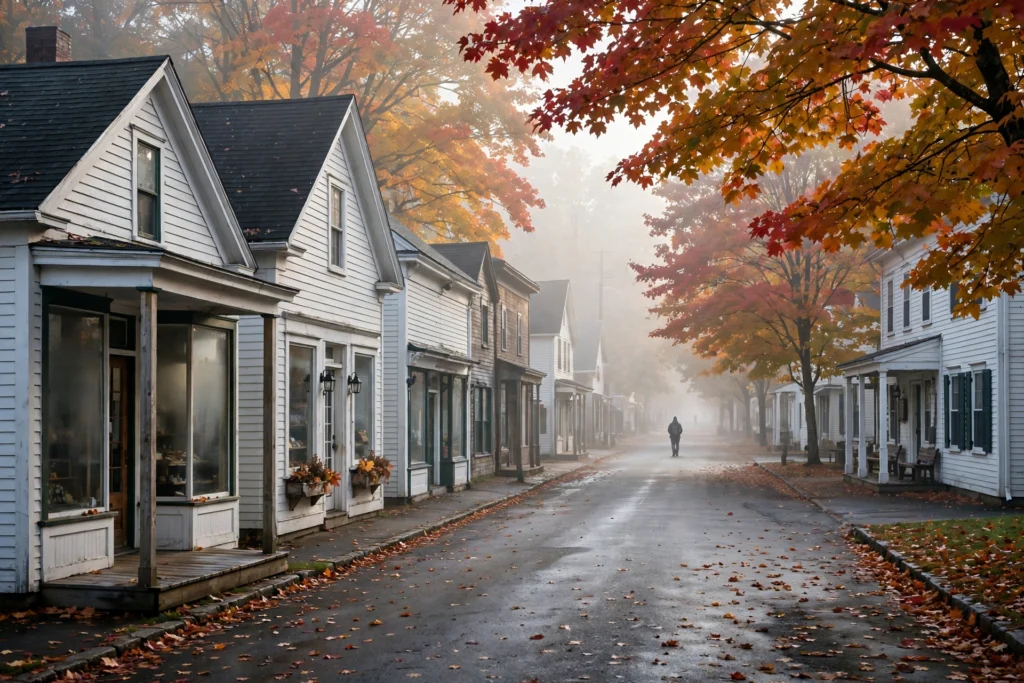
I used to drive fall the way I used to do everything else. Fast, with a list, stopping once at the most crowded overlook and driving home tired. One October, a road closure in Vermont sent me onto a back road I had never heard of, and I spent the afternoon in a village with no plan, watching light move across a hillside.
Pick a Base Town Before You Pick a Road
Start with where you sleep. That sounds backwards, and it is the single most useful piece of advice I can give you.
A base town gives you a morning routine, a place to eat, and a reason to come back the same way in different light. I stay three or four nights in one place and drive one stretch a day.
How do you choose? Match the town to your dates, not to a postcard. Early October points north, to New Hampshire, Vermont, and the high Rockies. Late October points south, to the Blue Ridge Mountains, the Great Smoky Mountains, and the Natchez Trace Parkway. If you can only travel on a weekend, pick the quieter region.
Book the town first, then plan the driving around it. Lodging in small New England towns fills fast for peak weekends, sometimes six to eight weeks ahead, so I book the room before I plan a single stop.
I also check where the gas stations are before I leave town. Mountain roads have long stretches with nothing, and I have coasted into North Conway, New Hampshire, on fumes once. Never again.
The Fall Foliage Road Trips I Would Drive Again
These are the fifteen routes I would hand to a friend, grouped by region so you can stay in one area. Each one comes with a peak window in general terms. Peak shifts every year with the weather, so check a live foliage report in the week you travel.
New England
Kancamagus Highway, New Hampshire. This 34.5 mile road runs through the White Mountain National Forest with almost no development, just pull offs above the Swift River and long mountain views. It usually peaks in early October. Base yourself in North Conway, drive it early, and fill the tank first, since there are no gas stations on the highway itself. The US Forest Service posts road information for the forest (White Mountain National Forest).
Vermont Route 100, Vermont. Route 100 runs through the Green Mountains, past Stowe, Warren, and small villages. Northern Vermont often peaks in the first days of October, with central Vermont following close behind. Base yourself in Stowe and drive one stretch a day, stopping at farm stands and covered bridges. I put the town-by-town timing in my Vermont in fall guide.
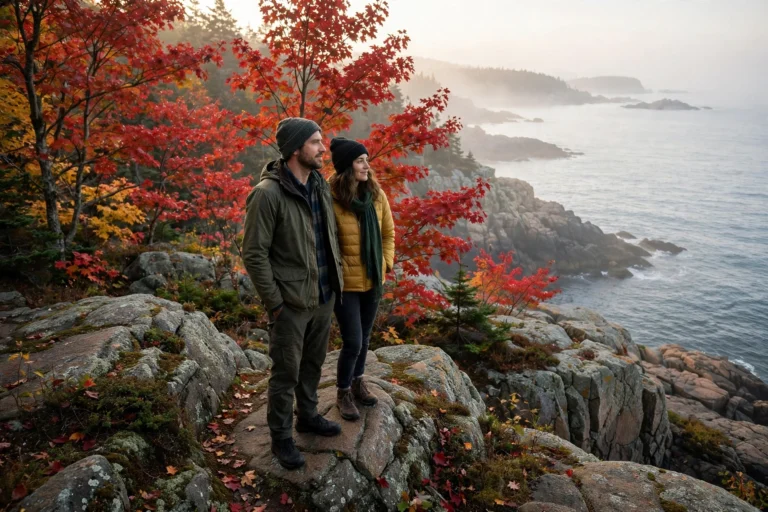
Park Loop Road, Acadia National Park, Maine. Acadia gives you color and coast in the same frame, with the road winding past granite ledges and quiet ponds. Coastal Maine usually peaks in early to mid October, a little later than the inland mountains. Base yourself in Bar Harbor, Maine, and drive the loop slowly in the morning. You need a park pass to enter Acadia National Park (Acadia National Park).
Mohawk Trail, Massachusetts. The Mohawk Trail crosses the Berkshires in western Massachusetts, and it feels quieter than the famous Vermont roads. Southern New England usually peaks in mid to late October, so this is a good choice if you missed the early color farther north. Williamstown or North Adams, Massachusetts, both work as a base.
The Blue Ridge and the Appalachians
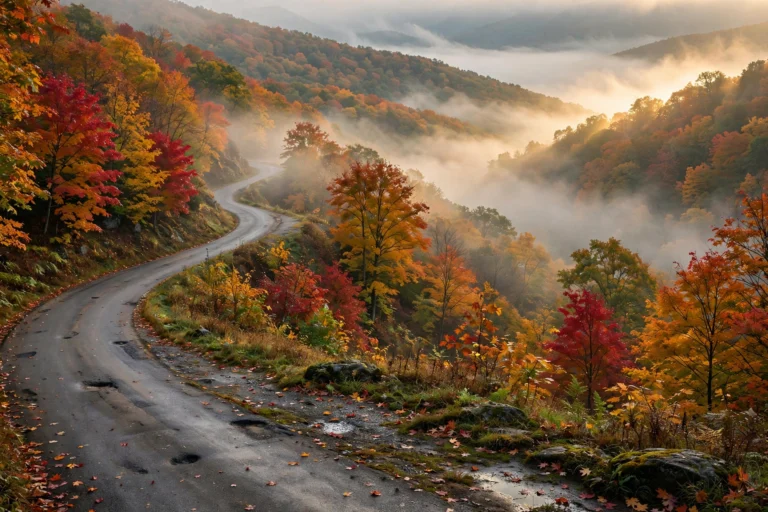
Blue Ridge Parkway, North Carolina and Virginia. The parkway runs 469 miles along the ridges, with overlooks every few miles and color changing as the elevation changes. High sections often peak from mid October, while lower elevations near Asheville, North Carolina, can hold color into late October and early November. Pick one stretch around Asheville. The National Park Service posts current road closures (Blue Ridge Parkway).
Skyline Drive, Shenandoah National Park, Virginia. Skyline Drive runs 105 miles along the crest of the Blue Ridge in Virginia, with 75 overlooks. It usually peaks in mid to late October. Base yourself in Front Royal or Luray, Virginia, enter the park early, and if one overlook is crowded, drive to the next one.
Newfound Gap Road, Great Smoky Mountains, Tennessee and North Carolina. This road crosses the Smokies from Gatlinburg, Tennessee, to Cherokee, North Carolina, climbing from valley floors to a high mountain gap. High elevations start turning in early October, while mid elevation coves and valley floors often peak in late October. Base yourself in Gatlinburg or on the quieter Cherokee side and drive in the morning (Great Smoky Mountains National Park).
Cherohala Skyway, Tennessee and North Carolina. The Cherohala Skyway is less famous than the parkway, and that is why I like it. It climbs from the lowlands of Tennessee into the high country of North Carolina, with long views and far fewer cars, usually peaking in mid to late October. Base yourself in Tellico Plains, Tennessee.
Gold Aspens, Lake Shores, and the Late South
Fall in the West is different. The color is not a whole forest turning red. It is gold aspen groves against dark mountains, cottonwoods along a river, and larches turning gold in the high country. The season is shorter, often just a week or two in any one place.
San Juan Skyway, Colorado. The San Juan Skyway loops through the San Juan Mountains, including the Million Dollar Highway between Ouray and Silverton, Colorado. High elevation aspens here often peak in mid to late September, earlier than most people expect. Base yourself in Ouray and drive the loop over two days. The Million Dollar Highway has steep drops and no guardrails in places, so I drive it in daylight.
Columbia River Gorge, Oregon and Washington. The Columbia River Gorge is a river level drive, with waterfalls, vineyards, and viewpoints along the way. The Gorge and the nearby Cascade Range usually peak in mid October. Base yourself in Hood River, Oregon, and drive the historic highway for the waterfalls, then cross the river for a different view.
Alpine Loop, Utah. The Alpine Loop is a short mountain road in the Wasatch Range, near Provo, Utah, that climbs through aspen groves and past mountain reservoirs. Utah aspens usually peak from late September into early October. Base yourself in Provo and drive the loop in the morning.
Door County, Wisconsin. Door County is a narrow peninsula between Green Bay and Lake Michigan, with orchards, lighthouses, and villages strung along the shore. It usually peaks in early to mid October. Base yourself in Fish Creek or Sister Bay, Wisconsin, and drive the shoreline roads slowly.
Tunnel of Trees, Michigan. The Tunnel of Trees is a narrow road, M-119, that runs along Lake Michigan near Harbor Springs, Michigan, with trees arching over the road and the lake appearing between the branches. Northern Michigan usually peaks in early to mid October. Base yourself in Harbor Springs or Petoskey, Michigan, and drive it early.
North Shore Scenic Drive, Minnesota. Highway 61 runs along Lake Superior from Duluth, Minnesota, toward the Canadian border, past waterfalls, state parks, and small harbor towns. The Upper Midwest usually peaks in early to mid October. Base yourself in Duluth or Grand Marais, Minnesota, and drive one section at a time.
Natchez Trace Parkway, Mississippi, Alabama, and Tennessee. The Natchez Trace Parkway is a long, quiet parkway that runs from Natchez, Mississippi, to Nashville, Tennessee, through hardwood forests, farmland, and small historic sites. The southern sections usually peak later than the mountains, often in late October and into early November. Base yourself in Tupelo, Mississippi, or Franklin, Tennessee, and drive one section a day.

What Peak Week Gets Wrong
Peak week is a useful idea that gets treated like a promise, and it should not be.
Color moves north to south and from high elevations to low ones, and weather can shift the timing by a week in either direction. Northern New England and the high Rockies peak first, from late September into early October. Central Vermont, the White Mountains, and the Upper Midwest usually follow in early to mid October, while the Blue Ridge Parkway and the Smokies stretch from mid October into early November.
Peak color in any one place usually lasts about a week to ten days, and the days just before peak can be just as beautiful, with less traffic. I would rather arrive three days early than three days late.
If you can, travel midweek and stay in one base town for three or four nights. A Tuesday on the Kancamagus Highway feels like a different road from a Saturday on the same highway.
The Overlooks I Drive Past Now
I skip the most famous overlook on a peak weekend, as practical advice, not snobbery.
The first overlook after a park entrance fills first, and it fills with people who are not going any farther. I drive past it and stop at the third or fourth overlook instead, where the view is nearly identical and the parking lot has space.
I also skip any drive that tries to cover a whole parkway in one day. The Blue Ridge Parkway is 469 miles long, and driving it end to end in a day means you see it through a windscreen and remember nothing.
And I skip the town that every guide lists as a must-see base if I cannot get a room there. A famous base town with no room is a day trip from somewhere else, and I would rather sleep in the quieter town next door.

What a Slow Drive Costs, and How Far Ahead to Book
A fall drive costs less than most people expect, and the money goes to the room, not the road.
The parkways and most scenic drives on this list charge no toll and no entrance fee to drive. The exceptions are the national parks: Acadia, Shenandoah, and the Great Smoky Mountains each have their own pass or entrance rules, so check the official park site before you go and buy the pass in advance if you can.
Lodging is the real cost, and it needs the most lead time. Small inns and motels in Stowe, North Conway, and Bar Harbor book up for peak weekends six to eight weeks ahead. Midweek rooms are easier and cheaper, and I have found good rooms two weeks out on a Tuesday.
Fuel is the cost I used to forget. Mountain driving uses more fuel than highway driving, and gas stations are sparse on the Kancamagus Highway, the Cherohala Skyway, and the Natchez Trace Parkway. I fill the tank every morning in the base town.
Packing for a Road That Loses Signal
Cell signal fades in the mountains, on the parkways, and along the Trace. I download my maps before I leave town, and I carry a paper map in the car as a backup.
My packing list is short:
- A paper map or downloaded maps, plus a car charger that works
- Water, snacks, and a layer I can add or remove, because a morning overlook is colder than an afternoon valley town
- A small bag for farm stand apples, and a notebook for towns I want to revisit
- A windproof jacket, gloves, and a beanie for high passes, even if the morning in town feels warm
Driving slowly means a few simple rules. I drive one section a day, not a whole parkway. I stop at every second overlook, not every one, and I walk for ten minutes at least once a day.

Questions I Get Asked on Every Fall Drive
Is one base town really enough for a whole trip?
Yes, and it is the reason my fall trips finally started working. One base town means you learn the light, the parking, and the food, and you stop wasting mornings on packing. Three or four nights covers two or three driving days with a rest day in between.
How far in advance should I book a room for peak color?
Book peak weekend rooms six to eight weeks ahead in small New England towns, and earlier if you want a specific inn. Midweek rooms are easier, and I have booked good ones two weeks out. If the room you want is gone, change the town, not the dates.
Can I drive these routes with kids?
Yes, with shorter days. Kids do best with one drive of two hours or less, one waterfall walk, and one town stop with food. The Natchez Trace Parkway and the Columbia River Gorge suit kids well, because the drives are gentle and the stops are close together. Save the Million Dollar Highway for a trip without small kids.
Do I need a park pass for these drives?
You need a pass for Acadia, Shenandoah, and the Great Smoky Mountains, and the rules differ by park, so check the official park site before you go. The Blue Ridge Parkway, the Kancamagus Highway, the Cherohala Skyway, and the Natchez Trace Parkway charge no fee to drive. Buy the pass in advance, because signal at park entrances is often weak.
What if I miss peak color by a week?
Go anyway. The days just before peak still have strong color with less traffic, and the days just after peak have bare branches but clear views and empty roads. I have had some of my best fall drives a week past peak, when the parking lots were empty and the light was low and gold.
Drive One Road This October
Pick the region that fits your dates. Pick a base town with a room. Book it, download your maps, fill the tank in town, and drive one stretch a day. If it is early October, head for northern New England or the high Rockies. If it is late October, head for the Blue Ridge, the Smokies, or the South.