Small Towns Florida Visitors Miss by Staying on the Interstate
Almost every worthwhile town in this state sits at least 20 minutes off I-75 or I-95, which is exactly why they stayed small. The small towns Florida actually keeps are split across five regions that have almost nothing in common culturally, and picking the wrong one is how people end up disappointed.

Below is what each region is really like, which towns are still rebuilding after recent hurricanes, and the insurance question anyone considering a move needs to answer first.
Florida Is Five Different States and the Towns Prove It
Treat this place as one destination and you will book badly.
- The Panhandle is culturally the Deep South, with Gulf beaches and Alabama accents.
- The Big Bend is Old Florida: fishing, clam farming, and almost no development.
- The Gulf Coast proper runs retiree, boater, and beach-town, with height limits protecting several from high-rises.
- The Atlantic Coast splits between colonial history in the north and surf towns in the middle.
- Inland Florida is citrus, cattle, cypress, and freshwater springs, and it looks nothing like the coasts.
The state is roughly 800 miles from Pensacola to Key West. Driving the length takes longer than driving from New York to Chicago. Pick a region, not a state.
The Big Bend Is Old Florida, and Still Rebuilding
Cedar Key, an island town of under 1,000 people in the Big Bend region, is the clearest surviving example of what Florida looked like before the developers arrived. No traffic lights, golf carts everywhere, and a working clam industry that produces the large majority of the state’s farmed shellfish.
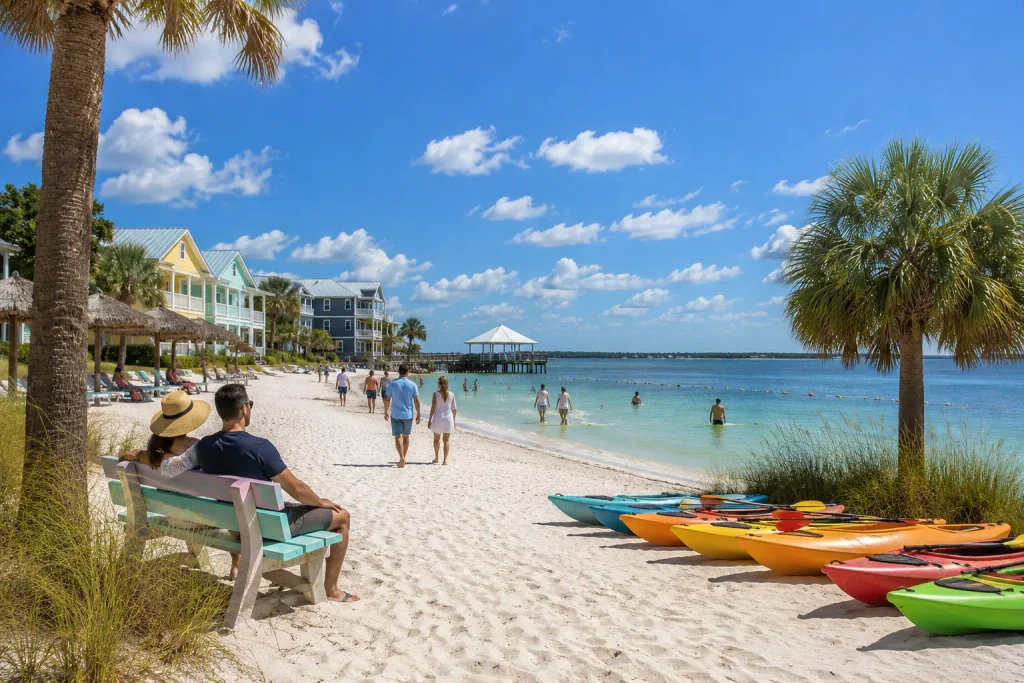
It has also taken a beating. Between August 2023 and September 2024, three hurricanes hit: Idalia, Debby, and Helene. Helene brought a storm surge above 11 feet that destroyed or damaged dozens of homes and washed parts of the waterfront away entirely.
What that means for a visit right now:
- Businesses along Dock Street and 2nd Street have reopened in stages, and the town is actively asking visitors to come
- The grocery store has remained closed, leaving residents driving roughly 40 minutes to Chiefland for a supermarket
- Rebuilt structures must meet current elevation codes, which is raising costs and quietly changing who can afford to live there
Go, and spend money there. Just do not expect everything on a two-year-old list to still exist.
Steinhatchee and Horseshoe Beach nearby follow the same pattern: fishing towns, minimal infrastructure, recent storm damage.
The Panhandle Runs Southern, Not Tropical
Apalachicola is the best small town in this part of the state. It is a working oyster port with a preserved downtown, a genuine maritime history, and none of the resort feel of the beaches an hour east.

Port St. Joe and Mexico Beach sit nearby and are worth understanding as a pair. Mexico Beach was largely destroyed by Hurricane Michael in 2018 and has rebuilt into something noticeably more expensive than what it replaced, which is the pattern coastal Florida keeps repeating.
Seaside, Grayton Beach, and Rosemary Beach along County Road 30A are planned communities rather than organic towns. They are attractive and heavily photographed. They are also expensive and can feel curated rather than lived-in.
Inland, Havana and Quincy near Tallahassee give you antique shops and tobacco-era architecture with almost no tourism.
Gulf Coast Towns That Kept Their Height Limits
This is the single best predictor of whether a Florida beach town stayed pleasant. Towns that capped building height decades ago never got the condo towers, and never got the crowds that come with them.

- Anna Maria Island near Bradenton, with a strict height limit and a free island trolley
- Boca Grande on Gasparilla Island, reachable by causeway and deliberately low-key
- Dunedin, north of Clearwater, walkable and built around a downtown rather than a beach strip
- Tarpon Springs, where the Sponge Docks preserve a Greek fishing community that dates to the early 1900s
- Matlacha near Pine Island, a tiny artists’ colony that took severe damage from Hurricane Ian in 2022 and has rebuilt
- Everglades City, the western gateway to Everglades National Park and the Ten Thousand Islands
Park information for the Everglades side is on the National Park Service site.
Small Towns Florida Built Inland, Around Springs and Cattle
Skip the coast entirely and the state gets cheaper, cooler in the shade, and considerably stranger.
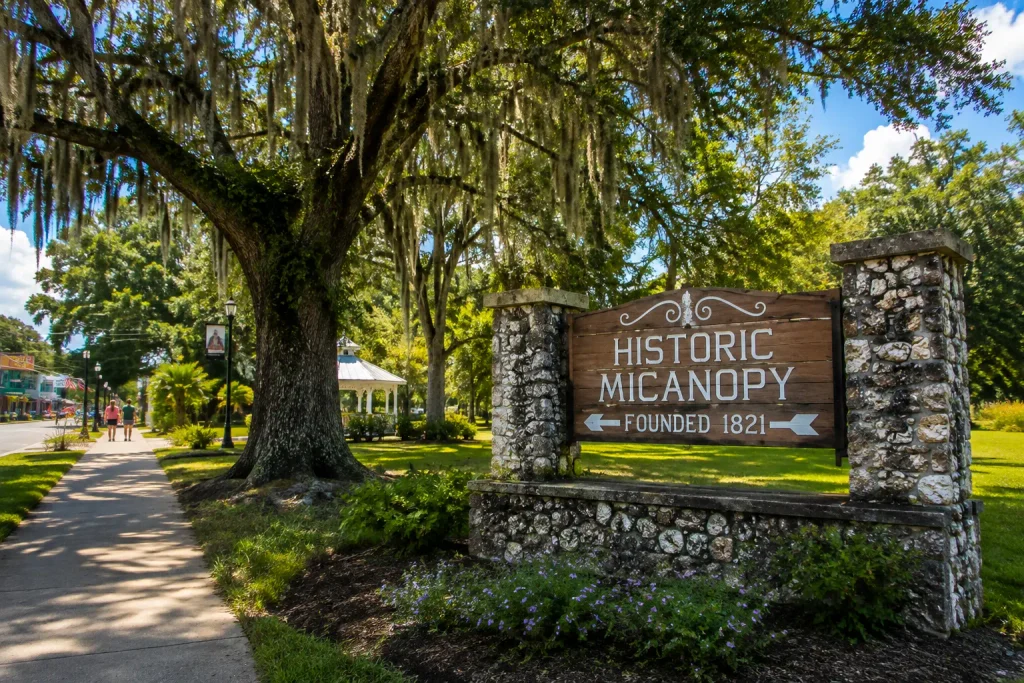
Micanopy, south of Gainesville, is a single street of live oaks and antique shops and is frequently called the oldest inland town in Florida. High Springs sits near a cluster of freshwater springs including Ginnie Springs and Ichetucknee Springs State Park, where the water holds around 72 degrees year-round.
Mount Dora on Lake Dora northwest of Orlando has the busiest festival calendar of any small town in the state. Lake Wales holds Bok Tower Gardens, a singing tower and garden on one of peninsular Florida’s highest points.
Arcadia in DeSoto County runs cattle and hosts a rodeo that predates most Florida tourism. State park details, including spring closures during high-use days, are on the Florida State Parks site.
The Atlantic Side Splits Historic and Surf
Fernandina Beach on Amelia Island in the far northeast has a 50-block historic district and Victorian architecture that feels more Georgia than Florida.
New Smyrna Beach is the surf town, with a serious local surf culture and a reputation for shark encounters that is statistically real but overstated in practice. Cocoa Village near Cape Canaveral puts you close enough to watch launches from the water.
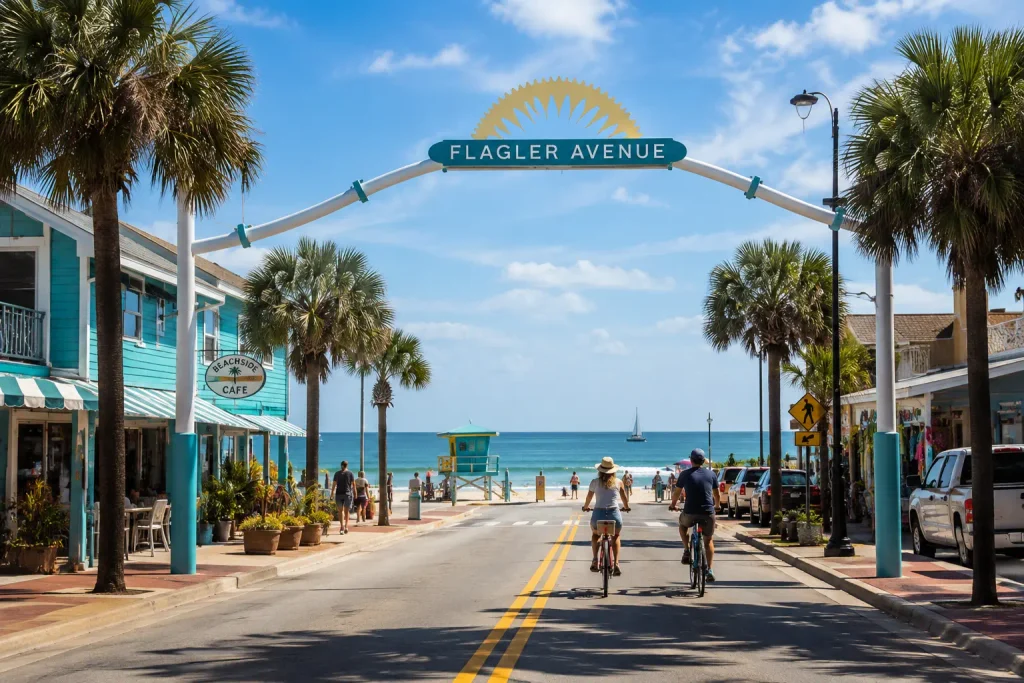
Vero Beach is the quiet money option, low-rise and residential, without the nightlife of anywhere south of it.
Worth knowing about this coast generally: the Atlantic side has real surf and stronger currents than the Gulf, and several of these beaches have no lifeguards outside summer. The Gulf is calmer and warmer, which is why families cluster there.
Before You Look at Real Estate Listings
This is the section that matters most if you are searching small towns to live in rather than visit, and travel guides never touch it.
Property insurance is the deciding variable in coastal Florida right now, not the listing price. Three things to check before you fall in love with a house:
- The FEMA flood zone. Look the address up yourself on the FEMA Flood Map Service Center rather than trusting a listing. Zone designation drives everything downstream.
- Whether an elevation certificate exists. For older coastal homes, this document can change the insurance quote dramatically. Ask for it before making an offer.
- What the actual quote is, not the estimate. Get a real binder from a carrier. Many coastal properties end up with Citizens Property Insurance, the state-backed insurer of last resort. Its coverage details and eligibility rules are published at Citizens Property Insurance.
- Whether the roof is insurable. Carriers in Florida routinely decline older roofs regardless of condition, and replacement often becomes a condition of coverage rather than a choice.
One more pattern worth understanding. When a storm destroys a low-lying town, everything rebuilt must meet current elevation and code standards. That raises construction costs, which raises prices, which changes who lives there. Mexico Beach after Michael is the clearest example, and Cedar Key is watching the same question play out now.
When to Go, and What Each Season Does
- January through March. Peak season statewide. Best weather, highest prices, snowbird traffic in Gulf towns.
- April and May. The sweet spot. Warm water, thinner crowds, rates dropping.
- June through September. Hot, humid, daily afternoon storms, and hurricane season. Cheapest by a wide margin.
- October through December. Excellent weather after the season winds down, and the best value of the year.
Inland spring towns run opposite to this. The springs are busiest in summer because the water stays cold, and they can reach capacity and close entry by mid-morning on hot weekends.
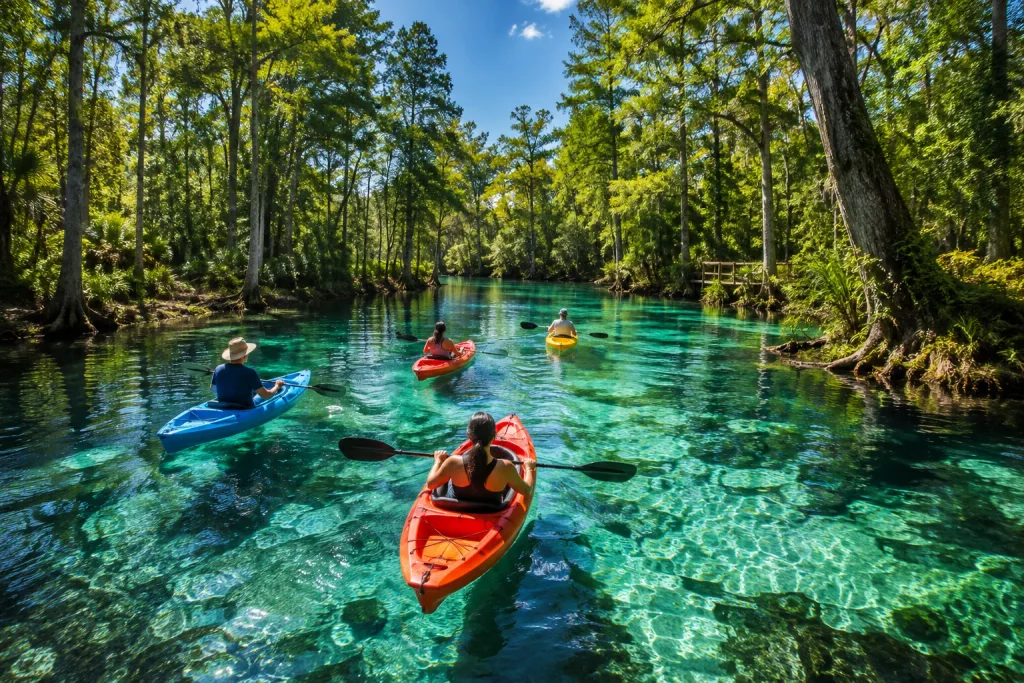
Manatee season adds another wrinkle. From roughly November through March, manatees move into warm spring runs around Crystal River and Homosassa, which makes those months the busiest of the year in towns that are otherwise quiet.
Four That Do Not Match Their Photos
- Any 30A town booked expecting a bargain. The architecture is lovely and the pricing is resort-level.
- Small Keys towns during peak season. Islamorada and Marathon are genuinely good, but US-1 is a two-lane road and traffic behaves accordingly.
- Coastal towns judged from pre-2023 articles. Idalia, Debby, Helene, Milton, and Ian all reshaped specific communities. Check current conditions.
- Inland towns visited in August. The interior gets hotter than the coast with no sea breeze at all.
Common Questions About Florida’s Small Towns
What is the best small town in Florida to visit? Apalachicola in the Panhandle for a working oyster port with a preserved downtown. Micanopy near Gainesville for inland Old Florida under live oaks. Dunedin on the Gulf Coast for a walkable downtown. Each represents a different region, and the state’s regions differ enormously.
What are the best small beach towns in Florida? Anna Maria Island, Boca Grande, and Fernandina Beach on Amelia Island all kept building height limits, which is why they never got condo towers or the crowds that follow. New Smyrna Beach is the surf option on the Atlantic side, with an active local surf community.
Is Cedar Key worth visiting after the hurricanes? Yes, and the town is actively asking visitors to come. Businesses along Dock Street and 2nd Street have reopened in stages since Hurricane Helene in September 2024. Some services, including the grocery store, have stayed closed, so check what is currently operating before you go.
What are the cheapest small towns in Florida to live in? Inland towns cost far less than coastal ones. Arcadia, Lake Wales, and the areas around High Springs and Gainesville all price well below the Gulf and Atlantic coasts. The gap is driven largely by property insurance, which rises sharply in coastal flood zones.
When is the best time to visit small towns in Florida? April through May, or October through December. Both windows deliver warm weather without peak-season pricing or summer humidity. January through March is the busiest and most expensive. June through September is cheapest but brings daily storms and falls inside hurricane season.
Which historic towns in Florida are worth a trip? Fernandina Beach has a 50-block historic district on Amelia Island. Apalachicola preserves a nineteenth-century maritime downtown. Micanopy is often described as the oldest inland town in the state. Tarpon Springs holds a Greek sponge-diving community dating to the early 1900s.
Pick the Region First
The small towns Florida still has are not interchangeable, and the biggest planning mistake is treating them as one list. Decide which Florida you want before you shortlist a single town. Southern and beachy points you to the Panhandle. Quiet and undeveloped points to the Big Bend. Walkable and low-rise points to the Gulf Coast. Cool water and no ocean at all points inland.
If you are looking at moving rather than visiting, reverse the order entirely. Pull the flood zone and get a real insurance quote first, then decide whether you still like the town.