Hidden Gems Oklahoma Hides Behind Its Own Flat Reputation
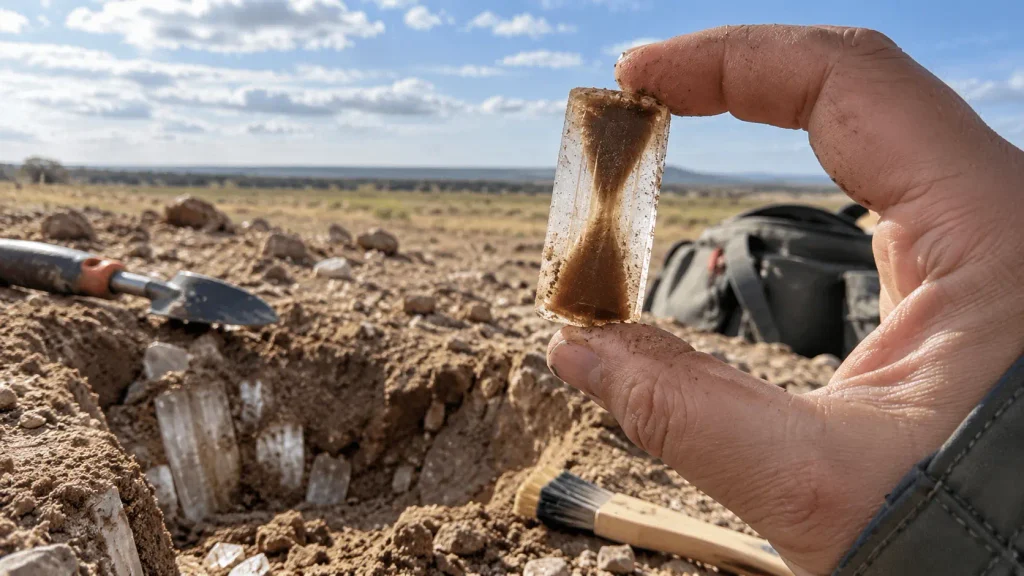
There’s one place on Earth where you can dig up hourglass-shaped selenite crystals, keep them, and pay nothing for the privilege. It’s in Alfalfa County, Oklahoma, and it’s open to anyone with a shovel from April through mid-October. Most lists of hidden gems Oklahoma turns up lead with murals and diners, which misses what makes this state strange.
Oklahoma isn’t flat. That single misconception is why people drive through it instead of stopping.
What’s Really Out There
Inside one state you’ll find salt flats, granite mountains, a sand dune field, the largest gypsum cave open to the public in the country, bald cypress swamps, a high mesa at nearly 5,000 feet, and some of the last tallgrass prairie left anywhere.
None of that matches the dust bowl image, and the image is doing real damage to a state that deserves better traffic.

I’d rank the crystal dig first, the Wichita Mountains second, and the panhandle third. Here’s why.
Dig Crystals Nobody Else on Earth Can
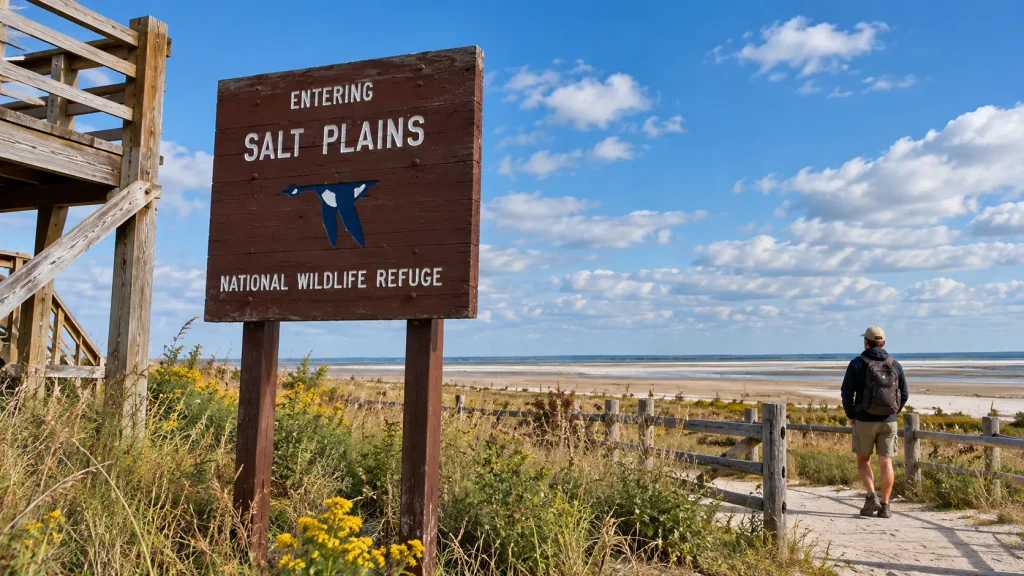
Salt Plains National Wildlife Refuge sits in north-central Oklahoma near Jet, covering roughly 32,000 acres with about 11,200 of those as bare salt flats. The US Fish and Wildlife Service has managed it since 1930, and it’s a National Natural Landmark.
Selenite is crystallized gypsum, common worldwide. What’s unique here is the hourglass inclusion: as the crystal grows below the salt crust, sand and iron oxide get trapped inside, producing a chocolate-brown hourglass shape found nowhere else on the planet. It’s Oklahoma’s state crystal.
How it works:
- Season runs April 1 through October 15, sunrise to sunset, every day
- It’s free. No permit, no reservation, no fee
- Digging is allowed only in the marked Dig Area, about a mile past the gate at 66003 Garvin Road in Cherokee, signed in bright orange
- Holes max out at two feet deep
- Bring a shovel, water, sunscreen, and a hat. There is no shade anywhere on the flats
Details are on the refuge’s crystal digging page.
Two things the tourism copy leaves out. The area served as a WWII bombing range, and the Army Corps of Engineers still reviews it for unexploded ordnance, which is part of why digging stays confined to one marked zone. And bark scorpions live in the same ground you’re turning over, so watch your hands.
Go on a weekday morning. The flats reflect heat back at you brutally by noon, and the white glare off the crust is hard on your eyes even with sunglasses.
If you’d rather look than dig, the observation deck outside the gate stays open year round, and the refuge draws over 300 bird species including sandhill cranes and the endangered whooping crane.
Granite Mountains With Free-Roaming Bison
Wichita Mountains Wildlife Refuge near Lawton in southwestern Oklahoma is the state’s best single destination and nobody outside the region talks about it.

Ancient granite peaks rise straight out of mixed-grass prairie. Bison, Rocky Mountain elk, and Texas longhorn roam free across 59,000 acres, and you will see them from your car without trying. The refuge dates to 1901, making it one of the oldest managed wildlife facilities in the country.
You can drive to the summit of Mount Scott at 2,464 feet, which gives you a view across the Oklahoma plains that people don’t believe exists until they’re standing on it. For actual hiking, Charon’s Garden Wilderness offers boulder scrambling that feels nothing like the Midwest.
There’s also the Holy City of the Wichitas, a stone replica of Jerusalem built in the 1930s that hosts an Easter pageant. Strange, free, and worth twenty minutes.
Refuge conditions and road status are at fws.gov.
Sand Dunes, Gypsum Caves, and a Swamp
Three more landscapes that shouldn’t be in the same state as each other.
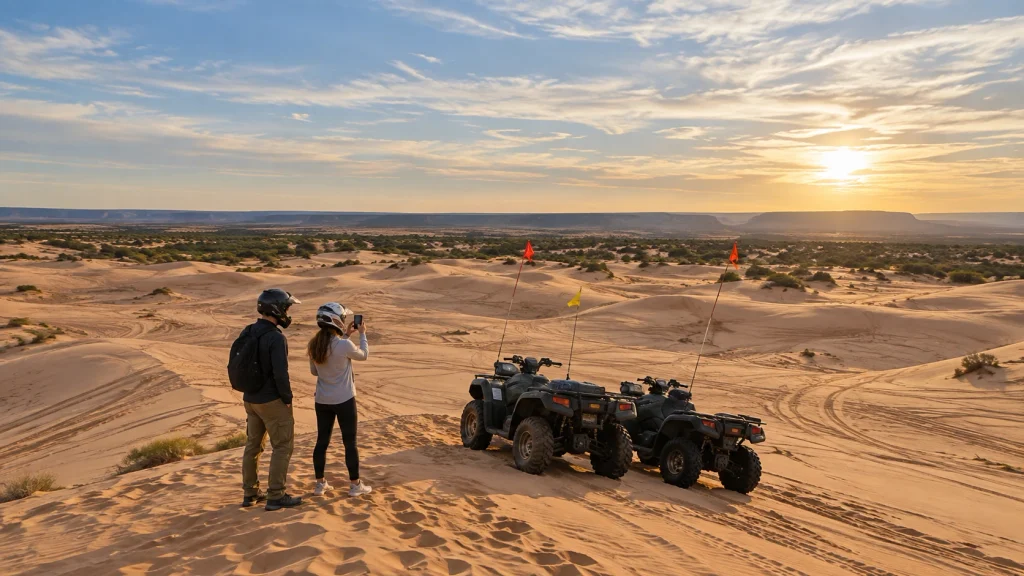
Little Sahara State Park near Waynoka holds about 1,600 acres of active sand dunes, some rising 75 feet. It’s an off-road vehicle park, loud and dusty, and it’s the last thing you expect an hour from Kansas.
Alabaster Caverns State Park near Freedom protects a natural gypsum cave with alabaster walls, and it’s the largest of its kind open to the public in the world. Guided tours run daily, and the cave holds a constant cool temperature, which makes it the correct July destination in western Oklahoma.
In the far southeast, Beavers Bend State Park and Broken Bow Lake deliver bald cypress, pine forest, and clear water that looks more like Arkansas than Oklahoma. The cabin market in nearby Hochatown has exploded, which means more options and higher prices than five years ago.
State park details are at TravelOK, the official state tourism site.
Hidden Gems Oklahoma Lined Up Along Route 66
Oklahoma carries more drivable original Route 66 mileage than any other state, and the roadside attractions here range from charming to deeply odd.
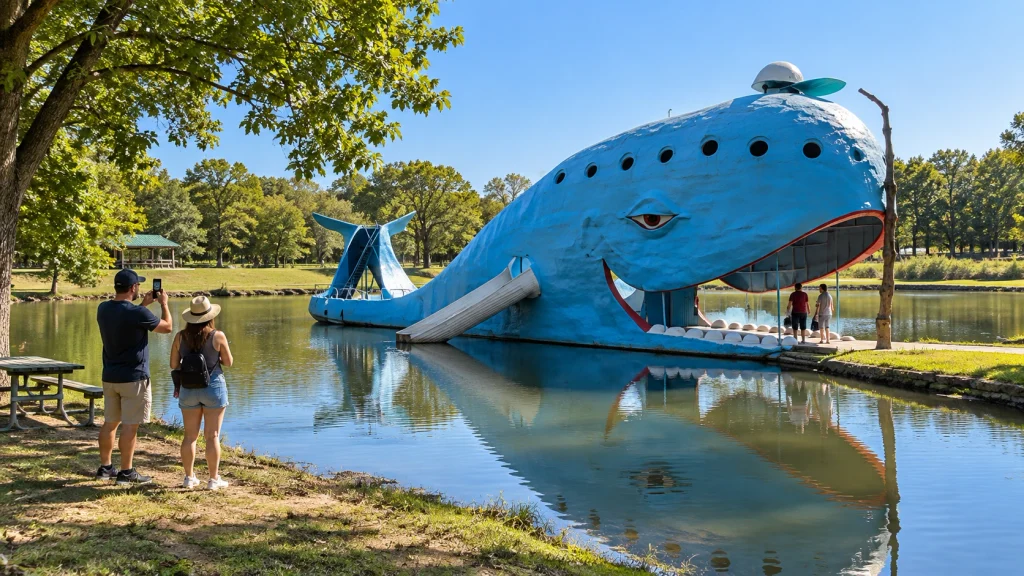
The Blue Whale of Catoosa is a hand-built concrete whale in a swimming hole, made by a man as an anniversary gift for his wife in the early 1970s. Pops 66 in Arcadia has a 66-foot illuminated soda bottle out front and hundreds of soda varieties inside. The Round Barn, also in Arcadia, is exactly what it sounds like and has stood since 1898.
In Stroud, the Rock Cafe opened in 1939 and its owner inspired a character in the animated film about Route 66, which the cafe has never let anyone forget.
None of these take more than half an hour. Strung together, they make the drive between Tulsa and Oklahoma City into something other than an interstate slog.
The Panhandle Is a Different State
Drive to Black Mesa in Cimarron County and you’ll be closer to Santa Fe than to Tulsa.

At 4,973 feet it’s the highest point in Oklahoma, a basalt-capped mesa where the state meets New Mexico and Colorado. The hike to the summit marker runs about 8.4 miles round trip across open shortgrass prairie, and there’s no shade and no water. Start early.
The real draw is overhead. The panhandle has some of the darkest skies in the southern plains, with essentially no light pollution for a hundred miles in any direction. Dinosaur trackways are preserved nearby too.
This is a genuine expedition, not a stop. Boise City is the nearest town of any size, and it’s small. Fill the tank whenever you see a station.
The Cultural Side Most Guides Skip
Oklahoma is headquarters to more tribal nations than any other state, and the cultural institutions here are first-rate rather than incidental.
The First Americans Museum in Oklahoma City opened in 2021 and covers the 39 distinct tribal nations in the state. The Chickasaw Cultural Center in Sulphur sits beside Chickasaw National Recreation Area, which the National Park Service manages, with details at nps.gov.
In Tulsa, the Greenwood District was the site of the 1921 Tulsa Race Massacre, and Greenwood Rising documents it directly. It’s difficult and it’s essential.
Philbrook and Gilcrease in Tulsa hold art collections that would anchor a much larger city. Philbrook occupies a 1920s Italian Renaissance villa with formal gardens, which is itself worth the ticket.
The Tallgrass Prairie Preserve near Pawhuska protects the largest remaining tract of tallgrass prairie on the continent, with a free-roaming bison herd across roughly 40,000 acres. Drive the gravel loop slowly and stay in the vehicle when the herd is on the road. They move when they’re ready.
Timing, Distances, and What Goes Wrong
Oklahoma is about 470 miles wide, and the panhandle adds another reach beyond that. Black Mesa to Beavers Bend is close to a nine-hour drive. Pick a region.
- April through early June is the best window, with green prairie, wildflowers, and moderate heat. It’s also peak severe weather season.
- September and October run a close second and bring far fewer storms.
- July and August are hot and humid in the east, hot and dry in the west. Caves and lakes only.
- Winter is unpredictable, with ice storms that shut down highways.
Severe weather deserves a plain warning. Oklahoma sits in the most tornado-active region in the world, and spring storms move fast. Keep a weather radio or alerts enabled, and know where the shelter is at any campground or cabin you book.
Questions Readers Send About Oklahoma
Where can you dig for crystals in Oklahoma? Salt Plains National Wildlife Refuge near Jet, in Alfalfa County. It’s the only place in the world where you can dig hourglass selenite crystals, and it’s free. The season runs April 1 through October 15, sunrise to sunset, in a marked dig area about a mile past the gate.
What is the most beautiful place in Oklahoma? Wichita Mountains Wildlife Refuge near Lawton, where granite peaks rise from prairie and bison, elk, and longhorn roam free across 59,000 acres. Beavers Bend State Park in the southeast is the runner-up, with bald cypress and clear water.
Is Oklahoma flat? No. The state ranges from bald cypress swamp in the southeast to a 4,973-foot mesa in the panhandle, with granite mountains near Lawton, a 1,600-acre dune field near Waynoka, gypsum caves in the northwest, and tallgrass prairie in the Osage. The flat reputation is wrong.
How many days do you need to see Oklahoma? Three days covers one region properly. The state runs roughly 470 miles wide, and driving from the panhandle to the southeastern lakes takes most of a day. Pick either the west with Salt Plains and the Wichitas, or the east with Route 66, Tulsa, and Beavers Bend.
What’s the best time of year to visit Oklahoma? April through early June for green prairie and wildflowers, though it overlaps peak severe weather season. September and October deliver similar conditions with far less storm risk. Summer is hot statewide, and winter brings ice storms capable of closing highways.
Is Black Mesa worth the drive? Only if you commit to it. At 4,973 feet it’s the state high point, with an 8.4-mile round trip hike across open prairie, no shade, and no water. The dark skies are among the best in the southern plains. Boise City is the nearest town and services are minimal.
Pick a Half of the State
The hidden gems Oklahoma holds are spread too thin to cover in one trip. Draw a line down the middle and choose a side, because trying to do both turns a good trip into a driving marathon.
West gets you the crystal dig, the Wichita Mountains, the dunes, and the caves. East gets you Route 66, Tulsa’s museums, the tallgrass prairie, and the cypress lakes. Both halves hold up, and neither one looks like what you were told Oklahoma looks like.
If you take one thing from this: check the crystal digging season dates before you plan anything else. It closes October 15, and nowhere else on Earth substitutes for it.