Things to Do Arizona Offers at Every Elevation, Desert to Snowpack
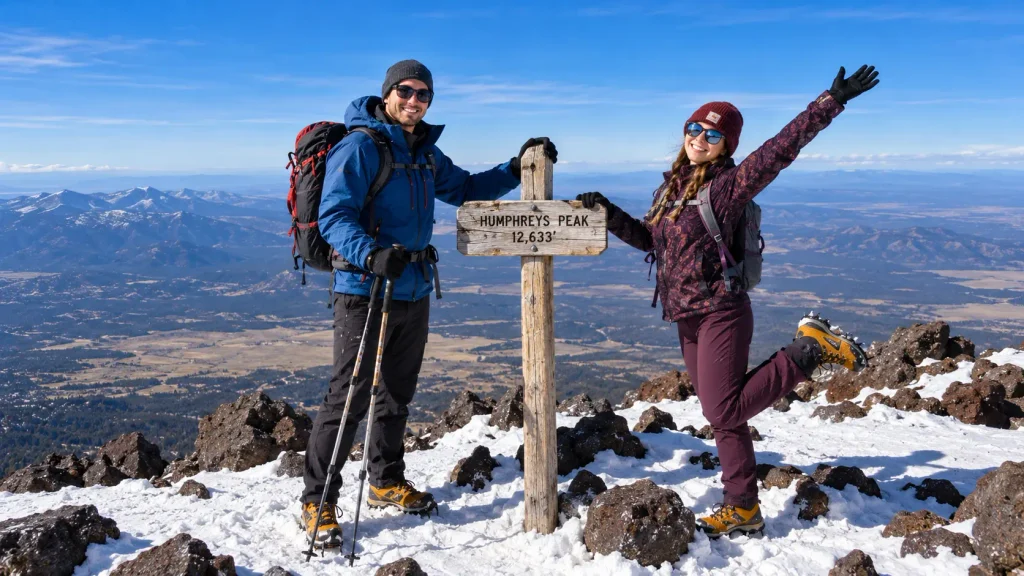
The state runs from about 70 feet above sea level near Yuma to 12,633 feet at Humphreys Peak, and that spread decides everything. Most disappointing trips happen because someone booked things to do Arizona style without checking what elevation they were headed to.
There is also one major change this year: the Grand Canyon North Rim reopened after the 2025 fire, but not as the place it used to be. Start with that.
Twelve Thousand Feet of Elevation, One State
Arizona is not a desert state. It is a desert state stacked on top of a mountain state.
- Low desert, under 2,500 feet. Phoenix, Tucson, Yuma. Peak season is November through April. Summer is genuinely dangerous.
- Mid elevation, 4,000 to 5,500 feet. Sedona, Prescott, Jerome. Comfortable most of the year.
- High country, above 6,500 feet. Flagstaff, the White Mountains. Real winters with real snow.
- Canyon and plateau country, roughly 4,000 to 8,000 feet. The Grand Canyon rims, Navajo Nation lands, Monument Valley.
Flagstaff sits at about 7,000 feet and averages more annual snowfall than many northern ski towns. Phoenix, two hours south, rarely sees frost. Pack for the elevation you will sleep at, not the state.
The North Rim Reopened, but 2026 Is a Recovery Season
This is the single most outdated fact in every older Arizona guide, and it matters if you were planning a canyon trip.
The Dragon Bravo Fire started with a lightning strike on July 4, 2025 and burned roughly 145,000 acres before containment that September. It destroyed the historic Grand Canyon Lodge, built in 1937, along with the North Rim Visitor Center, numerous historic cabins, and the area’s wastewater treatment plant.

The North Rim reopened on May 15, 2026, but the National Park Service describes this season as day use and limited backcountry rather than business as usual.
What that means in practice:
- No overnight lodging. The Grand Canyon Lodge is gone, and its future goes through a separate planning and environmental review.
- No potable water on the North Rim. Bring your own. The general store sells bottled water and limited supplies.
- The North Rim Campground is open through mid-October, but the experience is more primitive than before.
- North Kaibab Trail reopened to foot traffic, with temporary closures likely as repairs continue.
Check the official North Rim status page within a week of travel. The South Rim is unaffected and operating normally.
Low Desert: A Winter Destination, Not a Summer One
Phoenix and Tucson invert the national calendar. Their high season is winter, and locals leave in July.
In Phoenix and Scottsdale: the Desert Botanical Garden in Papago Park, the Musical Instrument Museum, and Camelback Mountain for a steep, crowded, genuinely good summit hike. Start any desert hike at sunrise, not mid-morning.

In Tucson: the Arizona-Sonora Desert Museum, which is a zoo, botanical garden, and natural history museum combined and is better than that description sounds. Mission San Xavier del Bac south of the city dates to the late 1700s. Saguaro National Park brackets the city in two separate districts, east and west.
Mount Lemmon rises from Tucson to over 9,000 feet in about an hour of driving. Botanists compare the transition to driving from Mexico to Canada, since you pass through roughly the same succession of life zones. It is the fastest elevation lesson in the state and the best way to escape Tucson heat without leaving the county.
Further out: Biosphere 2 north of Tucson still operates as a research facility with public tours, and Chiricahua National Monument in the southeast corner holds rock spires that see a fraction of Sedona’s traffic.
Things to Do Arizona Built at Red Rock Elevation
The middle band is where most people actually want to be.
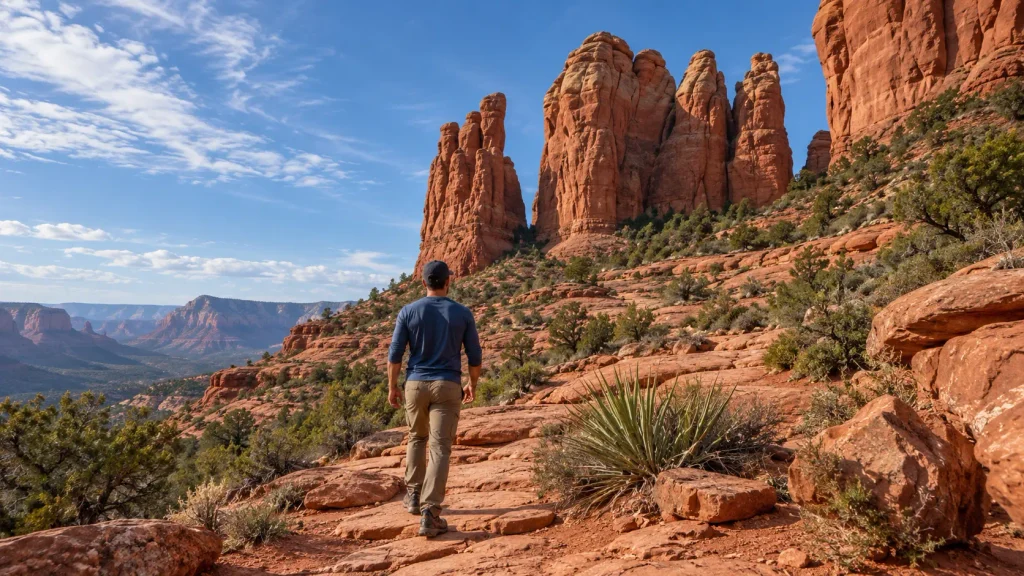
Sedona at roughly 4,300 feet is the anchor. Cathedral Rock, Devil’s Bridge, and Soldier Pass are the famous trails, and all three now have parking that fills before 8 a.m. Sedona runs a seasonal shuttle to the busiest trailheads specifically because the lots cannot cope.
Jerome, a former copper mining town clinging to Cleopatra Hill at about 5,200 feet, is a 30-minute drive and worth the switchbacks. Prescott has a walkable square and a genuine four-season climate.
Nearby: Montezuma Castle National Monument, a cliff dwelling visible from a short paved trail, and Tuzigoot National Monument in the Verde Valley. Neither takes more than an hour, and both sit directly off I-17 between Phoenix and Flagstaff, which makes them the rare roadside stop worth the exit.
A note on Sedona specifically: the town has a Red Rock Pass requirement for parking at many Forest Service trailheads. An America the Beautiful pass covers it at most locations, so check before buying twice.
High Country: Arizona Has Snow
Flagstaff is the base for the northern half of the state and a legitimate winter destination.
- Arizona Snowbowl runs lifts on the San Francisco Peaks
- Lowell Observatory, where Pluto was discovered in 1930, sits in town
- Walnut Canyon, Sunset Crater Volcano, and Wupatki National Monuments form a loop within an hour
- Humphreys Peak, the state high point, is a demanding day hike with real altitude effects

Flagstaff also sits at the junction of I-17 and I-40, which makes it the practical hub for reaching the Grand Canyon, Page, and the Navajo Nation. Altitude matters here too. Arriving from Phoenix means gaining 6,000 feet in two hours, and people routinely underestimate how that affects a first-day hike.
Meteor Crater sits about 40 minutes east on I-40 and is privately operated rather than federally managed, so a national park pass does not apply.
Tribal Land Runs on Its Own Rules
Several of Arizona’s most photographed places are not public land, and treating them as such is how people get turned away.
- Antelope Canyon near Page sits on Navajo Nation land. You cannot enter independently. An authorized Navajo guide is required, and tours book out well ahead.

- Monument Valley is a Navajo Tribal Park, not a national park. Separate fees, separate hours, and its own closure calendar. See Navajo Nation Parks and Recreation.
- Havasu Falls is on the Havasupai Reservation and requires a reservation obtained through the tribe directly. Permits are released once a year and sell out fast. Book only through the official Havasupai site.
- Canyon de Chelly National Monument is co-managed by the NPS and the Navajo Nation. Except for the White House Trail, canyon access requires a Navajo guide.
Third-party sites reselling Havasupai permits are not legitimate. The tribe has said so repeatedly.
The Time Zone Trap That Ruins Tour Bookings
Arizona does not observe daylight saving time. The Navajo Nation, which lies within Arizona, does. The Hopi Reservation, which lies within the Navajo Nation, does not.

For part of the year, driving from Page to Monument Valley to a Hopi village can change your effective time twice in a few hours.
Practical consequences:
- Confirm the time zone when booking any tour on tribal land, in writing.
- Do not trust your phone. Cell handoffs across reservation boundaries produce wrong clock times regularly.
- Build a buffer into Antelope Canyon and Monument Valley tour arrivals. Missing a slot means losing the fee.
Permits and Lotteries Worth Entering Early
- The Wave at Coyote Buttes North is managed by the Bureau of Land Management through a lottery with very low odds. Enter months ahead and have a backup.
- Havasupai permits release annually and sell out within hours.
- Grand Canyon backcountry permits and Phantom Ranch lodging both run on advance systems through Recreation.gov.
- Kartchner Caverns State Park tours book ahead and cap group sizes. State park details are at Arizona State Parks.
Four Arizona Stops That Disappoint
- The Grand Canyon as a single stop on a road trip. Two hours at a viewpoint is a photograph, not a visit. Give it a full day minimum.
- Sedona vortex tours if you expected something measurable. Enjoy the geology and skip the framing.
- Tombstone in high season. The historic core is genuine, the reenactment economy around it less so.
- Any low-desert hike after 9 a.m. between May and September. Rescues here are routine and occasionally fatal. Phoenix closes some trails on extreme heat days for exactly this reason.
Questions Travelers Send Before an Arizona Trip
What is the best time of year to visit Arizona?
March through May and October through November work statewide. The low desert around Phoenix and Tucson peaks from November through April. The high country around Flagstaff is best in summer and offers skiing in winter. Avoid the low desert entirely between June and September.
Is the Grand Canyon North Rim open in 2026?
Yes, since May 15, 2026, but as a recovery season. There is no overnight lodging after the Dragon Bravo Fire destroyed the Grand Canyon Lodge, and no potable water is available. The campground and general store operate, and North Kaibab Trail is open to hikers with possible temporary closures.
How many days do you need in Arizona?
Seven at minimum to combine the Grand Canyon with either Sedona or the Phoenix area. Ten lets you add Page, Monument Valley, and the Navajo Nation. Driving distances are large, and a Grand Canyon day trip from Phoenix means roughly eight hours in the car.
Do you need a permit to visit Antelope Canyon or Havasu Falls?
Yes to both. Antelope Canyon sits on Navajo Nation land and requires an authorized Navajo guide, with no independent entry. Havasu Falls requires a reservation from the Havasupai Tribe, released annually and selling out within hours. Book only through official tribal channels.
Does Arizona observe daylight saving time?
No, with one exception. Arizona stays on Mountain Standard Time year round, but the Navajo Nation within the state does observe daylight saving. The Hopi Reservation inside the Navajo Nation does not. Confirm the time zone in writing when booking tours on tribal land.
What are the best Arizona day trips from Phoenix?
Sedona and Jerome sit about two hours north and pair well in one day. Montezuma Castle is directly en route. Tucson and Saguaro National Park are under two hours south. The Grand Canyon is possible but makes for a long, rushed day.
Sort by Altitude Before You Book
Nearly every list of things to do Arizona travelers find online sorts by popularity, which puts a July Phoenix hike next to a February Flagstaff ski day as though they were interchangeable. They are not. Decide which elevation band your trip lives in, then build around it. Winter or shoulder season means the low desert and Sedona. Summer means Flagstaff, the White Mountains, and the canyon rims.
Two things to handle before anything else. Check the North Rim status page if the canyon is on your list, and confirm tour times in writing for anything on tribal land. Those two calls prevent the mistakes that actually cost people days.