
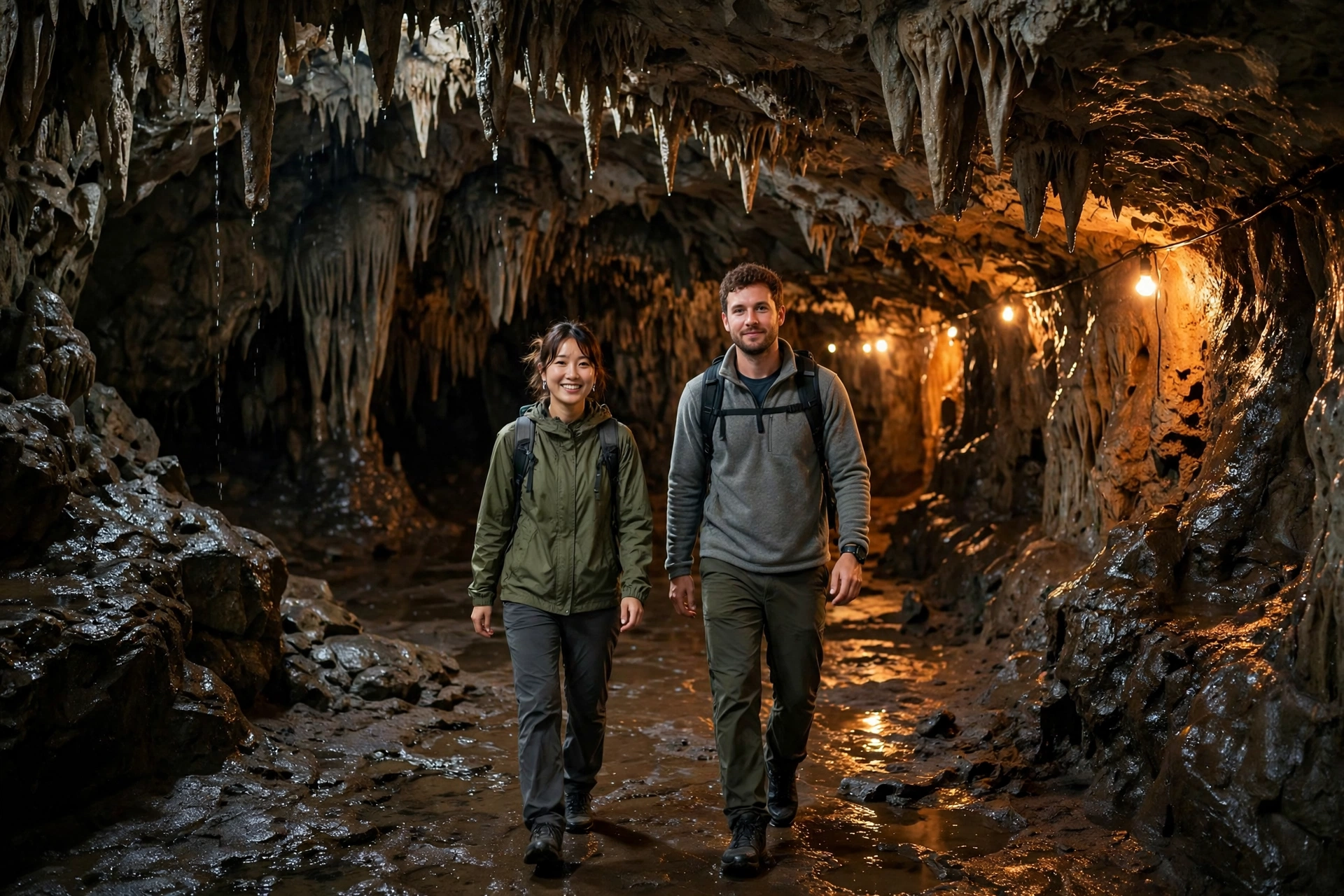
The Caves to Visit in the USA That Go Deeper Than You Think
The first time I walked into a real cave, the air dropped twenty degrees in ten steps and the dark swallowed the entrance behind me. I have been going underground ever since, from Kentucky to New Mexico, and the best caves to visit USA has to offer are not all the same kind of dark. Some are vast chambers you could fit a stadium in. Some are narrow passages where you duck and turn sideways. This list is the ten I would go back to, with the honest notes on which ones are worth a detour and which ones to skip if you are short on time.
The Caves to Visit USA That Belong on Every List
I picked these ten by one rule: the cave has to be worth the drive on its own, not just worth it if you happen to be nearby. A great show cave gives you formations you cannot see anywhere else, a guide who knows the stories, and a walk that feels like a different world. I left off caves that are mostly a gift shop with a hole in the ground, and I left off wild caves that need ropes and permits. What remains are ten caves you can walk into on a regular ticket, in ten different states.
The practical rule for all of them is the same: it is cold underground. Cave temperatures sit in the 50s Fahrenheit year-round, even when it is 95 degrees outside, so bring a jacket and closed shoes. Most of these caves run guided tours on a schedule, and the popular ones sell out on summer weekends, so book the tour when you book the trip.
Kentucky and Tennessee: The Deep South Underground
Mammoth Cave in Kentucky is the longest known cave system in the world, with more than 420 miles of surveyed passage, and it still grows every year as explorers map new sections. The National Park Service runs a dozen different tours, from the easy Historic Tour through the big rooms to the Domes and Dripstones route and the Frozen Niagara walk. I did the Historic Tour first and the Domes and Dripstones second, and the second one is the better walk if your knees can handle the stairs. The cave is cool, damp, and enormous, and the scale of the main passages is the thing that stays with you.
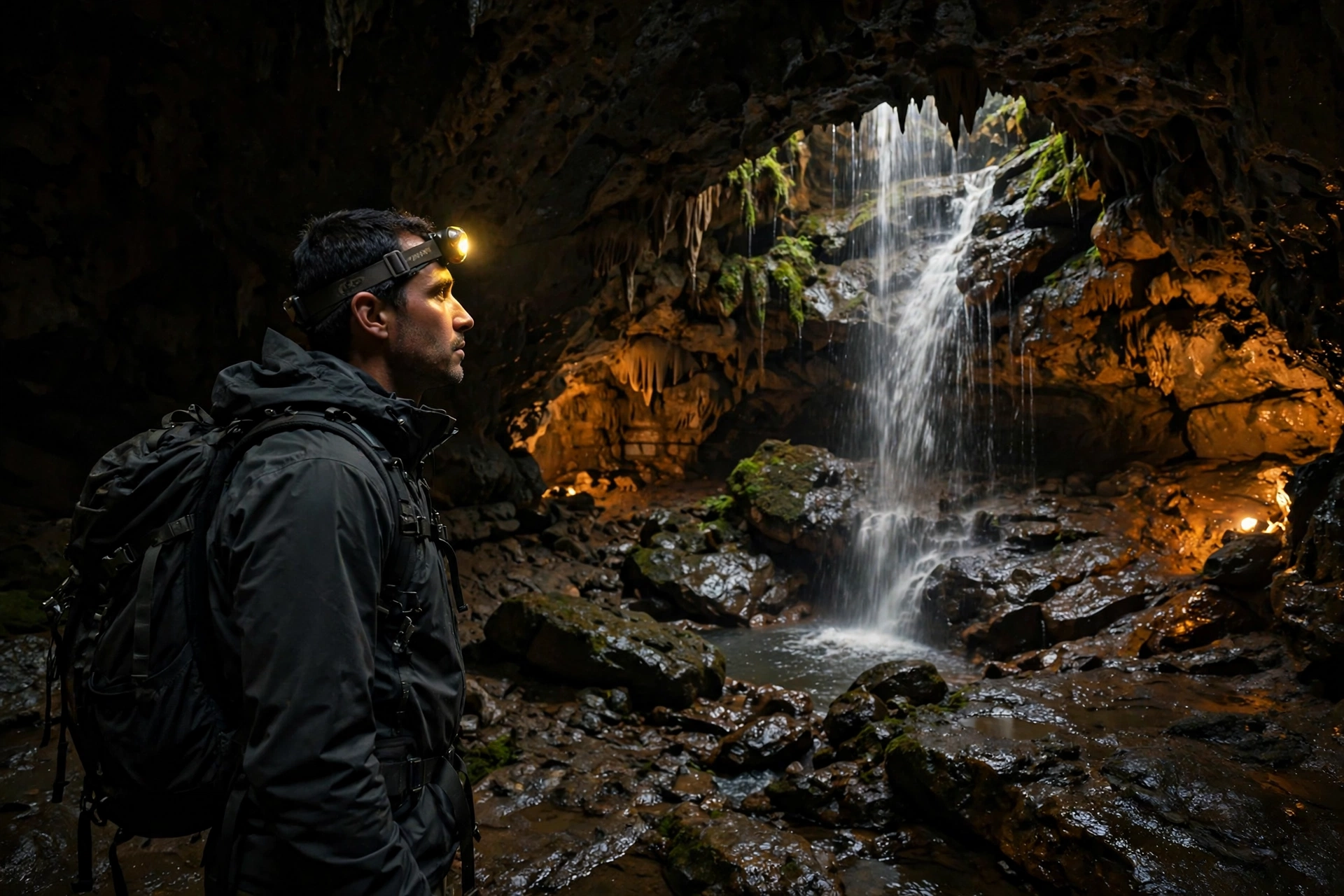
Ruby Falls sits inside Lookout Mountain near Chattanooga, Tennessee, and it is the showpiece cave of the South. The waterfall drops 145 feet inside the mountain, 1,120 feet below the surface, and the walk to it winds through passages full of stalactites and stalagmites. The cave was found in 1928 by Leo Lambert, and the falls are lit in colors that change as you stand there. It is commercial, it is crowded on weekends, and it is still worth it. Go first thing in the morning when the tours are small and the lights feel less like a show.
The Desert Caves: Carlsbad and Kartchner
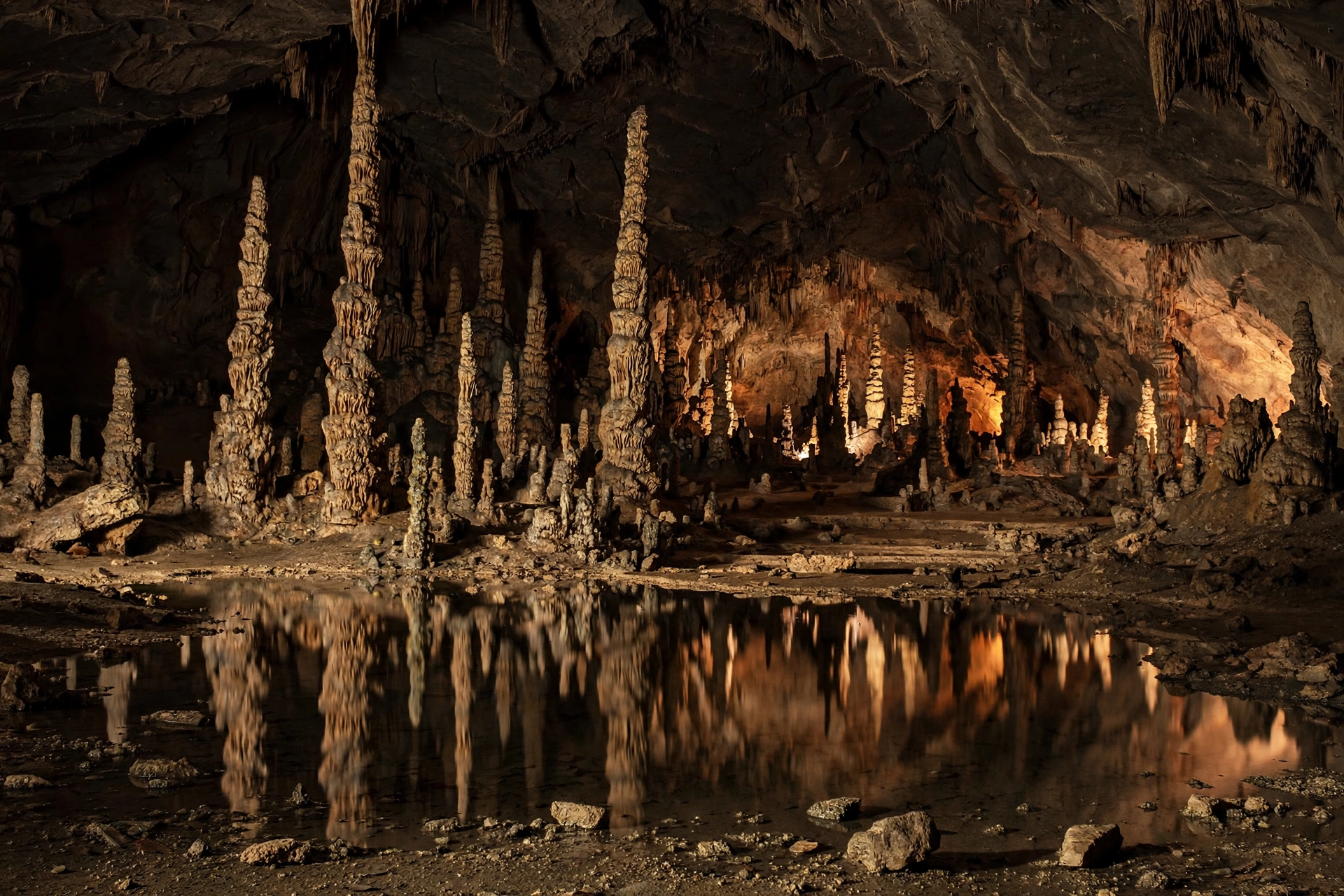
Carlsbad Caverns in New Mexico is the big one, and the Big Room is the largest cave chamber in North America, about 4,000 feet long and 625 feet wide, with a ceiling 255 feet overhead in places. You walk down the Natural Entrance trail, which drops 750 feet into the earth, or you take the elevator straight to the Big Room floor. I walked down and took the elevator up, which is the right call if your knees are good. The formations in the Big Room look like a frozen forest, and the self-guided trail loops through them at your own pace. The bat flight program runs in the warm months, when thousands of bats spiral out of the entrance at dusk, and it is the best free show in the park.
Kartchner Caverns in Arizona is the younger sibling, discovered in 1974 and opened as a state park in 1999, and it feels newer because it is. The Throne Room holds one of the tallest and widest columns in the country, and the Big Room tour runs through formations that are still growing. The tours are timed and guided, and the park limits group sizes, which keeps the experience quiet. The desert above the cave is worth an hour too, with trails through the foothills of the Whetstone Mountains.
The Black Hills Pair: Wind Cave and Jewel Cave
South Dakota holds two of the longest caves in the world within a short drive of each other, and they are nothing alike. Wind Cave is famous for boxwork, the honeycomb-patterned calcite formations that cover its walls, and about 95 percent of the world’s known boxwork sits in this one cave. The tours run through the middle levels, and the guides explain the geology without dumbing it down. Above ground, the park has a bison herd and miles of prairie trails, so you can spend a morning underground and an afternoon watching bison from the road.
Jewel Cave is the third-longest cave in the world, with more than 200 miles surveyed, and it is named for the calcite crystals that sparkle on its walls like cut glass. The Scenic Tour is the standard walk, with metal stairs and walkways through the big rooms, and the guides point out the crystals that give the cave its name. Jewel Cave is quieter than Wind Cave, and the tours are smaller, which makes it the better pick if you want a slower walk. Do both if you have two days. They are close enough that a single base in the Black Hills covers them, and the pair is the best cave weekend in the country.
Virginia, New York, Texas, and Oregon: The Classic Show Caves
Luray Caverns in Virginia is the classic East Coast show cave, discovered in 1878, and it holds the Great Stalacpipe Organ, the largest musical instrument in the world, which plays music by striking stalactites with rubber mallets. The formations are dense and tall, and the tour walks through rooms with names like Giant’s Hall and the Cathedral. It is the most commercial cave on this list, with a garden maze and a car museum on the property, and it is still worth the stop if you are driving the Shenandoah Valley.
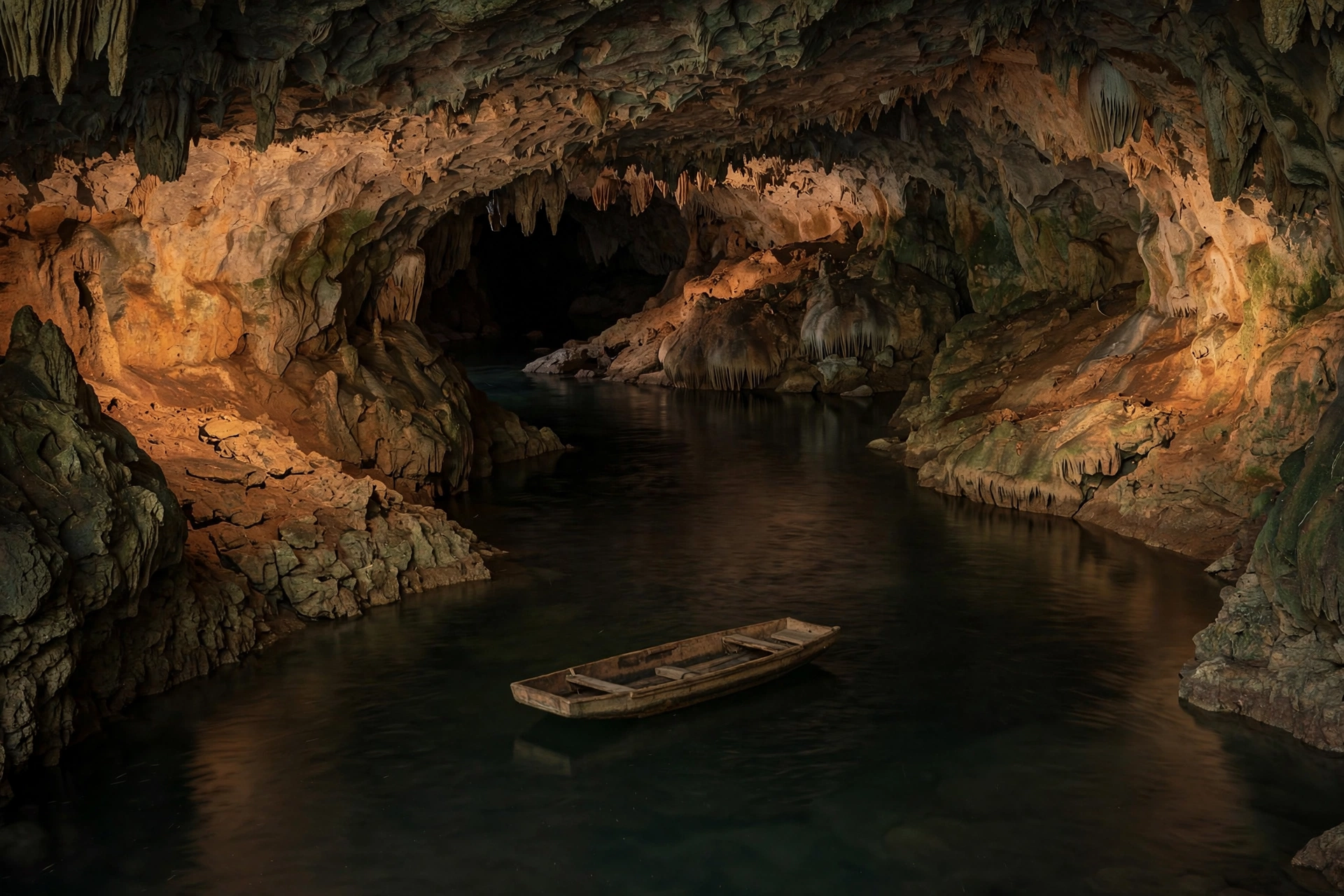
Howe Caverns in New York runs 156 feet below the surface, and the tour ends with a boat ride on an underground river, which is the detail that makes it memorable. The cave was found in 1842 by Lester Howe, and the tour mixes walking passages with the boat, so the pace changes halfway through. The surface has a motel and a restaurant, and the whole place feels like a family operation that has been doing this for a long time.
Natural Bridge Caverns in Texas is the largest known cavern system in the state, discovered in 1960, and the tour walks through rooms full of stalactites, stalagmites, and flowstone. The surface has a canopy challenge course and zip lines, which makes it a good family stop if you have kids who need to burn energy after the cave. The cave itself is the draw, though, and the Discovery Tour is the one to take first.
Oregon Caves is the outlier, a marble cave in the Siskiyou Mountains, and the only cave in the National Park System in Oregon. The tours are guided and the passages are narrower than the big show caves, which gives it a wilder feel. The lodge above the cave is a historic building with a dining room, and the drive up the mountain is half the trip.
What to Know Before You Go Underground
The temperature rule is the first thing to pack for. Caves sit in the 50s year-round, so a light jacket and long pants are the right call even in July, and closed shoes with grip matter on wet walkways. Leave the sandals in the car. Most caves ban tripods and flash photography in the tour groups, and some ban bags, so check the rules before you go and bring a small bag if you need one.
Timed tickets are the second thing to plan. The popular caves sell out on summer weekends, and the tour times are fixed, so book online when you book the trip. The National Park Service caves run on recreation.gov for some tours, and the state park caves run on their own booking systems. Arrive early. The tours leave on time, and a late arrival means waiting for the next one.
Accessibility varies a lot. Mammoth Cave and Carlsbad have accessible routes and elevators, and the park websites list them clearly. The smaller show caves have stairs and narrow passages that wheelchairs cannot use, and some have low ceilings that force tall visitors to duck. Check the accessibility page for the cave you are visiting before you promise anyone a walk.
The One Cave I Would Skip on a Short Trip
If you only have time for a few caves, skip the most commercial stop on your route and spend the time on the quieter one instead. Luray is the example I give people: it is a great cave, but the property around it is built for volume, and the tour can feel rushed when the groups are big. If you are driving the Shenandoah Valley and you have one cave stop, Luray is still the right one. If you have two days, pair it with a quieter cave and give Luray the early morning slot.
The other skip is the cave that is mostly a gift shop. A few caves on the tourist maps are short walks with more time in the shop than underground, and they are not on this list for that reason. If a cave’s website leads with the gift shop and the zip lines instead of the formations, keep driving.
Pairing Caves With the Rest of the Trip
Caves pair well with the outdoors above them. Mammoth Cave sits in a national park with hiking and kayaking on the Green River, and the park is worth a full day on its own. Carlsbad pairs with Guadalupe Mountains National Park across the Texas line, and the two parks together make a long weekend. Wind Cave and Jewel Cave pair with Mount Rushmore and the Black Hills, and the whole region rewards a slow drive.
The most popular caves in the US list on this site covers the wider set of caves travelers ask about, and it is a good cross-check if you are building a route around the ones here.
If you want mountains above ground to go with the caves below it, the breathtaking mountains to visit roundup covers the ranges worth pairing with a cave trip, and the Black Hills pair with it naturally.
For the days between cave visits, the beautiful botanical gardens list has the gardens and green spaces that make a good break from the dark.
Questions I Hear About Cave Trips
How cold is it underground? Caves sit in the 50s Fahrenheit year-round, even in summer. Bring a jacket and closed shoes.
Which cave should I visit first? Mammoth Cave, because it is the longest in the world, the park runs a dozen tours, and the scale of the main passages is unlike anything else.
Are caves safe for kids? Yes, on the standard guided tours, which are built for families. The walking is easy, the guides keep the groups together, and the boat ride at Howe Caverns is the part kids remember most.
Do I need to book in advance? Yes for the popular caves on summer weekends. Book the tour when you book the trip, and arrive early, because the tours leave on time.
Go Down Once, Then Go Back for the Second One
These are the caves to visit USA travelers ask me about most, and the advice stays the same: start with Mammoth Cave or Carlsbad, book the tour early, bring a jacket, and leave time for the world above the cave too. The first cave trip is the one that hooks you. The second one is the one where you start planning the next.


3 Comments