Atlanta, the Way Locals Keep Coming Back to It: 13 Stops
Atlanta is a city people visit once and then keep returning to, and the reason is not the big-ticket attractions. It is the walk along the BeltLine on a warm evening, the food hall at Ponce City Market on a Saturday, the quiet hour at the King Center before the tour buses arrive, and the park bench in Piedmont Park where the whole city seems to exhale. I have been back a dozen times, and the things to do Atlanta rewards most are the ones locals do every week, not the ones on the first-timer checklist. Here are the 13 stops I keep coming back to, in the order locals do them.
The 13 Things to Do Atlanta, in the Order Locals Do Them
Downtown, Done in Two Days, Not One
1. Martin Luther King Jr. National Historical Park. Start in Sweet Auburn, where the park preserves the block King was born on. The visitor center tells the story straight, Ebenezer Baptist Church still holds services in the building where King preached, and the King Center across the street holds the reflecting pool and the crypts of Martin and Coretta Scott King. The birth home on Auburn Avenue runs timed tours with limited space, so book ahead and do not count on walking in. The park is free, it is run by the National Park Service, and it is the most important stop in the city. Give it a full morning, and go early, when the grounds are quiet.
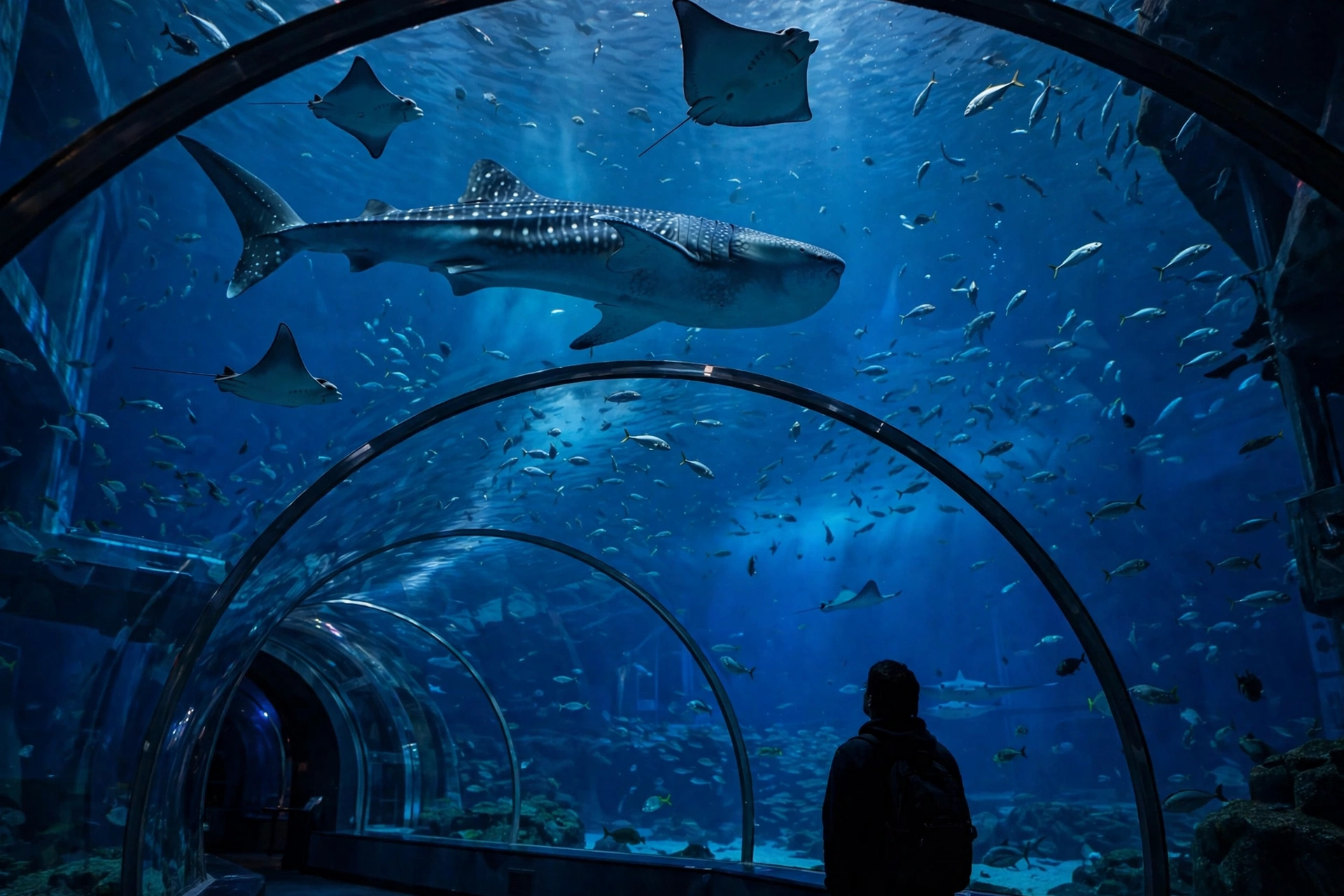
2. Georgia Aquarium. The aquarium sits on the Centennial Olympic Park block downtown, and it is one of the largest in the world, holding more than 10 million gallons of water. The Ocean Voyager tunnel, with whale sharks passing overhead, is the room people remember, and the belugas and penguins are the ones kids talk about on the drive home. Fixed-date tickets start at $54.99 and the price moves with the day, while the Anytime ticket costs $69.99. Children two and under are free. Book a timed ticket online, arrive at opening, and reserve your dolphin and sea lion presentation seats as soon as you walk in, because the free general seating fills fast.
3. World of Coca-Cola. It stands beside the aquarium at 121 Baker Street, and it is the company museum for a drink invented in Atlanta in 1886. The film at the start is short, the history galleries are better than you expect, and the Vault of the Secret Formula is the room everyone photographs. The end is the Taste It! room, where you sample more than 100 drinks the company sells in other countries. Adult admission runs about $25, and the building is closed on Thanksgiving and Christmas Day. Give it two hours, and do not try to do it on the same morning as the aquarium. Both deserve their own half-day.
4. National Center for Civil and Human Rights. The Center stands on the same downtown block, at 100 Ivan Allen Jr. Boulevard, and it is the stop that stays with you longest. The lunch-counter sit-in simulation puts headphones on you and shakes the stool while recorded voices shout, and a minute and a half feels like an hour. The King papers and artifacts, the global human-rights galleries, and the children’s gallery all earn their time. The Center is closed on Mondays, open Tuesday through Saturday from 10 AM to 5 PM and Sunday from noon to 5 PM, with last entry at 4 PM. Pair it with the aquarium or with Coca-Cola, not with both in one day. Three big downtown attractions in a single day is how people burn out by 3 PM.
5. Centennial Olympic Park. The park is the green square that ties the downtown three together, built for the 1996 Olympics and still the city’s front lawn. The Fountain of Rings runs in warm weather, the lawn fills with families on weekends, and the park is free. I use it as the break between stops: an hour on a bench, a coffee from a cart, and a look at the skyline before the next museum.
The BeltLine Is the Trip
6. Ponce City Market. The market fills a 1926 Sears, Roebuck warehouse at 675 Ponce de Leon Avenue, and it is the best food hall in the city. The ground floor holds food stalls, shops, and a central bar, and the roof has a carnival-style amusement park with skyline views. Come hungry, come at 11 AM before the lunch crowd, and eat at two stalls instead of one big meal. The market opens directly onto the BeltLine, which is the point. You eat, then you walk.
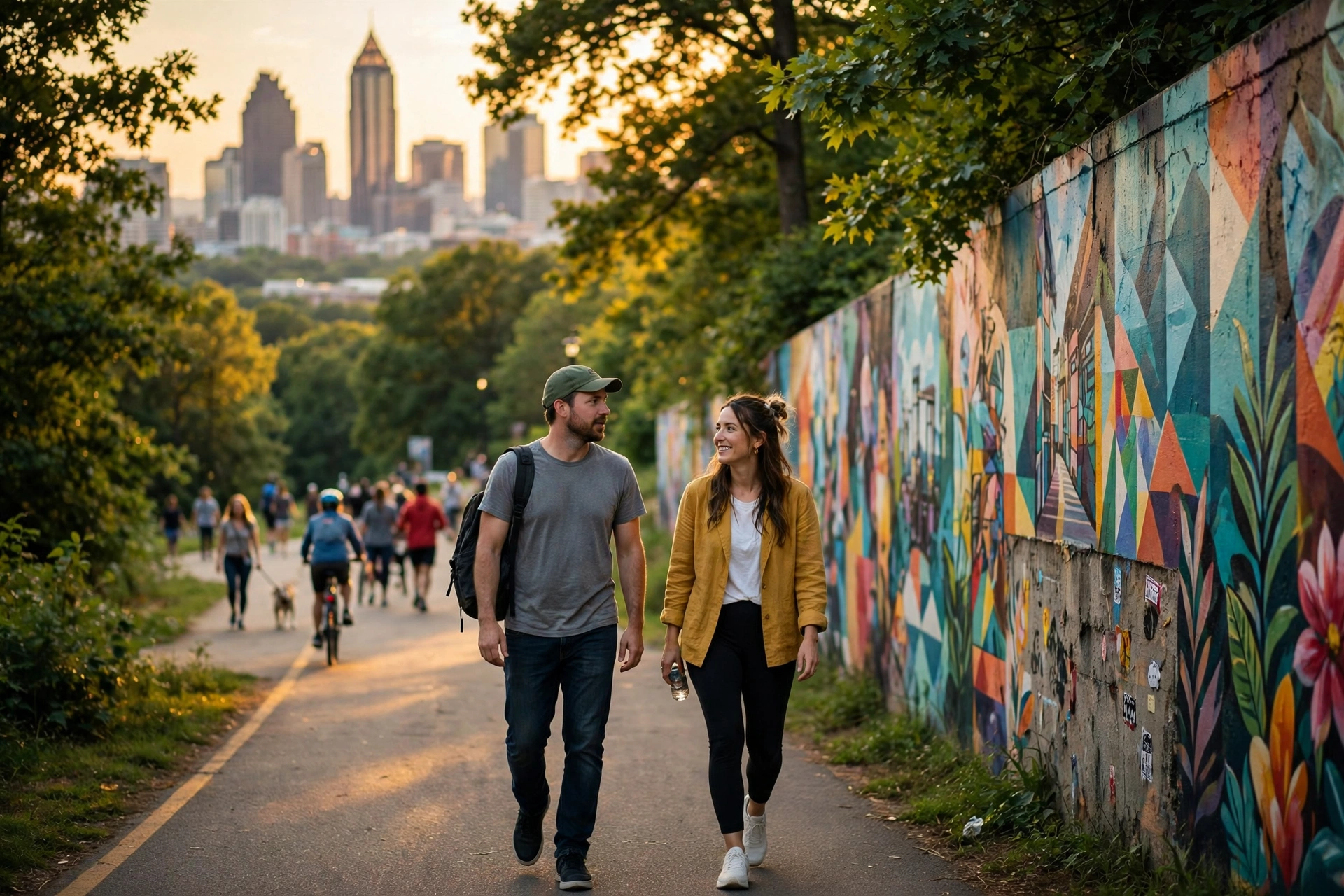
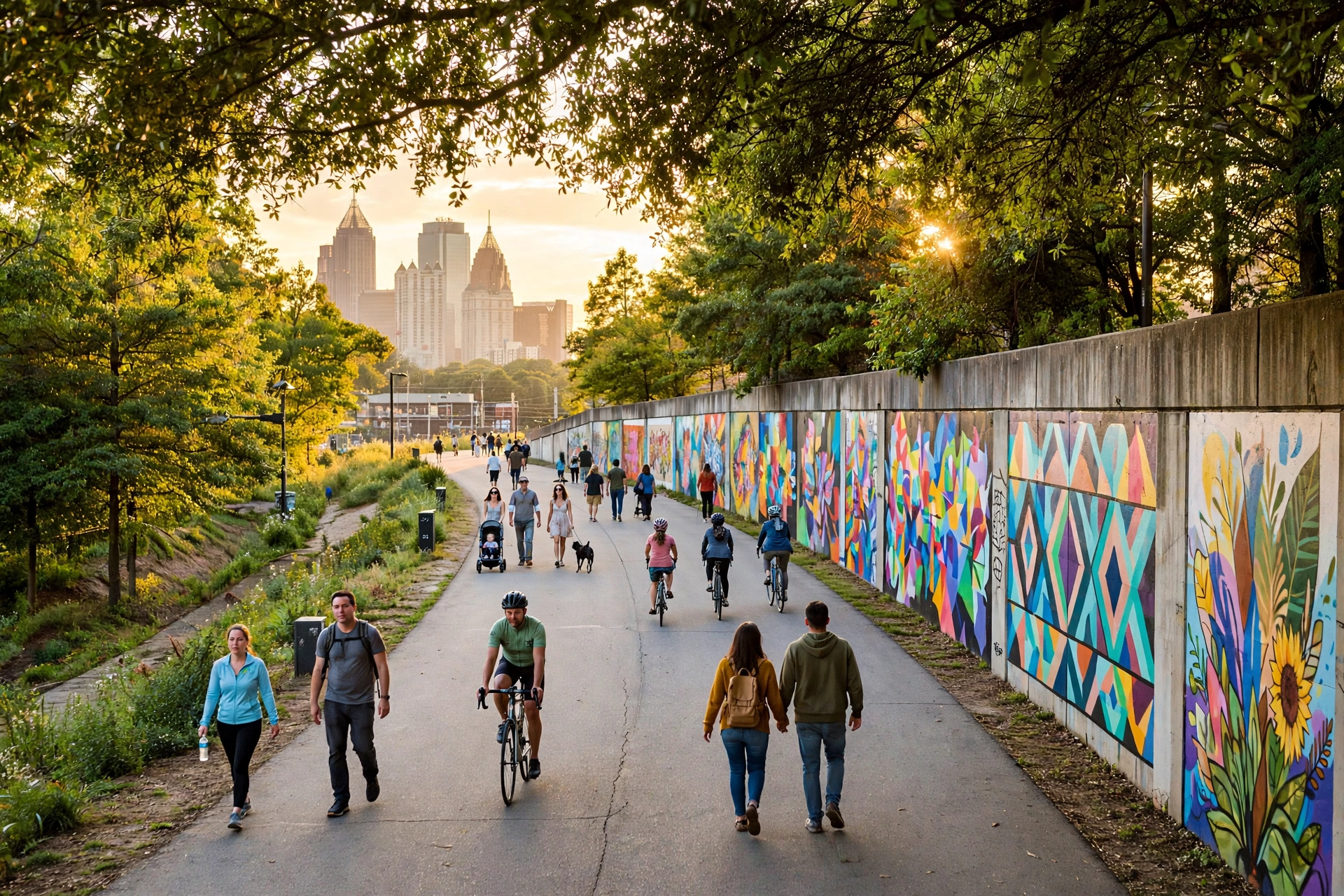
7. The Atlanta BeltLine Eastside Trail. The BeltLine is a ring of trails built on old rail lines around the city, and the Eastside Trail is the stretch locals walk daily. From Ponce City Market, walk south toward Krog Street Market, past murals, patios, and public art, with the skyline on your left. The walk takes about 40 minutes at a strolling pace, and it is free, flat, and full of people. Atlanta is one of the best cities for live music in the country, and the BeltLine patios are where you hear it on a warm night, with local bands playing to a crowd that came for a walk and stayed for the set. Krog Street Market at the south end is the smaller, quieter cousin of Ponce, and the murals on the tunnel walls are worth the walk alone.
Midtown Green
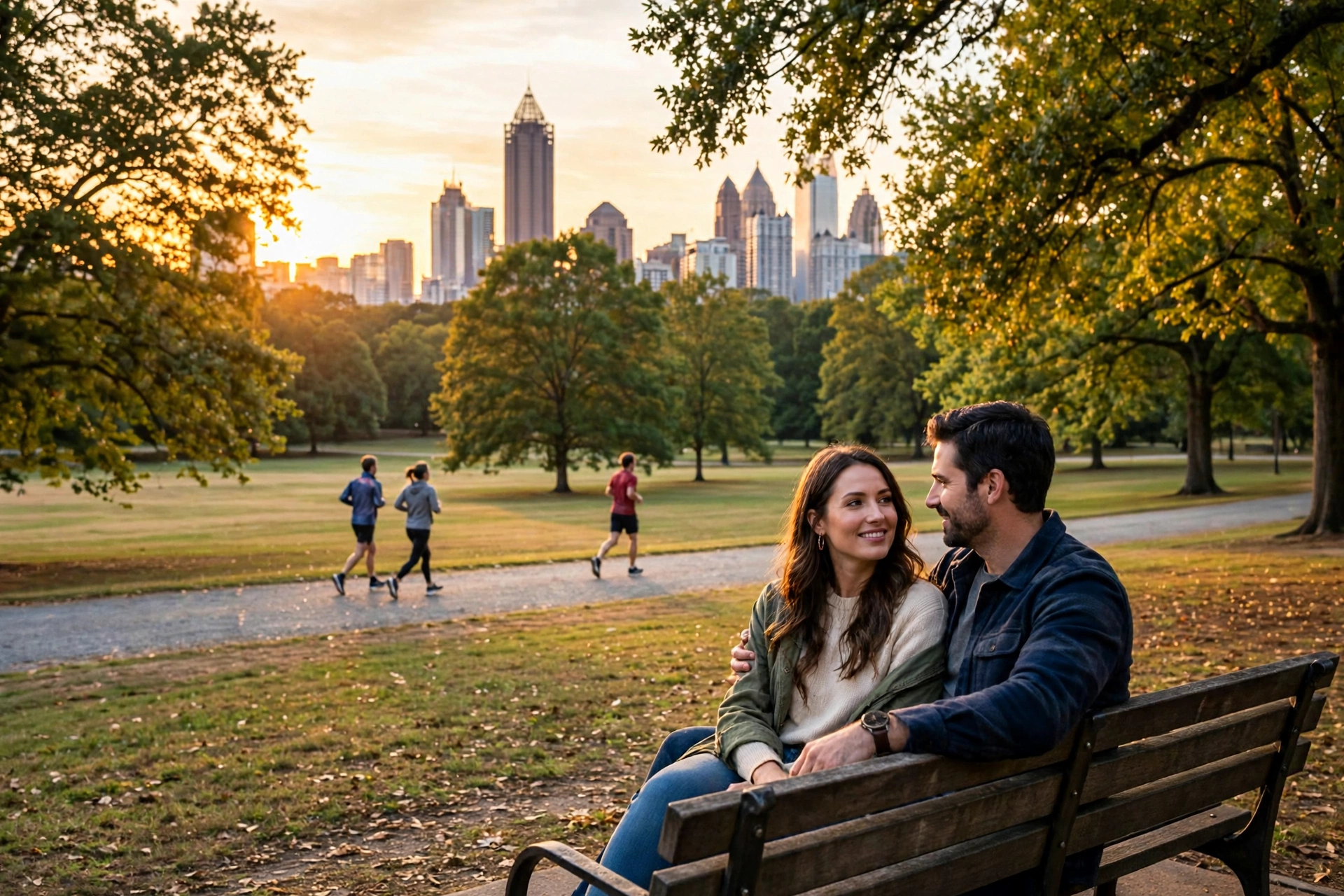
8. Piedmont Park and the Atlanta Botanical Garden. Piedmont Park is the city’s big green heart in Midtown, a few blocks from the MARTA station, with lawns, a lake, dog parks, and skyline views from the meadow. The Botanical Garden sits at the park’s northeast corner, with the Fuqua Conservatory, the orchid house, and the canopy walk through the trees. The park is free. The garden charges admission, and the light shows in winter are worth the ticket if your trip lines up. Locals run, picnic, and read here every day of the year, and a slow morning in the park is the most Atlanta thing you can do.
9. High Museum of Art. The High stands in Midtown on Peachtree Street, in a white Richard Meier building that is worth seeing from the outside before you go in. The collection runs from American folk art to European masters to contemporary work, and the rotating exhibitions are usually the best reason to go. Give it two hours, and pair it with the park rather than with another museum. Two museums in one day is one too many.
The Quiet Favourites
10. Oakland Cemetery. It sounds like a strange recommendation, and it is the one locals give most often. Oakland is the city’s oldest cemetery, full of Victorian monuments, gardens, and guided tours that tell Atlanta’s history better than any museum. The tours run on weekends, and the grounds are free to walk during the day. Go in the morning, when the light is low and the place is empty, and read the stones. You will understand the city better afterward.
11. Atlanta History Center. The History Center sits in Buckhead, north of Midtown, with a museum, historic houses, and 33 acres of gardens and trails. The Civil War and Southern history galleries are thorough without being dull, and the Swan House, a 1928 mansion on the grounds, is the building people photograph. Give it half a day, and drive or take a rideshare. The bus does not serve it well.
12. Jimmy Carter Presidential Library and Museum. The Carter Center sits east of downtown, with the library, the museum, and gardens that Carter himself helped plant. The exhibits cover the presidency, the Camp David Accords, and the Carters’ post-White House work, and the tone is quieter and more personal than any other presidential library I have visited. It is the stop people skip and then wish they had not. Give it two hours.
13. College Football Hall of Fame. It closes the list because it closes the downtown day. The Hall of Fame sits on the Centennial Olympic Park block, with interactive exhibits, a 45-yard indoor field, and a wall of helmets from every college team in the country. It is loud, fun, and the best stop in the city for kids who have had enough of museums. Give it 90 minutes, and go late in the day, when the school groups have left.
What the Weekend Costs
The free things to do Atlanta hands you are the ones locals use every day: the BeltLine, Piedmont Park, the King Center grounds, Centennial Olympic Park, and the Oakland Cemetery walks. The paid stops are the aquarium, Coca-Cola, the Botanical Garden, the High, the History Center, and the Hall of Fame. The aquarium is the priciest, with fixed-date tickets from $54.99 and the Anytime ticket at $69.99. Coca-Cola runs about $25 for adults. The rest fall between $15 and $30. A weekend that does the downtown block, the BeltLine, and one museum runs about $100 to $130 per person for tickets, plus food and a hotel, which is fair for a city this size.
The Atlanta CityPASS covers five of the big six, the aquarium, Coca-Cola, Zoo Atlanta, the Fernbank Museum, the College Football Hall of Fame, and the National Center for Civil and Human Rights, and it is worth pricing if you plan to do three or more of them. MARTA, the train system, covers downtown, Midtown, and the airport, and it costs a few dollars a ride. The BeltLine stops are not on the train, so plan on walking, a rideshare, or a rental scooter for those.
What I Skip
I skip the downtown chain restaurants on the park block, which charge tourist prices for food you can get better two blocks away. I skip trying to do the aquarium, Coca-Cola, and the Civil Rights Center in a single day, which is how people end up exhausted and resentful by dinner. I skip driving everywhere, because Atlanta traffic is the worst part of the city and the train plus walking covers the whole list. And I skip the aquarium on a Saturday afternoon, when the crowds peak. Go at opening on a weekday and the building belongs to you.

What People Ask Before an Atlanta Weekend
How many days do I need? Three days cover the whole list at the pace I wrote it. Two days cover downtown and the BeltLine if you cut the quiet favourites. One day covers the downtown block only, and that is a fine trip on its own if you keep it to two stops and the park.
Is downtown safe to walk at night? The park block and the BeltLine are busy and well lit in the evening, and I walk them without worry. The streets between them are quieter after dark, so take a rideshare for the gaps rather than walking the empty blocks. Atlanta is a driving city, and the walkable pockets are the ones to stay inside after dark.
Do I need a car? Not for downtown and Midtown. MARTA covers the airport, downtown, and Midtown, and the BeltLine is a walk. Rent a car only if you are adding a day trip, and return it the same day. Parking downtown costs more than the train.
What is the best month to come? October and April, when the weather is warm and the humidity drops. Summer is hot and the crowds are thick. Winter is mild and quiet, and the garden light shows make December worth a trip on its own.
Can I do this trip with kids? Yes, and the list was built with kids in mind. The aquarium, the Hall of Fame, the BeltLine, and the park are the kid stops. The Civil Rights Center is intense for young kids, so preview it first and decide. The lunch-counter simulation shakes the stool and plays recorded shouting, and some kids find it frightening.
My Call on Atlanta
Atlanta is not a city you see once. It is a city you come back to, and the second trip is better than the first, because the second trip is the BeltLine, the food hall, the park, and the quiet favourites, not the checklist. Do the downtown block in two days, walk the BeltLine at dusk, and save a morning for Oakland Cemetery. That is the Atlanta trip locals keep coming back for, and it is the one I keep coming back for too.
Seattle is the cooler counterpart to this trip, and things to do in Seattle suit the same slow pace.