Stonehenge Winter Solstice Morning, When the Ropes Come Down and the Field Opens
I set my alarm for 4:30 in the morning, pulled on every layer I owned, and drove across a dark Wiltshire plain toward a circle of stones I had only ever seen in photographs. The Stonehenge winter solstice gathering was already underway when I arrived, and the first thing that struck me was the sound of it. Not chanting, not music, just thousands of people talking in low voices under a cold sky, waiting for the light to change.
That morning remade how I think about Stonehenge. Most visitors see it from behind a rope on a summer afternoon, fenced off and photographed from a distance. On solstice morning the ropes come down, the field opens, and you stand among the stones with everyone else. It is cold, it is crowded, and it is one of the most honest travel experiences I have had in England.
Watching the Stonehenge Winter Solstice Sunrise
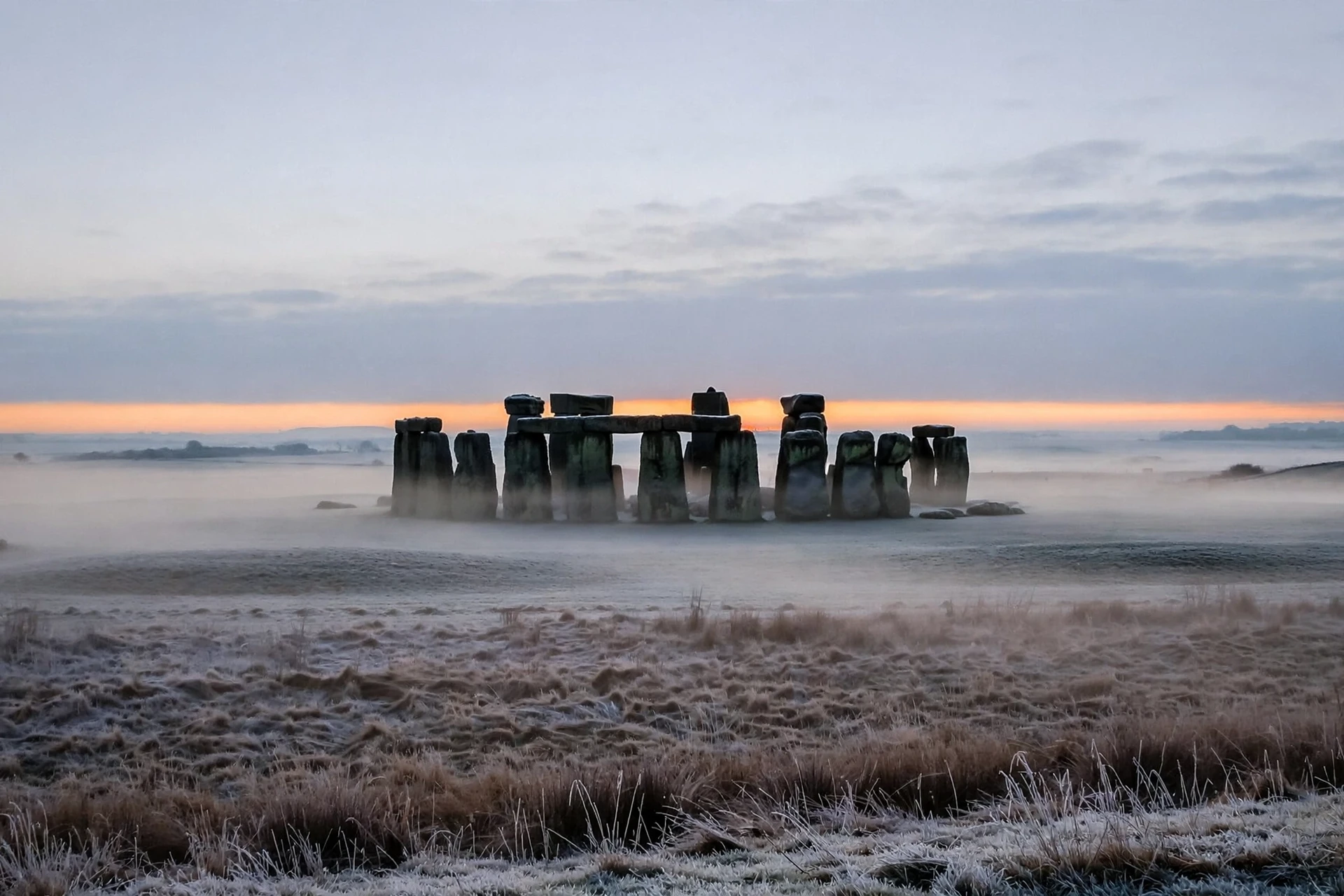
The sun does not leap over the stones. It creeps. The sky over Salisbury Plain goes from black to a bruised purple, then to a thin band of orange along the horizon, and for a long stretch nothing seems to happen at all. People shift their weight, stamp their feet, and pass flasks of tea hand to hand. Then the light finds the stones and the whole circle changes color at once, grey to gold, and the crowd goes quiet without anyone asking it to.
The alignment is the reason people come. At the winter solstice the sun sets in line with the great trilithon, the tallest pair of stones with its lintel still in place, and the stones frame the last light of the shortest day. The dawn gathering is the other half of that moment, the turn from the longest night toward longer days. You only need to be standing there when the light arrives, with cold hands and a clear view of the horizon.
I had read about the alignment for years before I saw it, and the reading did not prepare me for the scale. The stones are bigger than they look in pictures, and the plain around them is emptier than you expect. The Heel Stone stands apart from the main circle, a lone marker on the avenue, and on solstice morning people gather near it because that is where the line of the sunrise runs. Stand there at dawn and you understand why the builders picked this spot. The land falls away in every direction and nothing blocks the sky.
Clouds can steal the whole show. My first solstice morning stayed grey until well past sunrise, and the sun never broke through. I still count it as a good morning, but check the forecast the night before and accept that December in southern England owes you nothing.
When the Gathering Happens and How the Date Is Set
The winter solstice falls around December 21, the shortest day of the year in the northern hemisphere, though the exact date shifts by a day in some years. The gathering at Stonehenge happens on the morning of the solstice itself, with people arriving in the dark hours before dawn. Some years the crowd also gathers for the sunset the day before, since the sunset alignment is the one the stones were built to frame, and the managed access period usually covers both the evening and the morning. Check the current year dates before you book anything, because the schedule follows the astronomy, not the calendar on your wall.
That timing shapes the whole trip. You are traveling to rural Wiltshire in the week before Christmas, when days are short and hotels near Salisbury fill early. I booked months ahead and still paid more than I expected, so treat the solstice like a holiday weekend, because for the villages around the plain, it is one.
The date question comes up in every conversation I have about this trip, so here is the short version. The solstice is an astronomical event, the moment the sun reaches its lowest point in the sky, and it lands on a specific day each December. The gathering follows that day. English Heritage publishes the access times for the current year on its Stonehenge pages, and that page is the one to trust over any blog post, including this one.
How to Attend the Solstice at Stonehenge
You do not buy a ticket for the solstice gathering. Access to the monument field during the managed access period is free, and you simply arrive, park where directed, and walk in. That sounds simple, and it is, but the free part fools people into thinking they can improvise the rest. You cannot. The car parks fill, the roads around Amesbury back up, and the last stretch to the stones is a walk across open ground in the dark.
I drove in from Salisbury and left far earlier than felt necessary, which turned out to be exactly right. The approach roads are narrow country lanes, the signage is clear but sparse, and the marshals direct traffic into fields that serve as temporary car parks. Give yourself at least an hour more than the drive time suggests. The worst version of this trip is arriving at dawn, stuck in a queue of headlights, listening to the crowd already inside the circle.
Public transport is thin at that hour. Trains run to Salisbury from London Waterloo, but nothing runs at 4 in the morning, so most people drive, book a coach tour from London or Salisbury, or stay overnight within walking distance. The coach option is the one I recommend to first timers. You sleep on the bus and someone else handles the dark lanes.
For the practical details that change year to year, the Stonehenge visitor page from English Heritage is the source to check before you travel, since it carries the current opening times and travel advice for the monument.
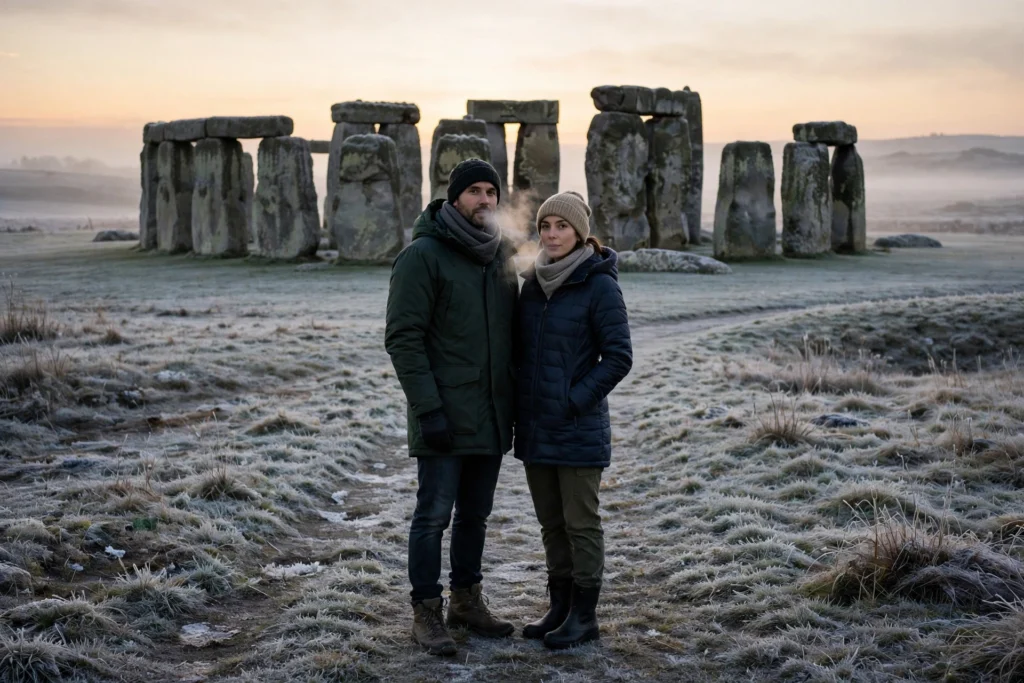
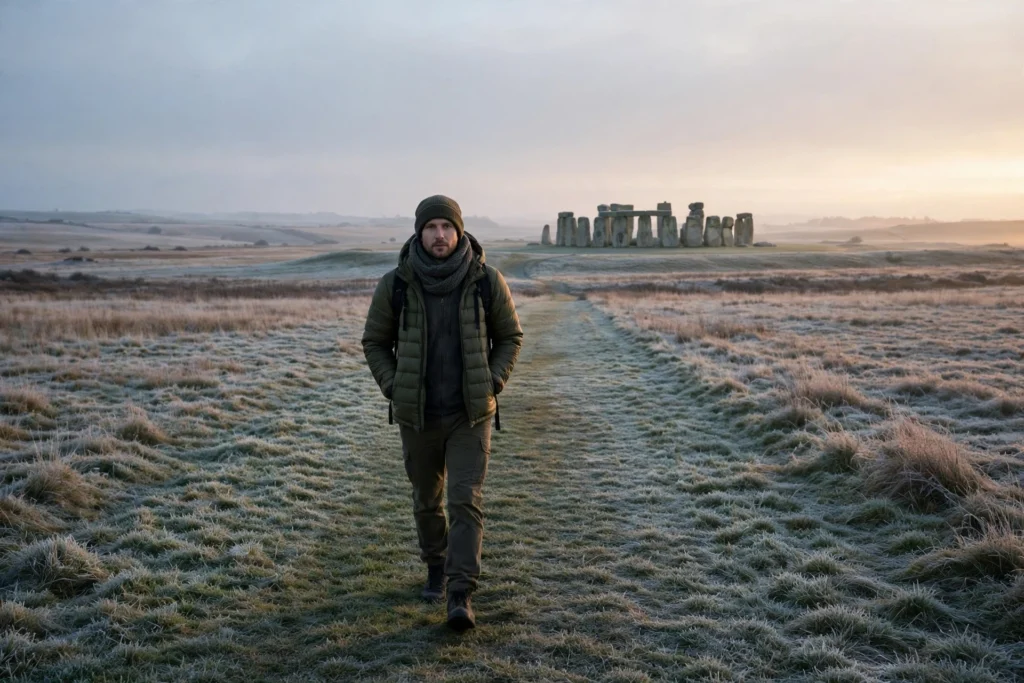
Dress for standing still in a field, not for walking. That is the mistake I made the first time. I wore hiking boots and a good jacket and still got cold, because walking keeps you warm and standing does not. The wind crosses Salisbury Plain with nothing to slow it down, and the temperature at dawn in late December sits near freezing. Wear thermal layers, a windproof outer shell, a hat that covers your ears, gloves you can keep on, and boots with grip for wet grass and chalk mud. Bring a hot drink in a flask, not a paper cup, and bring more water than you think you need.
What Managed Access Means on the Night
Managed access is the phrase English Heritage uses for the solstice opening, and it means the monument field is open to the public under rules that keep the stones and the crowd safe. The ropes come down and you can walk among the stones and touch them, which is not allowed on an ordinary visit. That freedom is the gift of the morning, and the rules are what keep it possible.
The rules are straightforward. No camping in the field, no fires, no fireworks, no amplified music, no alcohol, and no drones. Dogs are not allowed inside the monument field during the gathering. Bags may be searched at the entrance, and the stewards will turn away anything that could damage the stones or spoil the morning for everyone else. The crowd polices itself, mostly, because everyone there understands the deal.
The crowd is bigger than you picture. Thousands of people attend, families with children, druids in white robes, photographers with tripods, and a lot of ordinary people who just wanted to be there for the shortest day. The atmosphere stays calm, and the stewards are visible but unobtrusive. If you want space, stand toward the edges of the circle and arrive early enough to pick your spot.
For the current year rules, read the winter solstice page from English Heritage before you go, since the access times and conditions are updated each year and the page is the official word.
One honest warning. The toilets are portable units in the car park area, the queues are long, and the field itself has no facilities at all. Go before you walk in. The visitor center is closed during the gathering, so the morning is you, the stones, and whatever you carried in.
Summer Crowds, Winter Quiet, and How the Two Solstices Compare
People ask me which solstice to attend, summer or winter, and my answer is winter, every time, with one condition. The summer solstice draws a far larger crowd, tens of thousands of people, and the atmosphere is closer to a festival, with music, color, and a long slow sunset that turns into a party. It is spectacular, and it is also packed, loud, and hard to move through. The winter gathering is smaller, quieter, and colder, and the quiet is what makes it worth the cold.
The light is different too. In June the sun rises early, the grass is dry, and the morning feels like the start of a long day. In December the sun rises late, the light stays low and gold for hours, and the whole morning feels compressed, as if the day is holding its breath. Summer has more people and more energy. Winter has more space to think. I have done both, and the winter morning is the one I still think about on ordinary days.
What to Pack for a December Dawn on Salisbury Plain
Pack like you are going to stand outside for three hours in near-freezing wind, because that is the plan. Thermal base layers under a fleece, a windproof and waterproof outer layer, and a hat, gloves, and scarf you will not want to take off. Two pairs of socks. Boots with a real tread, because the chalk grass gets slick with frost and the walk from the car park crosses uneven ground.
Leave the tripod at home unless photography is the reason you came. The crowd is dense around the stones at dawn, and a tripod takes up space other people need. A camera with a fast lens does the job, and a phone does nearly as well in the low light if you hold it steady against a stone.
The Rest of the Day: Salisbury, Avebury, and a Warm Pub
The sun is up by 8, the crowd thins fast, and you have a whole day left in Wiltshire with cold hands and a story to tell. Do not drive straight back to London. The morning deserves a slow second act, and the county around the stones is full of them.
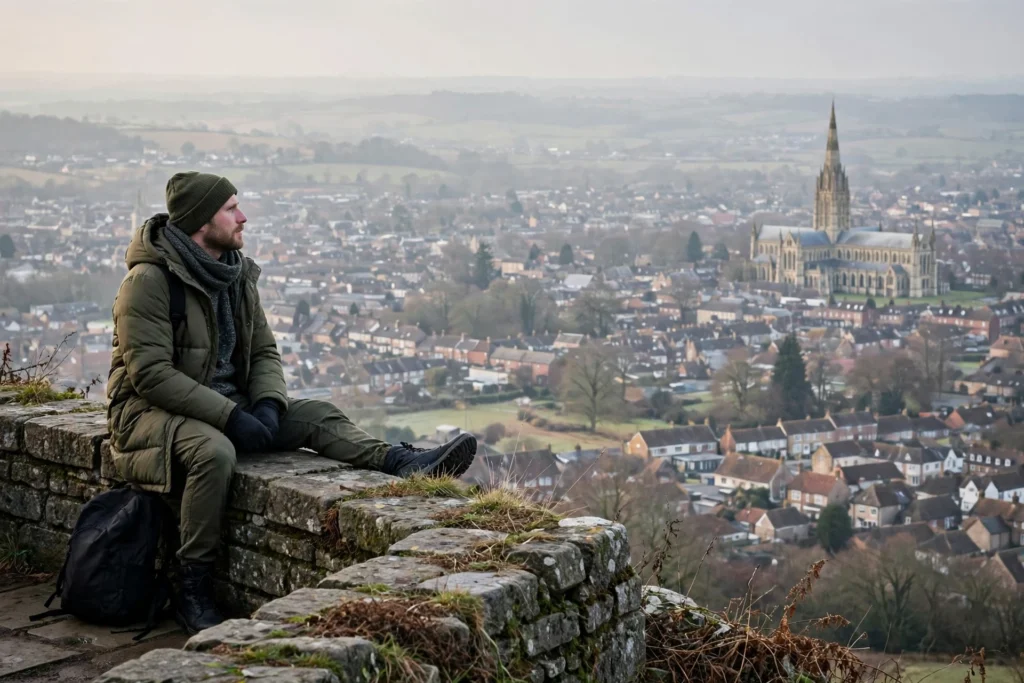
Salisbury is the obvious next stop, twenty minutes down the road, and its cathedral is the tallest in Britain, with a spire you can see for miles across the plain. The close around the cathedral is quiet on a December morning, the cafes on the high street open early, and a hot breakfast after a cold dawn tastes better than any breakfast I can remember.
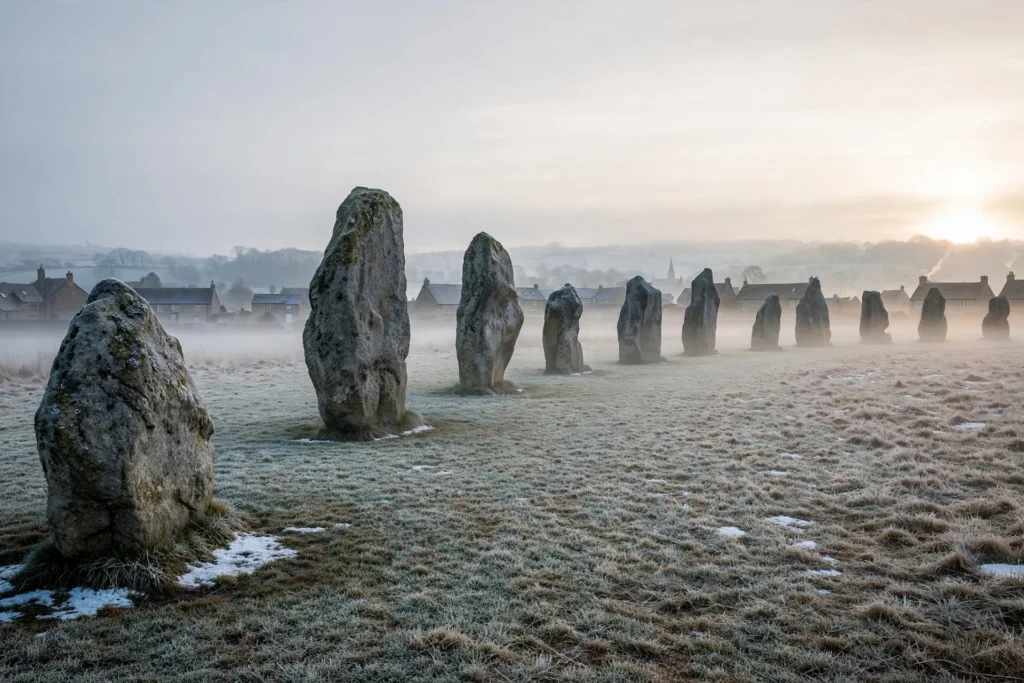
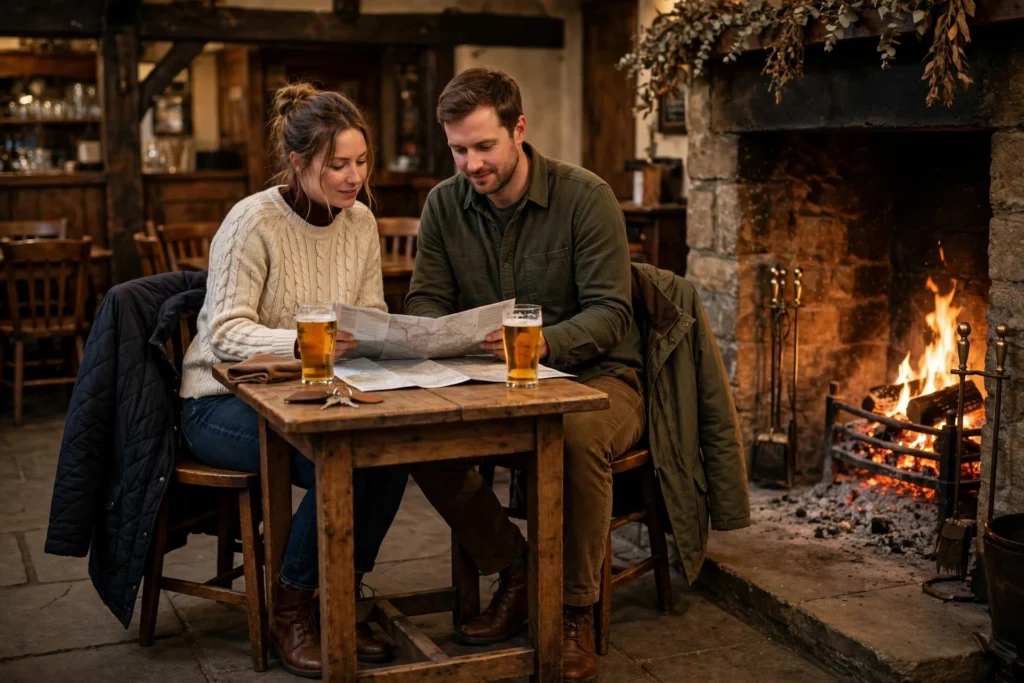
Avebury sits about twenty miles north, and it is the place I send people who felt rushed at Stonehenge. Its stone circle is larger, you can walk among the stones any day of the year, and the village pub sits right inside the circle. The Avebury stones are rougher and less famous, and that is exactly why I like them after the solstice crowd. Go there in the afternoon, walk the circle slowly, and eat lunch somewhere warm.
For ideas on the wider county, the Visit Wiltshire site lists the villages, walks, and seasonal events around the plain, and it is the official tourism board for the area.
Questions I Get Asked Before Every Solstice Trip
Do I need a ticket to attend the winter solstice at Stonehenge?
No, access to the monument field during the managed access period is free, and no ticket is required. Arrive early, follow the stewards’ directions to the car parks, and walk in. The free entry is one reason the crowd is large, so treat the early start as part of the plan.
When is the winter solstice at Stonehenge?
The solstice falls around December 21 each year, and the gathering happens on the morning of the solstice, with people arriving in the dark before dawn. The exact date shifts by a day in some years, so confirm the current year date with English Heritage before booking travel.
Can I touch the stones during the solstice?
Yes, during managed access the ropes are down and visitors may walk among the stones and touch them. Treat them gently, do not climb on them, and follow the stewards’ instructions. The access is a privilege English Heritage grants for the solstice, and it depends on visitors respecting the monument.
What happens if it rains?
The gathering goes ahead in rain, and December rain on Salisbury Plain is cold, sideways, and relentless. Bring waterproof layers, a waterproof cover for your bag, and a change of socks for the car. A wet solstice is still a solstice, and the crowd thins a little, which is its own reward.
Do I need a travel authorization to visit the UK?
US citizens now need an Electronic Travel Authorisation, called an ETA, before traveling to the UK, and you should apply well before your trip. The ETA guidance on GOV.UK explains who needs one, how to apply, and how long it takes, and it is the official source to use.
Go for the Sunrise, Stay for the Silence
I would go back to the winter solstice at Stonehenge in any year, in any weather, and I would leave at the same unreasonable hour. The sunrise matters, but the silence matters more, that minute when thousands of people stop talking at once and watch the light come up over stones older than any country on earth. Nothing else on my travel calendar feels like it.
Book the room early, pack for the cold, arrive before you think you need to, and stand near the edge of the circle where you can see the horizon. Then put the camera down for one minute and watch it with your own eyes. The photograph will be fine. The memory will be better.