
Travel Packing Essentials I Learned the Hard Way, After Denver With No Charger
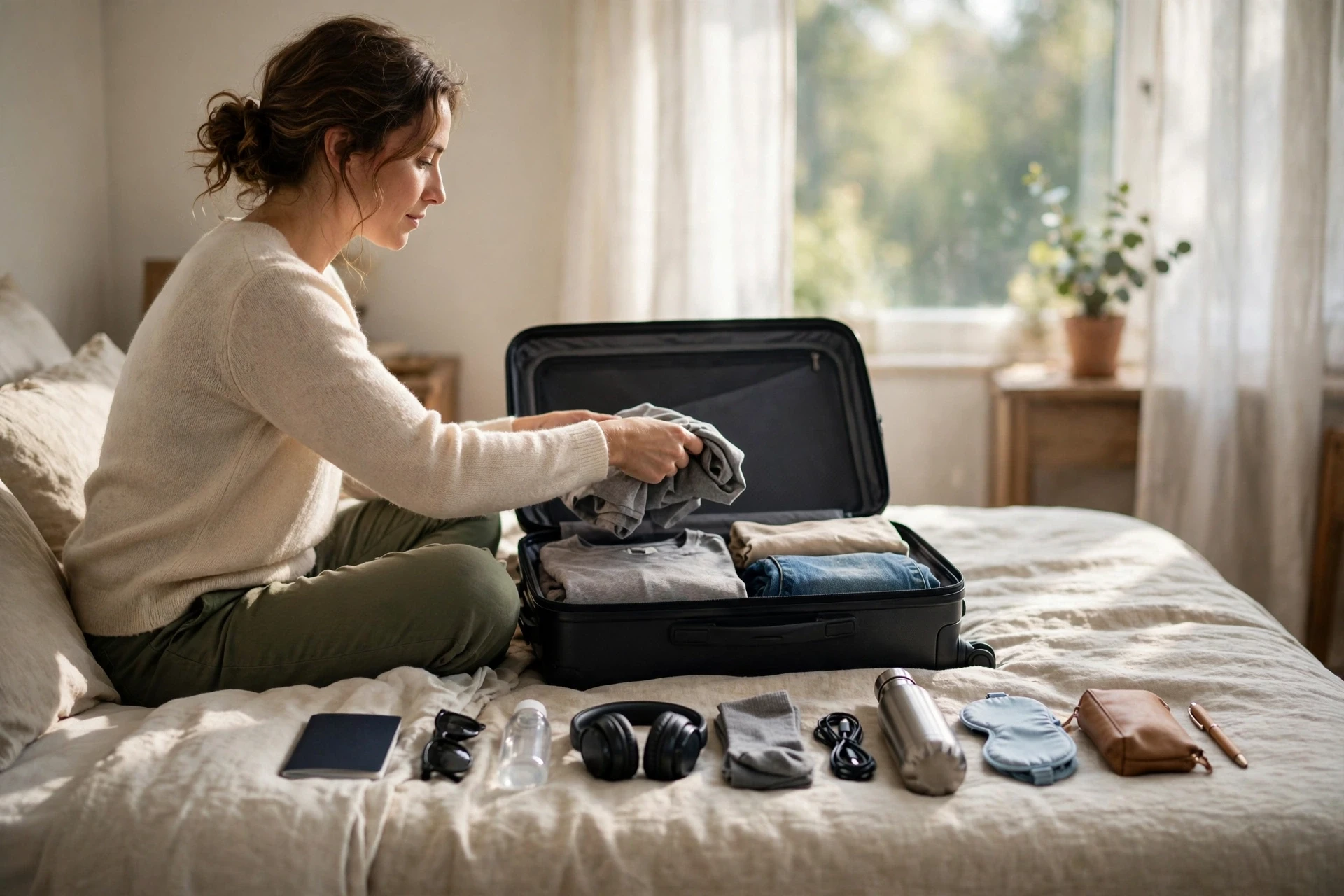
I have packed badly enough times to know the difference between a bag that works and a bag that fights you. I once flew to Denver with no phone charger, no jacket, and a suitcase full of clothes I never wore. The charger cost me 38 dollars at the airport. The jacket cost me a miserable evening on a patio in 48-degree wind. After forty-odd trips, the travel packing essentials I reach for are the same ten things, whether I am gone for a weekend or three weeks.
The 10 Travel Packing Essentials I Pack Every Single Time
I keep this list on my phone now. It has not changed in two years, and that is the point. A good list survives new destinations, new seasons, and new bags. Here are the ten, in the order I pack them.
1. A passport and a paper backup of every document
Your passport is the one item with no substitute. I check the expiration date a month before every international trip, because many countries want six months of validity left, and an expired passport at the gate ends the trip before it starts. The U.S. Department of State posts the current passport rules and renewal times on its site, and I check them before I book anything abroad.
I also carry a paper folder with printed copies of my passport, my bookings, and my travel insurance card. Phones die. Screens crack. A paper copy in a zip bag has saved me twice, once at a rental car counter in Phoenix and once at a hotel front desk in Chicago where the Wi-Fi was down. Keep the originals in your bag and the copies in a different pocket. If one goes missing, the other gets you home.
2. A phone charger, a cable, and a power bank that holds a charge
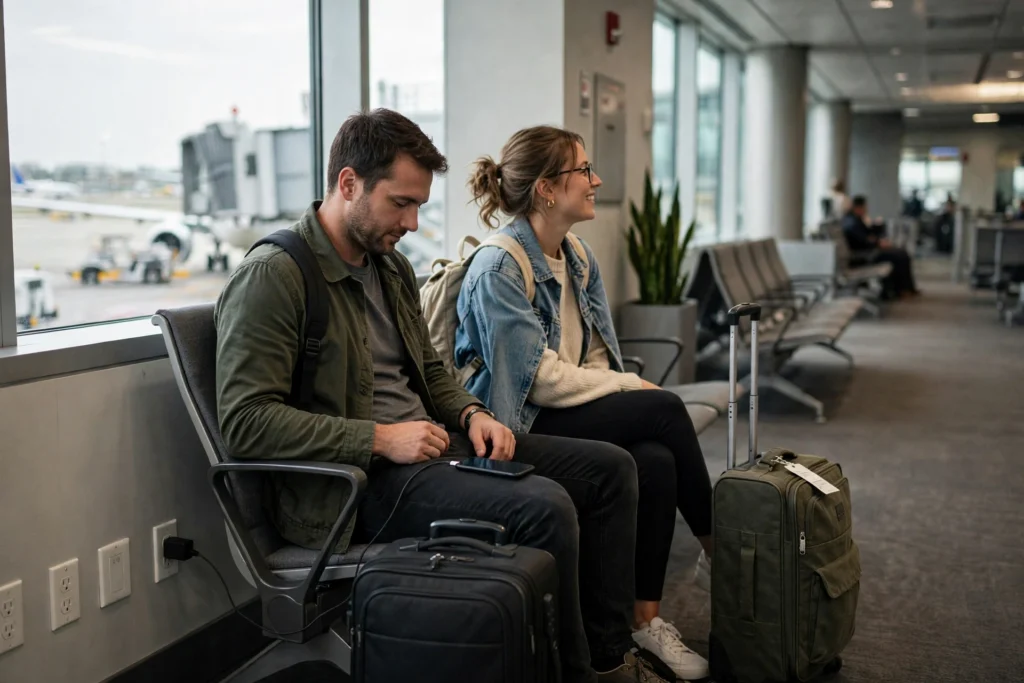
A dead phone is a dead map, a dead boarding pass, and a dead way to call a cab. I pack a wall charger, a six-foot cable, and a power bank rated at 10,000 mAh or better that holds a real charge. Outlets in hotel rooms hide behind beds and under desks, and a three-foot cable leaves your phone on the floor all night.
Test the power bank before you leave. I once carried a dead one through three airports because I had not charged it since the last trip. Charge it the night before, and throw it in the bag first so it never gets left on the kitchen counter.
3. Medications, packed in your carry-on, with a day extra
Never put medication in a checked bag. Bags get delayed, and a pharmacy in a strange town at midnight is a bad place to learn that lesson. I keep a full day of extra doses in a small zip pouch, plus the basics: ibuprofen, an antihistamine, motion sickness tablets, and bandages.
I also read the Centers for Disease Control and Prevention travel pages before any trip outside the country, because some destinations need vaccines or malaria pills weeks in advance. A travel clinic visit takes twenty minutes. A preventable illness takes the whole trip.
4. A bag you can carry comfortably for a full hour
The bag matters more than what goes inside it. I have watched travelers drag a 55-pound suitcase across cobblestones in Charleston and pay for it in sore shoulders for days. My rule is simple. I pack a bag I can lift into an overhead bin without help and carry up a flight of stairs without stopping.
Soft-sided bags forgive an extra souvenir. Hard-sided bags survive baggage handlers better. Pick one based on how you travel, not on how the bag looks in the store. Walk around the shop with it packed full before you buy. If it pulls your shoulder after five minutes, it will ruin your trip after five days.
5. One jacket that handles rain, wind, and a cold restaurant
I used to pack three jackets. Now I pack one good one. It is water-resistant, it has a hood, and it fits over a sweater. A jacket that only works in perfect weather is luggage weight with no job. In the mountains I add a thin fleece underneath. On the coast I wear it over a T-shirt.
The mistake is packing for the forecast and not the day. I have sat through a sunny morning in Asheville and a 45-degree rainstorm by lunch. The jacket that lives in my bag is the one that handles both. Leave the second jacket home. You will not miss it.
6. Shoes you have already walked ten miles in
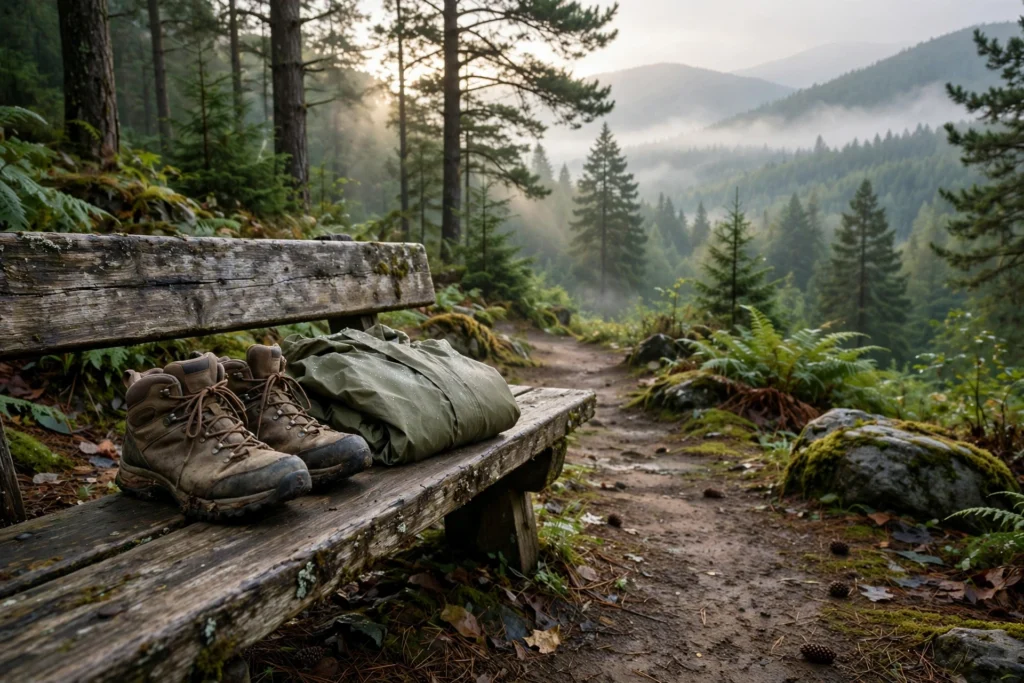
New shoes on a trip are a gamble, and the house usually wins. I pack one pair of walking shoes I have broken in over at least two weeks, plus sandals or a light second pair that packs flat. Blisters on day one change how you see a city. You start choosing the shortest route instead of the best one.
I learned this in Santa Fe, where I tried a fresh pair of boots on a five-mile walk to the plaza. By mile three I was buying bandages at a drugstore and limping back to the hotel. The shoes I pack now have at least a hundred miles on them before they earn a place in the bag. Comfort beats style every time, and most good walking shoes manage both.
7. Toiletries in a leak-proof kit that follows the liquids rule
Toiletries explode. Shampoo bottles open at altitude, and one loose cap can ruin everything in a bag. I use a clear zip pouch with screw-top bottles that I have tested upside down at home. Everything goes in the pouch, and the pouch goes at the top of the bag where I can grab it at security.
The Transportation Security Administration keeps the current liquids rules on its site, and the 3.4-ounce limit still applies to carry-ons. I decant into small bottles instead of carrying full sizes. A full bottle of shampoo is the heaviest useless thing in most bags. Buy the rest at your destination. Every town has a drugstore.
8. Snacks and a refillable water bottle
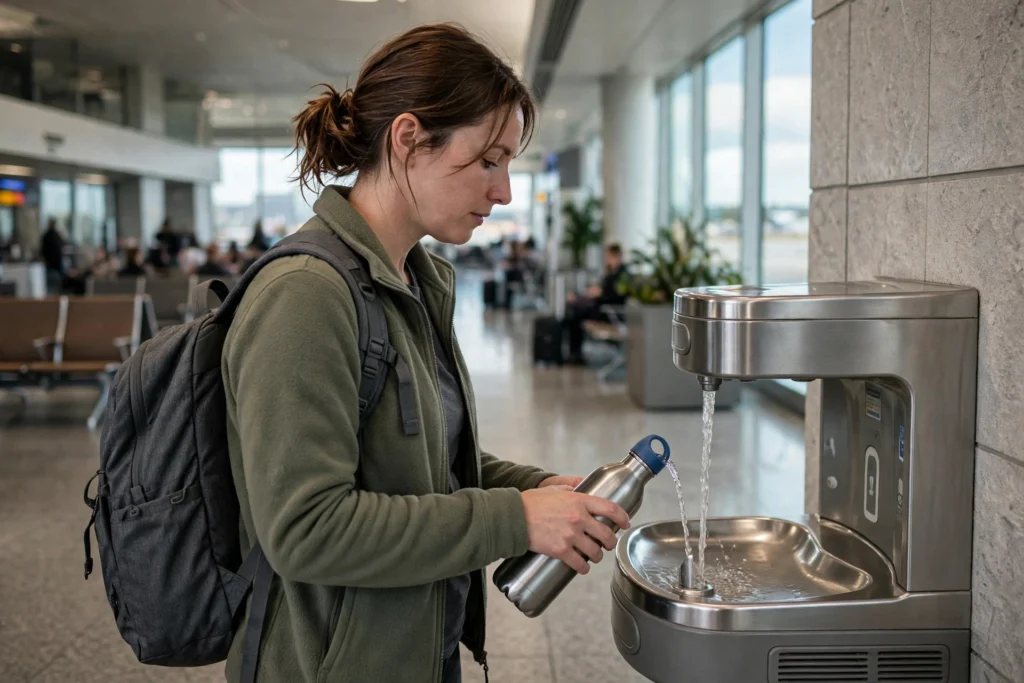
Hunger makes bad travel decisions. I pack a couple of protein bars, a small bag of nuts, and an empty water bottle that I fill after security. The snacks cover delayed flights and long drives through towns with nothing open. The bottle saves money and keeps me from buying plastic bottles all day.
On a drive through West Texas I once went ninety minutes without a gas station, let alone food. The bars in my bag were the difference between a calm drive and a miserable one. Pack food like you pack a spare tire. You hope you never need it, and you are glad it is there when you do.
9. A sleep kit for planes, trains, and thin hotel walls
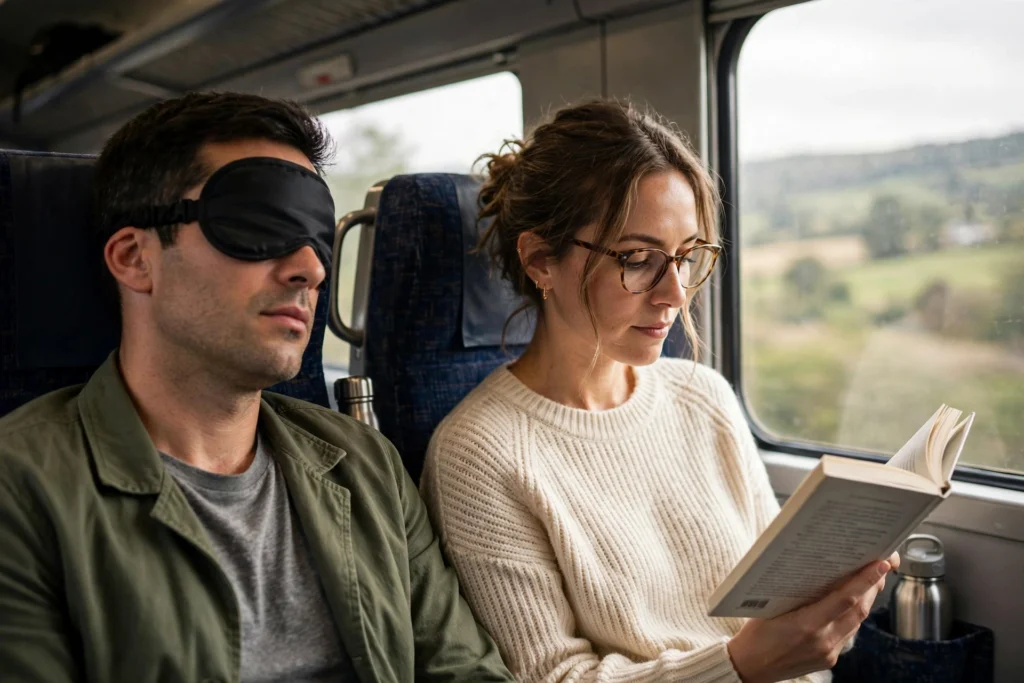
I sleep badly on planes and in noisy hotels, so I pack earplugs, an eye mask, and a neck pillow that compresses flat. The earplugs are the most important part. A snoring seatmate or a hotel hallway at 2 a.m. can cost you the next day, and a two-dollar pair of foam earplugs fixes it.
Skip the bulky U-shaped pillows that never fit in the bag. Mine rolls into a ball the size of a grapefruit. It beats a balled-up jacket, and it has earned its place on every overnight flight I have taken since 2023.
10. A small daypack that folds into your main bag
The tenth item is the one that makes the other nine useful once you arrive. I pack a light daypack that folds flat and weighs almost nothing. It holds water, snacks, a layer, and a camera while I walk a city, and it carries souvenirs on the way home.
On a day trip to the Blue Ridge Parkway I used mine to carry a jacket, two water bottles, and a paper map while the main bag stayed at the hotel. Without it I would have carried everything in my hands or skipped the hike. A daypack turns a suitcase trip into a walking trip, and walking is how you see a place.
What I Stopped Packing
A short list is only half the job. The other half is what stays home. I stopped packing a second pair of jeans, because one pair plus laundry beats two pairs every time. I stopped packing a hair dryer, because every hotel I have stayed in for years has one. I stopped packing books, because my phone holds more reading than a week allows.
The worst offender was the “just in case” pile. A dress for a dinner I would never attend, a spare pair of shoes for weather that never came, a full first-aid kit fit for a camping trip. The pile added five pounds and zero good days. If you cannot name the day you will use something, leave it home. You can buy almost anything you forgot within a mile of any hotel.
How I Pack It All Without the Bag Exploding
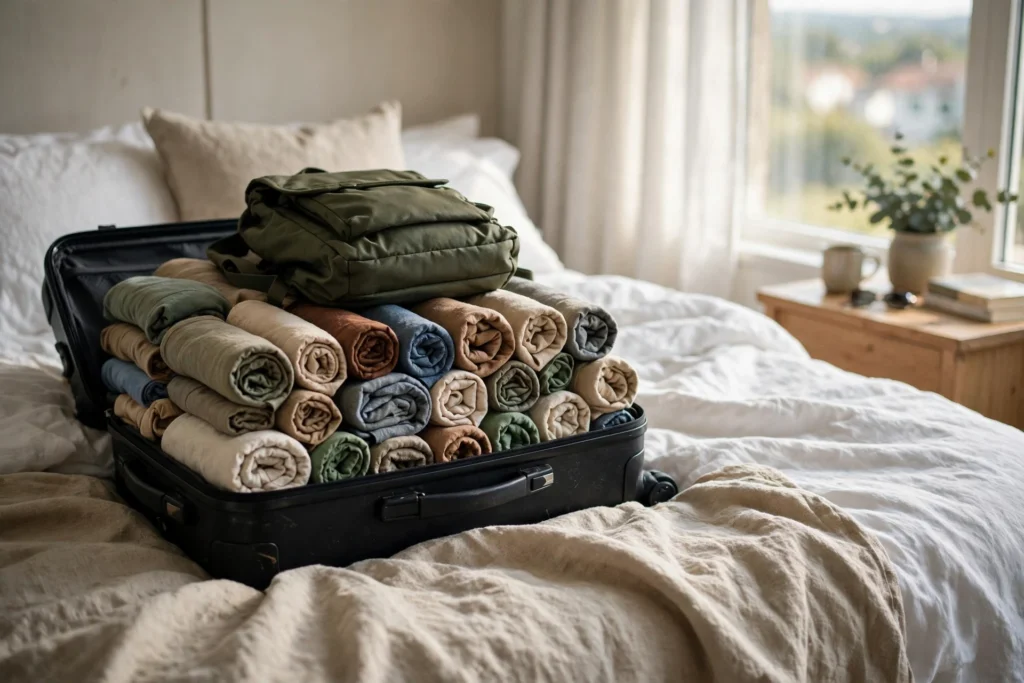
The order matters. Heavy things go at the bottom near the wheels. Shoes go in bags so they do not touch clean clothes. Liquids go at the top. The things I need on the plane, charger, snacks, earplugs, go in an outside pocket.
I use packing cubes, but not the way the internet tells you to. I use three: one for tops, one for bottoms, one for everything else. The cubes keep the bag from turning into a pile by day three, and they make repacking at 6 a.m. a two-minute job instead of a ten-minute one. Roll soft clothes, fold stiff ones. A rolled T-shirt takes half the space of a folded one, and it comes out with fewer wrinkles.
Questions People Ask Me About Packing Light
How many days of clothes should I pack for a two-week trip?
Pack for five days and plan to do laundry once. A hotel sink wash or a laundromat stop takes an hour and saves you from hauling a second bag. I have done two weeks in Europe with a carry-on this way, and the only cost was one load of laundry in a small town in Portugal.
Is a carry-on really enough for a week?
Yes, if you pack to the list above and skip the just-in-case pile. A carry-on forces the choices that matter. It also means you skip baggage claim, you never lose a bag, and you can catch a bus or a train without wrestling luggage up the steps.
What do I do if I forget something important?
Buy it where you land. Toothpaste, chargers, umbrellas, and even jackets are for sale near every airport and hotel. The only things you cannot replace quickly are a passport, medication, and glasses. Those three ride in your personal item, never in a checked bag.
Should I pack differently for a road trip?
The list stays the same, but the bag can be bigger. A car forgives weight, so add a cooler, a blanket, and a real pillow. The discipline still matters, because a car full of stuff you never use is a car you cannot find anything in.
What is the one thing first-time travelers always forget?
A pen. You need one for customs forms, for luggage tags, and for writing down an address when your phone dies. I keep one clipped to my daypack. It weighs nothing and it has saved me more times than I can count.
Pack It Tonight, Walk Out Calm Tomorrow
Ten items. One bag. No scrambling at the door. These travel packing essentials work because they are the ten things that carry the trip, and everything else stays home. Pack the list tonight, set the bag by the door, and spend the morning thinking about where you are going instead of what you forgot.