Christmas Villages Europe Does Best When the Village Is Small
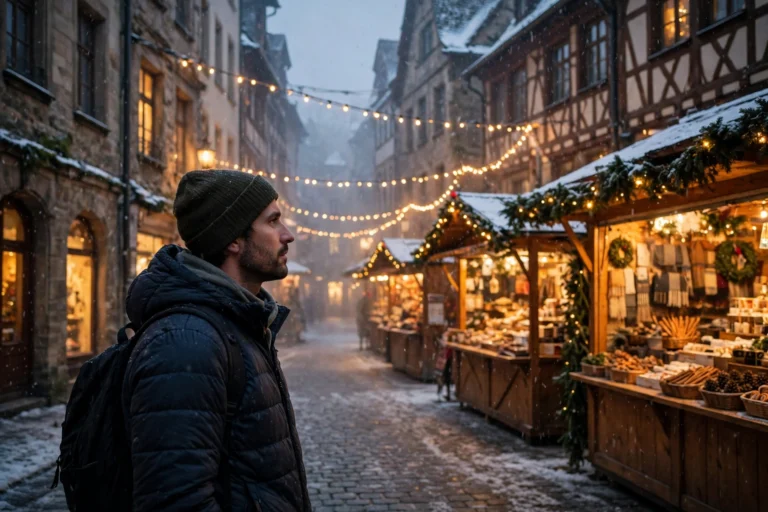
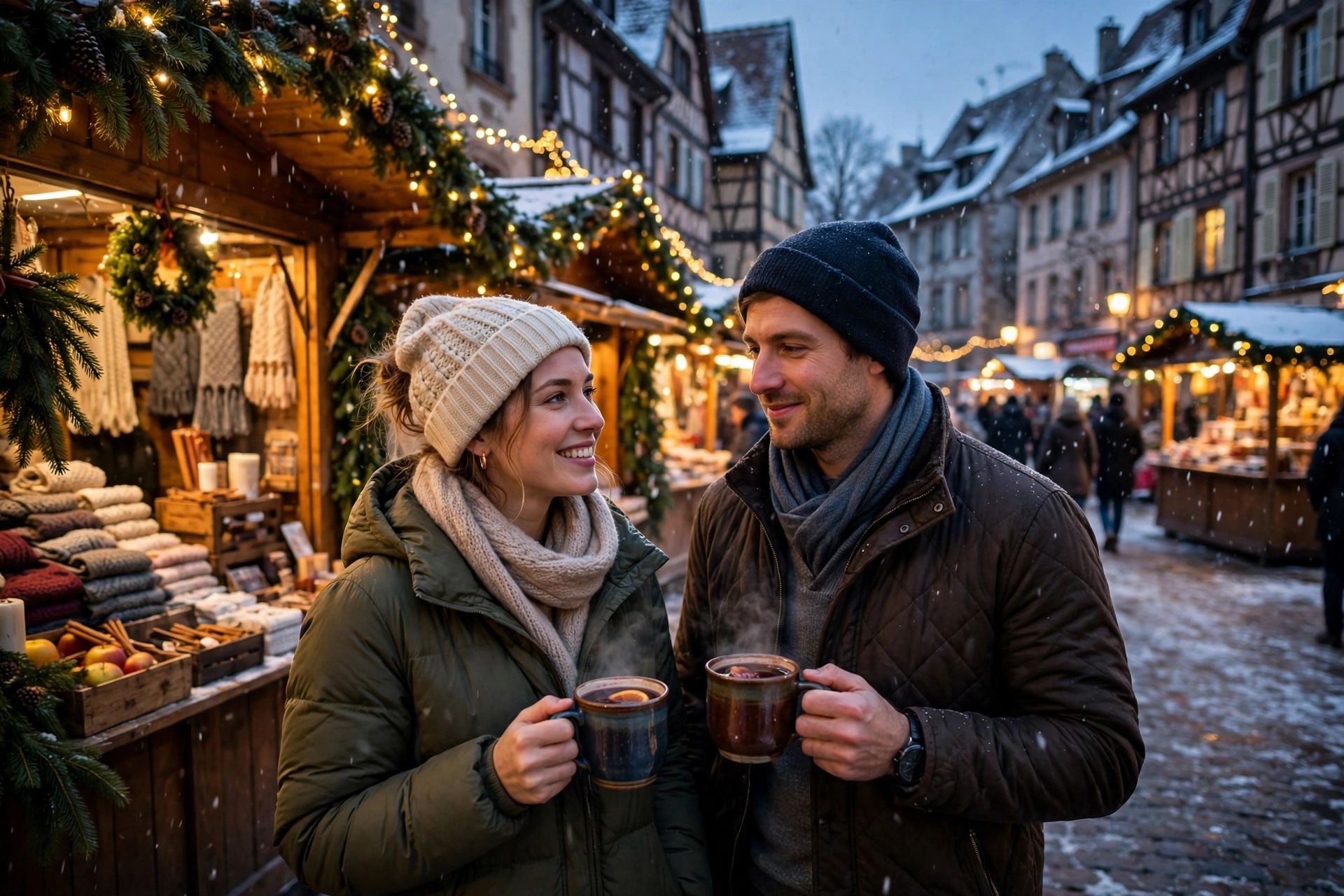
I have spent five Decembers chasing Christmas light across Europe, and the pattern never changes. When I rank the Christmas villages Europe has to offer, the small ones win every time. The big-city markets have their place, but the villages give you the whole scene in one walk: woodsmoke, choir practice drifting from a church door, and a mug you drink with both hands. This list is the fifteen I would go back to, ranked by how long each stayed with me.
How I Picked These Fifteen (and What I Left Out)
I ranked the prettiest Christmas towns in Europe by three things: can you walk the old town in one evening, does the market sell things made nearby, and can you sleep inside the village instead of commuting in from a city. The best European Christmas market villages pass all three.
I left out the big-city markets on purpose. Vienna and Nuremberg run wonderful markets, but they belong on a city list, not this one. I also cut villages whose stalls were mostly imported ornaments and phone cases. If a transatlantic flight is not in the cards this year, there are American Christmas markets worth visiting too, and I have ranked the US ones separately.
And if Europe is not in the cards this year at all, Christmas places across the USA do December well too, from snowy mountain towns to warm-weather escapes.
Alsace, Where I Start Every December
If you only have one week, spend it here. Five stops sit within an hour of each other along the Alsace Wine Route. This is the Christmas in Alsace villages travel guide I wish I had on my first trip: five stops, one road, four nights, no rental car if you plan the buses.
Strasbourg, France
The big one, and it earns its size. The Christkindelsmärik has run in some form since 1570, one of the oldest Christmas markets in Europe, and it sprawls across a dozen squares in the old town. I start at Place Kléber under the great tree, then drift to Petite France as the lights come on. Saturday afternoon is the worst of it, when the lanes near the cathedral barely move. Stay in Petite France or Krutenau and walk everywhere. Check the Strasbourg tourist office site for market dates before you book.
Colmar, France
Colmar is the prettiest town on this list after dark. Six small markets sit minutes apart in the old town, and the canals of Little Venice reflect the lights so well the whole place feels staged. It is just that good at dusk. December weekends bring park-and-ride shuttles from lots outside the center. Leave the car there and walk in. The Colmar tourism site posts market dates and shuttle details each autumn.
Riquewihr, France
A wine village that looks the same in December as on a postcard from 1950, except the postcard never had this many people in it. The main street runs between half-timbered houses and wine cellars, with the Dolder tower watching over it all. Come early or after six, when the day buses have gone, and you get the village back. Midday on a December Saturday is a slow shuffle. Buy wine from the cellar door, not the stall with the longest queue.
Eguisheim, France
Eguisheim is the quiet one, and that is exactly why it made the list. The lanes run in concentric circles around the old castle, so you can walk the whole village in twenty minutes. The market is small, a few dozen stalls, the winemakers pouring their own bottles. It was voted France’s favourite village in 2013, and December shows why: lights in the windows, no queues, and a pace that lets you look up.
Kaysersberg, France
Kaysersberg sits in a valley on the Wine Route with a ruined castle on the hill above it, and its market feels like a village fair that sells very good wine. This is the birthplace of Albert Schweitzer, whose childhood home is now a small museum. The market runs in the old town squares, local winemakers staffing their own stalls, and the walk up to the castle at dusk is worth it for the view over the rooftops.
Four German Towns That Still Feel Like 1600
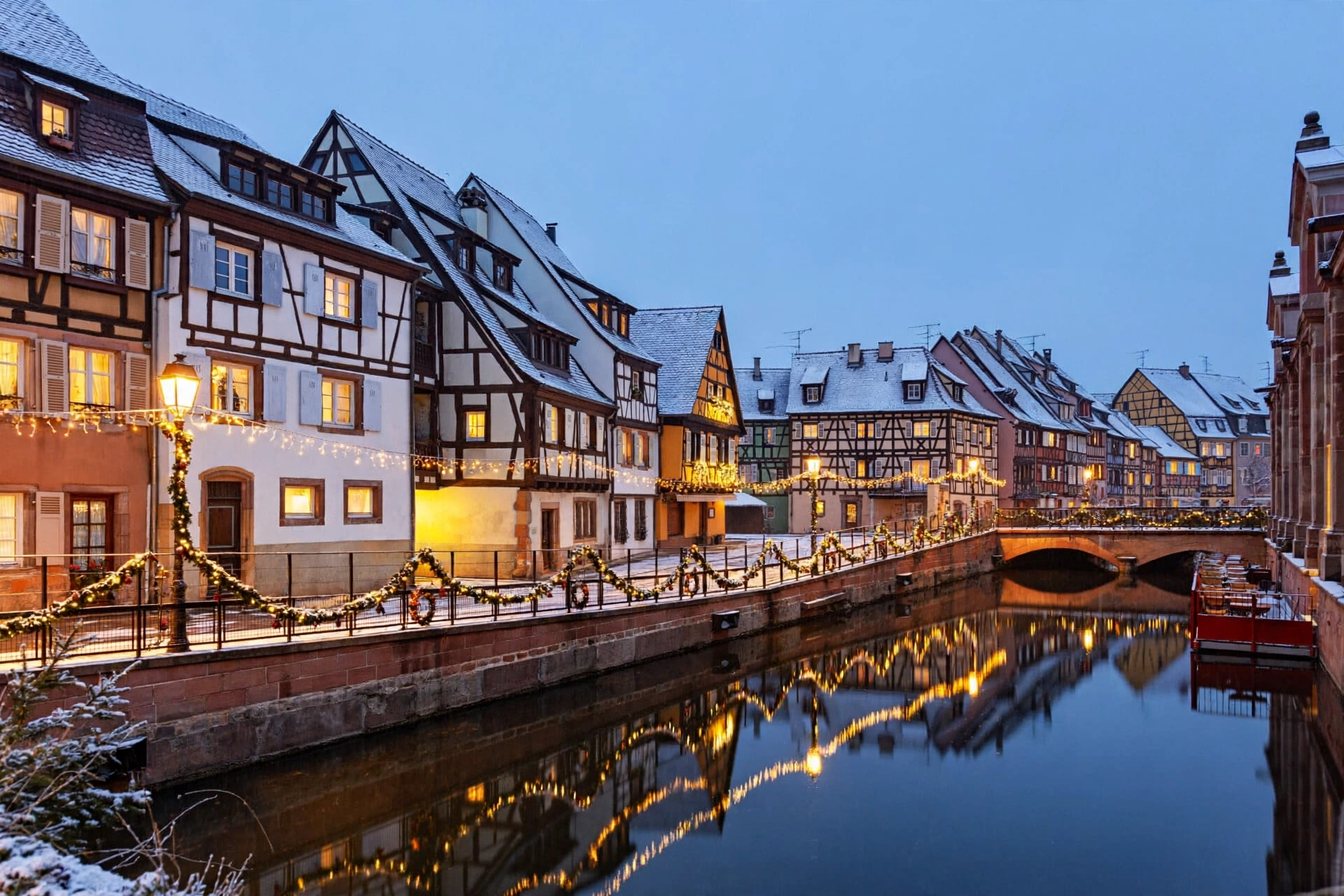
Germany holds the fairytale Christmas villages in this list, the ones with walls, towers, and timber frames older than most countries. These four are spread out, so treat them as separate trips or a slow drive, not a single weekend.
If you want the full set of fairytale Christmas destinations to visit, the list runs from the Rhine to the Danube with the same timber, light, and market squares.
Rothenburg ob der Tauber, Germany
The Reiterlesmarkt fills the Marktplatz with stalls and the smell of roasted almonds, as it has in some form since the 15th century. The Käthe Wohlfahrt Christmas shop stays open all year, which tells you how seriously this town takes December. Walk the town walls at dusk, find the Plönlein corner before the tour groups do, and book the Night Watchman tour for the town’s stories after dark. Check dates on the Rothenburg tourism board site: the market opens in late November.
Monschau, Germany
Monschau sits in a narrow Eifel valley, half-timbered houses leaning over the Rur river, and it feels further from the modern world than the drive suggests. The mustard mill has ground its jars since 1882. The Christmas market fills the old town on Advent weekends. The Red House museum shows how the cloth merchants lived. Go on a Friday evening if you can. The market is quieter, the lights come on over the river, and you can hear the water again.
Quedlinburg, Germany
Quedlinburg is a UNESCO-listed old town with more than a thousand half-timbered houses. In December it opens its courtyards for Advent weekends, so you drink glühwein in gardens closed the rest of the year. The Schlossberg gives you the view over the rooftops, and the market below is small enough to cross in five minutes. Stay in the old town. The morning after a market night, frost on the timber frames, is the best time to walk it.
Gengenbach, Germany
Gengenbach is the smallest town on this list, and it pulls the best trick: the town hall turns into a giant Advent calendar, one window lit each evening until Christmas. The market fills the square in front of it, the Black Forest rises on every side, and the air smells of pine and bread. Come on a weeknight. The calendar lighting draws a crowd, but an hour later the square is yours, and the walk back through the lanes is the quietest on this list.
Three Stops on the Way East
East of Germany the markets get older, colder, and less crowded. These three reward travelers willing to fly further or ride a longer train.
Hallstatt, Austria
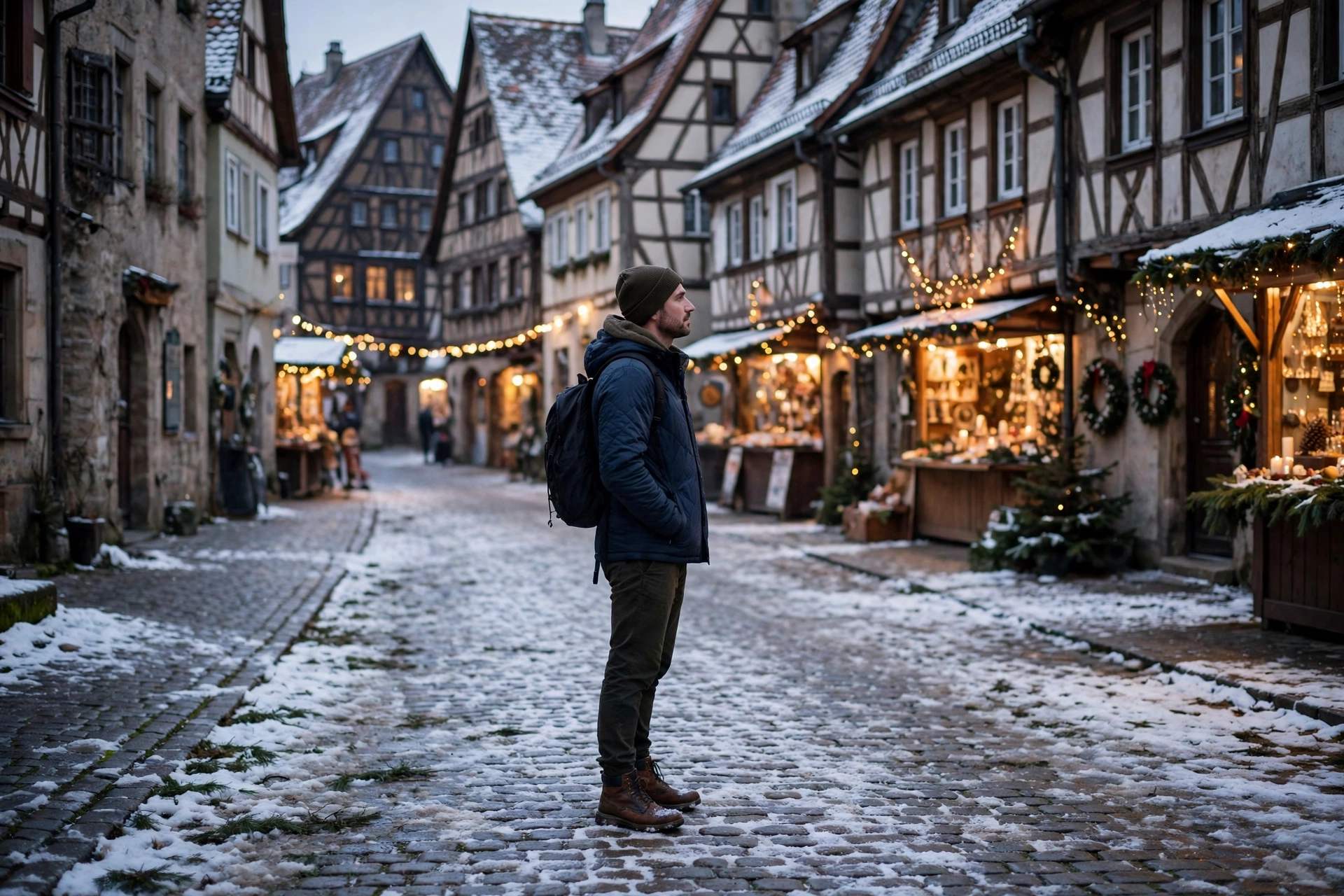
Hallstatt sits on a lake so still the village reflects in it twice, and the salt that made it rich has been mined here for thousands of years. The Christmas market is small, a single square with a handful of stalls, running for a short stretch in December, so check the dates before you plan around it. Midday brings day-trippers by the busload, and the lakeside lane gets tight. Stay overnight if you can. The Hallstatt tourism site posts the market dates, and early morning, before the buses arrive, is the village at its best.
Český Krumlov, Czech Republic
Český Krumlov bends around the Vltava under a castle that dominates the skyline, and its Christmas market fills Svornosti Square with wooden stalls and the smell of trdelník. It is a fraction of Prague’s markets in size and crowd, which is the point. Walk up to the castle gardens for the view over the red roofs, then come back after dark when the tree lights up. Book a room inside the old town. The walk home across the river at midnight is part of the trip.
Tallinn, Estonia
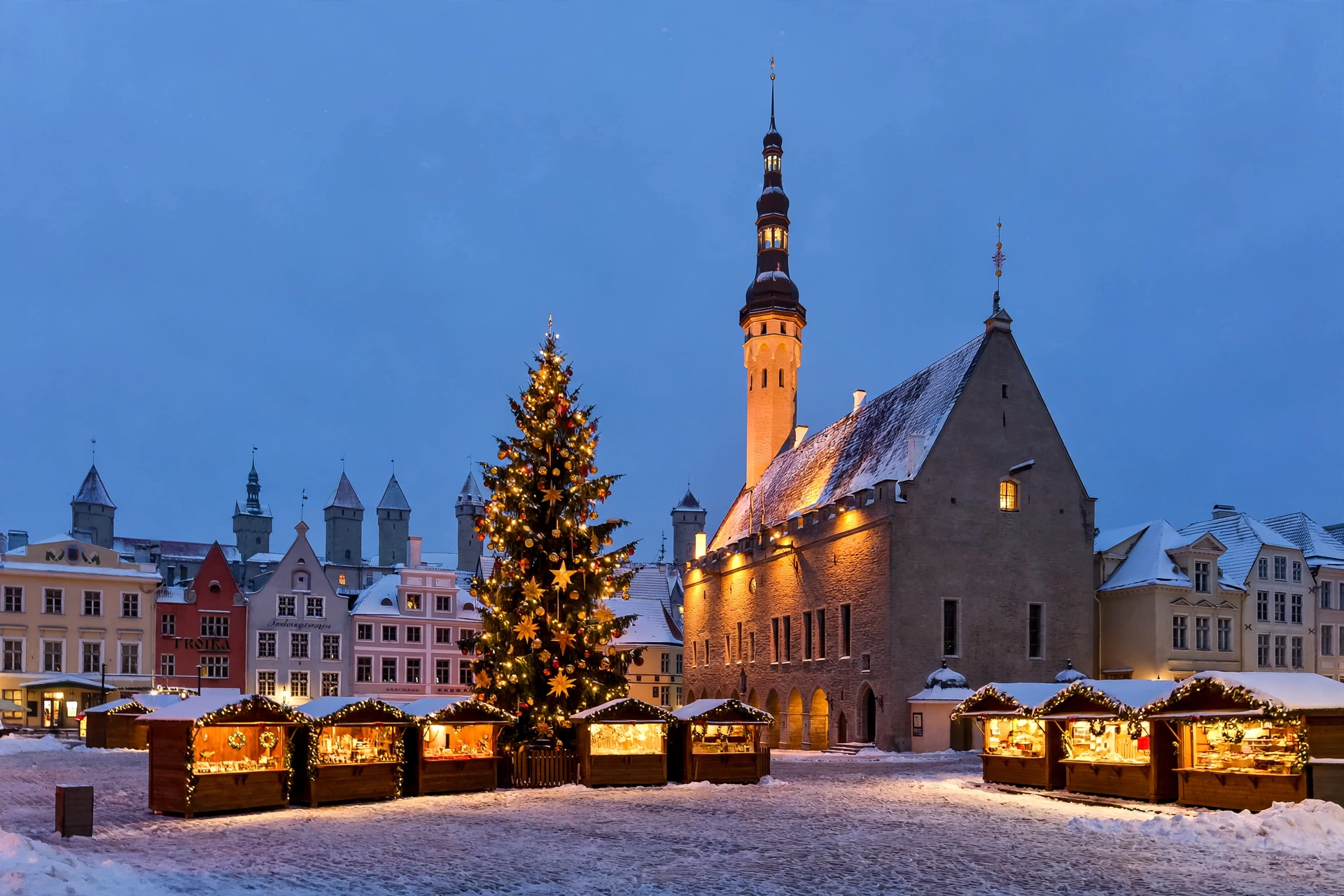
Tallinn’s Town Hall Square hosts one of the region’s oldest Christmas markets, and the city claims its public Christmas tree tradition goes back to 1441. The medieval old town is UNESCO-listed, the stalls sell black pudding and hot spiced wine, and snow, when it comes, makes the whole square look like a film set. It is properly cold here, colder than Alsace or Germany. The Visit Tallinn site lists market dates and winter events, and the walk up Toompea hill at dusk is worth the wind.
The Three I Almost Left Off
Every list has a cut line, and these three sat on it until the last draft. They are further out, smaller, or harder to reach in December, and that is exactly why they belong here.
Sibiu, Romania
Sibiu’s Grand Square fills with a Christmas market and an ice rink in December, and the Transylvanian town behind it is one of Romania’s prettiest. The Council Tower gives you the view over the rooftops, the stalls sell mulled wine and chimney cake, and the old town stays walkable on a market Saturday. Fly into Sibiu directly: the airport is close to the center, and a December weekend here costs a fraction of an Alsace one.
Brașov, Romania
Brașov is the calmer Romanian stop: a market in Council Square under the Black Church, with the Tampa mountain and its cable car rising behind the old town. The Carpathian air is sharp in December, the crowds thinner than in Sibiu, and the old town lanes stay quiet after the market closes. Take the cable car up at dusk if the weather holds: the view over the rooftops and the lit square is the best in this section.
Alberobello, Italy
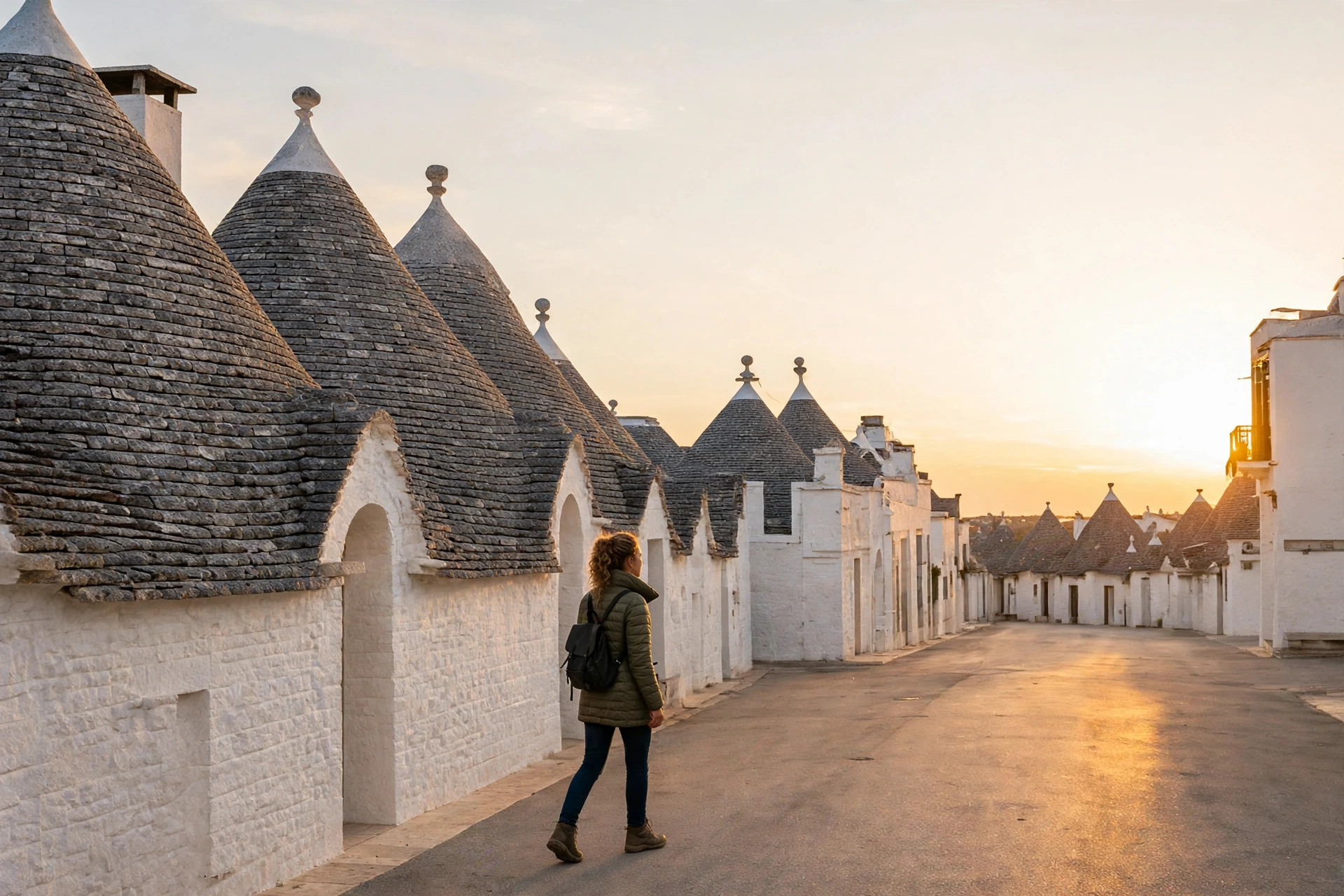
Alberobello is the warmest stop on this list and the strangest to look at: whitewashed trulli houses with cone roofs, a UNESCO site, strung with Christmas lights in December. It has no big market, and that is the appeal. You come for the lanes, the lights, and the food, basing in Bari, an hour away. December is low season, so the lanes are quiet, the restaurants have tables, and the trulli look better with no crowd in front of them.
Christmas Villages Europe Are Best After Dark
Small European towns at Christmas time empty out after the day buses leave, and that is when they are worth the most. The stalls stay open, the lights come on, and the lanes go quiet enough to hear your own steps. I plan every village day around the evening: arrive by three, walk the market, eat early, then walk it again.
That means staying the night, and the small villages have few rooms. Book by September for December weekends, earlier for a room inside Riquewihr or Eguisheim. Base in Colmar or Strasbourg for Alsace, in Rothenburg for the German towns. Weeknights are easier everywhere: the room that sells out on a Saturday sits empty on a Tuesday, often for less.
What December Does to a Village Trip
December in Alsace and Germany means highs around 4 or 5 degrees, lows near freezing, and dark by half past four. Snow is possible, but rain is more likely in the valleys, and the cobbles get slick. Tallinn and the Romanian towns run colder, Alberobello warmer, so pack for the coldest stop on your route.
Pack waterproof shoes with grip, layers for under a coat, gloves that let you hold a mug, and a small bag to carry in front of you. Leave the wheeled suitcase at the hotel and use a backpack: the lanes are cobbled, the stairs are steep, and nobody enjoys dragging wheels over either.
The Ones I Would Skip Next Time
Skip Strasbourg on a Saturday afternoon, when the lanes near the cathedral barely move. Skip Hallstatt between eleven and three, when the day buses stack up along the lake. And skip any stall selling the same imported ornaments you saw three towns ago: if the maker is not standing behind it, keep walking.
Skip driving into the smallest villages at midday. Riquewihr and Eguisheim have little parking and less patience for it. Park outside, walk in, and you arrive in a better mood than the drivers circling the center. And skip the plan that fits five villages into one day. You will see five car parks and no villages.
Questions I Get Before Anyone Books
When do the markets open? Most open the last weekend of November and run to December 23 or 24. A few, including Strasbourg and Tallinn, run past Christmas into the New Year. A couple of the smallest run only on Advent weekends, so check the town’s tourism site before booking.
Can I do Alsace without a car? Yes. Trains run Strasbourg to Colmar in about half an hour, and buses reach Riquewihr, Eguisheim, and Kaysersberg from Colmar. A car helps for evenings and the smallest villages, but I have done the whole Alsace stretch by train and bus, and it works if you plan ahead.
Is it worth it with kids? Yes, with caveats. The lights, carousels, and market food keep kids happy for hours, but the days are short, the cobbles are hard on small feet, and a stroller is a liability here. Bring a carrier for toddlers, plan a warm stop every hour, and quit while everyone is still having fun.
How far ahead should I book? Rooms for December weekends go by September in the small villages, and Strasbourg and Colmar sell out first. Weeknights are easier and cheaper. Flights are usually fine six to eight weeks out, but rooms are the bottleneck. Lock those in first.
Are the markets worth it if you hate crowds? Yes, if you go where the buses do not. The Christmas villages Europe does best are the ones with one market square instead of five, and a bakery that still sells to locals first. Go on a weeknight, stay overnight, and the crowds thin to almost nothing by eight.
Pick One Road and Walk It Slow
Do not try to see all fifteen in one trip. Pick one road, Alsace or the German towns, book a base town, and walk it slow. The villages will still be there next December.
If you want the big-city version of this trip, Vienna’s Christmas markets and magic are the natural next stop, with a dozen markets and music in every square.