12 Best Places to See Fall Foliage in New England
New England does not hand you its color all at once. I have chased fall foliage New England from the northern mountains to the Connecticut coast, and the color moves like a slow tide, starting in late September and reaching the southern hills by late October. I have driven these roads in good years and in years when rain knocked the leaves down a week early, and this list is the result: twelve places I would drive back to, ranked by the color I saw, with the timing and the base towns that make each one work. If you would rather let someone else drive, start with my New England fall foliage tours.
Why Fall Foliage New England Is a Timing Game
The color starts high and north, then slides downhill and south. The first reds show on the high slopes of northern Vermont and New Hampshire in the last week of September, and the last golds hang on in the Connecticut river valleys into the last days of October.
I check the state foliage reports before I lock a route, and New Hampshire’s foliage tracker is the one I trust most for the White Mountains. Every September I pull up a peak fall foliage map new england search and compare the state trackers, because the peak moves by a week or more depending on rain and frost.
When to see Vermont fall colors, specifically: the Northeast Kingdom and the high Green Mountains turn first, late September into the first days of October, while the Champlain Valley and the southern towns hold their color into mid-October. Vermont runs its own weekly foliage report too. Drive north for the early color, then work your way south.
Aim for the middle of the window, not the first day of it. A tree at full color holds for about ten days, and the second half is usually better than the first. One hard rain can strip a ridge bare, so I build in a spare day and drop south when the color goes.
The Twelve, North to South
1. Stowe and Smugglers’ Notch, Vermont
Stowe tops every foliage list. Route 108 climbs out of town and threads Smugglers’ Notch, a narrow pass where boulders the size of cars squeeze the road to one lane, with maple and birch blazing. The notch peaks in the last days of September, earlier than the town below it, so drive it first. The base is Stowe itself, and the honest problem is the price. Stay in Waterbury and come into the notch before 8, when the pullouts are still empty.
For a full list of things to do in Stowe, Vermont beyond the foliage, start with this guide.
2. Woodstock and Quechee Gorge, Vermont
Woodstock is the prettiest village in the state, and Quechee Gorge, ten minutes east on Route 4, is the sight that justifies the stop. The Ottauquechee River cut a gorge about 165 feet deep here, and the trail down to the water puts you under a canopy of red maple. Walk the rim, then take the trail down. The river path behind the shops beats the crowded Middle Bridge. Base in Woodstock and plan on early to mid-October. The gorge trail is short, steep, and slick after rain.
3. Route 100 Through the Mad River Valley, Vermont
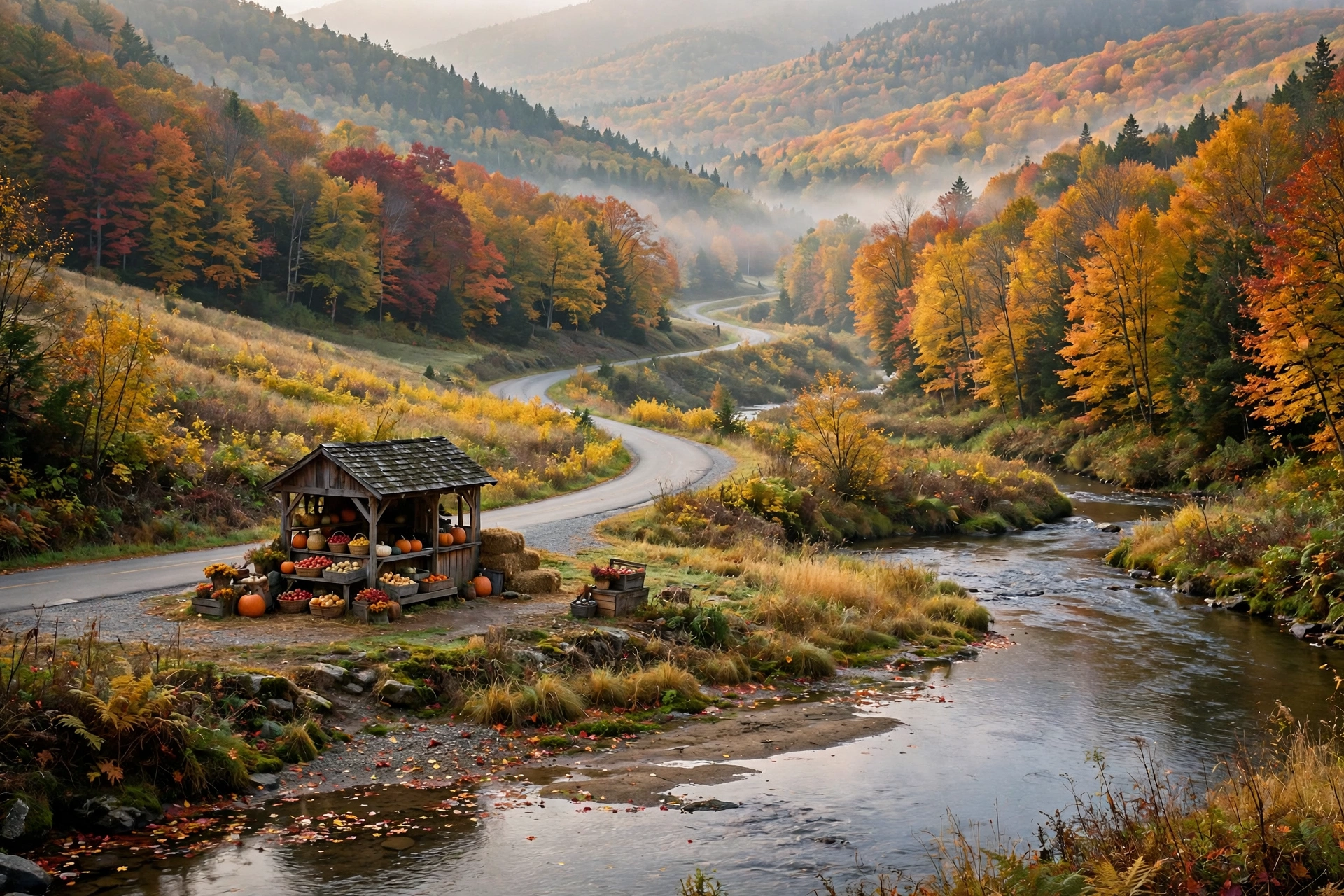
Route 100 is the spine of Vermont foliage, and the Mad River Valley stretch is its best twenty miles. The road follows the river past farm stands and hillsides in bands of red and gold. Warren Falls is the stop everyone makes: the river drops through rock ledges under the trees. This is the drive for people who hate the Stowe crowds, and it peaks in the first week of October. Fog can hold until ten, and the mist burning off the river is the best photograph on this list.
4. The Kancamagus Highway, New Hampshire
The Kancamagus runs 34.5 miles from Lincoln to Conway. The pass at 2,855 feet takes in ridge after ridge of color. Sabbaday Falls is the stop I never skip: a short walk to a gorge where water drops through a rock chute. I mapped every stop in my guide to the Kancamagus Highway in fall: start before 8 and drive west to east. There are no gas stations on the highway, so fill up in Lincoln. The road peaks from late September into mid-October, and the overlooks fill by ten on Saturdays.
5. Franconia Notch, New Hampshire
Franconia Notch is the Kancamagus’s quieter neighbor. The Flume Gorge is the main draw: a boardwalk through a narrow granite gorge. The Basin is a free stop ten minutes north, and Echo Lake sits at the foot of Cannon Mountain. The White Mountain National Forest site lists trail conditions, and I check it before I go, because the Flume boardwalk can close after heavy rain. Base in Lincoln or Franconia. Peak is late September into the first week of October. The Flume charges admission and fills by mid-morning, so walk the Basin first.
6. Mount Monadnock, New Hampshire
Monadnock is often called one of the most climbed mountains in the world, and the bare summit explains why: in mid-October the hills in every direction are red and gold. The White Dot Trail is the standard route: steep, rocky, about two miles up, and two hours to the summit for most people. The summit is bare rock, so wind hits hard, and I bring a shell. The trail is all rock and roots. Base in Jaffrey or Peterborough. Go on a weekday: the parking lot fills by nine on October Saturdays.
7. Acadia National Park, Maine
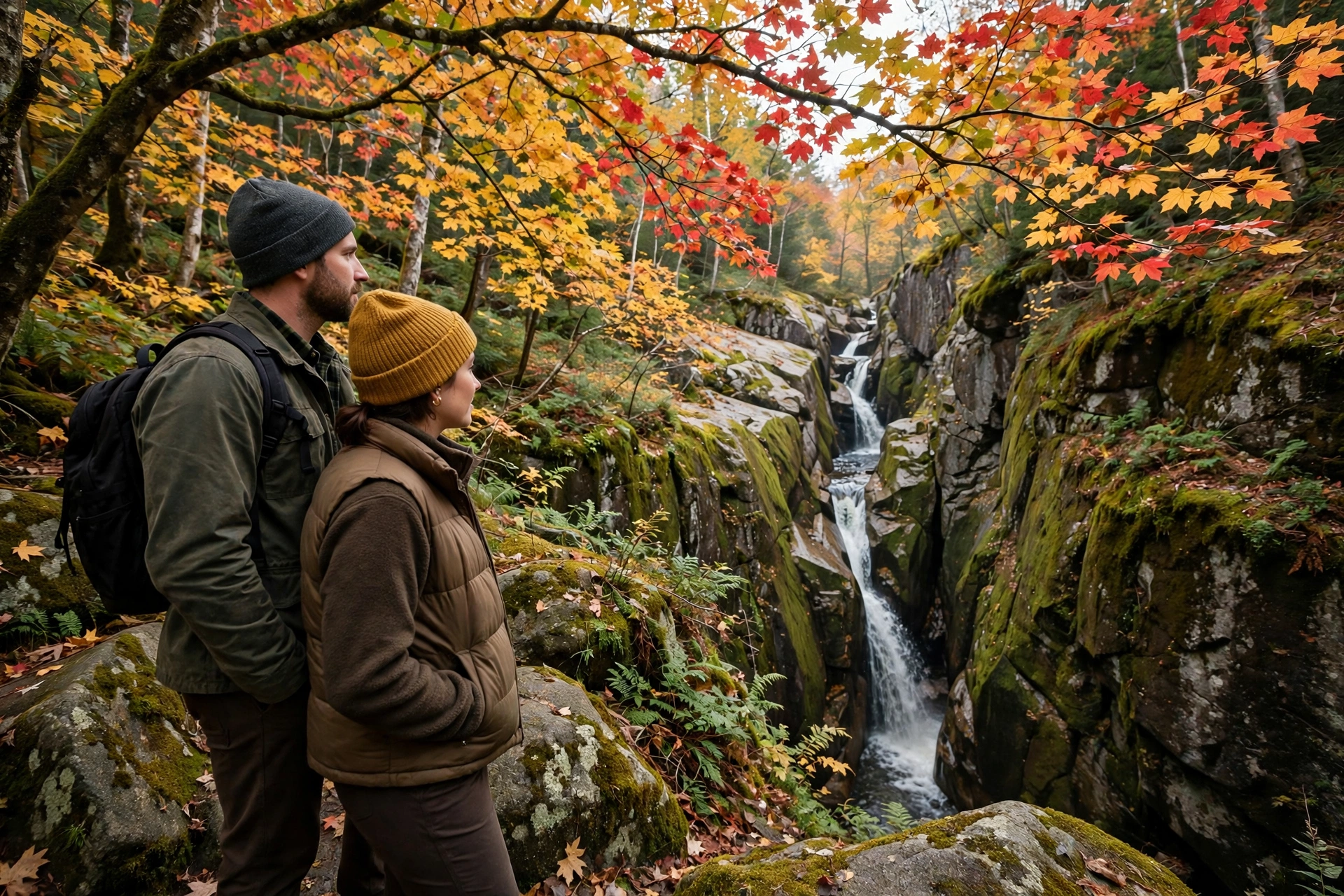
Acadia is the only national park in New England, and the ocean is in every view. The Park Loop Road runs 27 miles around Mount Desert Island, and Jordan Pond is the classic stop. Cadillac Mountain is the highest point on the Atlantic coast north of Brazil. Acadia’s own site posts the carriage road status and the Cadillac Summit Road reservation rules: the summit road requires a reservation in season, and the slots sell out days ahead. Base in Bar Harbor, where peak runs mid-October, but stay outside town and drive in early.
For more Maine fall foliage locations beyond Acadia, start with this guide to seven of the best spots.
8. Camden and Mount Battie, Maine
Camden is the prettiest harbor town on the Maine coast, and Mount Battie is the reason to stop. The summit sits about 780 feet above the harbor, with a view across the bay and the windjammers at anchor. The road to the top is open to cars in season, and the walk to the stone tower takes ten minutes. The town is small enough to walk in an hour, and the harbor walk is free. Peak is mid-October, and the town is quieter than Bar Harbor, so eat lobster at the harbor.
9. The Mohawk Trail, Berkshires, Massachusetts
Route 2 across the Berkshires, the Mohawk Trail, is the oldest scenic road in the country. The hairpin turn above North Adams takes in the whole valley in color. Mount Greylock, the tallest peak in Massachusetts at 3,491 feet, sits just south of the trail. Peak runs mid to late October here, later than Vermont, which makes the Berkshires the right stop for the second half of a trip. Base in North Adams or Williamstown, and go early: the hairpin pullout is small and the summit road closes in late October.
10. Arnold Arboretum, Boston, Massachusetts
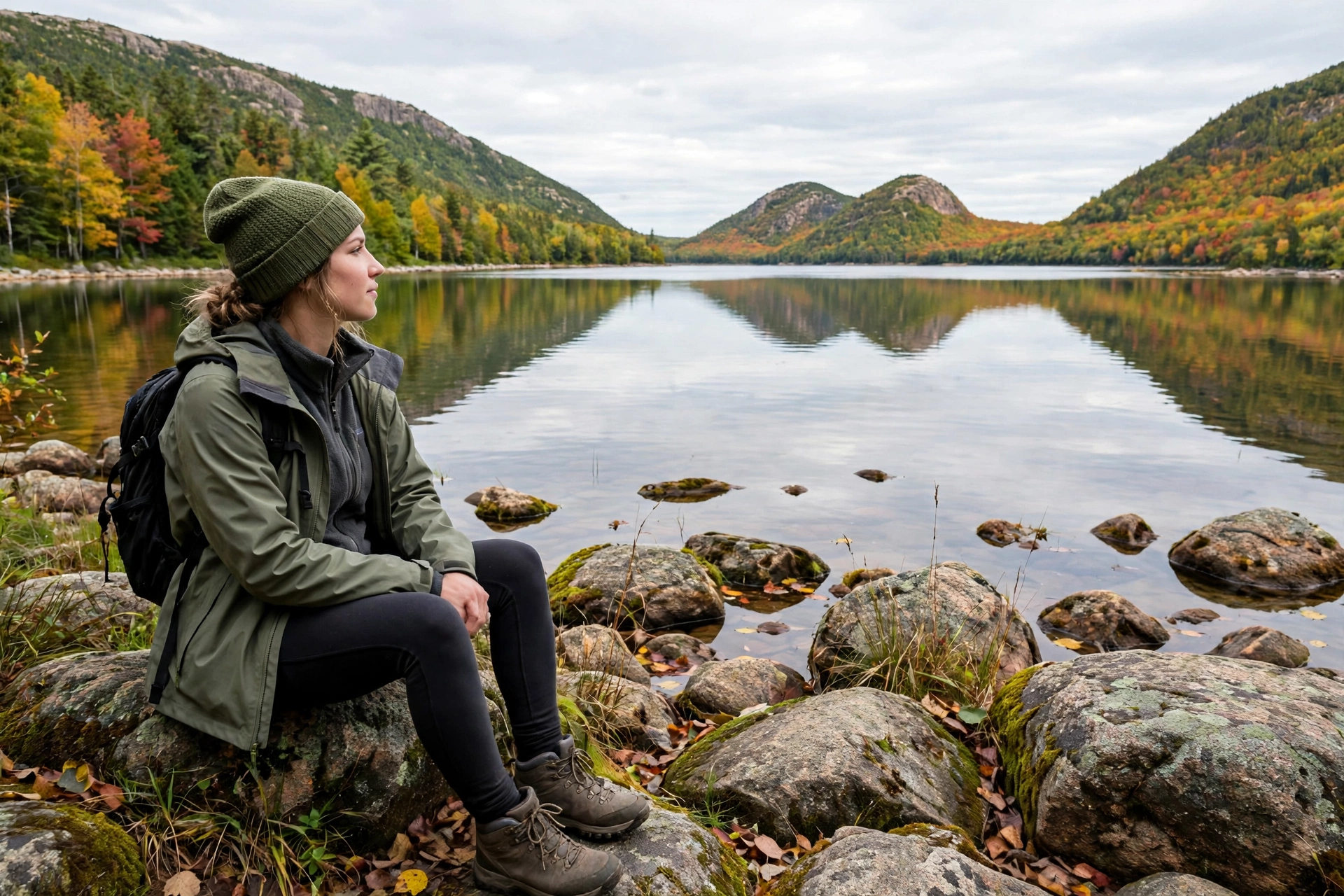
The Arnold Arboretum is the best foliage in Boston without a car. The Arboretum covers 281 acres in Jamaica Plain, and in late October its maple collection turns in shades that rival anything in Vermont. Admission is free, and the Orange Line drops you at Forest Hills station, a ten-minute walk from the gate. Peters Hill is the walk to make, and the color is thickest on the south slope. It is the best backup on the list: if rain ruins a mountain day, the Arboretum is still worth the trip.
11. Litchfield Hills, Connecticut
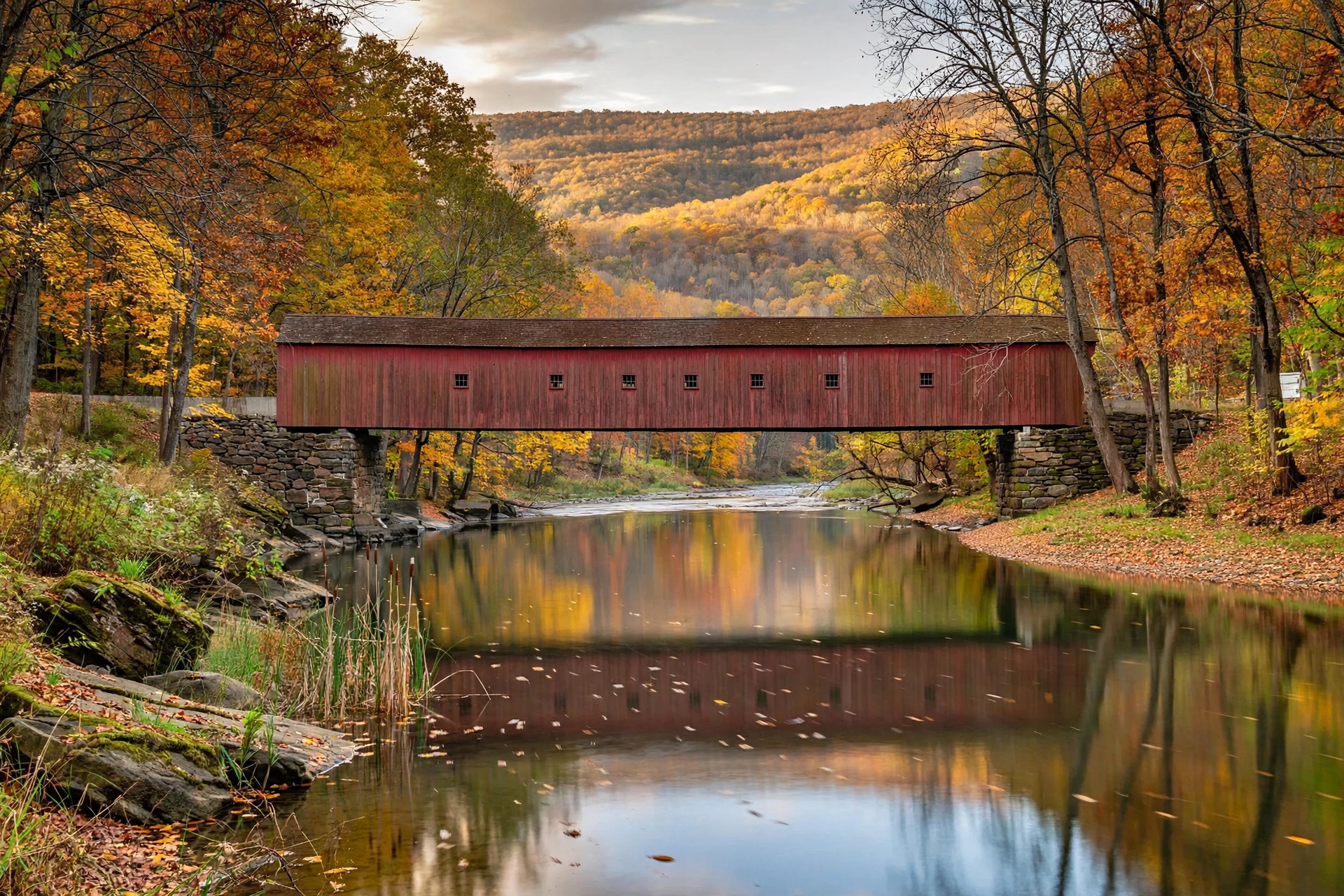
The Litchfield Hills are Connecticut’s answer to Vermont, and they peak last, in the last two weeks of October. Route 7 follows the Housatonic River through small towns and covered bridges. Bull’s Bridge, a covered bridge over the Housatonic near Kent, is the landmark stop. Base in Kent or Litchfield itself. The hills are gentler than the Green Mountains, which makes this the best region for an easy drive. The color is less dramatic than Vermont: oak and hickory turn gold and russet, not the bright red of the sugar maples.
12. Essex and the Connecticut River Valley, Connecticut
Essex sits on the Connecticut River, and the valley around it is the last color of the season. Gillette Castle State Park, across the river in East Haddam, is the stop: a stone castle on a hill above the river. The Essex Steam Train runs through the valley in October. Peak runs into the last days of October, so this is the place to end a trip. Base in Essex or Old Saybrook, and plan a slow day. The castle interior closes in mid-October, but the grounds and trails stay open.
One Loop That Links the Best of Them
People ask me every September for the best places for new england foliage, and this loop is my answer. Five days covers the best of this list: Stowe for the notch and Route 100, Woodstock for the gorge, the Kancamagus and Franconia Notch, Camden and Acadia, then the Berkshires and the Connecticut River Valley, where the color runs latest. The whole loop is about 700 miles.
If you want the wider map, my USA fall foliage road trips guide ranks fifteen routes across the country, and three of the New England ones on this list sit near the top. This is the new england foliage road trip route I drive myself: north first, then south, with a base town every night. I have done this loop twice, and the second time I gave the extra day to Acadia.
Beds, Bases, and the Booking Window
October is the most expensive month in New England. A room that costs $150 in September can cost twice that in peak week in Stowe or Bar Harbor, and the small inns sell out first. I book six to eight weeks ahead for peak week, and I would not arrive without a reservation anywhere on this list after the first of October.
The base towns that work best are Stowe, Woodstock, Lincoln, Bar Harbor, North Adams, and Essex. The cheapest nights are Sunday through Thursday, and the biggest saving is the town next door: Waterbury instead of Stowe, Ellsworth instead of Bar Harbor, Adams instead of North Adams. The drive adds twenty minutes and the rate drops by a third.
The Small Towns I Keep Coming Back To
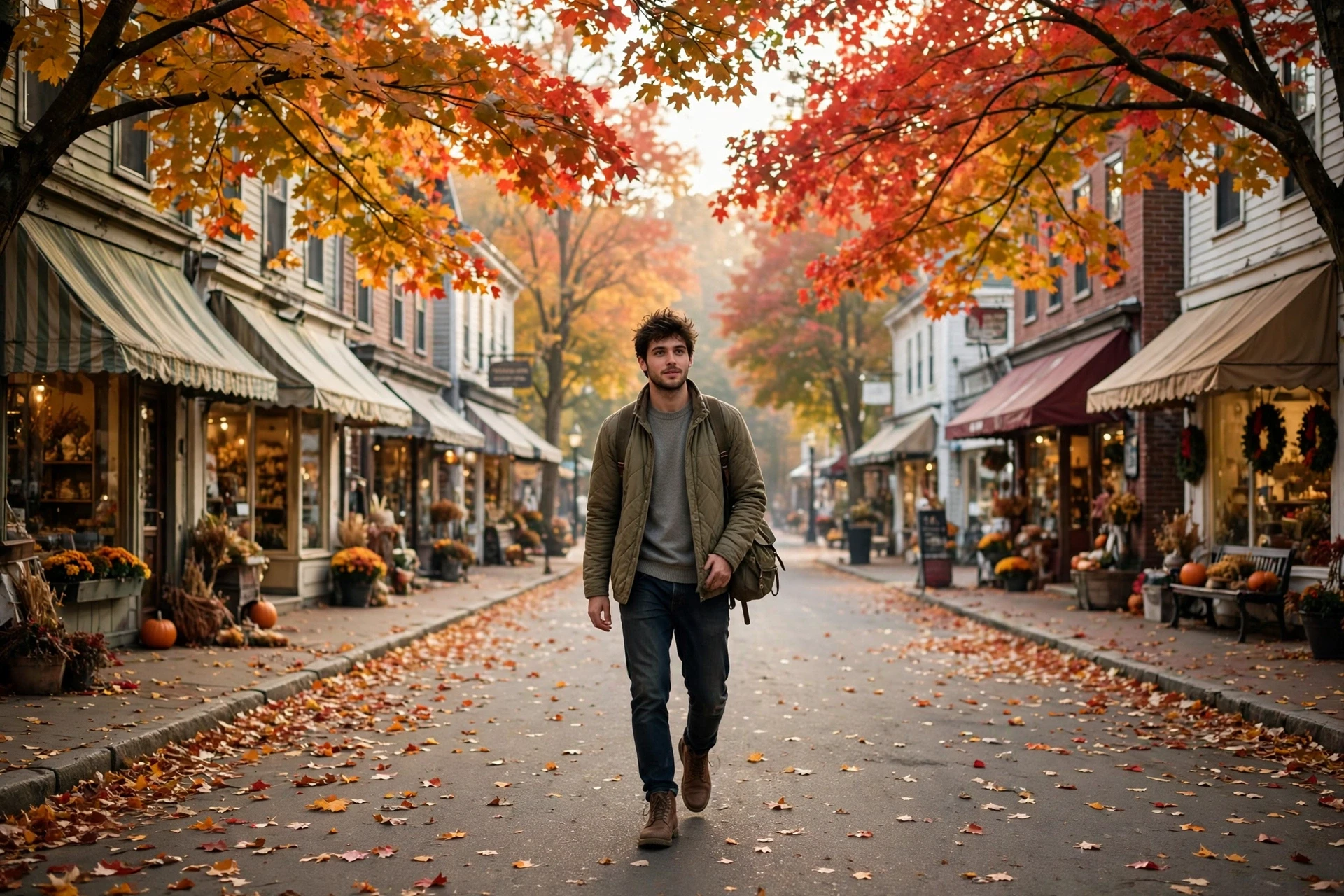
The twelve places above are the destinations, but the towns are the trip. Ask me about small towns new england fall colors and I will name five. Newfane, Vermont, has a white village green and a courthouse that looks like a postcard, with maples arching over the road south of town. Harrisville, New Hampshire, is a mill village of red brick and a millpond, and the general store makes a sandwich worth the stop.
Damariscotta, Maine, sits on a tidal river and stays quiet even in October. Stockbridge, Massachusetts, is the town Norman Rockwell painted, with a main street that still looks the part. Washington, Connecticut, has a green, a white church, and a general store. None of these towns is a destination on its own.
Where the Trip Goes Wrong
The Kancamagus on a Saturday in peak week is the first trap: the overlooks fill by ten and an hour’s drive takes three. Go on a weekday, or go at dawn. Stowe on a peak Saturday is the second.
The third trap is the reservation you forgot: Cadillac Summit Road needs one in season, and the Flume sells timed tickets. Check the morning you go, not the week before. The fourth is mud: October trails are wet, the leaves hide the roots, and a twisted ankle ends a trip. Wear boots with grip.
The trap I fell into myself was chasing the peak. I once drove four hours north for better color and arrived to find the leaves already down. The color where you are beats the perfect color somewhere else.
The Questions I Get Asked on Every October Drive
When is peak color in New England?
It depends on where you stand. The high north peaks in the last week of September, central Vermont and New Hampshire in the first two weeks of October, and the coast and the south from mid to late October. Check the reports the week you travel.
How many days do I need for this list?
Five days covers the loop at a comfortable pace, with a base town each night and no day longer than three hours of driving. Three days covers one region well. One day covers a single spot, if you arrive early.
Do I need a car?
Yes, for eleven of the twelve places. The buses between these towns are thin, and the best roads have no public transport at all. Boston is the exception: the Arnold Arboretum is a subway ride from downtown, and it is the best no-car foliage on the list.
Is it worth going on a peak weekend?
It is worth it if you go early and stay off the famous roads after ten. The crowds concentrate on five or six overlooks, and the rest of the map is quiet. Weekdays are better, and the week after the peak is often the best trip of all.
What should I pack?
Layers, a rain shell, and shoes with grip for wet trails. Mornings run cold, afternoons run warm, and the temperature swings twenty degrees between the two. Bring a paper map or download one offline, since cell signal drops in the notches.
Drive Slow, Sleep Twice, Go North First
If you remember one thing about fall foliage New England, make it this: start north, follow the color south, and give every stop a full morning. The list is twelve places, but the trip is one slow drive with nowhere to be by noon. Book the rooms, check the reports, and leave the schedule loose enough to stay an extra day where the color is good.