
My Short List of the Best Fall Foliage Spots, Kept in My Head for Years
I keep a short list in my head, the spots I would drive back to tomorrow if someone called and said the color was peaking: a summit at sunrise, a waterfall at 8 AM, a bridge over a lake at dusk. This is that list, ten spots, and every one of them earned its place on a morning when the light did something I still think about. These are the best fall foliage spots I know, and I would go back to any of them this October.
How I Picked These Best Fall Foliage Spots
I only list spots I have stood in during October, or in the last two weeks of September for the high country. A spot I visited in July tells me nothing about its October color. I looked for a specific place to stand, a time of day when the light works, and a reason the spot beats the famous overlook a mile down the road. I checked closure dates, reservation rules, and which lots fill by 9 AM. What I wanted was a list a driver can use, not a list a photographer can admire.
Three Summits Where the Color Earns Its Keep
If you want the color from above, start here. Each of these climbs to a real summit with a view for miles, and each one is worth the early alarm.
Cadillac Mountain, Acadia National Park, Maine
The North Ridge Trail runs 4.4 miles round trip from the parking area on the Park Loop Road to the summit of Cadillac Mountain, 1,530 feet above the water. The trail is mostly open granite, so the color stays in view all the way up, with Frenchman Bay below at the top. I went up on a Tuesday in mid-October and had the summit to myself at 8 AM.
Acadia National Park runs a vehicle reservation system for the Cadillac Summit Road in the busy season, and the rules change year to year. The summit draws a sunrise crowd, so hike up instead and skip it. Current rules are on the park’s site: Acadia National Park.
Hawksbill Summit, Shenandoah National Park, Virginia
The trail to Hawksbill is 2.9 miles round trip from the Upper Hawksbill parking area on Skyline Drive, and it tops out at 4,050 feet, the highest point in Shenandoah National Park. The last stretch is a rock scramble, short but hands-on, and then the trees open up and the whole valley sits below you in orange and gold.
Check the Skyline Drive status before you go, because it closes in bad weather: Shenandoah National Park. The lot holds maybe two dozen cars, so get there before 9 AM on a weekend or plan on a weekday.
Mount Greylock, Massachusetts
At 3,491 feet, Mount Greylock is the highest point in Massachusetts, and the Appalachian Trail crosses right over the summit. Hike up from the base, about 5 miles round trip, or drive the summit road and walk the last stretch to the tower. The color runs late here, often into the third week of October, because the oaks turn after the maples.
Bascom Lodge sits at the summit and serves meals in season. The honest downside is fog. Greylock makes its own weather, and I have driven up twice to find the summit wrapped in cloud with no view at all, so check the webcam before you drive up.

Two Waterfalls That Carry the Color
Water and color belong together in October, and these two falls are the spots I return to when I want both in one frame.
Sabbaday Falls, Kancamagus Highway, New Hampshire
Sabbaday Falls sits right off the Kancamagus Highway, a short walk from the lot into a gorge where the water drops through a rock chute under a canopy of maples. Go at 8 AM, before the lot fills, and the light comes down through the trees in shafts. The highway runs 34.5 miles from Lincoln to Conway, and the pass sits at 2,855 feet, so the color here lands in late September or the first two weeks of October.
Fill the tank in Lincoln or Conway and download your map before you leave town. The lots at Sabbaday Falls and Rocky Gorge fill by mid-morning on October weekends, so I start before 8 AM.
Multnomah Falls, Columbia River Gorge, Oregon
Multnomah Falls drops 620 feet in two tiers, and the trail to the top runs 2.4 miles on paved switchbacks. The lower viewpoint is flat and easy, and the bridge is the spot worth the climb. The gorge holds its color late, often into the first week of November, and the maples along the creek turn late and bright.
The lot fills by 9 AM on fall weekends, so go early or go on a weekday, and check the current access rules before you go, because they change with the season. I walk the lower falls first and only climb if the crowd at the bridge is thin.

Two Roads I Would Drive Again Tomorrow
Some spots are not a place to stand. They are a stretch of road where the color closes over you, and these two are the best of them.
Linn Cove Viaduct, Blue Ridge Parkway, North Carolina
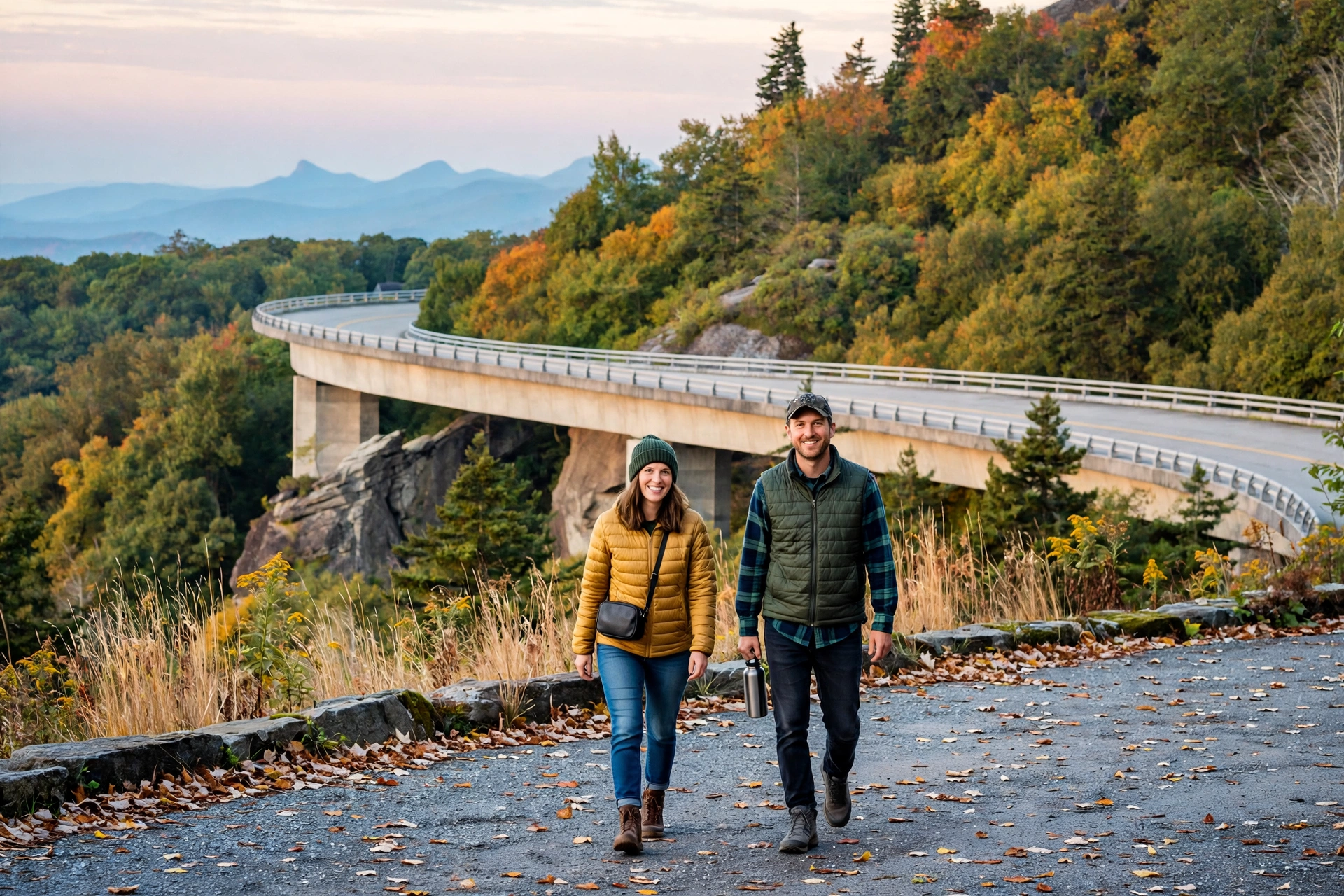
The Blue Ridge Parkway runs 469 miles from Virginia to North Carolina at 45 mph, and the Linn Cove Viaduct is the stop everyone photographs, a concrete ribbon curving around the side of Grandfather Mountain. My favorite time there is a weekday morning in mid-October, when the high country turns first and the overlooks are empty.
The parkway closes sections for fog, ice, and rock slides, so check the road status before you go. The Park Service posts closures and the fall color report on its parkway page: Blue Ridge Parkway. Gas is scarce on the parkway, so fill up in Asheville, Blowing Rock, or Roanoke first.
M-119, the Tunnel of Trees, Michigan
M-119, the Tunnel of Trees, runs about 20 miles from Harbor Springs to Cross Village along the Lake Michigan shore, and the maples close over the road in a canopy that turns the light gold. It is narrow, with no center line in places, and the speed is slow by design. Pull-offs are small and few. The color usually peaks in the second half of October, later than New England.
The honest downside is traffic. On a fine October Saturday the road crawls. Go on a weekday if you can, or go early. I keep a longer road-only list in my scenic fall foliage road trips guide, and this road is the one I would add first.
Two Lakes That Double the Color
A lake doubles the color, once in the trees and once in the water, and these two are the spots where the reflection is the photograph.
Maroon Bells, Aspen, Colorado
Maroon Bells, outside Aspen, is the most photographed spot in Colorado, and for once the photograph is honest: two peaks over a lake, with aspen all the way down to the water. The aspen turn fast, usually in the last two weeks of September, and the light is best in the first hour after sunrise, before the wind ruffles the lake.
You cannot just drive up in the fall. The road to Maroon Bells runs on a reservation and shuttle system in the busy season, and the parking fills weeks ahead. Book the shuttle before you book the hotel. The honest downside is the altitude and the price. Aspen is expensive, and the air is thin at 8,000 feet. Drink water, and take the first day slowly.
Jordan Pond, Acadia National Park, Maine
Jordan Pond is the quieter lake in Acadia, and the spot I send people to when Cadillac is crowded. Sit on the shore rocks in the morning, with Cadillac Mountain and the autumn color across the water, and the pond doubles the whole scene. The pond is a short drive from the Park Loop Road, the walk around it is flat and easy, and the color along the shore turns in mid-October.
Go early, before the tour buses arrive, and bring a layer, because the wind off the water is cold in the morning. The pond is the spot I would pick for a slow October morning, a thermos, and no agenda at all.
One Valley to Finish
The last spot on this list is not a summit or a waterfall. It is a valley, and it is the place I go when I want the color without the crowds.
Cades Cove at Sunrise, Great Smoky Mountains, Tennessee
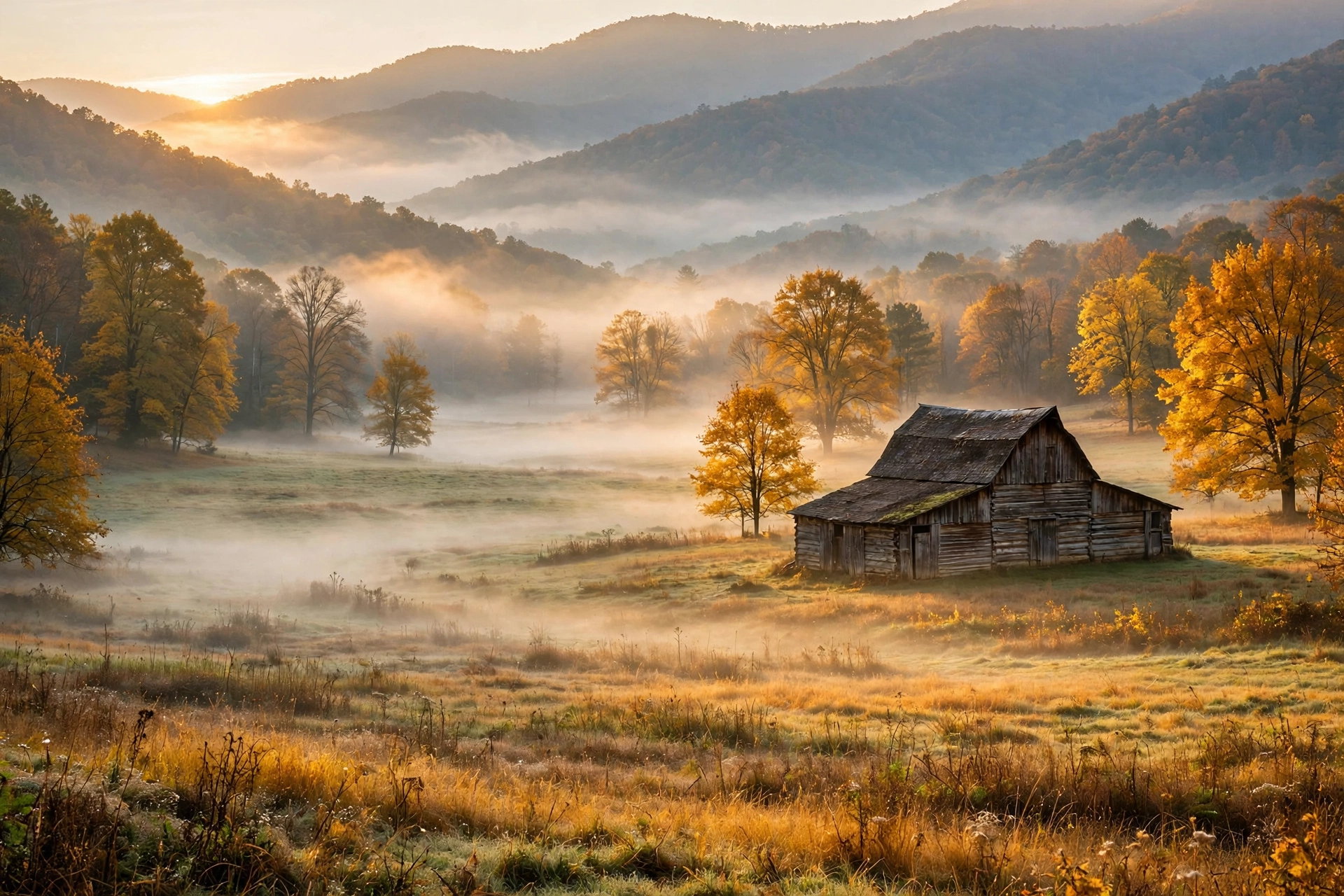
Cades Cove is an 11-mile loop through a valley in the Great Smoky Mountains National Park, and at sunrise it is the best spot in the park. The fog sits in the fields, the deer are out, and the color on the ridges above the valley turns gold in the first light. I go at sunrise and leave before the tour buses arrive, and the loop takes about two hours if I stop at every pull-off, which I do.
The park’s elevation range, from about 875 feet to 6,643 feet at Clingmans Dome, means the color lasts nearly two months if you chase it up and down the mountain. The park posts its fall color updates and road status on its site: Great Smoky Mountains National Park. Skip the loop on a Saturday if you can. Go on a weekday, go at sunrise, and the valley is yours.
When the Color Runs Late
Some years the color is late, or you are. A warm September holds the green, a storm strips a hillside overnight, and the weekend you booked is a week early. The fix is simple and most guides skip it: go lower or go south. Color moves downhill as the season goes on, so a valley trail below the peak can still be in full color. Oaks and hickories turn weeks after maples. And if the leaves are gone, the season is not over. The bare ridges open up views the canopy hides, and the light gets lower and warmer. I have had some of my best October mornings on bare ridges, with the whole valley open below me and no one else on the trail, and I would not trade those mornings for a crowded peak weekend.
Pick One and Go This Weekend
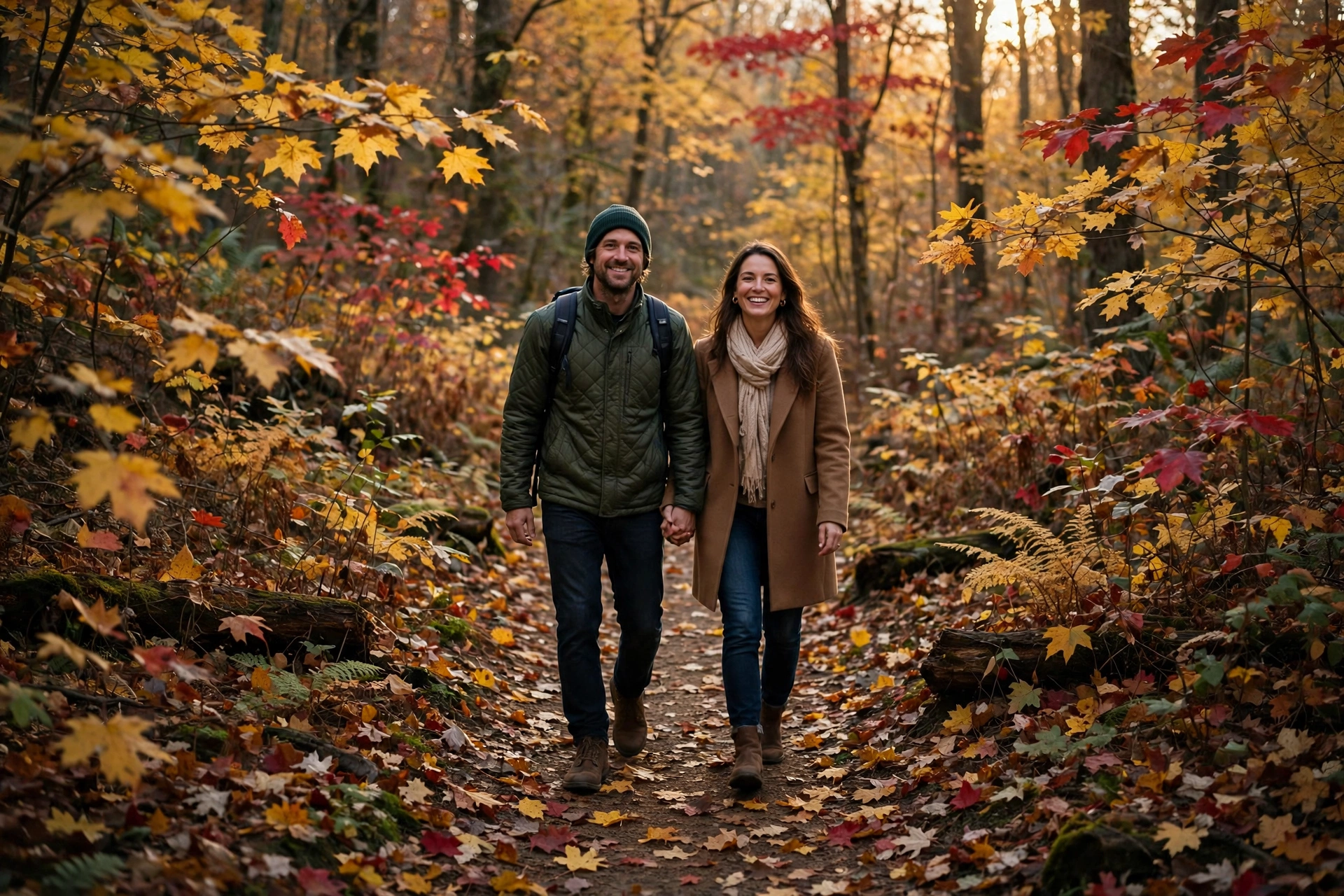
If you only visit one of these best fall foliage spots this year, make it the one closest to your house, and go this weekend. The color does not wait for a perfect plan, and the best October day I ever had was a two-hour drive I almost talked myself out of. Pick one, fill the tank, and go.