Swimming With Manatees Florida Works Best When You Float Still and Wait
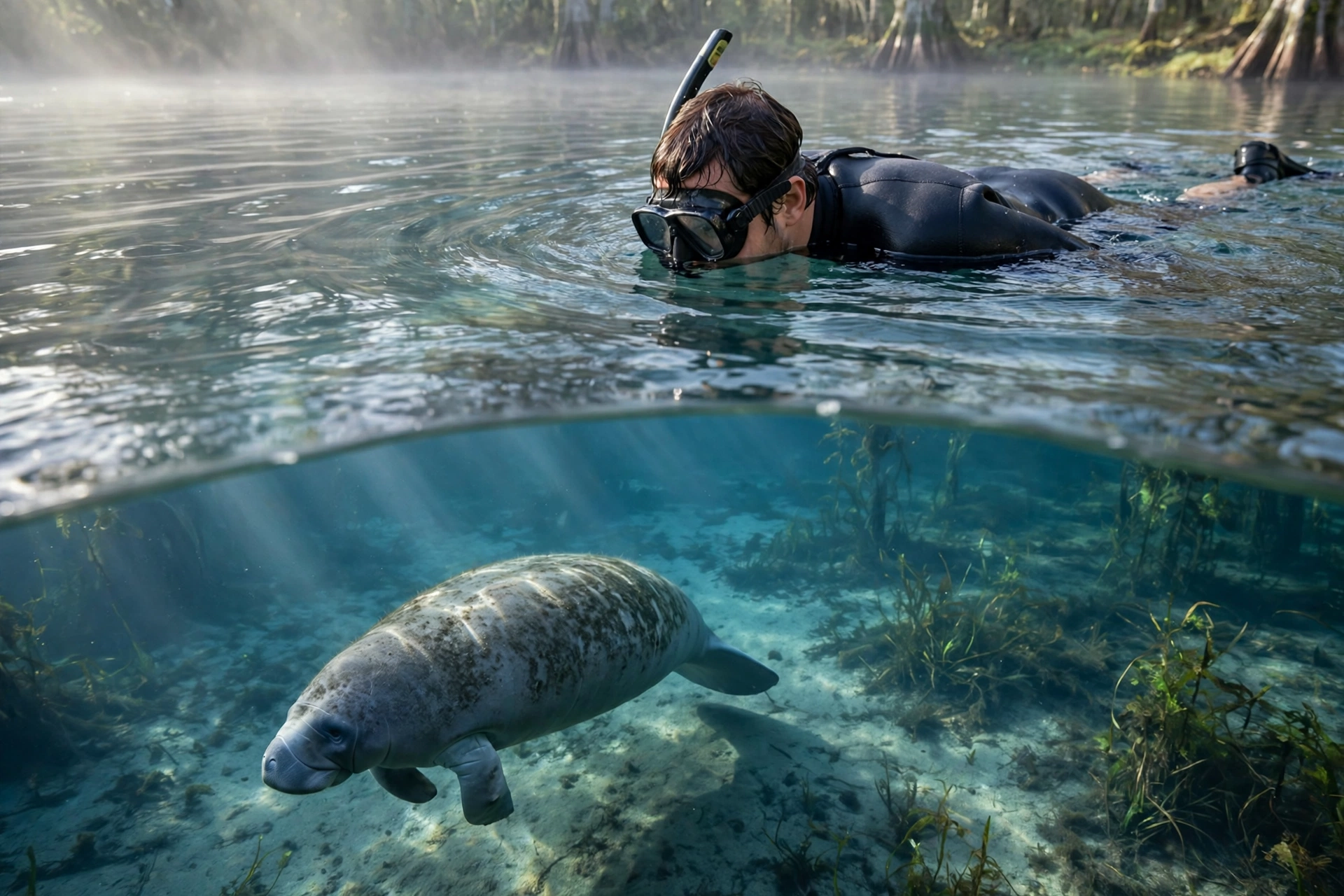
Swimming with manatees Florida is the rare wildlife encounter that rewards doing less, not more. In Crystal River, on the Gulf Coast about ninety minutes north of Tampa, the springs run 72 degrees all year, and from November to March the manatees come in from the cooling Gulf to rest in that warm water. I slipped into Kings Bay on a cold January morning, floated still with my arms at my sides, and watched a manatee the size of a couch drift past close enough to see the whiskers on its face.
Why Crystal River, and Why Winter
Crystal River is the only place in the United States where you can legally swim with manatees, and that is not a marketing line. The springs of Kings Bay are part of the Crystal River National Wildlife Refuge, set aside specifically for manatees, and the whole town runs on that fact. When the Gulf of Mexico cools in late fall, hundreds of manatees move into the bay and its springs, because the spring water stays 72 degrees while the Gulf drops into the 50s and 60s. A manatee cannot survive long in cold water, so the warm springs are not a preference. They are survival.
The season runs from mid-November through March, and the numbers build as the cold fronts stack up. December is strong, January and February are the peak, and by March the Gulf warms and the manatees start drifting back out. Cold snaps are your friend here. A week of cold weather pushes more manatees into the springs, and a warm spell thins them out fast.
Three Sisters Springs is the famous spot inside the bay, a cluster of three spring vents that pour clear water into a small cove, and it is where most tours head first. You reach it only by water, by boat, kayak, or swimming in from the bay, and the refuge closes parts of it as sanctuaries when the manatees crowd in. That closure is a good sign. It means the animals are there in numbers worth protecting, and the guides will take you to the open water just outside instead.
The 7 AM Tour Is Not a Suggestion
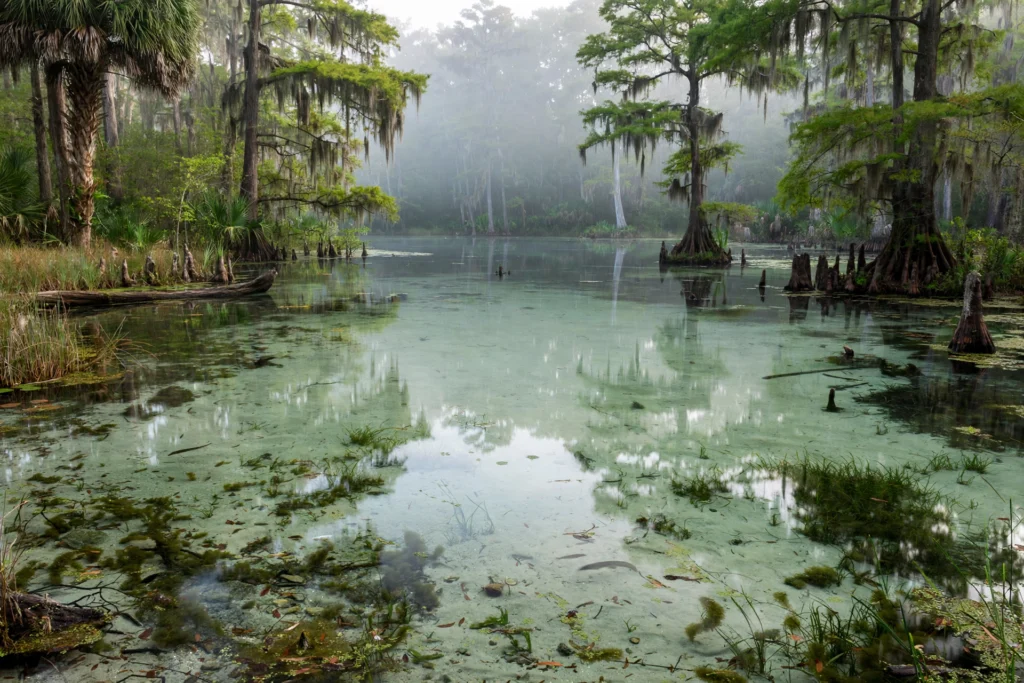
Book the first boat out. I mean that as a rule, not a preference. The early tour leaves around 7 or 8 AM, and it gets three things the later boats do not: the clearest water, the fewest people, and the calmest manatees. The springs are glassy before the wind picks up, the sunlight angles in low and lights the water from the side, and the manatees are still resting from the night instead of dodging a dozen snorkelers.
By 10 AM the bay is busy, the water clouds up from fins and boat traffic, and the manatees move into the sanctuary areas where you cannot follow.
Small groups matter as much as early starts. Look for operators that cap the boat at ten people or fewer, and ask before you book. A boat with twenty snorkelers drops into the water like a crowd at a pool party, and the manatees leave. A boat with six slips in quietly, and the animals stay. The best guides keep the group together, keep the noise down, and move the boat when a spot gets crowded instead of adding to the pile.

Swimming With Manatees Florida Has Rules, and the Good Guides Enforce Them
This swim comes with a rulebook, and the good operators treat it as law. The core rule is passive observation: you float, you watch, and you let the manatee decide how close to come. You do not chase, corner, or follow a manatee that swims away. You do not touch with two hands, grab, ride, or separate a mother from her calf. If a manatee drifts up to you on its own, a gentle one-hand touch is tolerated, but the guides will tell you to keep your hands still and let the animal move on. The U.S. Fish and Wildlife Service manages the refuge and sets these rules, and the rangers on the water do enforce them. Crystal River National Wildlife Refuge
Your guide is the person who makes or breaks the trip. A good guide reads the water, finds the animals without crowding them, and calls the group back when someone breaks the rules. A bad guide lets people chase. Ask the operator how they handle manatee manners before you book, and pick the one that answers with specifics instead of a shrug. I have been on both kinds of boats, and the difference is obvious within ten minutes of getting in the water.
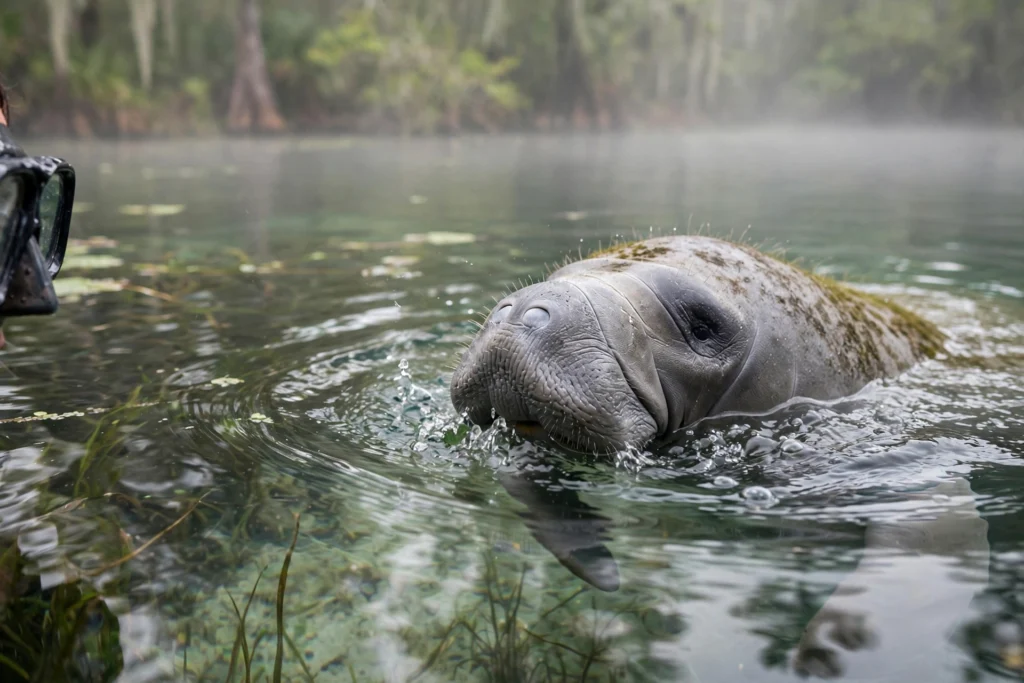
Float on your stomach with your arms at your sides, breathe slowly through the snorkel, and resist the urge to kick toward the animal. Manatees are curious, and a quiet swimmer is an interesting object to them. The best encounter I had came after five minutes of doing nothing at all, when a manatee rolled over below me and looked up at me with one small dark eye. It stayed for a full minute. Nothing I could have done would have made that happen faster.
What 72-Degree Water Feels Like at Dawn
Seventy-two degrees sounds warm on paper. In the water at 7 AM in January, with wet hair and a breeze, it feels cold for the first five minutes. Your wetsuit is essential, and every decent tour provides one, usually a shorty or a full suit depending on the season. Put it on before the boat leaves the dock, and keep it on for the whole swim. You will be glad you did by the second stop.
Kids feel the cold faster than adults, and most operators take children as young as three, though the minimum age varies by company, so check before you book. A small child in a wetsuit will last about thirty minutes in the water before the shivering starts, and that is enough for the experience. Bring a big towel and dry clothes for the ride back.
Do not wear sunscreen into the springs. The guides will ask you to skip it, because the chemicals cloud the water and harm the habitat, and you will be in the water for an hour at most. Put on a long-sleeve rash guard instead if you burn easily, and save the sunscreen for after the swim. The water is clearest when nothing is in it but swimmers, and that clarity is what you came for.

Three Springs, Three Different Mornings
Three Sisters Springs is the postcard, and it deserves its reputation when the manatees are in. The water is so clear you can see the sand vents bubbling on the bottom, and the cove is small enough that a handful of manatees fills it. When the refuge closes the springs as a sanctuary, you watch from the water just outside, and the view is still good. The boardwalk at the Three Sisters Springs Center gives you a dry-land look on days when you would rather watch than swim.
Kings Bay itself is where most of the swimming happens, and it is bigger and less famous than the springs. The bay is dotted with spring vents, and the manatees rest in the open water between them. I liked Kings Bay better than the crowded cove, because the animals had room and the group had room, and the encounters felt unhurried. Your guide will pick the spot based on where the manatees were that morning, and you should let them.
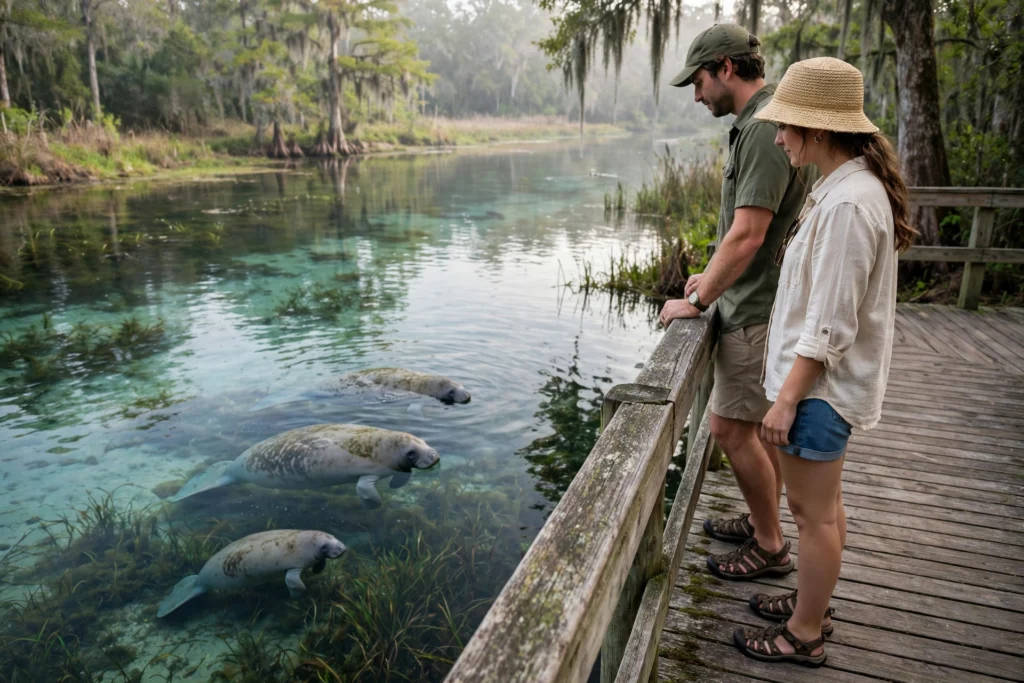
Blue Spring State Park, near Orange City on the other side of the state, is the other big viewing spot, and it draws the largest winter gathering of manatees on the Atlantic side. Swimming in the spring run is closed during manatee season, and you watch from the boardwalk as dozens of animals rest in the clear water below. It is a different trip from Crystal River, a watching trip instead of a swimming trip, and it is the right call if anyone in your group prefers to stay dry. Blue Spring State Park
The Tampa Electric Manatee Viewing Center, near Apollo Beach south of Tampa, is free and open from November through April, and the manatees gather in the warm water discharged from the power plant. You watch from a boardwalk, you do not get in, and it is the easiest manatee sighting in Florida for a family that wants a short stop. It is a viewing stop, not a swim, and the numbers on a cold day are impressive. Tampa Electric Manatee Viewing Center
What It Costs and How Far Ahead to Book
Swimming with manatees Florida is not a cheap morning, and you should know the numbers before you go. A guided tour usually runs about fifty to eighty dollars per person, with wetsuit, mask, and snorkel included, and the price climbs in January and February when demand peaks. Private tours cost more and are worth it for families with small kids, because the guide works around your pace instead of a group schedule.
Book two to four weeks ahead for January and February, and a week ahead for December and March. The early boats sell out first, and the best small-group operators sell out before the big ones. I booked my January tour three weeks out and took the last two seats on the 7 AM boat, and the 10 AM boat that day had a waiting list. If you are locked into a date, book the moment you know it.
The tour price is the main cost, and the rest of the day is cheap. Parking at the marina is usually free or a few dollars, and lunch in Crystal River runs at small-town prices. The expensive mistake is waiting to book and ending up on a big crowded boat at midday, which costs the same money for half the experience.
The Mistakes That Ruin the Swim
Chasing is the first mistake, and it ruins the swim for everyone in the water. A manatee that feels followed will dive and leave, and the whole group loses the encounter. The rule is simple: if the animal moves away, let it go. Another one will come, or the same one will circle back when the water calms.
Loud groups are the second mistake. Manatees hear well, and a group shouting through snorkels clears the area fast. Keep your voice down on the boat and in the water, and save the excitement for the ride back. I have watched a quiet group get a twenty-minute encounter while the loud group fifty feet away got nothing.
The third mistake is the wrong tour. A big boat, a late start, and a guide who does not enforce the rules will give you a crowded paddle in cloudy water, and you will come back saying the manatees were a letdown. They were not. The setup was. Spend the extra money on the small early boat, and the animals will do the rest.
After the Swim: The Rest of Crystal River
Crystal River is a small town, and it knows what it is. The waterfront has a handful of seafood restaurants where the grouper is fresh and the portions are big, and the prices are lower than anything on the Gulf Coast beach strip. I ate lunch at a small place on the water after my swim, still damp under a dry shirt, and it was the right end to the morning.
The Three Sisters Springs Center boardwalk is worth an hour on foot, especially in the afternoon when the light is good and the manatees are visible from above. The center explains the refuge, the springs, and the rescue work in plain language, and it gives you the context the swim does not. I learned more about manatees in that hour than I did in the water, and the two halves of the day fit together well.
What People Ask Me Before They Book
Can you touch a manatee in Florida?
You may not chase or grab a manatee, and the rule is passive observation. If a manatee approaches you on its own, a gentle one-hand touch is tolerated, but the guides will tell you to keep your hands still. The best encounters happen when you float quietly and let the animal choose the distance.
What is the best month to see manatees in Crystal River?
January and February, when the Gulf is at its coldest and the most manatees are in the springs. December is strong too, and March thins out as the water warms. Book the early boat in any month, and check the cold forecast, since a cold snap pushes more animals in.
Can kids swim with manatees?
Yes, and most operators take children as young as three, though the minimum age varies by company. Kids get cold fast in 72-degree water, so a wetsuit is essential, and a private tour is worth it for families with small children. Bring dry clothes and a big towel for the ride back.
Is it safe to swim with manatees?
Yes. Manatees are gentle herbivores with no interest in people, and there are no recorded attacks on swimmers. The real risk is the cold water and the boat traffic, so follow your guide, stay with the group, and wear the wetsuit.
Do I need to know how to swim?
You need to be comfortable floating with a mask and snorkel, and most tours provide a flotation noodle. Non-swimmers can stay on the boat and watch, and many do. Tell the operator your comfort level when you book, and they will match you with the right boat.
Book the First Boat Out
Crystal River rewards the early alarm and the quiet floater, and it punishes the late start and the chaser. Book the small boat, take the 7 AM departure, wear the wetsuit, and let the manatees come to you.
Manatees turned me into a slow-wildlife person, and the places to see the northern lights are the next trip on my list. Different animals, same rule: go early, go quiet, and let the wild thing set the pace.
Visit Florida keeps a current overview of manatee season and the Crystal River tours, and it is a useful check before you book. Visit Florida