The Fall Foliage Places in America That Stay With Me After Nine Octobers
I have driven for color in nine Octobers now, and the places that stay with me are not the ones with the most famous name. They are the ones where the road, the light, and the timing all lined up on the same morning. This list holds ten of those places, from the Maine coast to the Colorado high country, and every one of them is a drive I would do again. These are the fall foliage places America hands you when you stop chasing a single peak weekend and start chasing the season instead.
My Shortlist of Fall Foliage Places America Worth the Drive
I only list places I have been in October, or in the last two weeks of September for the high country. A place I visited in July tells me nothing about its October color. I looked for color you can count on in a normal year, a real range of effort, and at least one option for the days your knees say no to a climb. I checked closure dates, reservation rules, and which lots fill by 9 AM. What I wanted was a list that works for a driver first, not a hiker who happens to own a car.
The Coast First: Acadia National Park, Maine
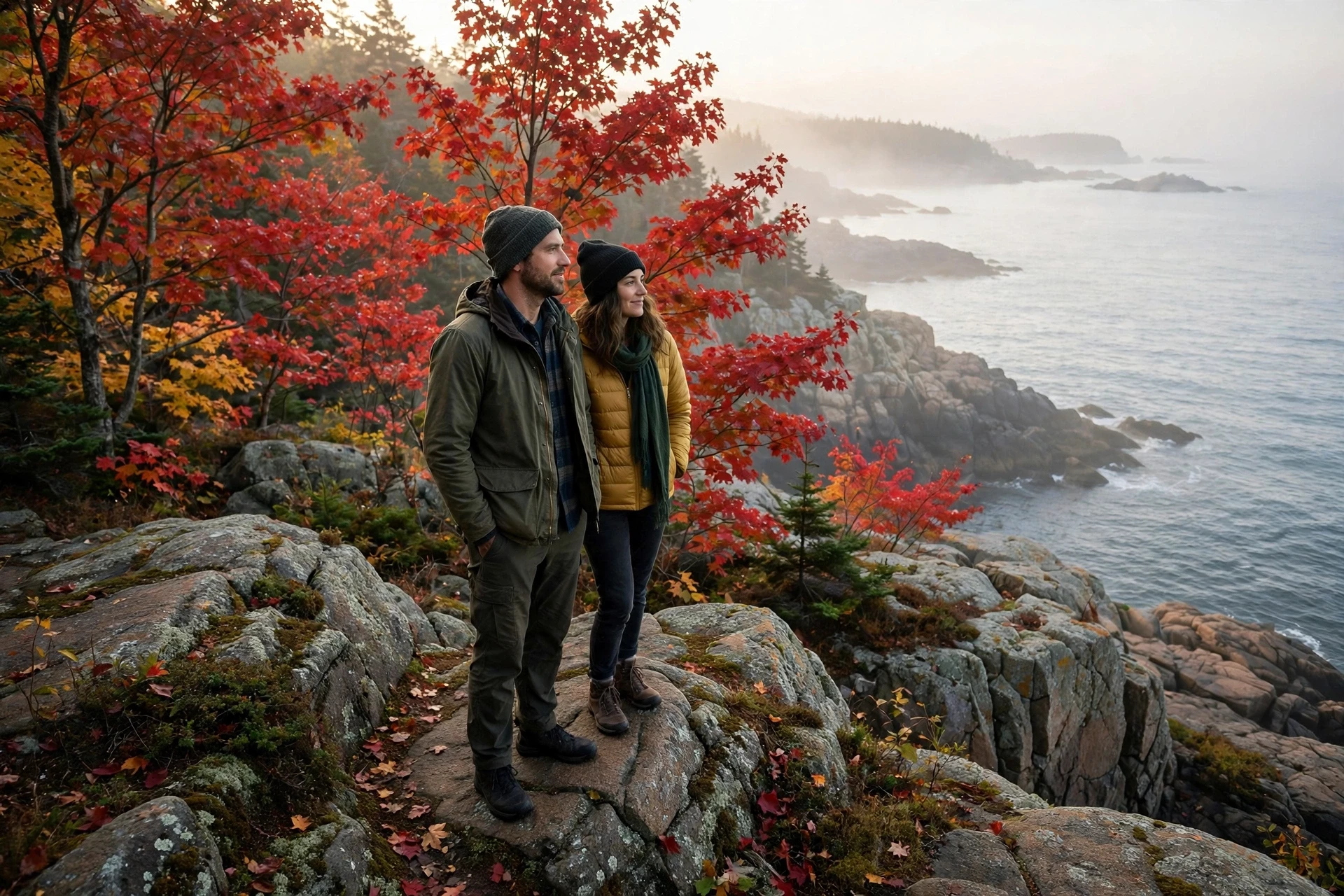
Start at the top of the map. Acadia National Park sits on Mount Desert Island, Maine, and its color runs from late September into mid-October, with the reds along the coast turning before the inland hills. The Park Loop Road is 27 miles, and it is the easiest way to see the whole park in a day without committing to a single trail.
Cadillac Mountain, at 1,530 feet, is the payoff. The North Ridge Trail runs 4.4 miles round trip from the Park Loop Road to the summit, mostly open granite, so the color stays in view all the way up. I went up on a Tuesday in mid-October and had the summit to myself at 8 AM. The drive up the summit road needs a vehicle reservation in the busy season, and the rules change year to year, so check before you go: Acadia National Park.
The honest downside is the crowds in Bar Harbor. The town fills on October weekends, the restaurants book out, and the loop road moves slowly by midday. Go on a weekday, or start before 8 AM, and the park feels like a different place. The park charges a per-vehicle entrance fee, good for seven days, and that is the only ticket you need for most of it.
The Drive Everyone Knows: Kancamagus Highway, New Hampshire
The Kancamagus Highway runs 34.5 miles from Lincoln to Conway through the White Mountain National Forest, with no gas stations, no restaurants, and almost no cell service along the way. The pass sits at 2,855 feet, and the stops stack up fast: Sabbaday Falls, Rocky Gorge, Lower Falls, and the Albany Covered Bridge. Peak color usually lands in late September or the first two weeks of October.
I drive it west to east in the morning, so the sun is behind me at the overlooks, and I stop at Sabbaday Falls first, before the lot fills. Fill the tank in Lincoln or Conway and download your map before you leave town. The lots at Sabbaday Falls and Rocky Gorge fill by mid-morning on October weekends, so I start before 8 AM. I keep a longer version of this drive in my scenic fall foliage road trips guide.
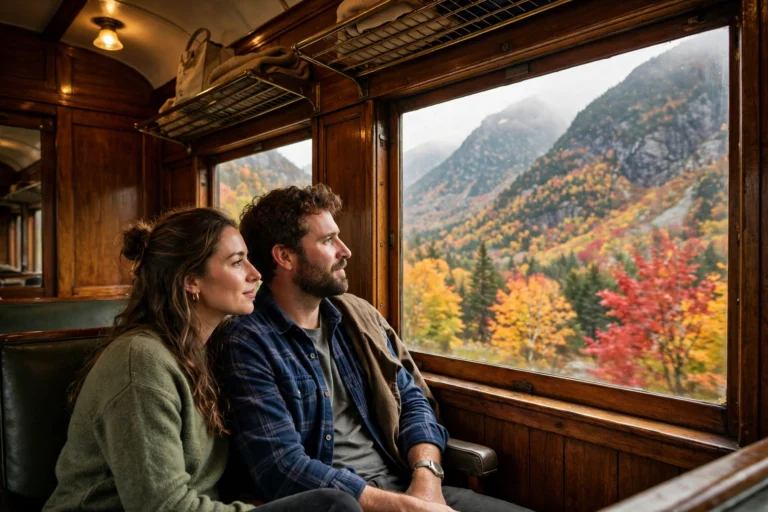
If you want the same mountains without the highway crowds, take Route 302 through Crawford Notch instead. The color is just as good, the pull-offs are bigger, and the Notch Train runs through it in the fall.
The Slow Valley: Stowe and Route 100, Vermont
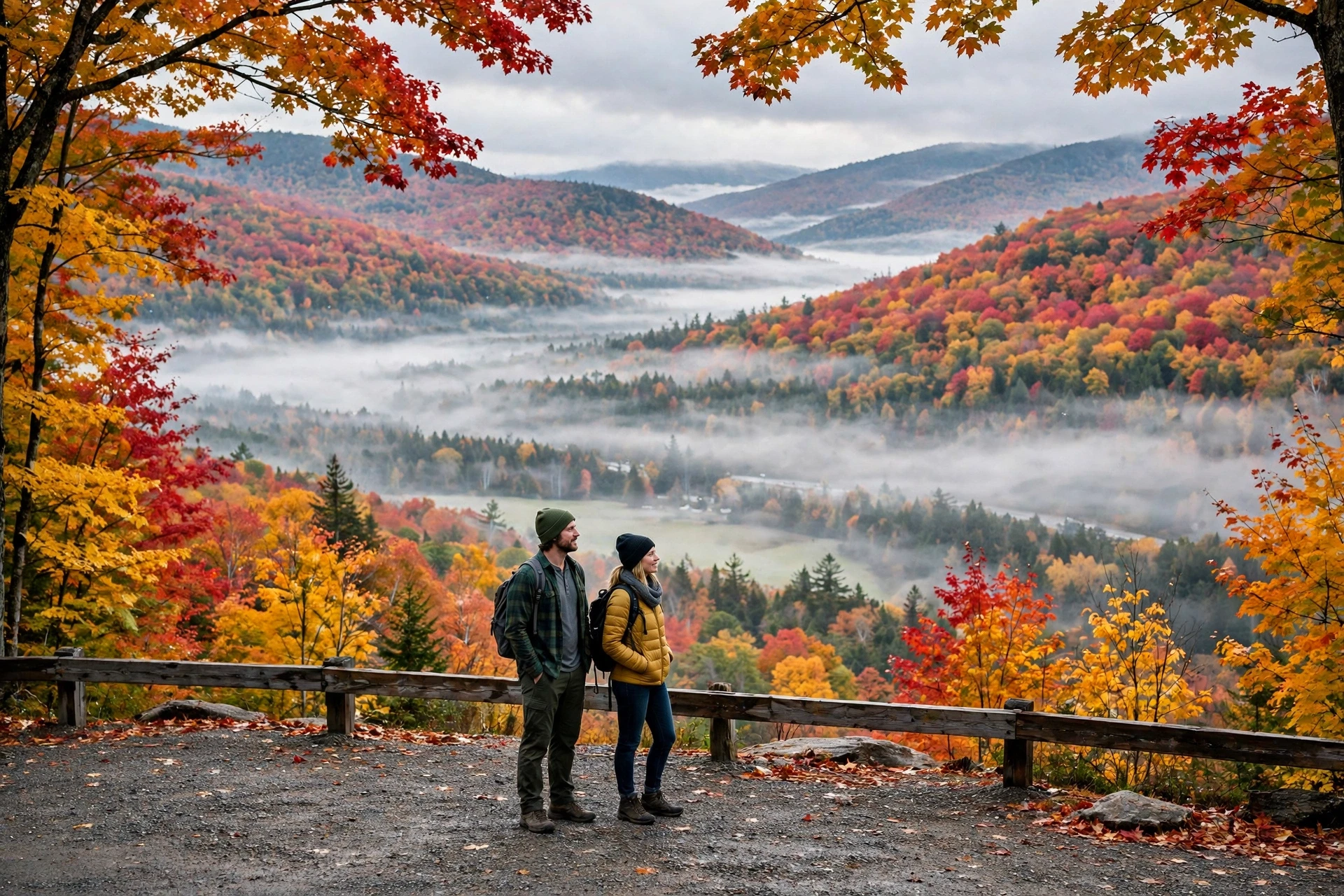
Route 100 runs the length of Vermont, and the stretch through the Mad River Valley, from Waterbury to Stowe, is the prettiest piece of it. The road follows the river, the farm stands sell cider donuts through October, and the hillsides turn in bands of red and gold. Stowe itself is a real town, not a resort facade, and the recreation path out of the village is an easy flat walk when you want to stretch your legs.
The color here usually peaks in the first two weeks of October, a few days after the higher passes. The honest downside is the price. Stowe in October is not cheap, and the weekend rooms go a month ahead. Stay in Waterbury or Morrisville and drive in, and you keep the same color for half the money. I cover the town in detail in my Stowe guide, which is already drafted.
The Big Woods: Adirondacks, New York
The Adirondack Park is six million acres, bigger than some states, and its color is the wildest on this list. The maples turn first, usually in the last week of September, and the high peaks follow. Lake Placid is the base most people pick, and it works, but the better color is often on the quieter roads: Route 73 through Keene Valley, and Route 30 along the lakes to the west.
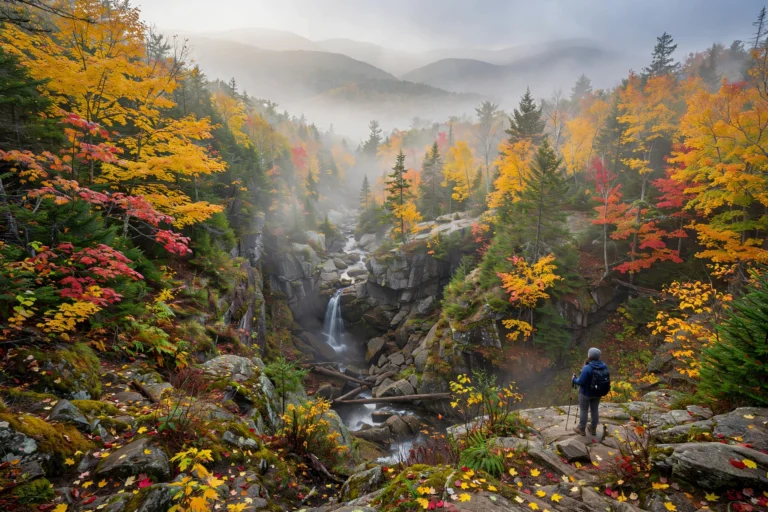
I hiked a short trail above Keene Valley one October morning and watched the fog lift off the valley in layers, red below and gold above, and I have not found a better free view in the East since. The trade-off is the weather. The Adirondacks make their own rain, and a gray day there is really gray. Bring a rain shell and a paper map, because the cell service drops out in the valleys.
The Ridge Walk: Shenandoah National Park, Virginia
Shenandoah National Park runs along the Blue Ridge in Virginia, and Skyline Drive, its 105-mile spine, is the easiest high-color drive in the mid-Atlantic. The overlooks face west, so the late light is the show, and the oaks and hickories turn after the maples, which stretches the season into late October.
Hawksbill, at 4,050 feet, is the highest point in the park, and the trail to it is 2.9 miles round trip from the Upper Hawksbill parking area. The last stretch is a rock scramble, short but hands-on, and then the whole valley sits below you in orange and gold. Check the Skyline Drive status before you go, because it closes in bad weather: Shenandoah National Park.
The lot holds maybe two dozen cars, so get there before 9 AM on a weekend or plan on a weekday. The honest downside is the speed. Skyline Drive caps at 35 mph, and on a busy October Saturday you will drive it at 25. Treat it as a slow morning, not a shortcut, and it works.
The Long One: Blue Ridge Parkway, North Carolina and Virginia
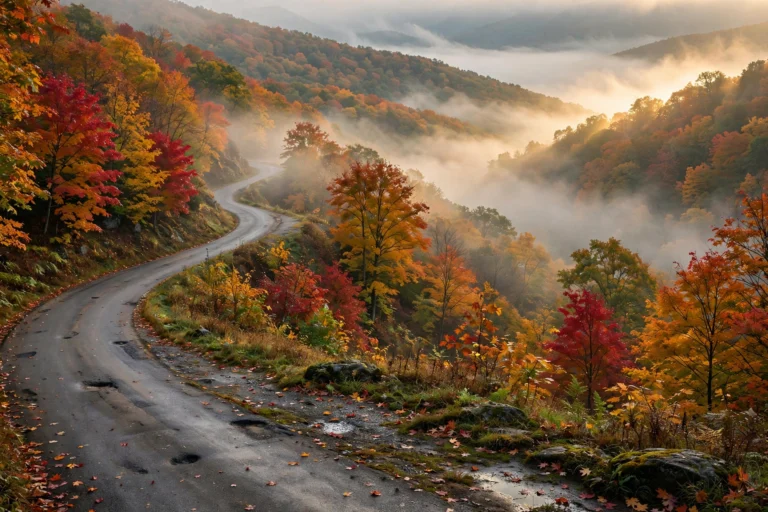
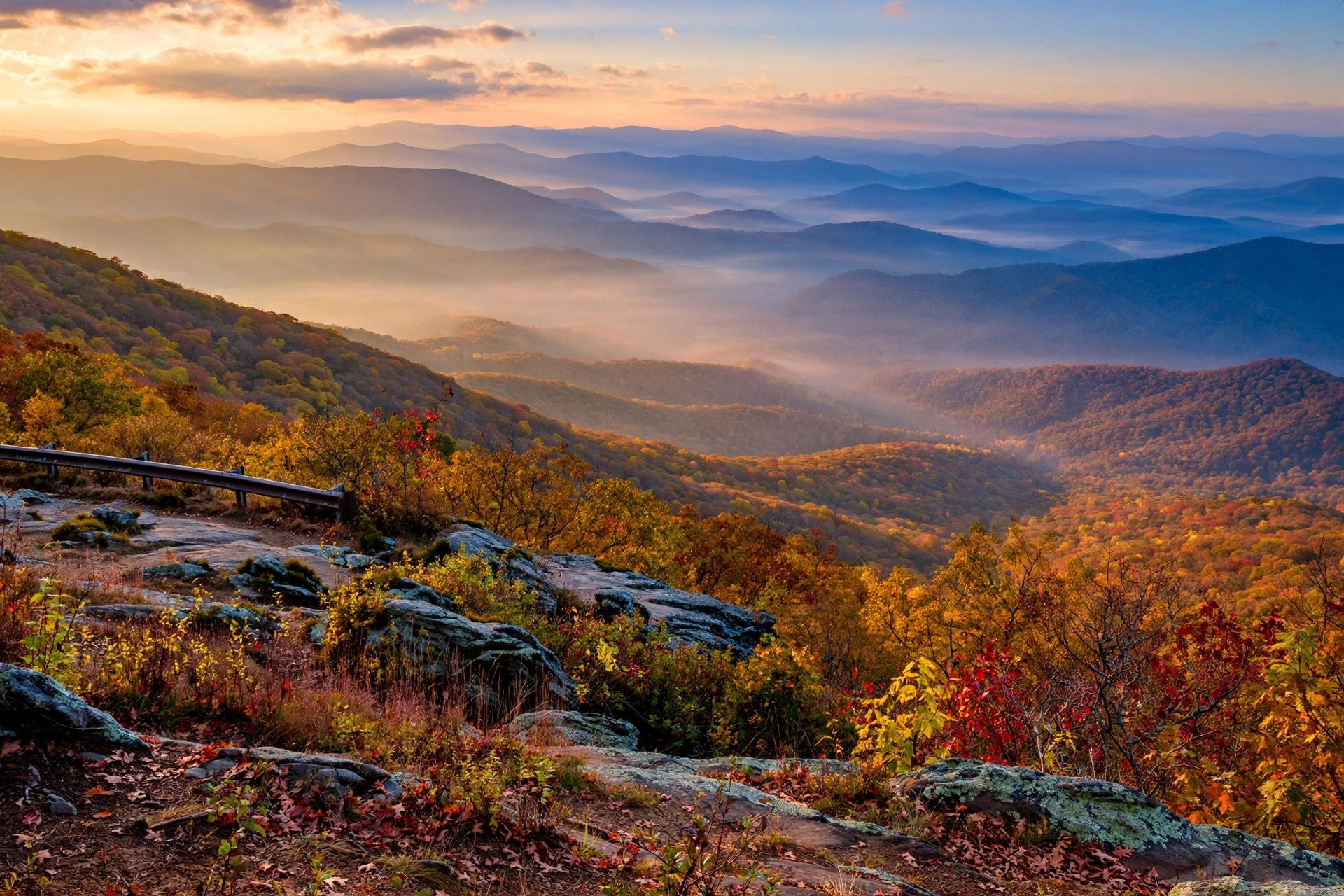
The Blue Ridge Parkway runs 469 miles from Virginia to North Carolina at 45 mph, and it is the single best fall drive I know. The high country near Mount Mitchell turns first, usually in mid-October, and the color rolls downhill for weeks after. Linn Cove Viaduct is the stop everyone photographs, but my favorite stretch is south of Asheville, where the overlooks are empty on weekday mornings.
The parkway closes sections for fog, ice, and rock slides, so check the road status before you go. The Park Service posts closures and the fall color report on its parkway page: Blue Ridge Parkway. Gas is scarce on the parkway, so fill up in Asheville, Blowing Rock, or Roanoke first.
Do not try to drive the whole thing in a weekend. Pick a hundred-mile section, stay in one town, and drive it twice, once in each direction. The light changes everything, and the second pass is always better than the first.
The Smokies: Great Smoky Mountains, Tennessee and North Carolina
The Great Smoky Mountains National Park is the most visited park in the country, and October is its busiest month, so I will be straight about it: the color is superb, and the crowds are real. The park’s elevation range, from about 875 feet to 6,643 feet at Clingmans Dome, means the color lasts nearly two months if you chase it up and down the mountain.
Newfound Gap Road is the spine, and Cades Cove is the loop everyone drives. I go to Cades Cove at sunrise, when the fog sits in the fields and the deer are out, and I leave before the tour buses arrive. The park posts its fall color updates and road status on its site: Great Smoky Mountains National Park.
Skip Gatlinburg on a Saturday if you can. Stay in Townsend, on the quiet side of the park, and enter through the less crowded gate. The color is the same, and the morning is yours.
The Gold Rush: Aspen and Maroon Bells, Colorado
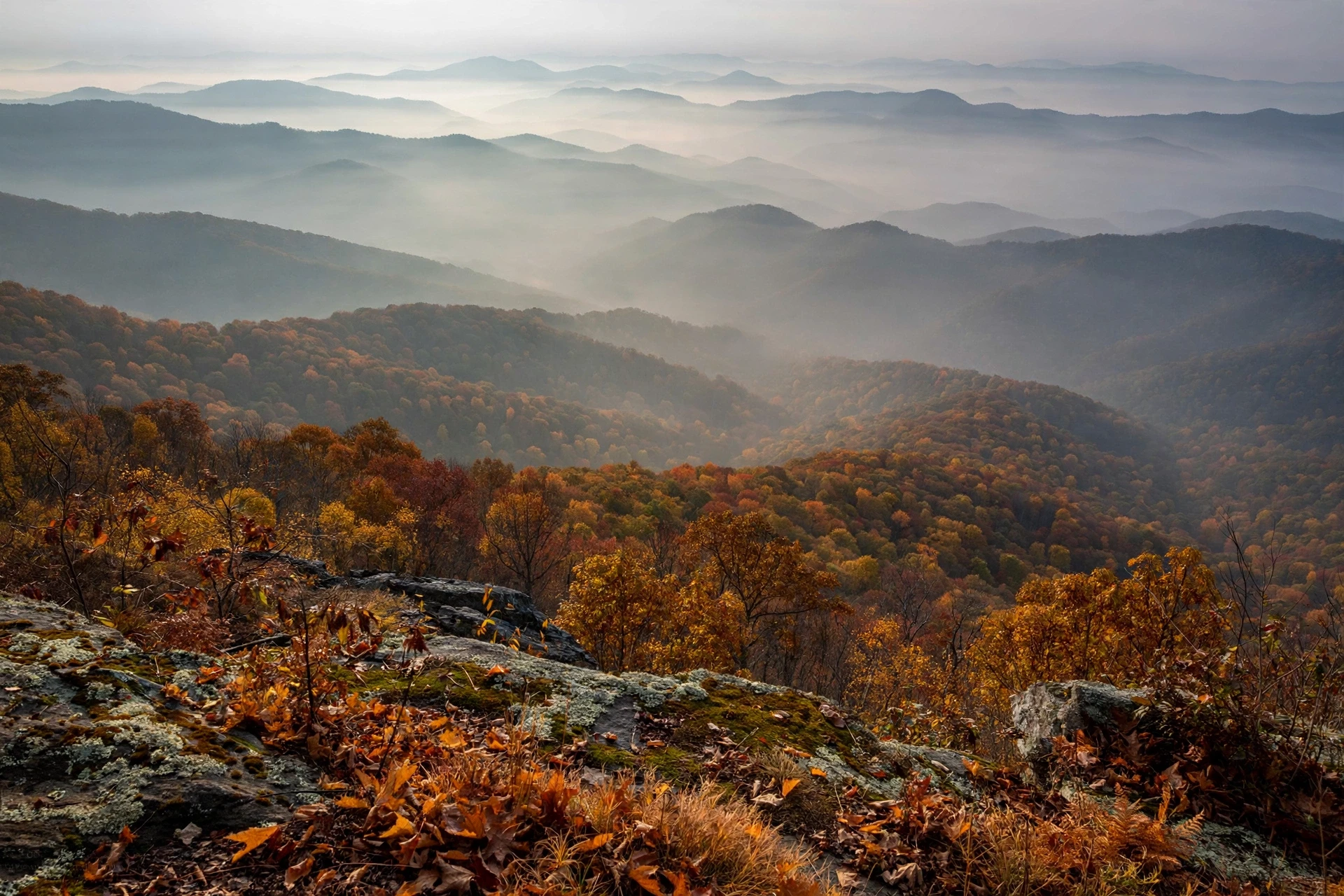
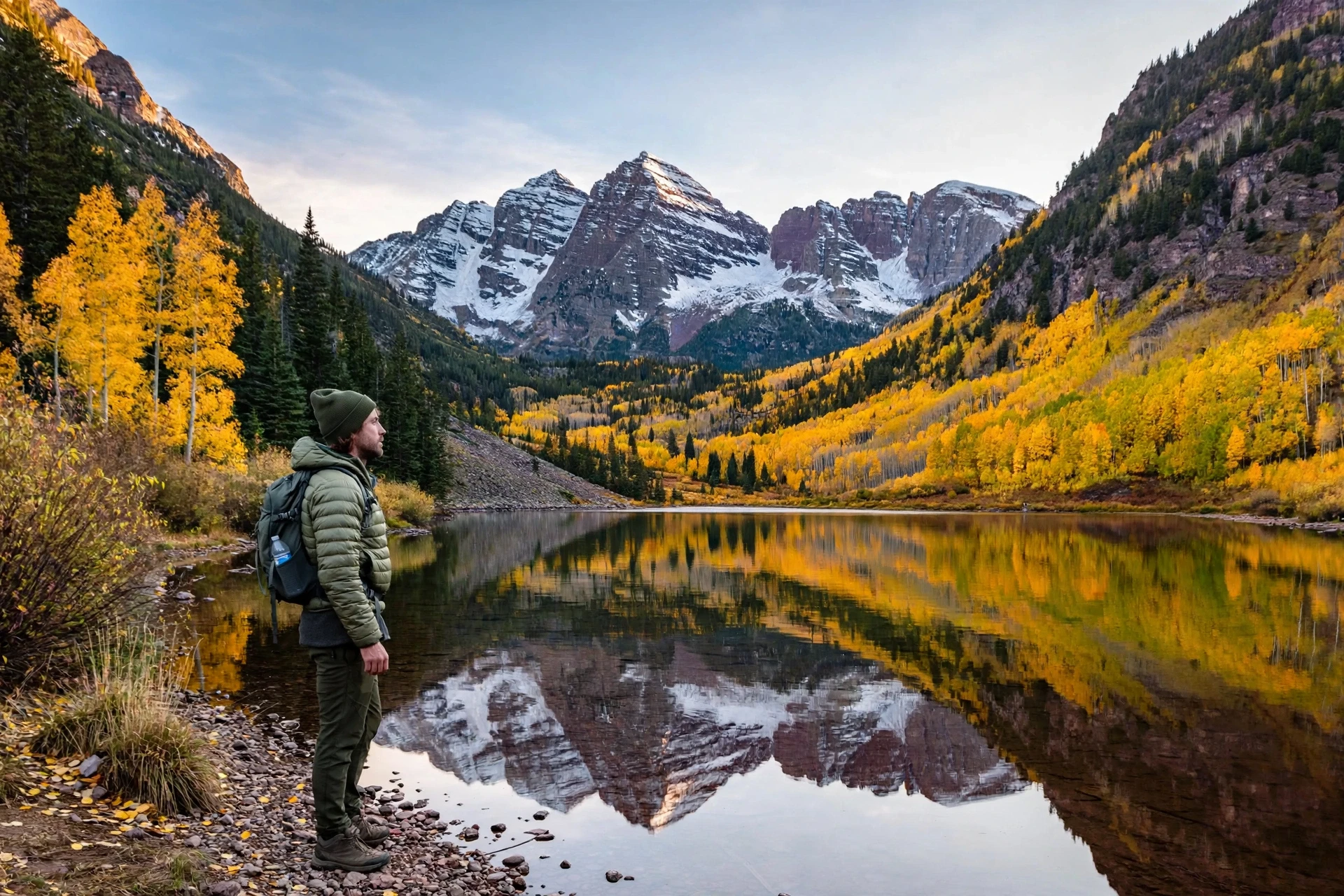
Colorado does fall differently. There are no red maples here. There is gold, whole mountainsides of aspen turning at once, and it happens fast, usually in the last two weeks of September. Maroon Bells, outside Aspen, is the most photographed spot in the state, and for once the photograph is honest: two peaks over a lake, with aspen all the way down to the water.
You cannot just drive up in the fall. The road to Maroon Bells runs on a reservation and shuttle system in the busy season, and the parking fills weeks ahead. Book the shuttle before you book the hotel. The aspen around Aspen turn first, then the color drops to the valleys, so a late-September trip that misses the Bells can still find gold on the roads out of town. Colorado is only one stop on my mountains in the USA list, and the aspen here turn earlier than most of the ranges on it.
The honest downside is the altitude and the price. Aspen is expensive, and the air is thin at 8,000 feet. Drink water, take the first day slowly, and stay in Carbondale or Basalt if the Aspen rates sting.
The Late One: Columbia River Gorge, Oregon
The Columbia River Gorge holds its color late, often into the first week of November, and that alone earns it a place on this list. Multnomah Falls drops 620 feet in two tiers, and the trail to the top runs 2.4 miles on paved switchbacks, but the lower viewpoint is flat and easy, and the color along the Historic Columbia River Highway is the real draw.
Drive the old highway instead of the interstate. The road is slow and narrow, the waterfalls stack up one after another, and the maples along the creek turn late and bright. The lot at Multnomah fills by 9 AM on fall weekends, so go early or go on a weekday, and check the current access rules before you go, because they change with the season.
Portland is forty minutes away, which makes this the easiest place on this list to pair with a city weekend. Stay in Portland, drive the gorge in the morning, and be back for dinner.
The Quiet Finish: Ozarks, Arkansas
The Ozarks are the place I send people who missed peak everywhere else. The color runs late here, into November in the south, and the hardwoods turn in waves, oak and hickory after the maple, so a late trip still has color to find. The Pig Trail, Arkansas Highway 23, runs through the Ozark National Forest between the Boston Mountains, and in late October it is a tunnel of color with almost no traffic.
There is no big town, no famous overlook, and no reservation system. That is the point. Stay in Eureka Springs or Fayetteville, drive the back roads, and stop at the farm stands. The honest downside is the services: gas stations are thin, restaurants close early, and the cell service drops out in the hollows. Fill up, carry cash, and download your map.

What I Would Do With One October Weekend
If I had one weekend and no plan, I would pick the place closest to home and go this weekend. The color does not wait for a perfect itinerary, and the best October day I ever had was a two-hour drive I almost talked myself out of. Pick the nearest place on this list, fill the tank, and go before the wind takes the leaves. If you want the short version, my best fall foliage spots list is the one I would hand a friend who only has a weekend.