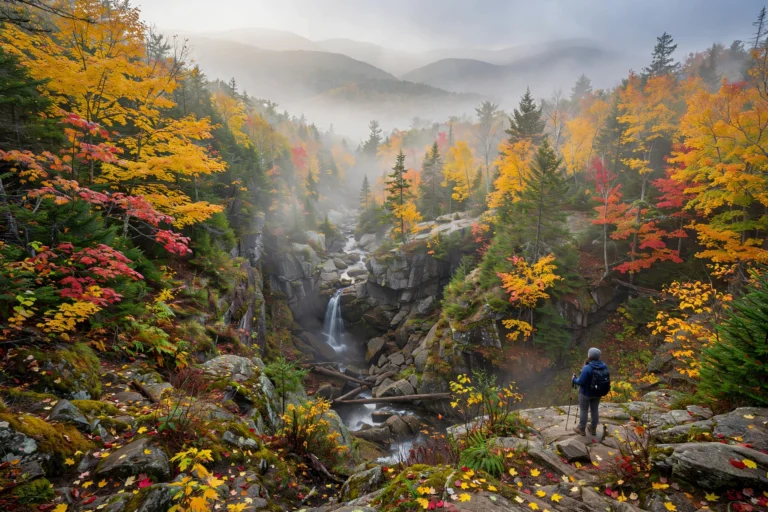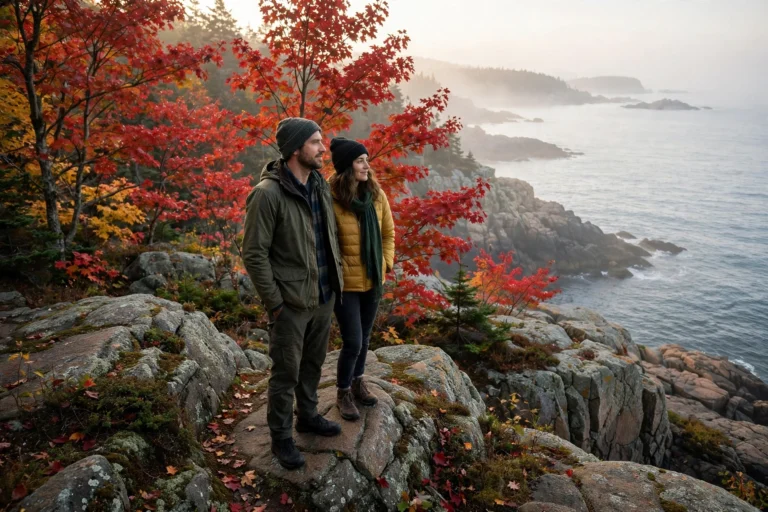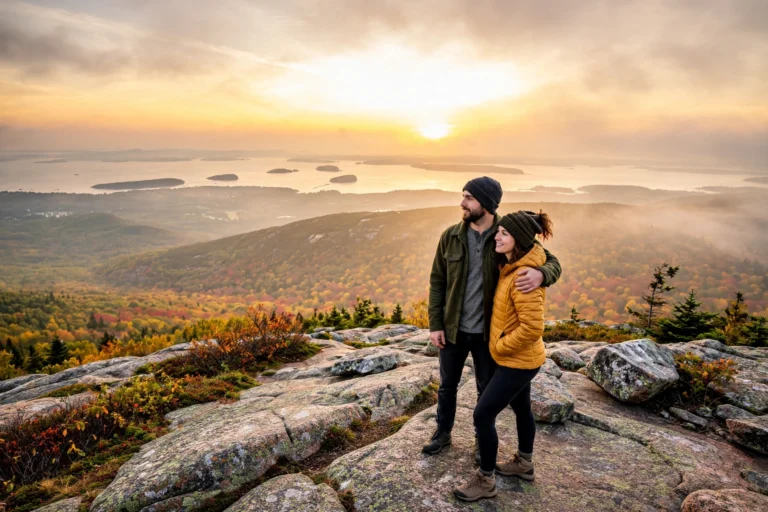
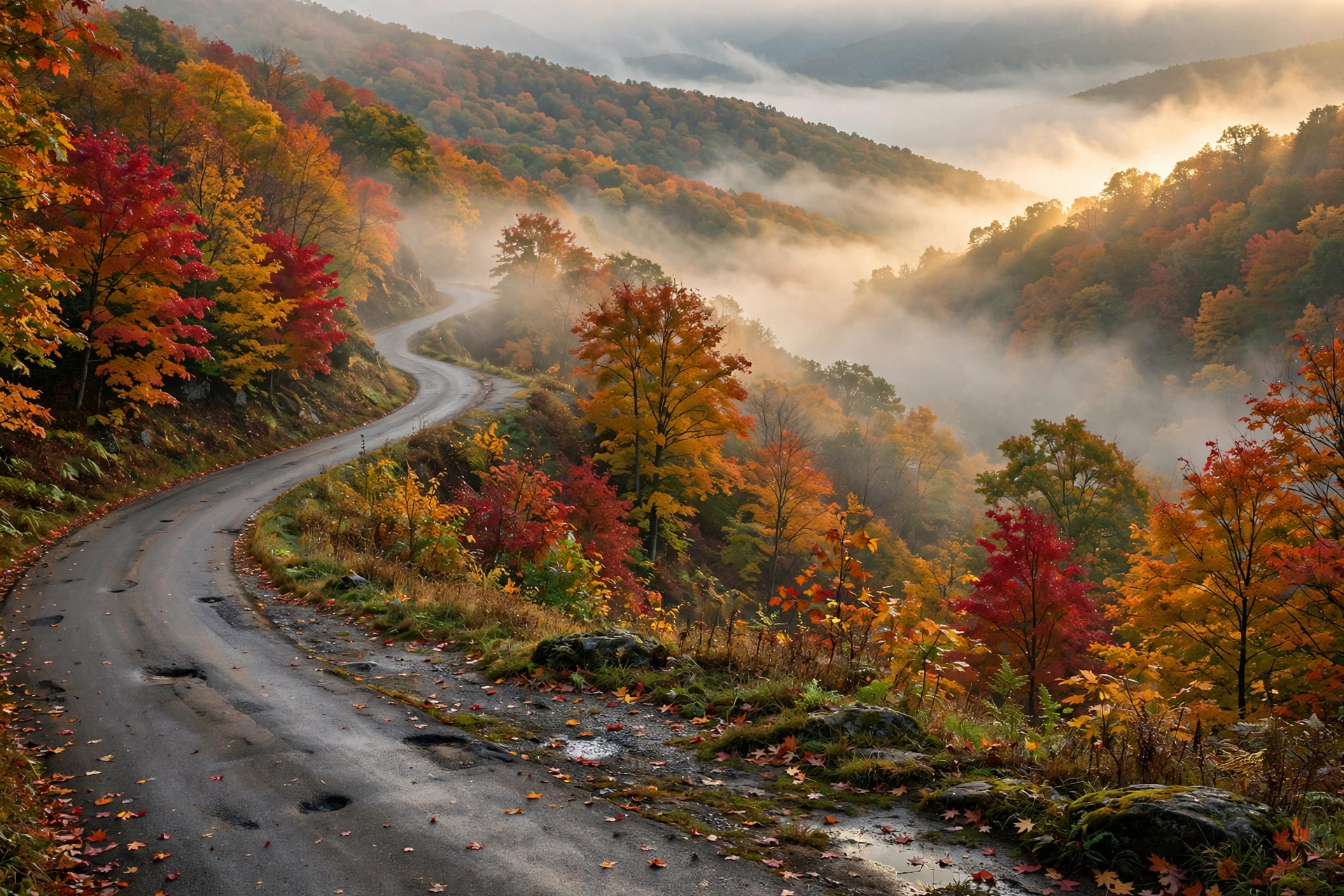
Take These 12 Fall Trips Before the Color Fades
I stopped chasing peak color years ago, and my fall trips got better the moment I did. Peak week is a rumor that moves with the weather, and I have driven five hours for a rumor more times than I care to admit. Now I pick places that hold up when the color is early, late, or gone entirely, and I stay long enough to see them in the morning light. These twelve are the ones I would take again, and every one of them works even if you miss the red week. If you want the places themselves, start with my fall foliage destinations in America.
Twelve Fall Trips, One Slow Rule
My rule is simple. One base town, two nights at least, and one slow morning before I decide anything. I do not plan a trip around a foliage forecast, because the forecast is a guess dressed up as a date, and I have watched it move a full week in either direction.
These are dreamy autumn getaways worth the trip, and none of them depends on catching one perfect week of color. I look for places that feel magical in autumn for a second reason, a lake, a market, a walk, a meal, so the trip survives a gray day. Think of this as fall travel ideas beyond leaf peeping, a list for people who want the season, not just the photograph.
Couples do well on this list, and so do families, for different reasons. Couples get quiet mornings and long dinners. Families get short drives, one good walk, and a town with food that does not require a reservation made in August.
If driving is the point, my bucket list fall foliage road trips guide covers the fifteen routes I would hand to a friend.
Mountains First: The Four I Plan Around

Start here if you want the classic fall, mountains, small towns, and color you can see from the road.
Stowe, Vermont. Stowe is a village green, a white church, and a main street you can walk end to end in ten minutes, and that is why I stay there. I sleep in Stowe and drive one piece of Route 100 each day, stopping where the farm stands and covered bridges pull me over. The cider donuts at a farm stand on the road are still warm in the morning, and I eat them in the car before they cool. Northern Vermont turns early, often in the first days of October, so I book the room before I plan a single stop, because the small inns fill first.
North Conway, New Hampshire. North Conway sits at the east end of the Kancamagus Highway. The Kancamagus runs 34.5 miles through the White Mountain National Forest, and the whole road is pull offs above the Swift River and long views, with no towns and no gas stations in between. I fill the tank in town before I turn onto it, because there is no gas on the road itself. An old railroad runs fall trains through the valley, and the covered bridges on the side roads are worth the detour. The US Forest Service posts road information for the forest (White Mountain National Forest).
Asheville, North Carolina. Asheville works because the Blue Ridge Parkway gives you color at different heights on the same drive, and the town gives you food and music after. The parkway stretches 469 miles along the ridges, and I drive one piece of it around Asheville instead of trying to cover it all. The Biltmore Estate dresses for the season, and the River Arts District is a good walk on a gray afternoon. The National Park Service posts current road closures (Blue Ridge Parkway).
Aspen, Colorado. Aspen in late September is gold, not red, and that is what makes it different. The aspen groves turn in waves across the mountains, and the Maroon Bells reflect in a lake that fills before sunrise. You need a shuttle or a reservation to get there in the season, so I sort that out before I book the room. Aspen sits near 8,000 feet, so I drink water, walk slowly the first day, and drive the mountain passes in daylight.
Water, Orchards, and Town Squares
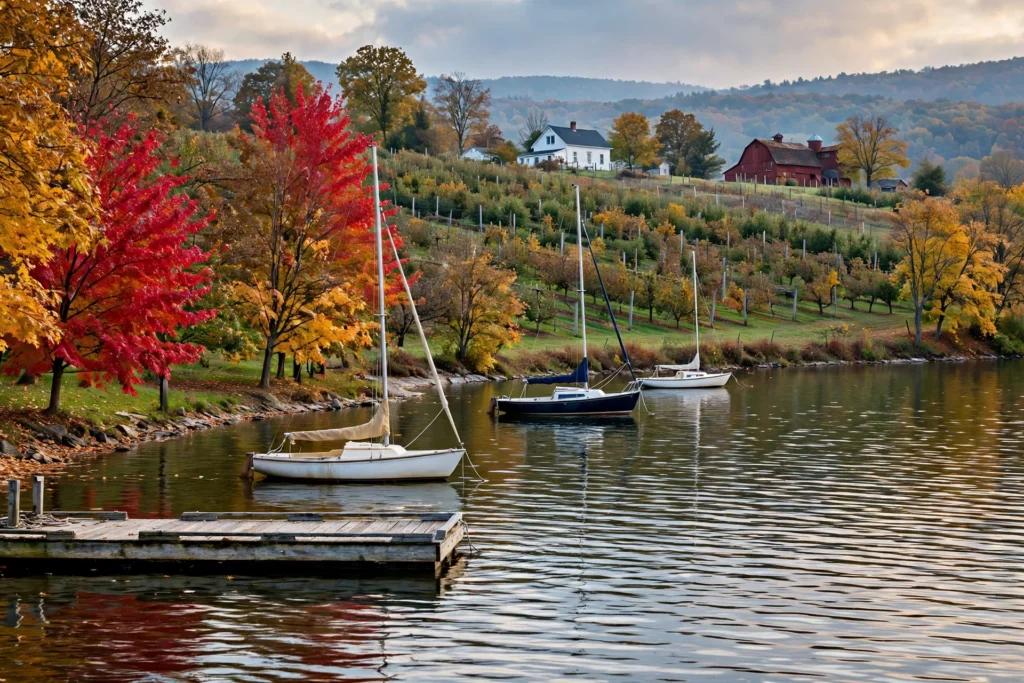
These four are for people who want fall with a lake, an orchard, or a town square in the frame.
Door County, Wisconsin. Door County is a narrow peninsula between Green Bay and Lake Michigan, with orchards, lighthouses, and villages strung along the shore. I base myself in Fish Creek or Sister Bay, Wisconsin, and drive the shoreline roads slowly, stopping at farm markets for apples and cherry jam. A Friday fish boil is the local ritual, and the harbors are quiet once the summer boats are gone.
Finger Lakes, New York. The Finger Lakes give you gorges, wine, and lake towns in one small region, and you can base in one town for the whole trip. Watkins Glen is a stone stairway beside waterfalls, and I walk it in the morning before the crowds arrive. The wine trails around Seneca Lake run through farm country, and the lake towns have diners and bookshops that stay open late into the season.
Hudson Valley, New York. The Hudson Valley is an easy drive from the city, with orchards, farm stands, and Storm King Art Center, a huge outdoor sculpture park on open fields. I pick apples in the morning and walk the sculpture fields in the afternoon, when the light is low. Sleepy Hollow in October is crowded on weekends, so I go on a weekday or skip the main street and drive the back roads instead.
Bar Harbor and Acadia, Maine. Bar Harbor, Maine, puts the coast and the color in the same view, and Acadia National Park is the reason to stay three nights instead of one. I take the Park Loop Road early, before the tour buses, and walk the shore path in town after lunch. Cadillac Mountain at sunrise needs a reservation in the season, so I book it the day the window opens and set the alarm. You need a park pass to enter the park (Acadia National Park).
The Late Ones Nobody Books First

These four turn late, and that is their advantage. The crowds have gone home, the rooms are cheaper, and the color is still there.
Eureka Springs, Arkansas. Eureka Springs sits in the Ozarks with steep Victorian streets, and the color here comes weeks after New England. I base myself in town and drive the Buffalo River roads one day, then walk the historic streets the next. The hills are steep, so I wear real shoes and skip the heels. The town is quiet on weekdays, and the cafes have time to talk.
Fredericksburg, Texas. Fredericksburg, Texas, in the Hill Country, turns in November, when most of the country has already gone bare. The wineries run through the hills, the German heritage shows in the bakeries and the street names, and the peach orchards are bare but the fields are gold. A pink granite dome outside town makes a good climb on a cool morning. I base myself in town and drive one country road a day, and I eat lunch early, because the small places fill at noon.
Taos, New Mexico. Taos is high desert, adobe, and art, and the aspen gold in the Sangre de Cristo Mountains is the reason to go in October. The light at 7,000 feet feels closer, and the mornings are cold enough for a jacket while the afternoons are warm enough to sit outside. I base myself in town, walk the plaza in the morning, and drive the Enchanted Circle in the afternoon. The official state tourism site lists current conditions and events (New Mexico Tourism).
Townsend, Tennessee. Townsend is the quiet side of the Great Smoky Mountains, and I stay there instead of Gatlinburg, Tennessee, on purpose. The Cades Cove loop is a slow drive past old cabins and open fields, and the crowds thin out the farther you get from the main entrance. Gatlinburg on a Saturday in October is a traffic jam with shops, so I drive through it early or not at all, and I sleep in Townsend, where the mornings are quiet.
The Money Part: Rooms, Gas, and One Splurge
I budget my fall trips the same way every year: the room is the cost, and the road is nearly free.
Driving is the cheap part of this list. The scenic roads here have no tolls, and most of them have no entrance fee at all. Acadia and the Great Smoky Mountains are the exceptions, and each one handles passes its own way, so I check the official park site before I go and buy the pass early when the site allows it.
Lodging is the real cost, and it needs the most lead time. Small inns in Stowe, North Conway, and Bar Harbor fill for peak weekends six to eight weeks out, so the room comes first in my planning, before any driving route. A Tuesday night costs less and books later, and I have found good rooms two weeks out in the middle of the week.
Gas is the cost I forget until the gauge drops. Mountain driving burns more than highway driving, and stations are sparse on the Kancamagus Highway and the back roads of the Ozarks, so I fill up in the base town every morning before I leave.
My one splurge is a good inn with a real breakfast, because a slow morning starts at the table. I would rather spend on the room than on a tour, and I skip the guided foliage drives, because the road and a paper map do the same job for free.
Pack for a Cold Morning and a Warm Afternoon
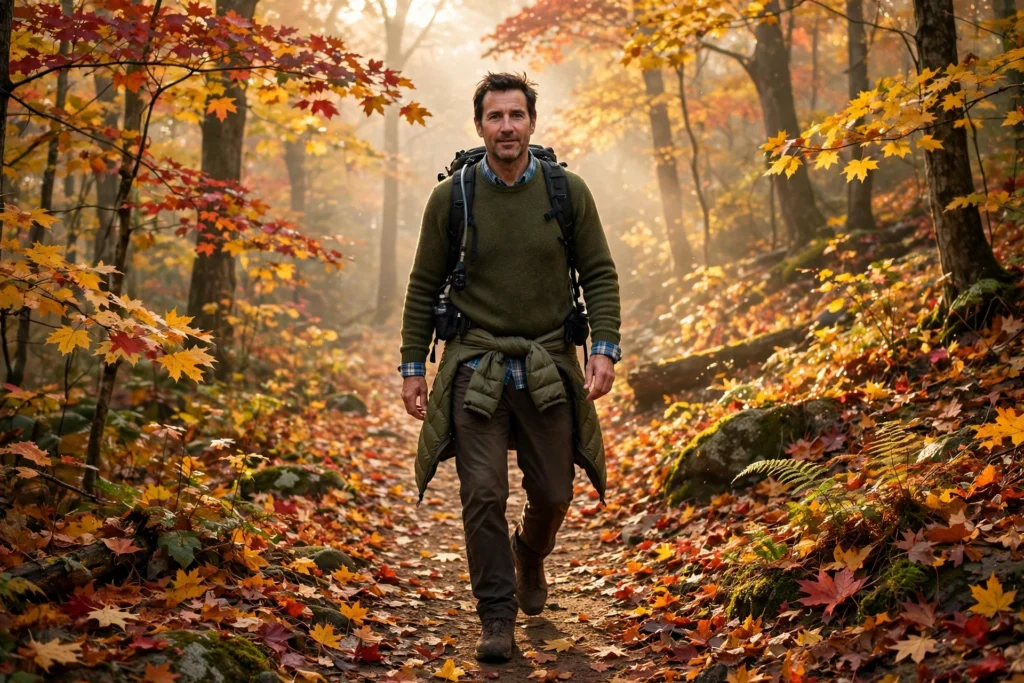
Signal fades in the mountains, on the parkways, and along the river roads, so I sort out my maps in town and keep a paper one in the glove box.
My packing list is short:
- Downloaded maps and a paper map in the glove box, plus a car charger that works
- A water bottle, snacks, and a sweater you can tie around your waist by noon
- Sturdy shoes, because the best views are a ten minute walk from the parking lot
- Cash in small bills for farm stands that do not take cards
Layers matter more than anything else on this list. I start the day in a sweater and a jacket, lose the jacket by noon, and put it back on for the drive home after sunset.
The Questions That Come Up After the List
Can I take kids on these trips?
Yes, and the trick is shorter days. I plan one drive of two hours or less, one walk to water, and one town stop with food, then I stop planning. Door County and the Finger Lakes suit kids well, because the drives are gentle and the stops are close together. Skip the steep streets of Eureka Springs with small kids.
How far ahead should I book a room?
For a peak October weekend, I book six to eight weeks out, and I book the room before I plan anything else. A Tuesday night is a different story, and I have found good rooms two weeks out. If your first choice is gone, move to the next town over instead of moving your dates.
Which of these trips needs a park pass?
Acadia needs a park pass, and the Great Smoky Mountains has its own entrance rules, so check the official park site before you go. The Blue Ridge Parkway, the Kancamagus Highway, and the country roads in Texas and Arkansas charge no fee to drive. Buy the pass in advance, because signal at park entrances is often weak.
What if the color is gone before I arrive?
Go anyway, because these trips were picked for a second reason. The lake, the market, the walk, and the meal are still there, and the roads are empty once the color crowd leaves. Some of my best October days came after the leaves fell, when the views opened up and the towns were quiet.
Which trip is best for a first fall trip?
Start with Stowe or North Conway, because the base town method works best where the driving is simple and the color is close to the road. Pick one stretch, drive it slowly, and stay two nights. If you want fewer crowds and later color, start with Townsend or Fredericksburg instead. If you want a city base instead, start with my US cities for fall foliage.
Pick One, Book the Room, Go
Choose one trip from this list, not three. Book the room tonight, while the dates you want are still open, and give yourself two nights in one town. Drive one stretch a day, stop at the second overlook instead of the first, and eat lunch where the locals eat. The color will do what it does. Go anyway, and go slow. I ranked these same twelve by how often I would take them again, and the list of the best trips in the USA is the one I hand to friends first.