Summer Destinations for Families USA That Don’t Melt in July
There are only four ways to escape American summer heat, and every good family trip uses at least one of them. Go north. Go up. Go to a coast with a marine layer. Or go inside something. The summer destinations for families USA parents rave about all solve that problem first and worry about attractions second.
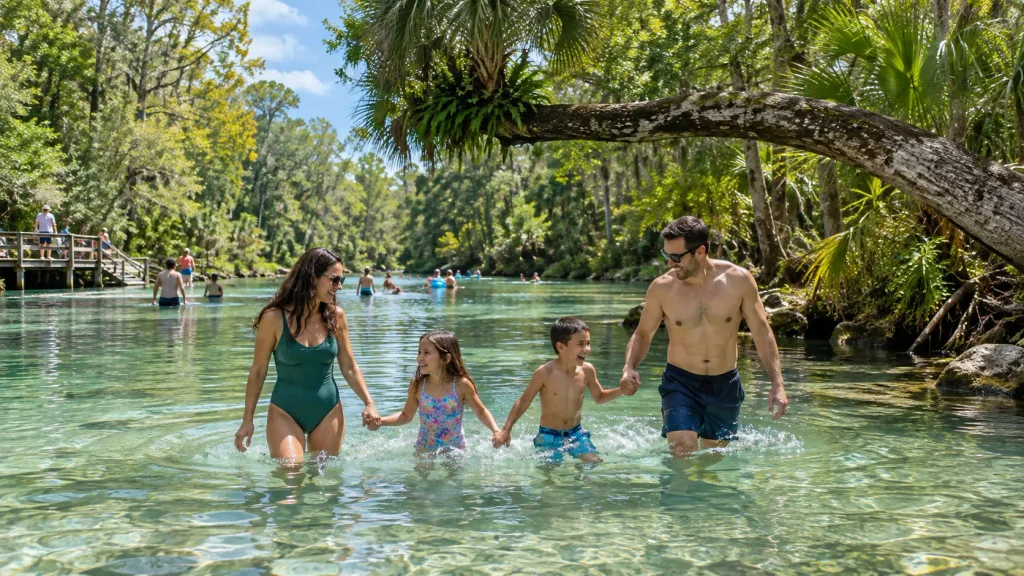
Kids overheat faster than adults do, which turns a merely uncomfortable afternoon into a ruined one. So build around the escape route, then fill in what you’ll do.
The Four Escapes, Ranked by How Well They Work
Latitude and elevation do the heavy lifting. Coasts help in specific places only. Indoor options work anywhere but cost the most.
- North buys you roughly 3 to 5 degrees for every 300 miles, plus dramatically longer daylight
- Elevation buys about 3.5 degrees per 1,000 feet, which is the fastest cooling available
- Coastal marine layer works on the Pacific and in northern New England, and barely at all on the Gulf or the mid-Atlantic
- Indoors works everywhere and is the fallback when the other three aren’t available
That third one trips people up constantly. Florida’s coast in July isn’t cooler than Florida’s interior in any way your body will notice. Southern California’s coast in July really is.
Going North
The Great Lakes are the best value in American summer travel and it isn’t close.
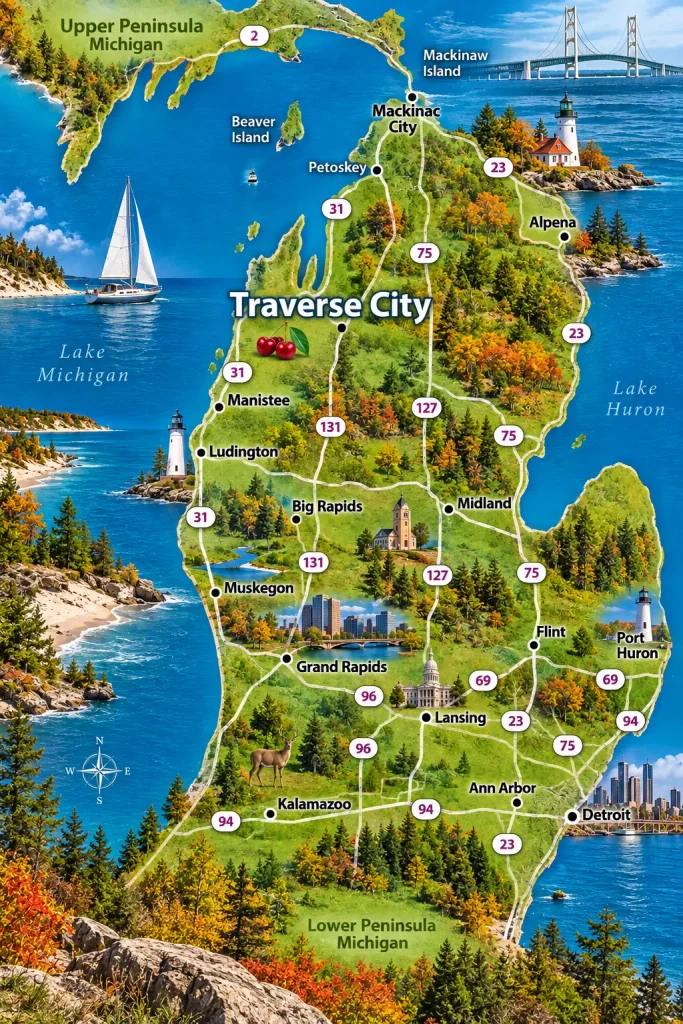
Traverse City, Michigan, sits on Grand Traverse Bay with Sleeping Bear Dunes National Lakeshore 30 minutes west. Lake Michigan water reaches the low 70s by August, which is the warmest any of the Great Lakes get and warm enough that kids will stay in for hours. Cherry season peaks in July.
Door County, Wisconsin, is a peninsula with 300 miles of shoreline and eleven lighthouses, and I’d pick it over Traverse City if your kids bike. The whole place works without a car once you’re there.
Further north, Duluth, Minnesota, and the Upper Peninsula get properly cold, sometimes too cold for swimming. Lake Superior almost never warms up, so treat that region as a hiking and waterfall trip rather than a beach one.
On the Atlantic side, coastal Maine around Acadia National Park delivers 75-degree afternoons in August while Boston bakes. The ocean stays in the mid 50s, so nobody swims for long, but the tidepooling at Bar Harbor occupies small kids indefinitely.
Going Up
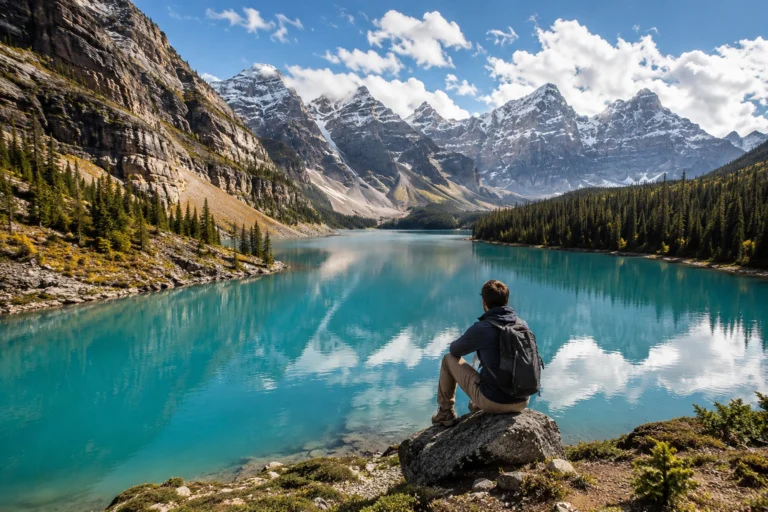
Elevation is the fastest fix, and it’s why western families spend July in the mountains.
Estes Park, Colorado, sits at about 7,500 feet at the gateway to Rocky Mountain National Park, where afternoon highs run 20 to 25 degrees below Denver. Flagstaff, Arizona, at roughly 7,000 feet, does the same relative to Phoenix, which is the single most dramatic escape in the country.

Two things to plan for at altitude with kids. Afternoon thunderstorms are near-daily in the Rockies in July, so hike in the morning. And children can feel altitude harder than adults do, so give the first day to walking around town rather than a summit push.
Timed entry applies at several mountain parks in summer, including Rocky Mountain. Permits release on rolling windows through Recreation.gov, and they go fast.
Where the Marine Layer Earns Its Reputation
San Diego, California, is the country’s most reliable summer family destination for weather alone. Highs hold in the mid to upper 70s, the marine layer keeps mornings overcast and cool, and Balboa Park holds seventeen museums plus the San Diego Zoo in one walkable area.

The catch is the ocean. Southern California water sits in the upper 60s at best in July. Fine for wading. Cold for swimming. Bring rash guards, and expect that everyone’s in the hotel pool by three.
The Oregon coast runs cooler still and is spectacular, but treat it as a beachcombing trip. Nobody’s swimming in the Pacific at Cannon Beach without a wetsuit.
One more Pacific option that gets overlooked: the Olympic Peninsula in Washington, where Olympic National Park puts rainforest, mountains, and coastline within a two-hour radius. August is its driest month and highs sit in the 70s. Pack layers anyway, because the coast and the interior valleys can differ by 20 degrees on the same afternoon.
Summer Destinations for Families USA Built Around Water
When the trip is about swimming rather than escaping, water temperature becomes the deciding variable.
Warmest reliable options for July and August:
- Lake Michigan beaches around Traverse City and Sleeping Bear Dunes
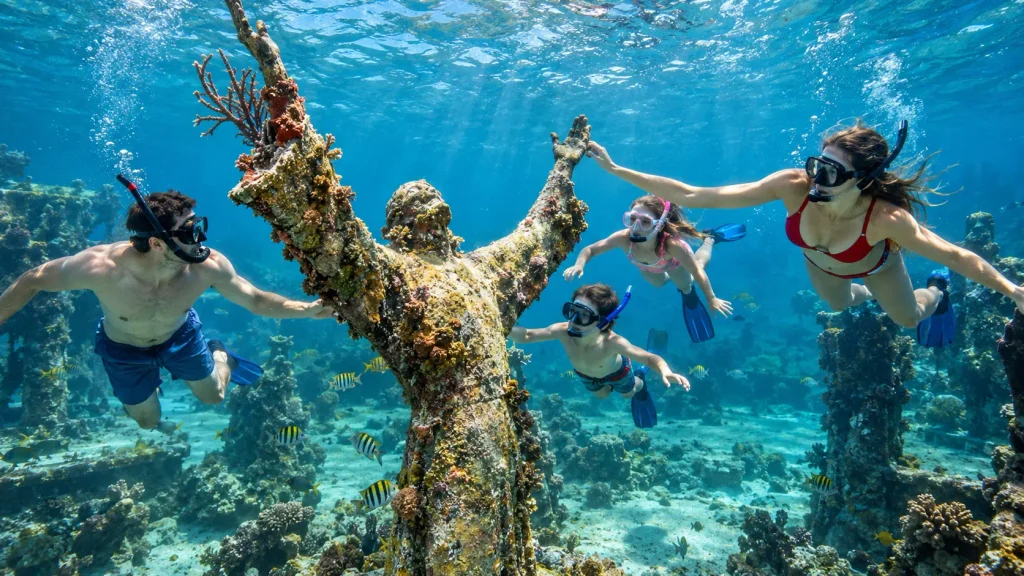
- The Florida Keys and South Florida, though you’re trading heat for water warmth
- Gulf Coast beaches in Alabama and the Florida Panhandle, warm but humid
- Lake of the Ozarks, Missouri, and Table Rock Lake near Branson, both properly warm by mid-June
- Wisconsin Dells, where indoor waterparks make weather irrelevant entirely
The Dells deserves its reputation as the waterpark capital, and it solves a real problem: rain doesn’t cancel your day. It’s also expensive and loud, and I’d do two nights there rather than a week.
The Water Safety Part Most Travel Guides Skip
I’d rather include this than pretend it isn’t the most important thing in a summer family article.
Drowning is the leading cause of death for children ages 1 to 4 in the United States, and the second leading cause of unintentional injury death for kids 5 to 14, behind car crashes. About 40 percent of drownings in that older group happen in natural water: lakes, rivers, and oceans. Vacation settings concentrate the risk, because the water is unfamiliar and adults are relaxed.
What reduces it, per the CDC and the American Academy of Pediatrics:
- Designate a water watcher. One adult, no phone, no conversation, on a rotation. Diffused responsibility is how gaps open.
- Stay within arm’s reach of young or weak swimmers. Touch supervision, not line-of-sight.
- Use Coast Guard-approved life jackets, not floaties, water wings, or pool noodles, which are toys rather than safety equipment.
- Know that drowning is silent. There’s usually no splashing and no shouting. People expect noise and there isn’t any.
- Ask about the rental’s pool fencing before you book a house. Four-sided fencing with a self-latching gate is the standard.

Formal swim lessons are associated with a large reduction in drowning risk for young children, so if a trip is a few months out, that’s the highest-value thing you can do between now and then. Current guidance is at CDC drowning prevention.
None of this should keep you home. It should just change who’s watching, and how.
Heat Hits Kids Differently
Children have more skin surface relative to their body mass, sweat less efficiently, and reliably fail to notice they’re thirsty. That combination means a child overheats before an adult in the same conditions, and often before anyone notices.
Practical adjustments that matter more than any destination choice:
- Schedule outdoors before 11 a.m. and after 4 p.m. The middle of the day is for museums, naps, or water.
- Push fluids on a timer, not on request. Kids won’t ask.
- Check surface temperatures. Playground equipment, metal slides, and sand can burn bare feet on hot days.
- Never leave a child in a parked car, even briefly. Interior temperatures climb dangerously fast, including on days that feel mild.
- Watch for the quiet ones. A kid who goes still and stops complaining is a bigger concern than one who’s whining.
Heat safety guidance is at weather.gov.
What This Costs and When to Lock It In
Summer is peak everywhere, so the savings come from structure rather than from hunting deals.
A rental with a kitchen beats two hotel rooms for a family of four on both nightly rate and food. National park trips cost a fraction of theme park trips, since entrance fees are low and most activities are free.
For timing: book in-park lodging 12 months out, campgrounds with hookups six months out, and flights two to three months out. If you can travel the last two weeks of August, southern school districts are already back and rates drop while the water stays warm. That’s the best-value window of the entire summer and almost nobody uses it.
Park listings and fee-free dates are at nps.gov.
Trips That Sound Great and Aren’t
Orlando in July. The parks are excellent and the weather is punishing, with heat indexes in the 100s and a thunderstorm most afternoons. Go in February.
Any western multi-park road trip in one week. The distances defeat it. Two parks in ten days is the honest version.
The Grand Canyon or Death Valley with kids in summer. Rim temperatures are manageable; anything below is not, and rescues from the inner canyon are routine in July.
And a beach vacation somewhere the water is 62 degrees. Check the water temperature, not the air temperature, before you promise anyone swimming.
Questions Parents Send Me
Where’s the best place for a family vacation in summer in the US? Traverse City, Michigan, for warm Lake Michigan water and Sleeping Bear Dunes. San Diego for the most reliable weather in the country. Estes Park, Colorado, for mountain temperatures 20 degrees below the plains. Each solves the heat problem a different way.
What are the cheapest family summer destinations? Great Lakes towns, national parks, and lake regions in Missouri and Arkansas all price well below coastal resorts. A rental with a kitchen cuts both lodging and food costs for a family of four, and most national park activities are free after a low entrance fee.
When is the cheapest week to travel in summer? The last two weeks of August. Southern school districts return first, so demand drops while lake and ocean water stays at its warmest. Rates fall noticeably and popular destinations feel manageable, which makes it the strongest value window of the season.
How do I keep kids safe around water on vacation? Designate one adult as water watcher with no phone, on a rotation. Stay within arm’s reach of weak swimmers. Use Coast Guard-approved life jackets rather than floaties. Drowning is fast and silent, so listening for splashing or shouting is not a reliable warning.
Is it too hot to visit national parks in summer? Depends on elevation. High parks like Rocky Mountain, Glacier, and Yellowstone are comfortable in July. Desert parks including Death Valley, Joshua Tree, and Big Bend become dangerous, and the Grand Canyon is manageable on the rim but not below it.
How far ahead should I book a summer family trip? Twelve months for in-park lodging at major national parks, six months for campgrounds with electrical hookups, and two to three months for flights. Timed entry permits at parks like Rocky Mountain release on rolling windows and disappear within minutes.
Do kids need to be older to enjoy a national park trip? Six to ten is the sweet spot, when kids can hike a few miles and stay engaged by scenery and ranger programs. Younger children work well at parks with short paved trails and water access. Teenagers usually want more independence than a park schedule provides.
Pick the Escape First
The summer destinations for families USA rankings put on top are mostly ranking attractions. Rank the climate instead. Decide how you’re beating the heat before you shortlist a single destination. North, up, coastal, or indoors. That one choice eliminates most of what won’t work and leaves you with a manageable list.
Then check the water temperature at whatever you’re promising the kids, assign a water watcher for the trip, and hold the last two weeks of August if your calendar allows it. Everything else is details.