Snorkeling the Florida Keys Slowed Me Down and Made Me Look Closer
I came to the Keys with a mask that leaked and a plan that was too ambitious, and the reef fixed both problems in about ten minutes. The best snorkeling spots Florida Keys trips share one trait: shallow, clear water over living coral, close enough that a first swimmer can relax. I spent five days moving down the island chain from Key Largo to Key West, with a long day out to the Dry Tortugas, and I kept notes on clarity, crowds, and which boats were worth the early alarm. This is the trip I would repeat, reef by reef.
The Snorkeling Spots Florida Keys Regulars Told Me to Start With
Start in Key Largo. It sits closest to the mainland, the reef sits closest to shore, and the town runs more snorkel boats than anywhere else in the chain.
The anchor for all of it is John Pennekamp Coral Reef State Park, the first undersea park in the country. The park covers about 70 nautical square miles of water, and its reefs sit inside the Florida Keys National Marine Sanctuary, which protects the only coral barrier reef in the continental United States. That protection shows: the coral looks tended, the fish stay close, and mooring buoys keep anchors off the reef heads.
John Pennekamp snorkeling tours leave from the park marina and reach the nearby reefs in under an hour. The rhythm suits first-timers: a short ride out, then about an hour in the water at each reef. Guides point out turtles and rays, and nobody makes a fuss when you ask for a flotation vest.
You can check tour times and park details on the John Pennekamp Coral Reef State Park page before you drive down.
Molasses Reef sits a few miles off Key Largo, and the boat ride out took about half an hour on a calm morning. The reef is a wide spur-and-groove formation: long fingers of coral separated by sandy channels. You swim along a channel, pass a coral wall full of fish, then cross to the next finger. It keeps the swim simple.
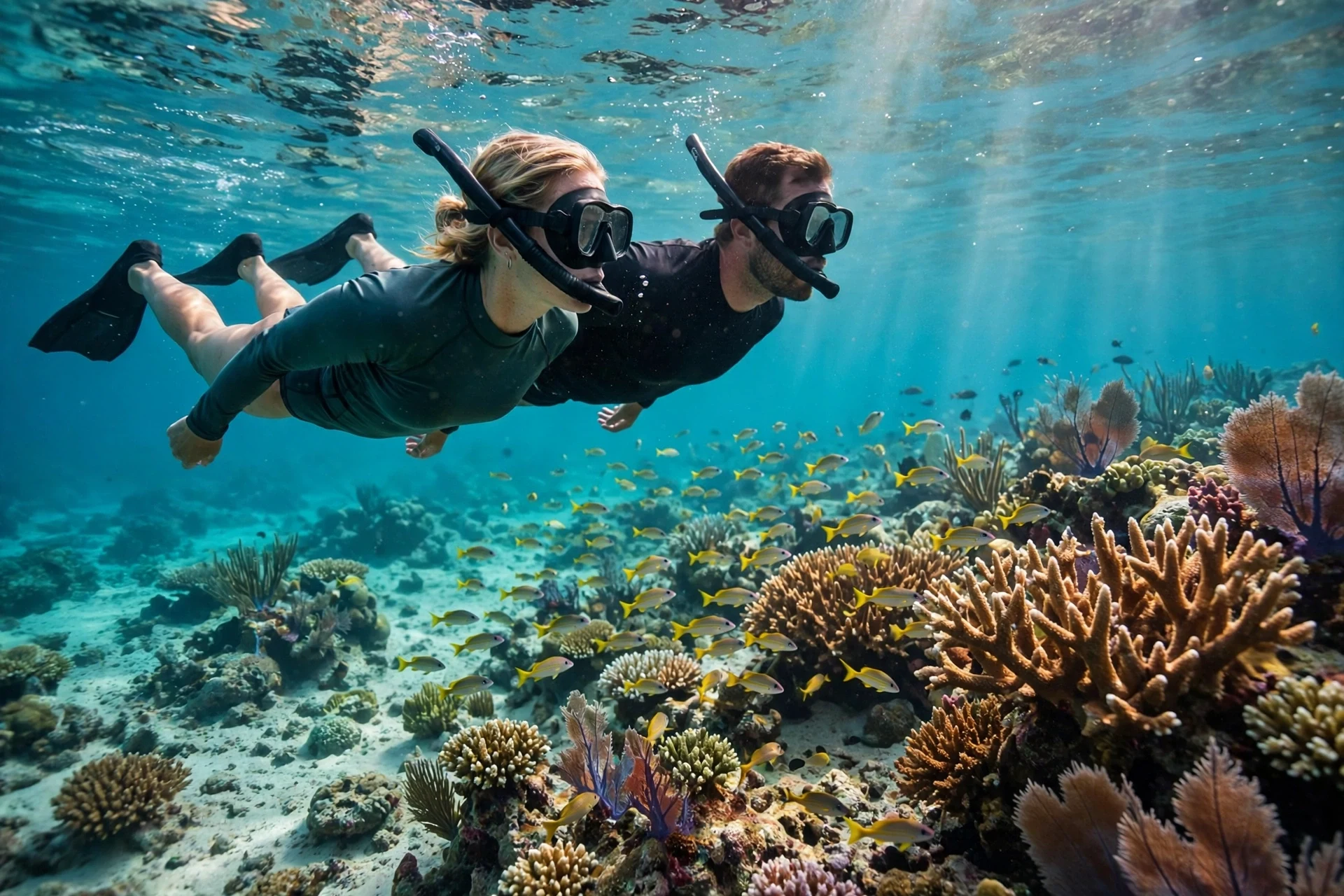
The water that morning was the clearest I saw all week. I could read the coral from the surface, count the yellowtail snapper schooling under a ledge, and watch a parrotfish scrape at algae without ducking my head twice. Depths run shallow along the top, then drop off at the edges, so a nervous swimmer can stay over the sand.
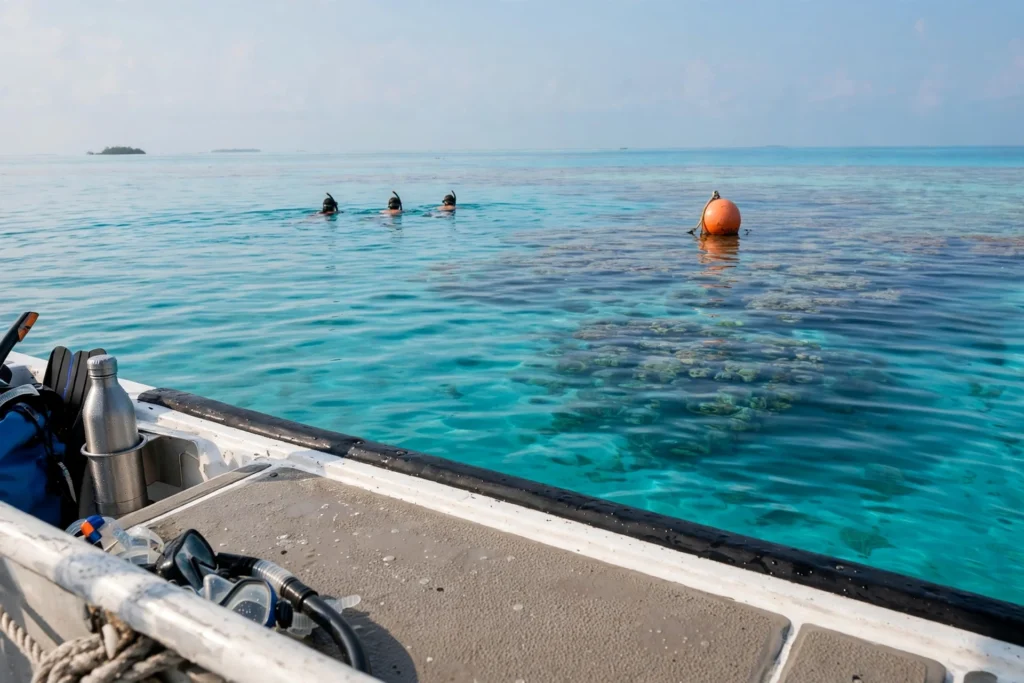
Molasses rewards a slow pace. Kick less, drift more, and the reef comes to you. I came out with a sunburn on the back of my neck where my shirt had ridden up, so bring a long-sleeve rash guard. The best snorkeling in Key Largo lives on this reef, so book the first boat of the day. My 8 a.m. trip had twelve swimmers. The boat behind us at noon looked twice as full.
The Statue, the Crowds, and the Early Boat That Fixes Both
The Christ of the Abyss statue stands on the bottom at Key Largo Dry Rocks, in water about 25 feet deep, with its arms raised toward the surface. It is a bronze figure, green with age, and it draws more snorkelers than any other single spot in the Keys. I went twice, at midday and at 8 a.m., and the two visits felt like different reefs.
At midday, six boats ringed the site. Fins kicked up sand, a line formed for photos, and the fish kept their distance. At 8 a.m., two boats shared the site. The water was flat, the statue stood clear against the sand, and a school of grunts circled it in a slow ring. Same statue, same reef, different trip.
Go early, or do not go at all. If your schedule only allows a midday slot, pick a different reef that day. The statue is worth seeing once. The coral around it, brain coral heads and sea fans the size of dinner plates, is worth more time than most people give it. From the surface, the statue reads clearly in good light.
Sombrero Reef and Looe Key: the Middle Keys at Their Calmest
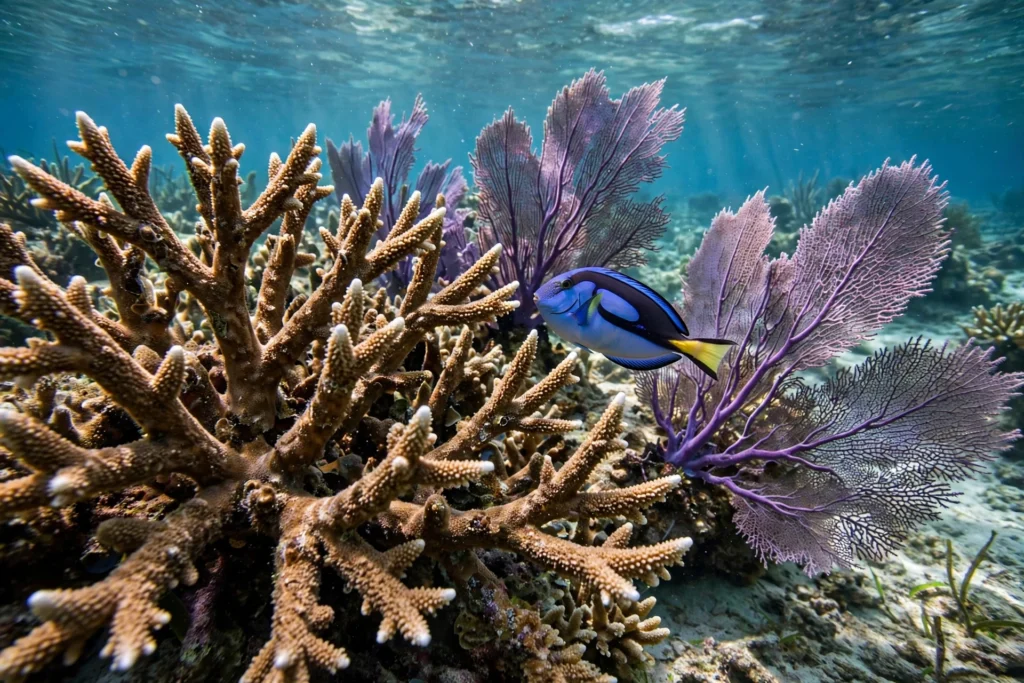
Marathon sits in the middle of the chain and moves slower than Key Largo or Key West. Sombrero Reef lies a few miles offshore, marked by its lighthouse, and the water over it stays shallow. I swam there on a windless morning, and the reef read like a map: elkhorn branches, brain coral domes, and sandy gaps where stingrays rested half-buried.
Sombrero is the reef I would send a nervous swimmer to. The boat ties to a mooring buoy, the current runs gentle on a calm day, and a guide pointed out a green moray eel tucked in a hole. I would have swum right past it. Looe Key, off Big Pine Key, runs deeper and wilder, with longer grooves and bigger fish. I saw a loggerhead turtle there, moving slow along a coral finger, and the boat carried fewer people than the Key Largo trips.
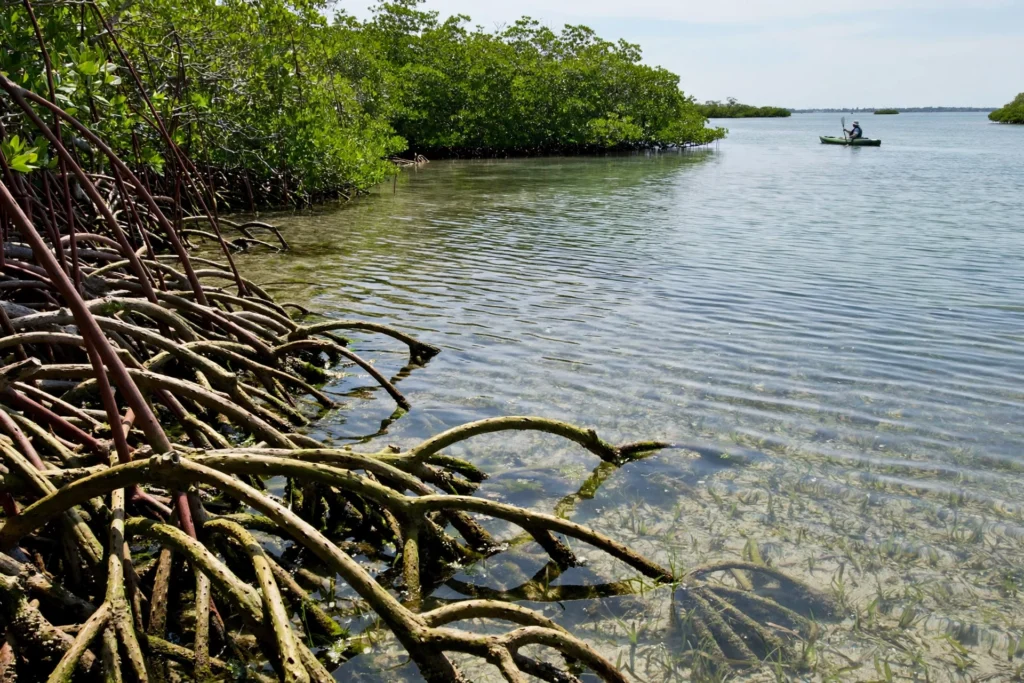
Between the two, Sombrero fits a family morning and Looe Key fits a swimmer who wants more depth and fewer people. Both sit close to the Seven Mile Bridge. I stopped on the old bridge walkway after Sombrero and watched the water change color from green to blue where the reef dropped away. The mangrove shorelines nearby shelter the young fish that later move out to the reef.
Dry Tortugas Took a Whole Day and Earned It
The Dry Tortugas sit about 70 miles west of Key West. The ferry ride runs about two hours each way, and the day stretches from early morning to late afternoon. I weighed that against a second day in Key West and picked the ferry. I would pick it again.
Dry Tortugas National Park covers small islands around Garden Key, where Fort Jefferson rises out of the water in red brick. Less than one percent of the park is dry land. The rest is water, reef, and seagrass, best seen by swimming. I snorkeled right off the beach beside the fort, in shallow water over coral heads, and I saw more fish in the first twenty minutes than on some full boat trips.
The reef here feels untouched because the islands are hard to reach. Coral heads sit close to the surface, and the moat wall shelters the swim area from the current. I floated along the wall and watched sergeant majors dart in and out of the bricks, with the fort filling the sky behind me.
The park’s official site covers ferry booking, camping, and what to bring for a day with no shops and little shade: Dry Tortugas National Park.
Bring your own mask and fins if you have them. Rental gear is available on the ferry, but fit matters more when you swim for hours. Bring more water than you need, a hat, and reef-safe sunscreen. There is almost no shade on Garden Key. Book early, because ferry seats and campsites fill up in season.
Key West Reefs Without the Party Boat
Key West snorkeling reefs sit further from shore than the Key Largo reefs, and the boats run longer rides to reach them. Sand Key and Rock Key are the usual stops, and both hold healthy coral in shallow water. I watched a school of blue tangs move across Sand Key like a single animal, turning together in the current.
Key West also runs the loudest boats in the Keys. Party catamarans with music, open bars, and fifty passengers work the same reefs as the small six-person boats. I picked a small boat out of the Historic Seaport, where six swimmers spread out, the guide stayed in the water, and nobody played music over the reef. Ask about group size before you book.
The afternoon wind picks up most days in Key West, so book a morning trip. I took a 9 a.m. boat and came back to flat water. A friend took the 2 p.m. trip the same day and came back tired, with choppy water and half the visibility. After the swim, watch the sunset from Mallory Square. It is the right ending for a reef trip, and it costs nothing.

My First-Timer Notes: What Helped and What I Would Change
Florida Keys snorkeling for beginners works because the water is warm, the reefs are shallow, and the boats carry guides who do this every day. These habits made the difference between a good swim and a great one.
- Fit your mask before you board. Press it to your face without the strap and breathe in through your nose. A leaking mask ruins more first swims than bad weather does.
- Wear fins that fit snug and a rash guard for sun. Fins save your legs, and the rash guard covers skin where sunscreen washes off first.
- Take seasickness tablets before you board if you have ever felt queasy on a boat. The ladder back aboard is the moment most people feel it.
- Keep a kid’s first swim short, about twenty minutes, on a shallow reef like Sombrero Reef. Use a flotation vest and a guide in the water. End the swim while they still want another one.
- Do not touch coral, stand on it, or feed the fish. Coral grows slowly, and one fin kick can break years of growth.
The sanctuary runs a Blue Star program listing dive and snorkel operators who follow reef-friendly practices. You can read about the sanctuary, its zones, and responsible diving on the Florida Keys National Marine Sanctuary site before you book.
The Reefs I Would Skip Next Time
The midday boats to the popular reefs run crowded, and I would not repeat the noon trip to Key Largo Dry Rocks. The reef is the same, but the crowd changes the swim. Book morning or pick a quieter reef.
Shore snorkeling disappointed me too. The Keys have few sandy beaches with reef access, and most beach entries lead to seagrass and sand, not coral. A couple of spots near Bahia Honda State Park give you a decent swim from shore, but the real reef sits offshore. Do not plan a trip around beach snorkeling.
Windy afternoons cost me one swim outright. The captain called the trip off at the dock, and I was glad he did. A choppy swim is tiring, the visibility drops, and the reef looks gray instead of gold. If the forecast shows wind over 15 knots, move your trip to the morning. Skip the glass-bottom boat if your goal is to swim. It stays dry while the snorkel boats get in the water.
Money, Timing, and the Bag I Packed Twice
Prices change by season and by boat size, so I will not quote a number that will be wrong by the time you read this. Half-day trips cost less than full-day trips, small boats cost more per person than big ones, and the Dry Tortugas ferry costs more than any reef trip in the Keys. Check operator sites for current prices, and book the Dry Tortugas weeks ahead in winter and spring.
The best months for calm water run from late April through June, and again from September into early November. The water stays warm, the wind stays low, and the crowds thin out after spring break. Winter brings cooler water and cold fronts. Summer brings heat, afternoon storms, and the busiest boats. I would pick May or October if I had free choice.
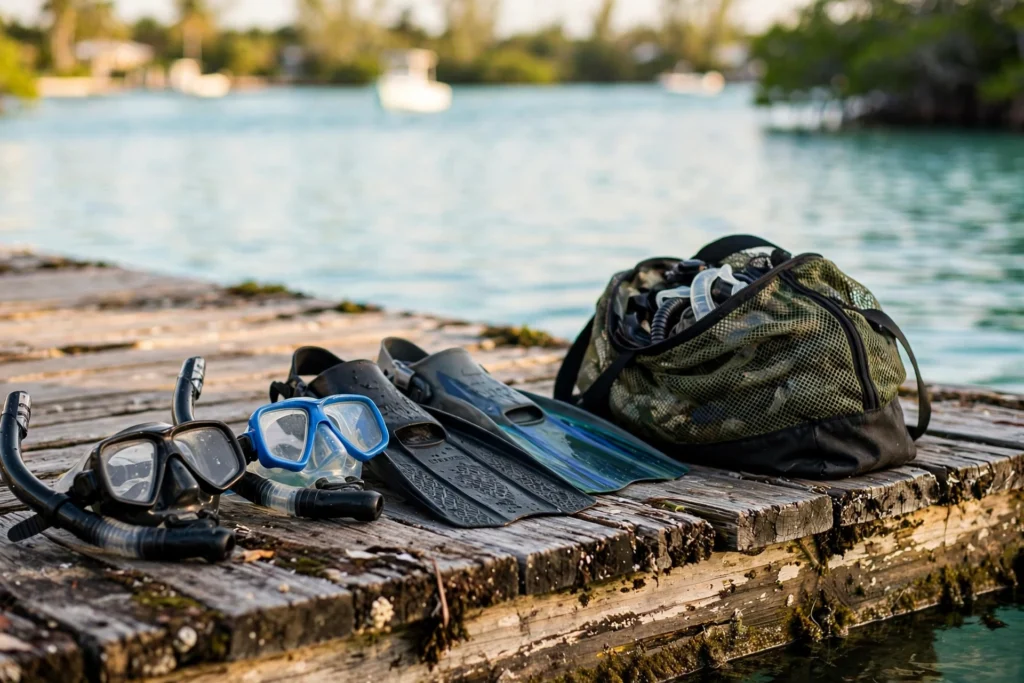
My bag, packed twice because I forgot half of it the first morning, now holds the same kit: mask, snorkel, fins, rash guard, reef-safe sunscreen, a dry bag for my phone, water, and a light windbreaker. The boat ride home runs cooler, and wet skin in a sea breeze gets cold fast.
Questions I Kept Hearing on the Dock
Do I need to be a strong swimmer to snorkel in the Keys?
No, but you should be comfortable floating in water over your head. The reefs are shallow, the boats provide flotation vests, and guides stay in the water on most trips. Practice in a pool first, and tell the guide you are new.
Can kids snorkel in the Florida Keys?
Yes, and the Keys suit kids well. Pick a shallow reef like Sombrero Reef, use a flotation vest, and keep the first swim to about twenty minutes. Most operators welcome kids over five, though age limits vary, so check before booking.
What is the best month for snorkeling in the Florida Keys?
May and October are my picks. The water is warm, the wind is low, and the boats run less crowded than in summer. Winter can bring excellent visibility between cold fronts, but watch the forecast and pick the calmest morning.
Is the Dry Tortugas trip worth a full day?
Yes, if you like quiet reefs and you can spare the day. The ferry takes about two hours each way, and the snorkeling off Garden Key runs shallow and clear, with Fort Jefferson behind you. Book early, bring your own gear, and pack water and sun protection.
Book the Early Boat and Pick One Reef to Start
The reef rewards the early riser and the slow swimmer. Pick one reef, book the first boat, and give yourself a full hour in the water. Key Largo for your first swim, Sombrero Reef for a calm family morning, Looe Key for bigger fish, and the Dry Tortugas for a day you will remember for years. That is the whole plan.
Start with the official tourism board to compare towns and seasons before you lock in dates: Visit Florida Keys.
Then book the boat, pack the rash guard, and get in the water. The best light of the day is the morning light.