Florida’s Best Beaches Split Into Two Different Trips, So Pick Your Coast First
I have driven both Florida coasts in the same week, and I can tell you the two sides of the state feel like different vacations. The Gulf side gives you calm, warm water and sand so fine it squeaks under your feet, while the Atlantic side gives you real surf, long walks, and wind that keeps the heat honest. When friends ask me to name the best beaches Florida has for their trip, my first question is always which coast fits the way they travel, because that choice shapes everything after it.
Two Coasts, Two Trips
Florida is a long peninsula with the Gulf of Mexico on the west and the Atlantic Ocean on the east, and the water on each side behaves differently. Gulf waves usually arrive as small laps, and the water warms up fast in spring. Atlantic water runs cooler and rougher, with real breakers, and the sand tends to be coarser and darker.
I plan Gulf days around swimming and long afternoons, and Atlantic days around walking and surfing. The Gulf coast runs from the Panhandle down through Clearwater Beach, St. Petersburg, Sarasota, and Naples, with beach towns built around sunsets. The Atlantic coast runs from Amelia Island and St. Augustine down through Daytona Beach, Cocoa Beach, Fort Lauderdale, and Miami Beach, and it feels busier and more tied to cities.
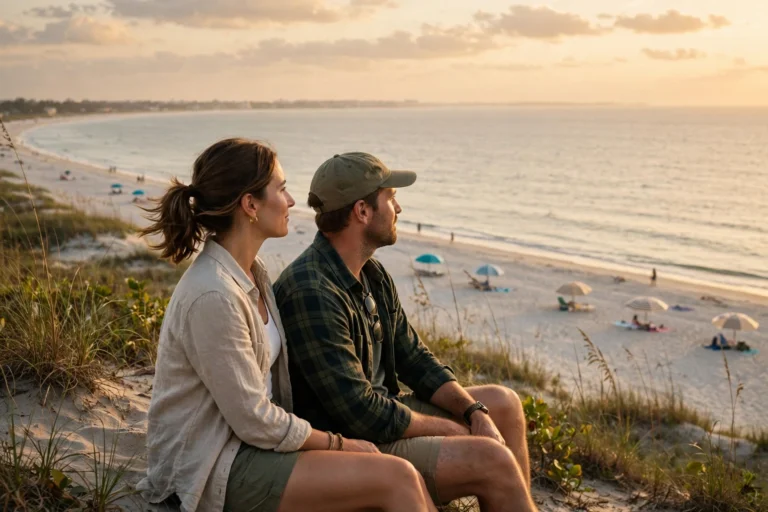
On the Gulf you watch the sun drop straight into the water; on the Atlantic you get sunrise instead, and the early morning belongs to runners and fishermen.
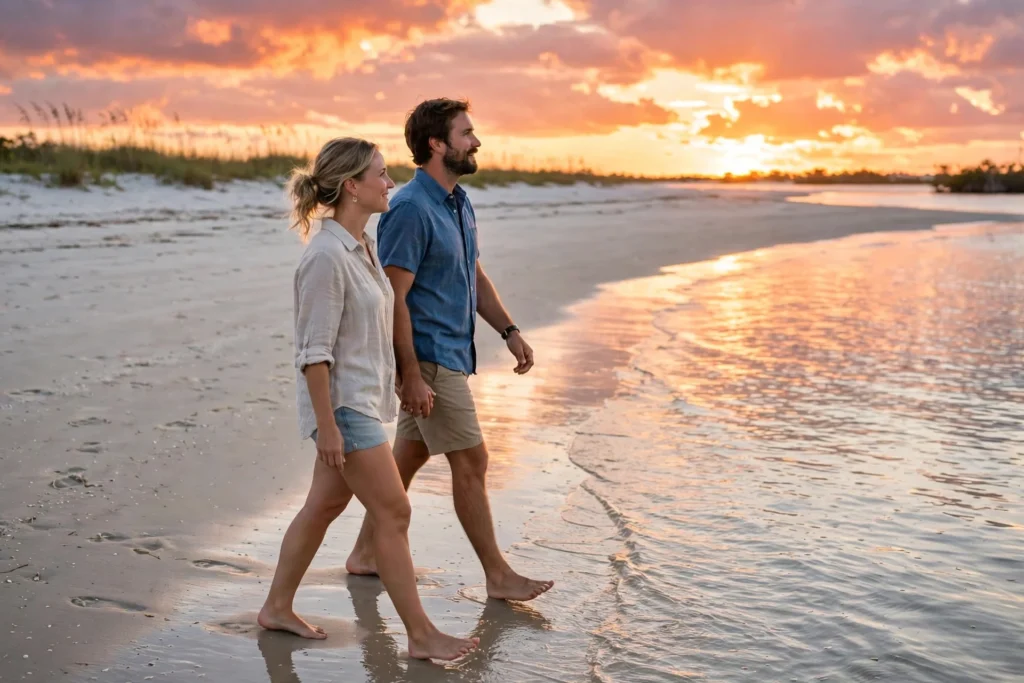
Gulf Calm: The Best Beaches Florida Gives Families
If your trip centers on small kids, grandparents, or anyone who wants to float without fighting waves, start on the Gulf. The water stays shallow a long way out at many Gulf beaches. You can walk twenty yards out and still stand waist deep.
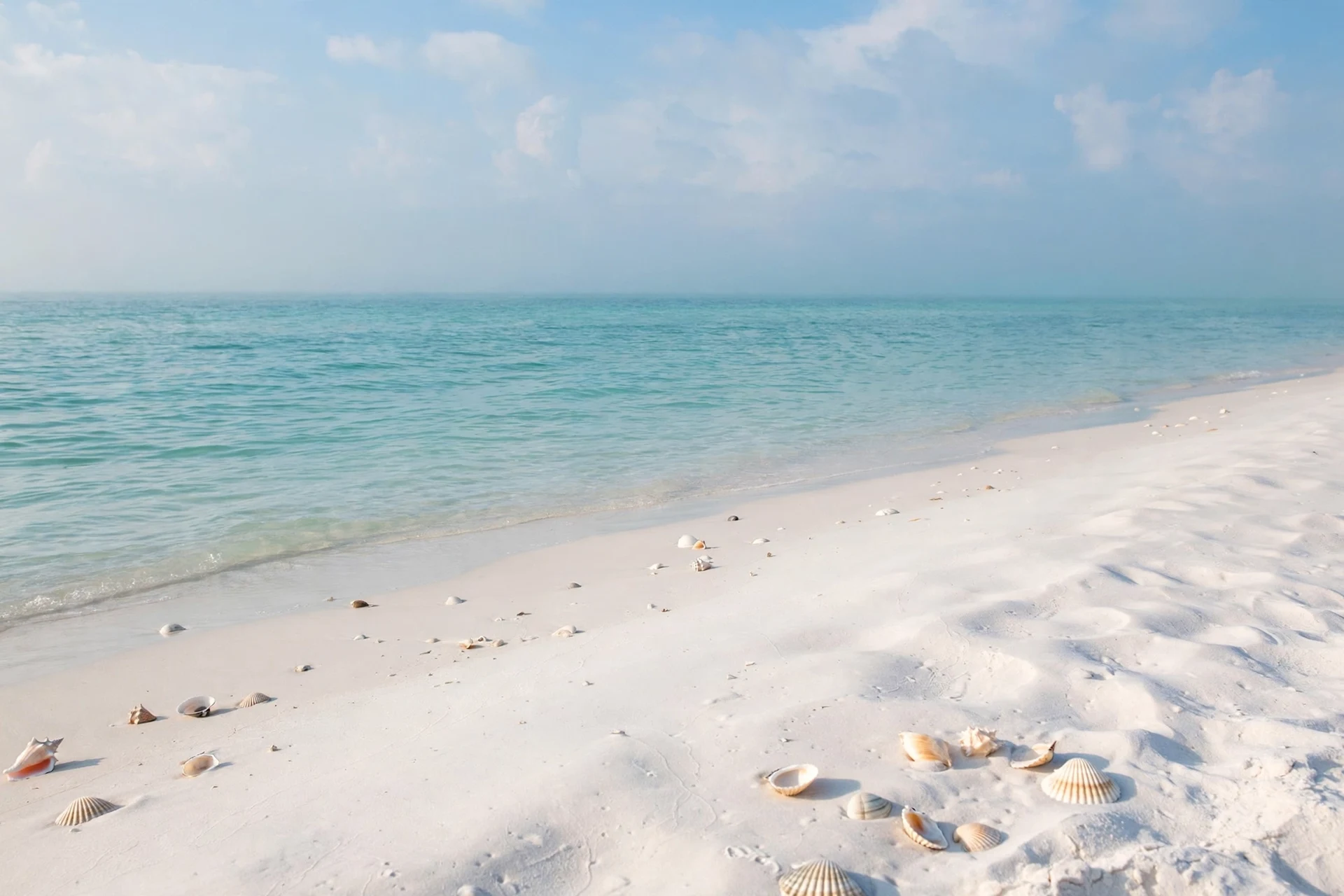
Siesta Key near Sarasota has the sand people talk about for years after they leave. It is almost pure quartz, white and cool underfoot even at midday, and it packs well for sandcastles. Parking fills early on weekends, so I arrive before 10 in the morning and bring my own shade.
Clearwater Beach is the livelier Gulf option, with a wide beach, a pier, and plenty of places to rent chairs and umbrellas. The sand is soft and the water is calm, and the beach walk makes it easy to move between the sand and the shops without getting back in the car. It gets crowded in spring, and parking near the beach costs real money, so I treat the fee as part of the day. Families who want a quieter version of the same water can head north to Honeymoon Island State Park near Dunedin, where the beach feels wilder and the nature trail gives kids something to do when they tire of the waves.
Clearwater Beach vs Siesta Key
People ask me to pick between these two more than any other pair in Florida, and the honest answer depends on what your group wants from a beach day. Clearwater Beach wins on energy, with more to do within walking distance, more food choices, and a pier that fills up at sunset. Siesta Key wins on the sand itself and on space, with a calmer, more spread out feel that suits a slow day.
Clearwater Beach works better without a car; Siesta Key works better with one and a plan to stay put for hours.
The Panhandle and the Quiet Gulf
The far northwest corner of Florida holds some of the prettiest water in the state, and far fewer crowds than the beaches near Tampa. Pensacola Beach and the shores of Gulf Islands National Seashore have white sand and water that turns a clear green blue on calm days, and the national seashore stretches feel open and undeveloped in a way the rest of Florida rarely does. I like this stretch for travelers who want a beach day without a town attached.
Gulf Islands National Seashore protects long stretches of barrier island beach, and its visitor information helps you find which areas have lifeguards, restrooms, and parking before you go.
Sanibel Island near Fort Myers is the shelling beach, and the best hunting happens at low tide in the early morning. The island moves slower than the mainland, with bike paths and a small town center, and it suits people who like to wander rather than sit still. Check conditions before you go, since the island has been rebuilding after storm damage.
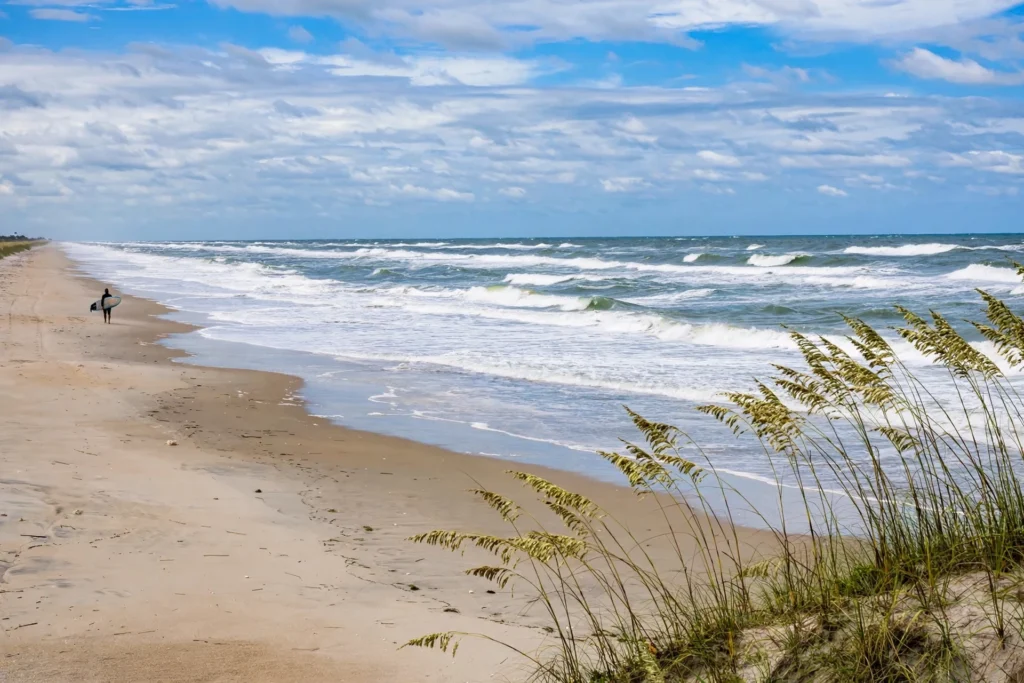
Atlantic Surf and Long Walks
The Atlantic side is where I go when I want to move. The waves are bigger, the beaches are longer, and the wind keeps the air from going still. Cocoa Beach near Cape Canaveral is the classic surf town, with a long pier, surf shops, and waves that suit beginners on most days. First time surfers stand up here within an hour of renting a board, and the town has a relaxed feel I like more than the polished resort strips further south.
Canaveral National Seashore sits just north of the space center, and it is the wildest beach on the Atlantic coast. The dunes are tall, the beach is wide, and on a weekday you can walk for a long stretch without seeing another person. There are no food stands and no chair rentals, so you bring everything you need. That is the trade, and it is worth it if you want space.
Canaveral National Seashore posts current conditions and entry details, and I check it before driving out, since some sections close for launches or wildlife protection.
St. Augustine Beach pairs a good beach with a town worth walking, and the sand is wide and firm enough for a long morning walk. Amelia Island at the top of the coast feels quieter and more residential, and the beach there suits travelers who want a calm base with a bit of history nearby. Daytona Beach is the one I warn people about in the same breath as I recommend it, because the hard packed sand and the driving lanes make it unlike any other beach in Florida.
Where the Water Runs Clearest
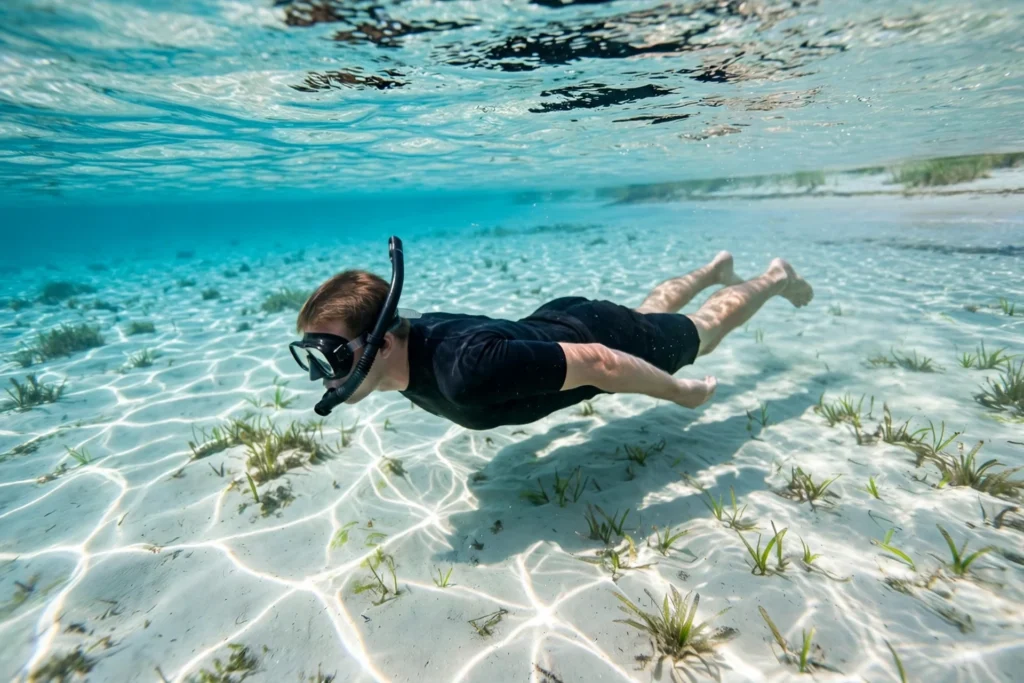
Florida beaches with the clearest water sit mostly on the Gulf side and in the far south, and the difference shows up the moment you step in. The Panhandle beaches around Destin and Pensacola Beach have water that turns a pale green on calm days, and the sand is so white it makes the water look brighter. The Florida Keys take it further, though the Keys have few natural sand beaches and most swimming happens from small coves or parks.
On the Atlantic side, clarity varies more with weather and wind, and a calm morning after a few still days is when the water looks its best. I judge a beach by whether I can see my feet in waist deep water, and the Gulf wins that test most of the year. Water also runs clearer away from river mouths and inlets, where runoff clouds it.
Snorkeling Without a Boat
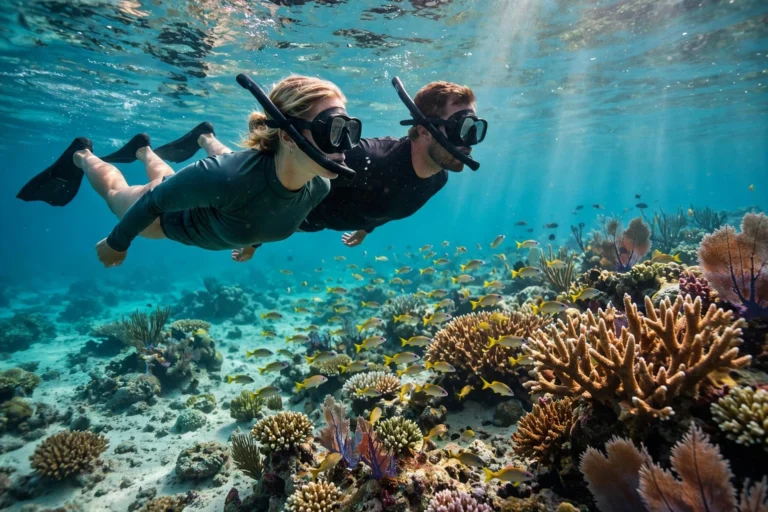
Florida has some of the easiest shore snorkeling in the country, and you do not need a boat to see fish. The Florida Keys lead the list, and John Pennekamp Coral Reef State Park in Key Largo has snorkel trips to the reef and a small beach for wading in, plus a visitor center that explains what you are looking at. The reef sits offshore, so most visitors take a tour boat out, but the park is still the right starting point for a first snorkel trip in Florida.
Closer to the mainland, Phil Foster Park in Riviera Beach has an artificial reef snorkel trail just offshore, with rocks and structures that attract fish, and you can walk in from the beach at the right tide. It is best at slack high tide, when the water is clearest and the current is weakest, and I would not go at low tide or in rough water. The short swim out suits confident swimmers who want a quick look underwater without booking a tour.
Peanut Island, also near West Palm Beach, has a small lagoon and snorkeling near the rocks, and it makes a good half day with kids who are ready to try a mask. The water is shallow and the fish are used to people, so it feels friendly rather than wild. Bring your own gear if you have it, since rentals near the parks can run out on weekends.
For a first snorkel, pick one spot, go early, and keep the session short. An hour in the water is plenty when you are learning, and a second session after lunch beats pushing through tired arms and a fogged mask.
What a Beach Day Costs in Florida
A Florida beach day can cost almost nothing or a fair amount, and the gap comes down to parking and rentals. Many city beaches charge for parking by the hour, and the lots near popular beaches fill up by late morning on weekends. State parks charge a small entry fee per vehicle that covers parking, restrooms, and trails, which makes them one of the best deals on the coast.
Chair and umbrella rentals run higher than most first timers expect, and a set for two can cost as much as a casual dinner. I bring my own umbrella and chairs when I am driving, and I rent only when I am flying in without gear. Food near the beach also carries a premium, so I pack sandwiches and water and save the restaurant meal for the evening.
Florida State Parks lists entry fees, hours, and amenities for each park beach, and I check the page for the park I plan to visit before I leave, since hours and fees change.
The cheapest beach days I have had in Florida were at state parks and national seashore beaches, where the entry fee was small and the sand was the main event.

Beaches I Skip Now
Not every Florida beach earns a return visit, and I say that as someone who loves this state. Daytona Beach during big race weeks and spring break turns into a traffic jam with a beach attached. I still like it on a quiet weekday in the off season, but I would not build a family vacation around it in March.
Miami Beach has great sand and clear water, and it also has the highest prices and the hardest parking of any beach on this list. The scene is fun if you want it, but it is a poor fit for a quiet day. I go for a morning walk there and leave before the afternoon crowds arrive.
Putting Two Coasts Into One Trip
You can see both coasts in one Florida trip if you plan the drive right. A week works well: three or four days on the Gulf around Clearwater Beach or Siesta Key, then a drive across the state to Cocoa Beach or St. Augustine for the Atlantic side. The cross state drive takes about three to four hours, and I leave after breakfast so I arrive with an afternoon still to use.
VISIT FLORIDA has regional guides that help you compare the two coasts and plan the drive between them, including beach towns, parks, and driving routes.
Pack for both sides: a light windbreaker for Atlantic mornings, reef safe sunscreen, water shoes for rocky entries, and a dry bag for your phone. The wind on the Atlantic can turn a warm day cool fast, and the Gulf sun can burn you in an hour if you skip sunscreen.

Questions I Get Asked on the Sand
Which Florida beach is best for small kids?
The Gulf side wins for small kids, and Siesta Key and Clearwater Beach are my picks. The water stays shallow and calm, the sand is soft, and lifeguards watch the main swimming areas. Arrive before 10 for easy parking and shade.
Is Clearwater Beach or Siesta Key better for a quiet day?
Siesta Key is better for a quiet day, with more space and a calmer feel, while Clearwater Beach has more energy and food nearby. If you want to sit still for hours, choose Siesta Key. If you want to move between the sand and town, choose Clearwater Beach.
When is the best time to visit Florida beaches?
Late fall through spring brings the most comfortable beach weather, with warm days and lower humidity, and the Gulf water stays warm enough to swim. Summer is hotter and busier, with afternoon storms, so I plan beach time for the morning.
Can you snorkel from shore in Florida?
Yes, and the easiest spots are Phil Foster Park near Riviera Beach and the lagoon at Peanut Island, both with shallow water and fish close to shore. Go at slack high tide for the clearest water, bring your own mask and fins, and keep your first session short.
How do I avoid crowds at Florida beaches?
Arrive before 10 in the morning, visit on weekdays, and choose state park or national seashore beaches over resort town beaches. The Panhandle and Canaveral National Seashore stay quieter than the beaches near Tampa and Miami.
Pick One Coast, Then Go
Florida rewards travelers who choose a coast and commit to it, because the two sides of the state offer different days, different water, and different light. Start with the Gulf if you want calm water, soft sand, and sunsets over the sea, or start with the Atlantic if you want surf, long walks, and sunrise. Book near one beach, arrive early, and let the coast you picked set the pace.