Ten Decembers of Christmas Yard Decorating Ideas That Held Up in Rain and Ice
My street goes quiet after Thanksgiving, then one house puts up lights, then three more, and by the second week of December the whole block is lit. I have decorated a yard for ten Decembers now, in a rental and in a house I own, and the ideas below are the ones that held up in rain, wind, and one ice storm. These are Christmas yard decorating ideas that look good from the street, cost less than a new roof of lights, and come down in January without a fight.
How I Picked These Christmas Yard Decorating Ideas
I only list ideas I have tried in my own yard, or helped a neighbor try on a real house. A photo from a store display tells me nothing about how an idea holds up in wind. I looked for ideas that read from the curb, not from the porch, that use a timer, and that a single person can put up in an afternoon. I checked safety rules, power draw, and which ideas survive a storm. What I wanted was a list a homeowner can use, not a list a catalog can sell.
Start With the Roofline, Not the Lawn
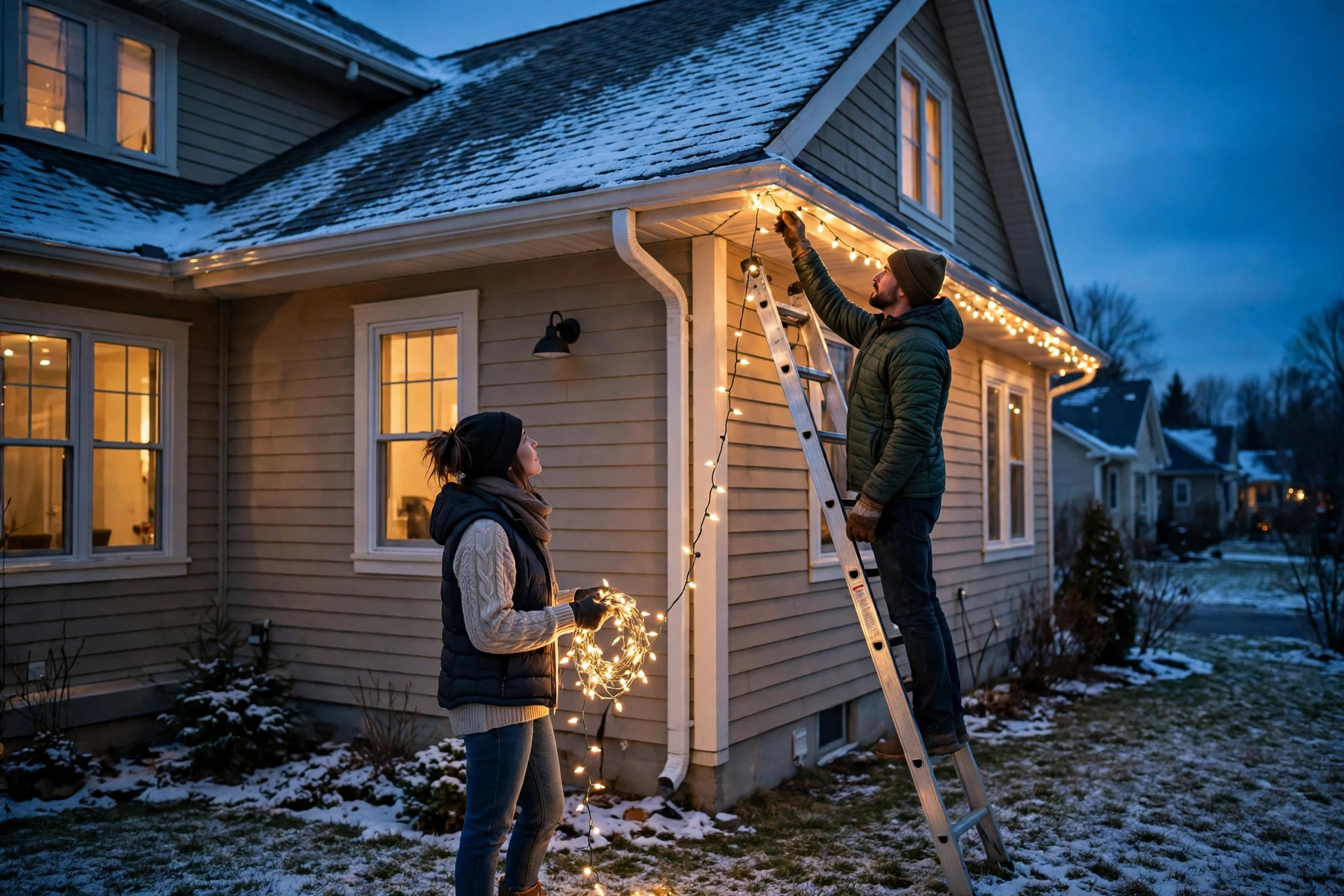
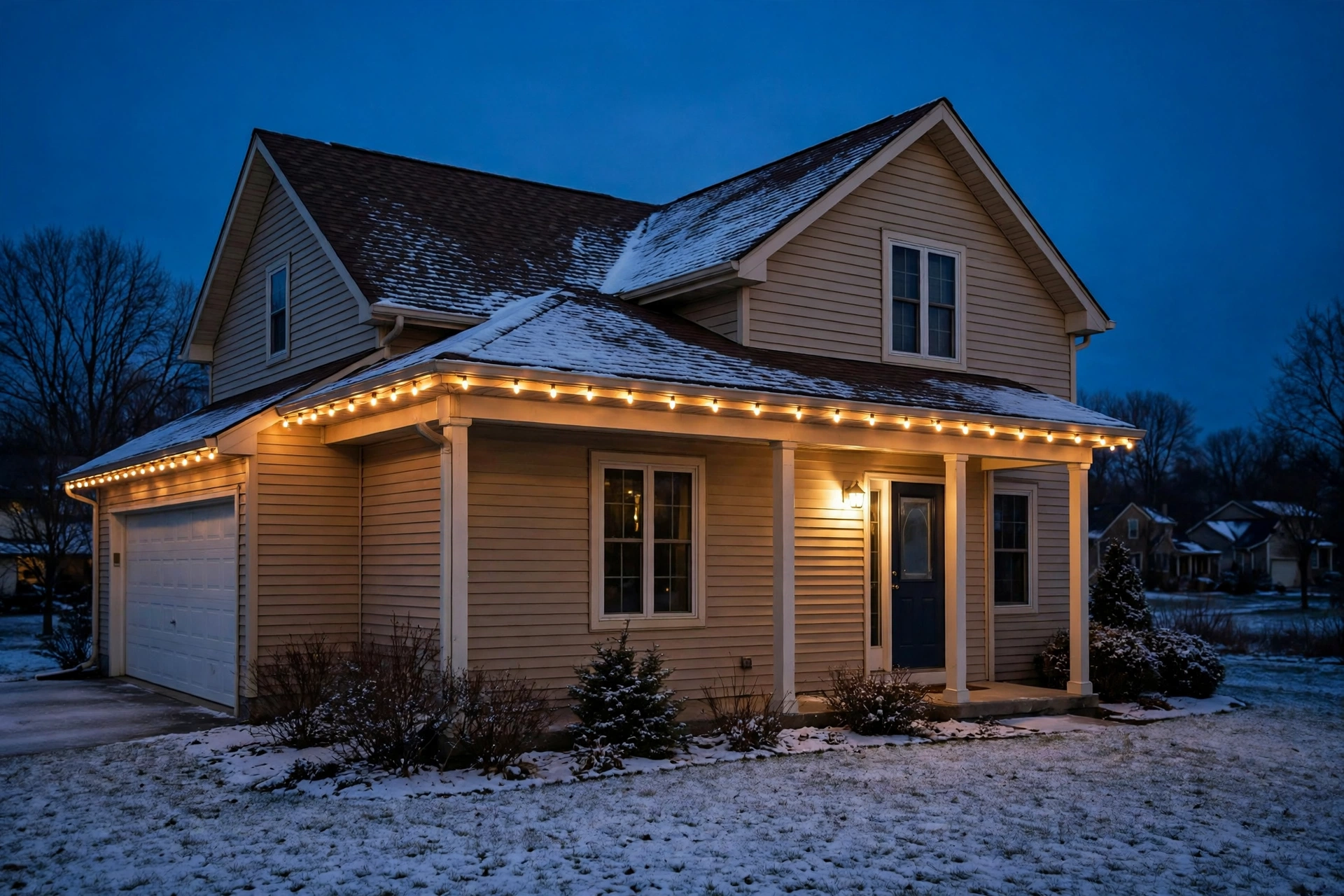
The roofline is the first thing a driver sees, and it is the cheapest place to make a house look finished. A single run of warm white C9 bulbs along the front eave, clipped every foot, reads better than a yard full of small lights. I use commercial-grade clips, not the plastic ones that snap in the cold, and I run the lights on a timer that turns them on at dusk and off at 10 PM.
The honest downside is the ladder. A two-story roofline needs a tall ladder and a second person to hold it, and the ice on a December roof is real. Hire a local installer if the roof is high, or keep the lights on the porch and the first-floor eave. The US Consumer Product Safety Commission posts outdoor light safety rules, including which lights are rated for outdoor use: CPSC Holiday Safety.
Measure the eave before you buy. A 25-foot string covers a small porch, not a whole house, and the big-box stores sell out of warm white first. Buy in November, test the string on the ground, and replace the dead bulbs before you climb.
One Big Tree, Lit From the Inside Out
A single large tree in the front yard, lit from the trunk out, beats ten small trees scattered around the lawn. I wrap the trunk in warm white lights, then work outward along the main branches, using a net light on the lower branches for fill. The tree reads from the street as a single glowing shape, and the light spills onto the lawn without a dozen stakes.
The trick is the extension cord. Run one heavy-duty outdoor cord from the porch outlet, bury it under a mat or a mulch path, and keep the connection off the ground in a weatherproof box. The US Department of Energy posts LED power use and outdoor lighting tips, and the savings over old incandescent strings are real: Energy.gov.
Pick a tree you can reach. A 20-foot maple is a good size. A 40-foot oak needs a pole and a helper, and the lights at the top will not read from the street anyway. Light the lower two-thirds and leave the top dark.
A Walkway That Guides People to the Door
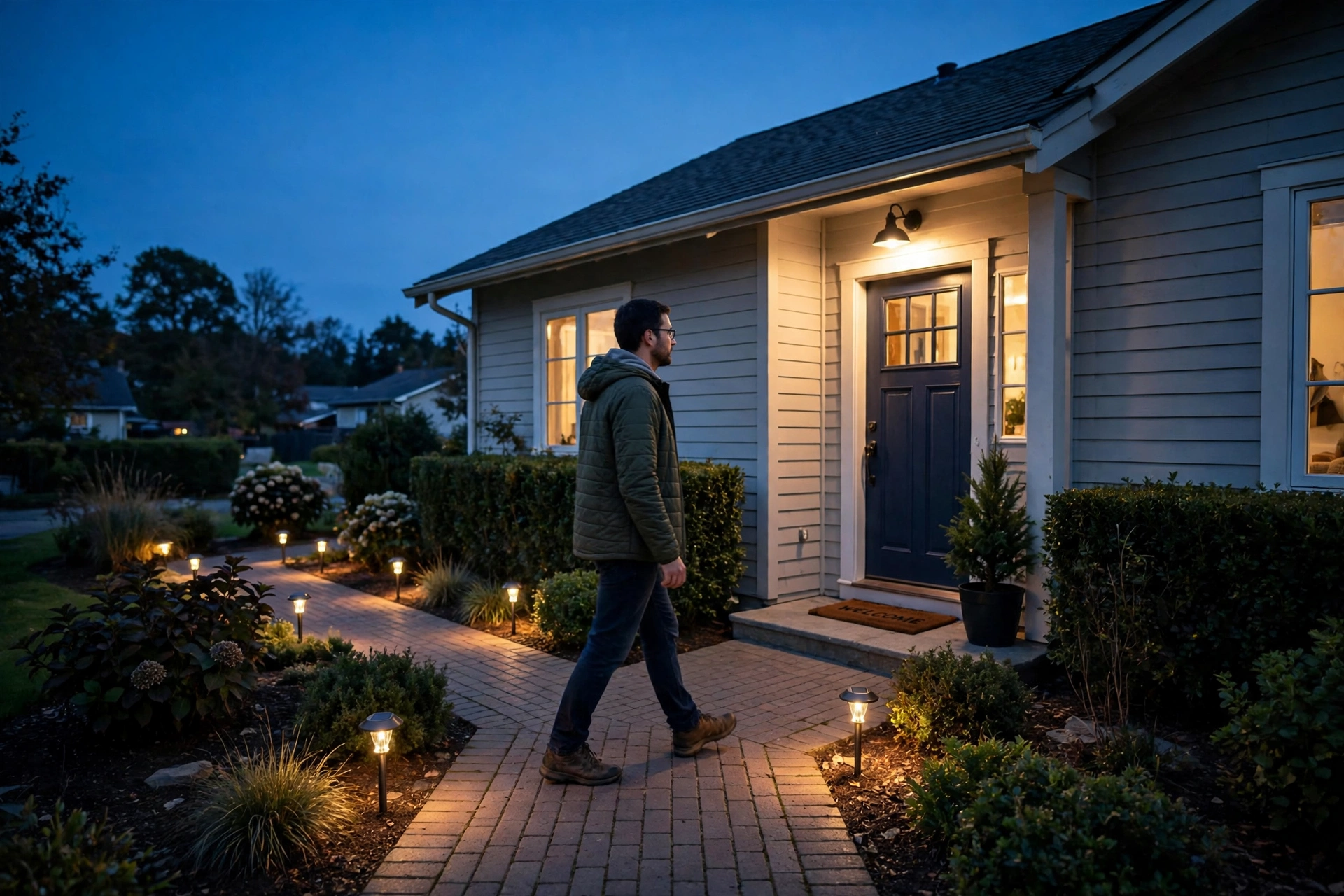
A lit walkway is the most welcoming idea on this list, and the cheapest. I use solar path lights along the front walk, spaced six feet apart, with a warm white bulb in each one. The solar lights charge in the day and turn on at dusk, and they need no cord at all. On a cloudy week they dim early, so I add two plug-in lanterns by the front steps for the nights that matter.
The honest downside is the shade. A walkway under a big tree gets no sun, and the solar lights will not charge. Test the spot in November, and if the lights are dim by 7 PM, switch to plug-in path lights on a timer. The path lights should point down, not up, so a guest can see the step.
Run the cord along the edge of the lawn, under a mulch border, and tape the joints.
Wreaths on the Windows, Not Just the Door
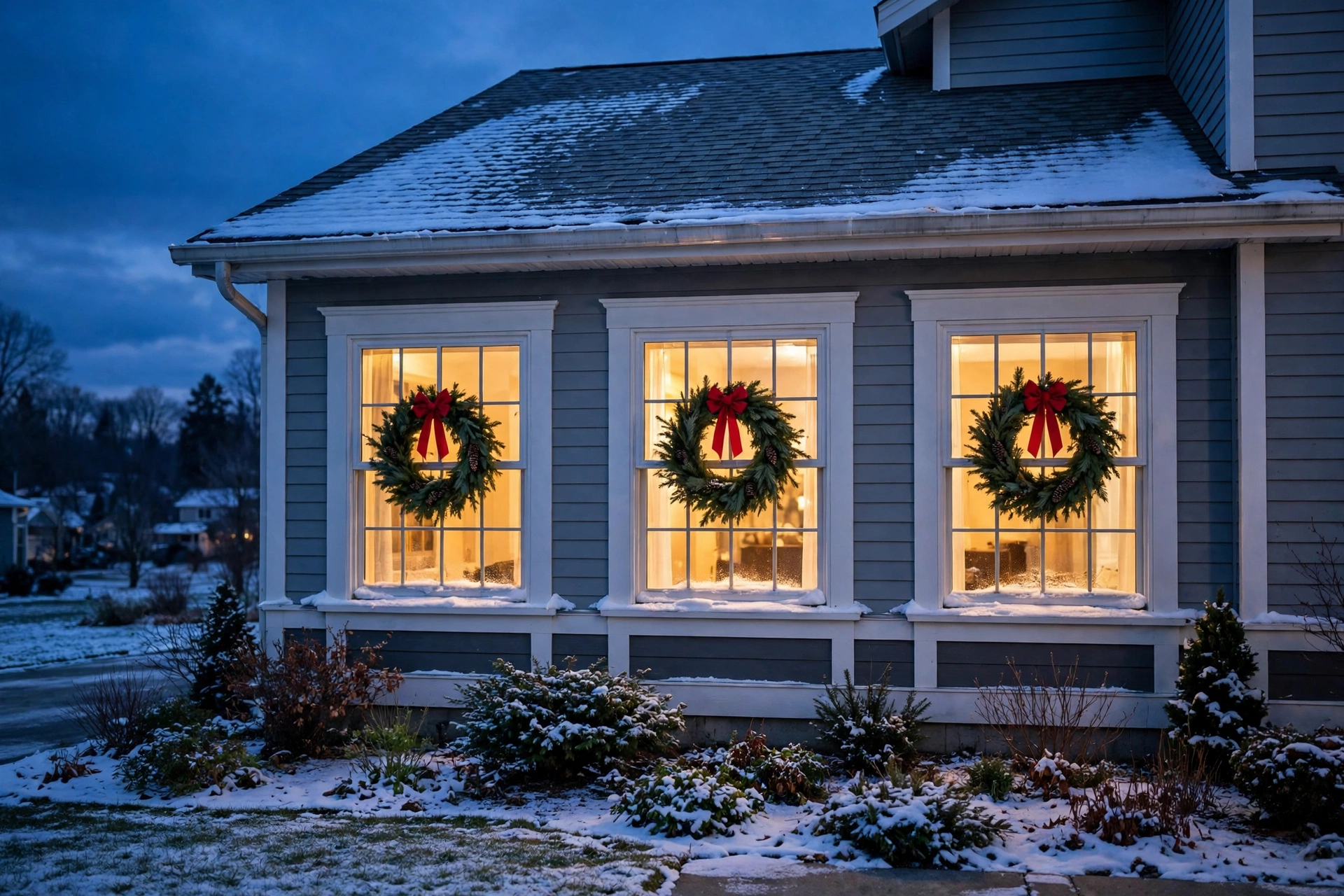
A wreath on the front door is the classic, but a wreath on every front window is the idea that makes a house look dressed. I use a simple evergreen wreath, 24 inches across, hung from a suction cup hook inside the window, with a red bow at the bottom. The wreath reads from the street, the bow catches the light, and the whole front of the house looks finished.
The trick is the hook. A suction cup on a cold window will fall, so I use a hook that hangs over the top of the window sash, inside the house, with a ribbon over the glass. The wreath hangs outside, the ribbon holds it, and the window closes on the ribbon. Test the hook in November, before the cold sets in.
Buy the wreaths in November, when the garden centers have the fresh ones. A dry wreath sheds needles on the porch, and the neighbors will notice. A fresh wreath lasts through January if you keep it out of the wind.
A Porch That Looks Lived In
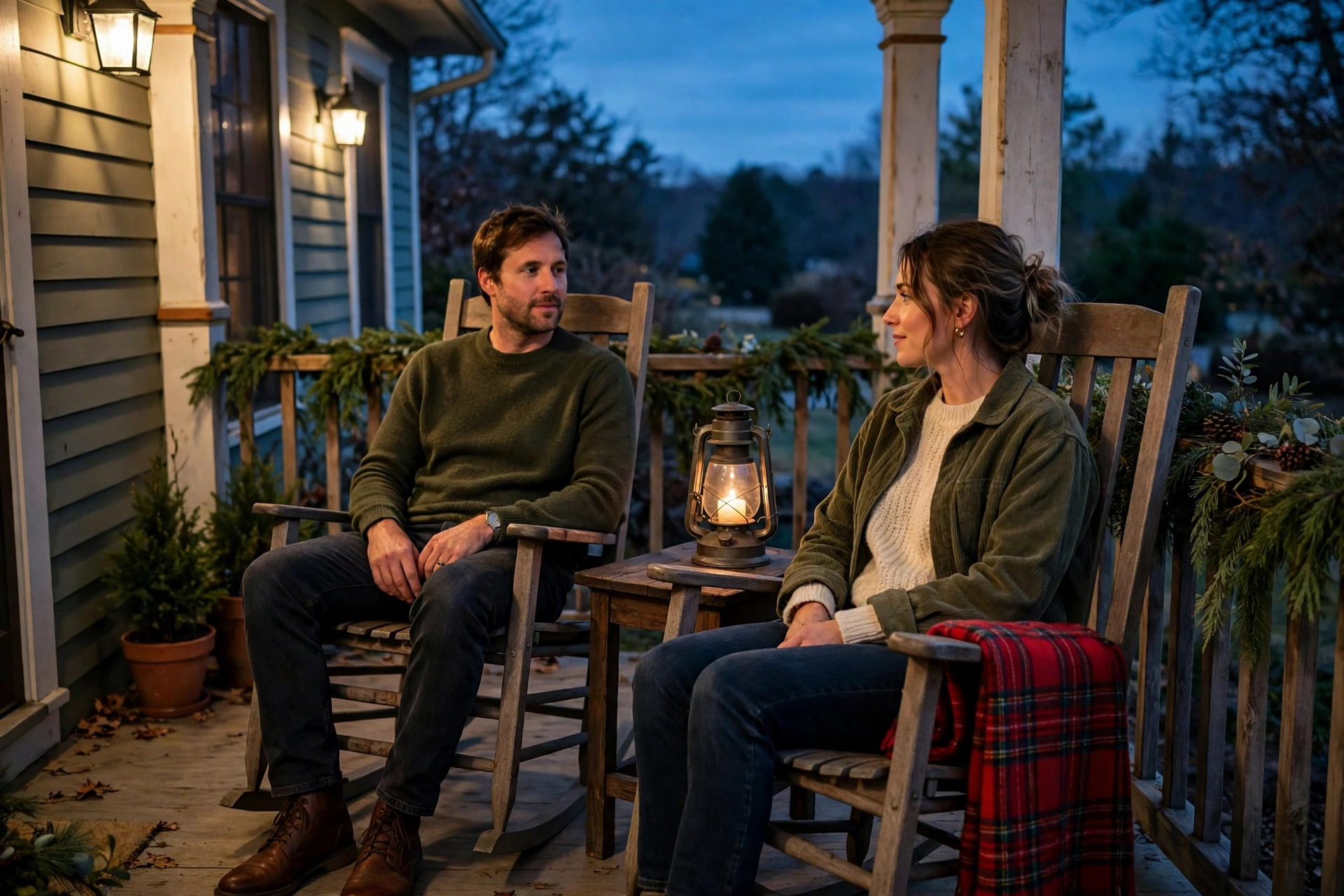
A porch with a chair, a lantern, and a blanket looks better than a porch with a dozen inflatables. I put a rocking chair by the door, a lantern with a battery candle inside, and a red plaid blanket folded over the arm. The lantern turns on with the timer, the blanket adds color, and the chair tells a driver that someone lives here.
The honest downside is the weather. A blanket left out in the rain will mildew, and a lantern left out in a storm will fill with water. Bring the blanket in on rainy nights, and use a battery candle, not a real one, in the lantern. The National Fire Protection Association posts candle and decoration safety rules, and the short version is simple: never leave a real flame unattended outdoors: NFPA Winter Holiday Safety.
Keep the porch clear of boxes and cords. A porch that looks lived in is not a porch that looks stored in.
Inflatable, But Only One, and Only Big
An inflatable can work, but only one, and only big. A single 8-foot Santa or snowman, staked down and lit from inside, reads from the street as a landmark. Three small inflatables scattered around the lawn read as clutter. I stake the inflatable with the stakes that come in the box, plus two sandbags on the base, and I run it on a timer that turns it off at 10 PM, so the fan does not run all night.
The honest downside is the wind. An inflatable in a storm will lift, drag, and tear, and the fan will burn out if it runs in the rain. Take it down before a storm, or tie it to a porch post with a rope. The fan draws power all night, so the timer matters for the electric bill as much as for the neighbors.
Pick a spot near the house, not in the middle of the lawn. A spot near the porch is easier to stake, easier to plug in, and easier to take down in January.
A Fence Line That Frames the Yard
A fence line is a ready-made frame, and a run of lights along the top rail is the idea that ties a yard together. I run a single string of warm white lights along the front fence, clipped to the top rail, with a timer that turns them on at dusk. The fence reads as a border, the yard reads as a room, and the house reads as the center of it.
The honest downside is the length. A long fence needs a long string, and the voltage drop on a cheap string will dim the far end. Use a commercial-grade string, test it on the ground first, and run a second feed from the other end if the fence is longer than 50 feet.
Warm white is the color that reads as Christmas from the street.
A Driveway Edge That Guides Cars Home
A driveway edge is a practical idea, and a row of small lanterns along the edge is the one that helps a driver at night. I use battery lanterns in glass jars, spaced ten feet apart, with a warm white candle inside each one. The lanterns mark the edge, the light is soft, and the whole drive reads as a path, not a dark slab.
The trick is the jars. A glass jar in the cold will crack if water gets in, so I drill a small hole in the lid for the candle cord, and I bring the jars in on the coldest nights. A plastic jar is safer, and the light reads the same from the street.
Keep the lanterns off the drive itself. A lantern on the drive is a thing a car will hit, and the glass will break. Put them on the grass, a foot back from the edge.
A Window Display That Glows From Inside
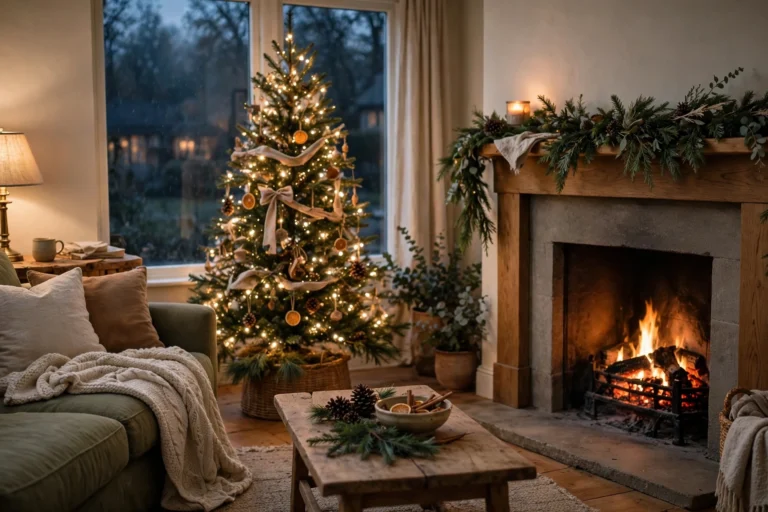
A window display is the idea for people who do not want to climb a ladder. I put a small tree in the front window, with warm white lights and a few ornaments, and I leave the curtains open after dark. The tree glows from inside, the room behind it reads as warm, and the whole house looks lit without a single outdoor cord.
The honest downside is the glare. A tree in a bright room will not read from the street, so turn off the overhead light and let the tree be the light in the room. The tree should be small, under four feet, and the ornaments should be simple, so the shape reads from the curb.
Pick a window that faces the street, not the side yard. A window on the side of the house is a display for the neighbors, not for a driver.
A Garland on the Porch Rail, Done Once
A garland on the porch rail is a classic, and the trick is to do it once and leave it alone. I run a fresh evergreen garland along the top rail, tie it every two feet with a ribbon, and add a few pinecones and a red bow at the ends. The garland reads from the street, the ribbon holds it in the wind, and the porch looks finished.
The honest downside is the weight. A wet garland is heavy, and a rail that is not strong will sag. Test the rail first, and use a light garland if the rail is old. A dry garland sheds needles, so buy it fresh in November and take it down in January.
Keep the garland off the steps. A garland on the steps is a trip hazard, and the first rainy night will prove it.
A Projector, Used Sparingly
A projector can work, but only one pattern, and only on the house, not on the trees. I use a single snowflake pattern on the front wall, on a timer, with the projector staked in the lawn ten feet from the house. The pattern moves slowly, the wall reads as a screen, and the whole house looks lit without a dozen strings.
Test the projector in November, before the cold sets in. A projector in the rain will fog, and a projector in the snow will bury itself. Put it under a small cover, or bring it in on storm nights.
A Nativity, a Menorah, or a Single Symbol, Placed With Care
A single symbol, placed with care, is the most personal idea on this list. I have seen a wooden nativity on a porch, a menorah in a window, and a single star on a roofline, and each one read as a statement, not a decoration. Pick the symbol that matters to you, place it where a driver can see it, and light it with a single warm light.
The trick is the placement. A symbol in the middle of a crowded lawn gets lost. A symbol on the porch, by the door, with a clear space around it, reads as the center of the yard. Keep the rest of the yard simple, and let the symbol be the focus.
A Plan for Taking It All Down
The best yard idea is a plan for January. I take a photo of the yard in December, label every cord and timer, and store the lights in the same box they came in, with the label on the outside. The wreaths go in a bag, the inflatable goes in a dry bin, and the garland goes in the compost. The whole take-down takes an afternoon, and the next December starts with a box that works.
If you would rather see the lights than hang them, the cities with the best Christmas lights do the work for you, with whole streets lit from November into January.
The honest downside is the storage. A wet light string stored in a damp garage will corrode, and a dry string stored in a hot attic will melt. Store the lights in a cool, dry place, test them in November, and replace the dead bulbs before you climb.
What I Would Do First, This Weekend
If I had one weekend and a small budget, I would start with the roofline, the walkway, and a wreath on every window. Those three ideas make a house look finished from the street, cost less than a hundred dollars, and take an afternoon to put up. The rest of the list can wait for next year, or for a neighbor who wants to borrow the ladder. Inside, I keep the same approach, and my Christmas decor ideas and trends list covers the living room, mantel, and tree.
I would buy the lights in November, test them on the ground, and put them up on a dry day, with a timer, before the first cold snap. The yard will look good from the street, and the take-down in January will be an afternoon, not a weekend. I keep the same seasonal home thinking in my fall habits cozy guide.