Big Powderhorn Mountain Is the Slow, Snowy Weekend the Upper Peninsula Keeps to Itself
I drove into Bessemer, Michigan, in a lake-effect squall with the wipers on full and the thermometer reading 19 degrees, and by the time I parked at the base lodge I understood why people who ski Big Powderhorn Mountain come back every winter. The hill is not big by western standards, but it skis bigger than its numbers, the snow falls in feet instead of inches, and nobody here is in a hurry. This is a slow ski weekend done right: two peaks, nine old double chairs, and a base village where you can walk to the lift in your boots.
Big Powderhorn Mountain Runs on Two Peaks and Nine Old Double Chairs
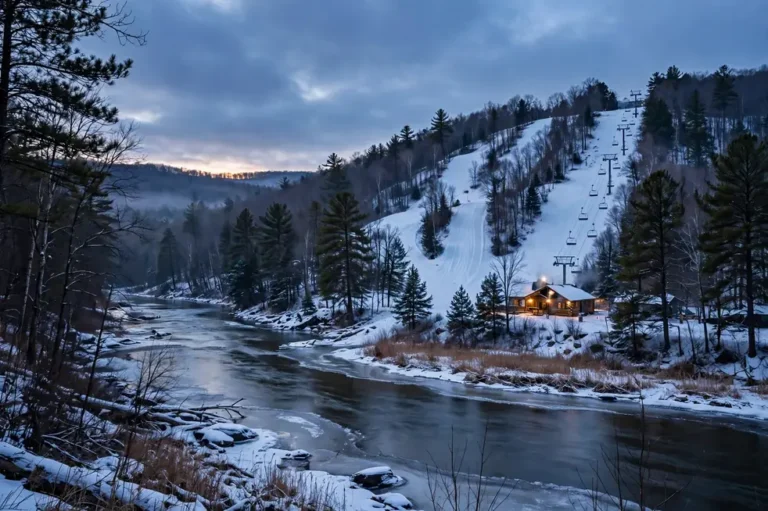
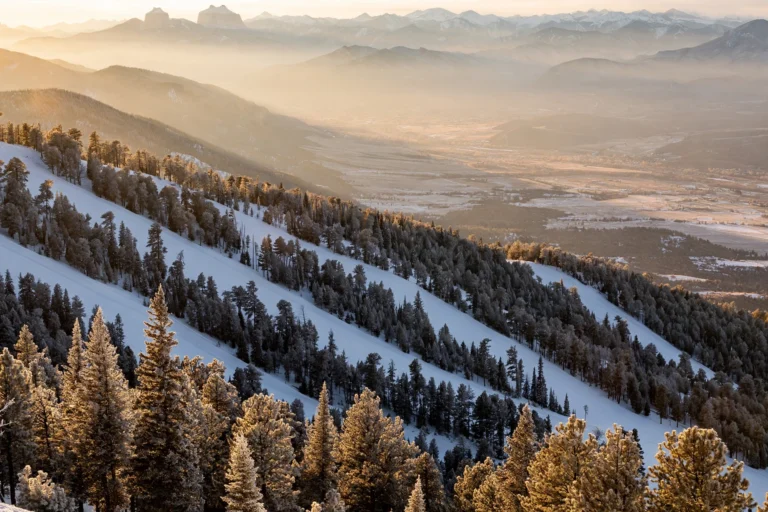
The mountain sits on Powderhorn Road between Bessemer and Ironwood, in the Gogebic Range of Michigan’s western Upper Peninsula, in the snow belt locals call Big Snow Country. The resort’s own trail map lists 45 runs across two peaks, served by nine Riblet double chairlifts and one handle tow, over 253 skiable acres. The summit stands at 1,631 feet and the base at 1,214 feet, which the resort lists as 417 feet of vertical. Older guidebooks quote 622 feet, a figure from an earlier survey, so if you see both numbers online, the resort’s current figure is the one to trust.
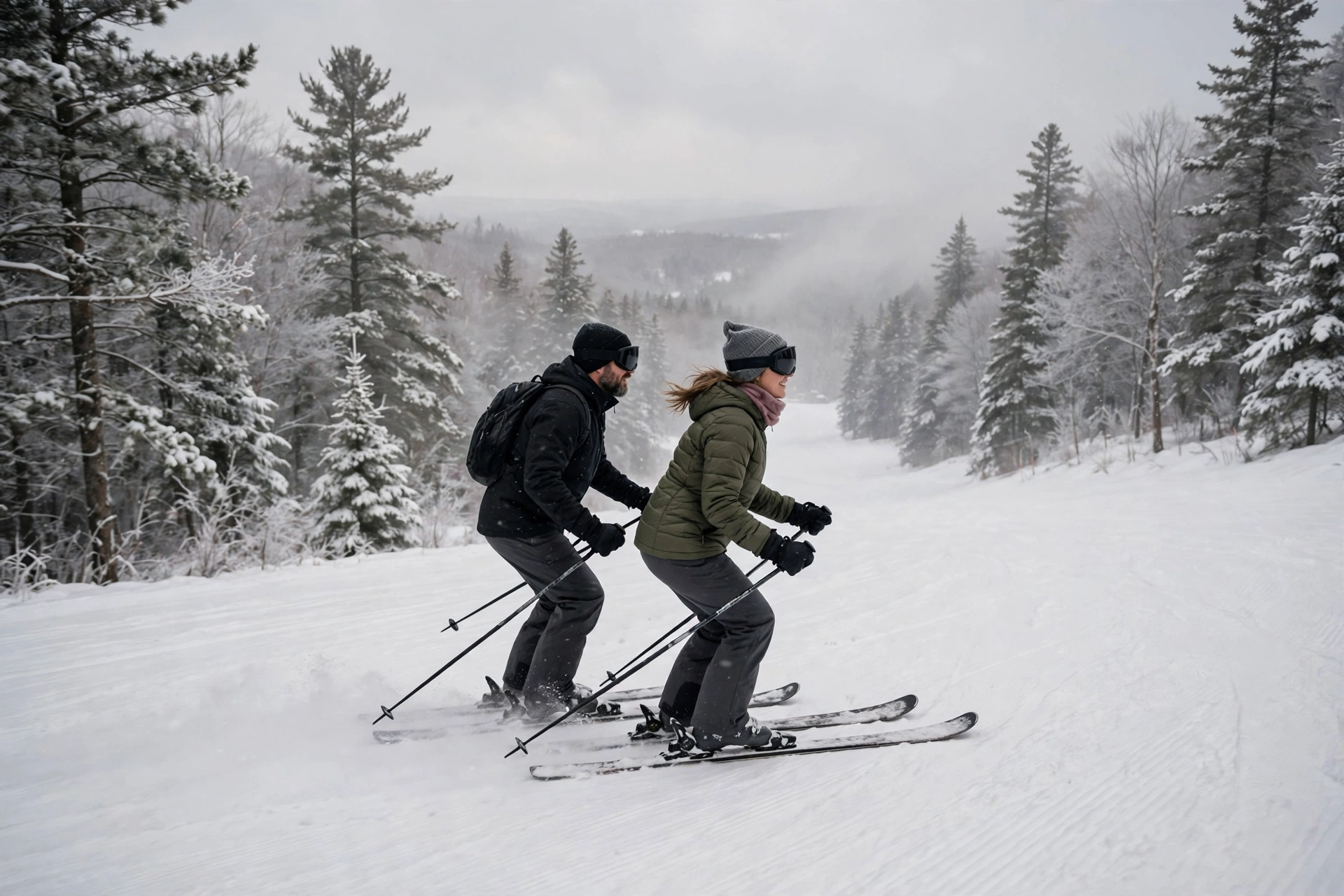
What the numbers do not show is how the hill skis. The two peaks face different directions, so when the wind scours one side, the other side holds soft snow. Runs drop north off the summit ridge, and the longest run stretches about a mile. The terrain mix runs close to a third beginner, a third intermediate, and a third expert, which means a mixed group can ski together without anyone spending the day bored or scared. Two terrain parks sit off to the side for riders who want jumps and rails, and the Wolverine Nordic trail system gives cross-country skiers groomed trails that start right in the village.
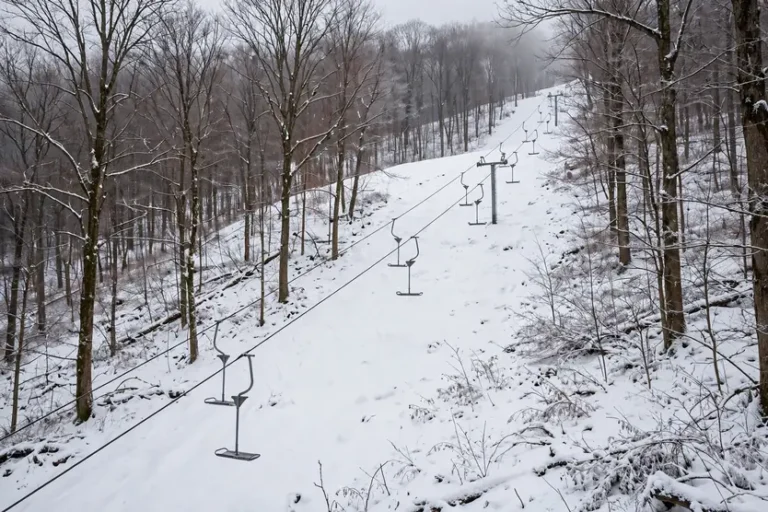
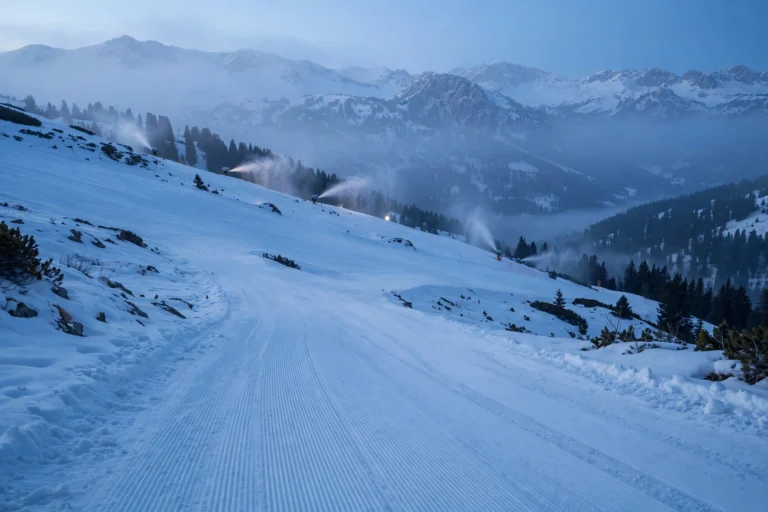
The lifts are slow, and I mean that as a compliment and a warning. Nine double chairs means nine chances to sit still for ten minutes and look at the lake-effect clouds stacking up over Lake Superior, which sits about 25 miles north. It also means a strong skier can lap the hill without ever waiting in a line, because the uphill capacity spreads people thin. If you arrive expecting a high-speed quad and a heated bubble, you picked the wrong mountain. If you arrive expecting to ski all day and never stand in a lift line longer than two minutes, you picked the right one.
When the Snow Is Best and When to Skip It
The season here runs on lake-effect snow off Lake Superior, and the resort reports about 200 inches in an average winter. The best window is late January through early March, when the base is deep and the cold has settled in. December can be thin, and the resort does not announce an opening date until the snow is there, so check the snow report on the resort site before you drive up. I have watched friends book a December weekend here and spend Saturday on four open runs. The same friends came back in February and skied all 45.
Weekends fill the base lodge and the parking lot, but the hill itself never feels crowded. The trick is to ski the far peak in the morning while everyone warms up on the front side, then move to the front side after lunch when the far peak gets tracked out. Midweek is a different mountain entirely. On a Tuesday in February I counted eleven cars in the main lot at 9 AM and shared every lift with nobody.
One honest negative: the cold here is serious. Lake-effect wind off Superior cuts through a cheap jacket, and the double chairs are exposed, so a ten-minute ride at 10 degrees with a 15-mile wind feels longer than it is. Bring a real face covering and hand warmers, and plan a lodge break mid-morning. The lodge is warm, the chili is decent, and nobody minds if you sit by the fire for half an hour.
Lift Tickets, Passes, and What a Day Costs
Lift tickets are sold online through the resort site, and the resort runs the usual dynamic pricing, which means the price moves with the date and how far ahead you buy. I am not printing a number here because the 2026-27 prices were not published when I wrote this, and a stale price helps nobody. Buy online before you arrive, because window prices run higher, and check the resort site for the current rates before you commit to a date.
The mountain is on the Indy Pass, which matters for how you plan a longer trip. Indy Pass holders get days here as part of the pass, and the pass covers a string of other small Midwestern hills, so a week in the Upper Peninsula can pair Powderhorn with a day or two at a second area without buying a separate ticket each time. If you ski five or more days a year at small independent areas, run the math on the pass before you buy day tickets. If you ski one weekend a year, skip the pass and buy the day ticket.
Rentals and lessons run out of the base area, and the learning area has its own handle tow, which keeps first-timers off the main chairs. Book lessons ahead on a holiday weekend. The ski school is small, and the Saturday morning slots go first.
Where to Stay Within Walking Distance of the Lift
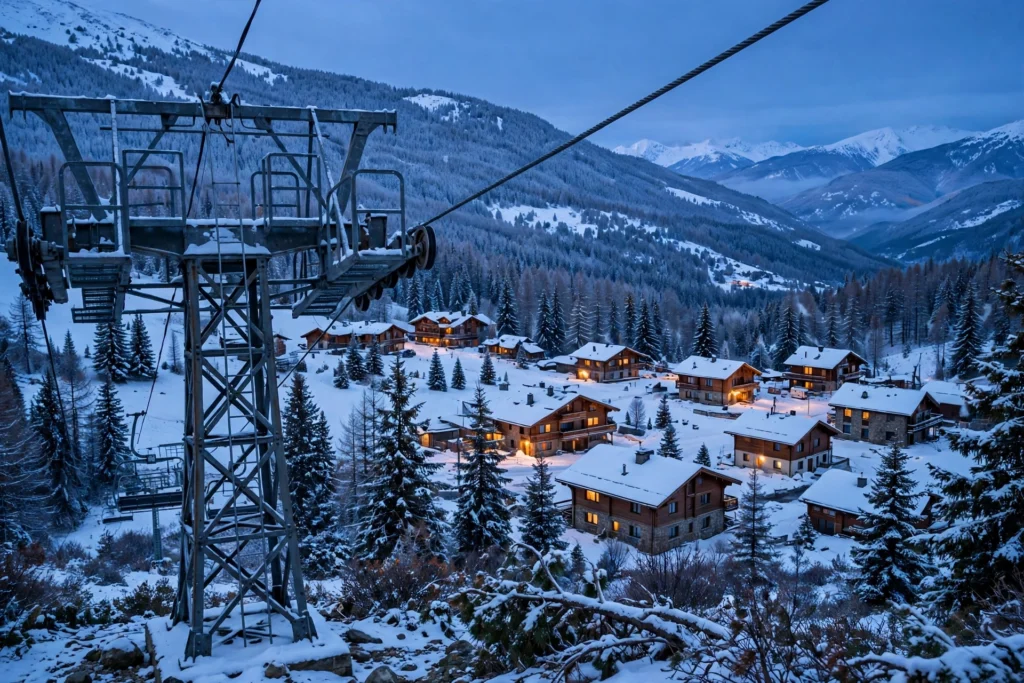
The base village is a cluster of condos and chalets built around the slopes, and most of them are ski-in, ski-out or a two-minute walk to a lift. That walk-to-the-lift convenience is the reason to stay here instead of in Ironwood. You wake up, look at the snow stake from the window, and walk to the chair in your boots. The condos are older, in the way that ski condos from the seventies and eighties are older: wood paneling, small kitchens, a fireplace that works. They are clean and warm, and the price reflects the age.
Ironwood sits about ten minutes west and Bessemer about five minutes east, and both towns have motels, a grocery store, and a handful of restaurants. If the village lodging is full, Ironwood is the better base, with more rooms and a real downtown. Book the village first if you can, because the walk-to-the-lift mornings are worth it, and the village sells out on the big February weekends while Ironwood still has rooms.
One thing to know before you book: the village quiets down early. There is a bar and a restaurant at the base, but this is not a late-night town. Dinner ends, the fire burns down, and the village goes dark by ten. If your idea of a ski trip includes a scene after dinner, Ironwood has it, or you bring a bottle and a card game back to the condo.
Beyond Downhill: Nordic Trails, Snowshoeing, and the Off Days
A slow ski weekend needs a second act for the afternoon your legs give out, and Powderhorn has one. The Wolverine Nordic system runs groomed cross-country trails through the woods around the village, with access points at the base and at the top of one of the lifts. The trails are flat enough for a first-timer and long enough for a real workout, and the woods go quiet in a way the downhill side never does.
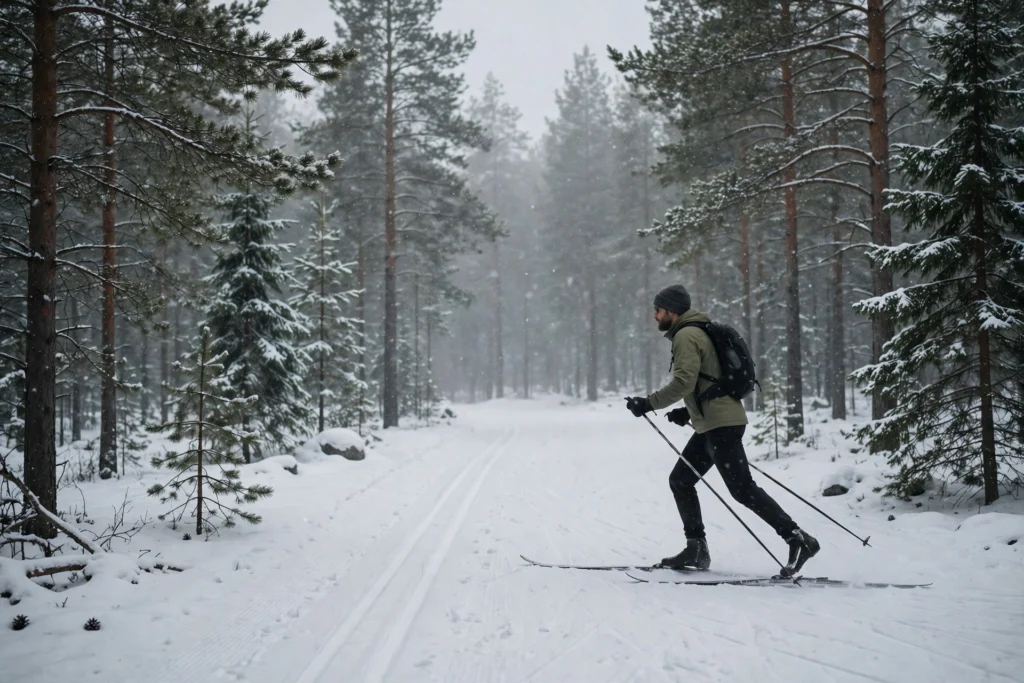
Snowshoeing works on the same trail network, and the resort rents snowshoes at the base. On a gray afternoon I snowshoed a loop through the pines while the downhill side ran in flat light, and it was the best hour of the trip. If the wind picks up and the lifts go on hold, which happens on the worst lake-effect days, the Nordic trails in the trees stay skiable when the chairs stop.
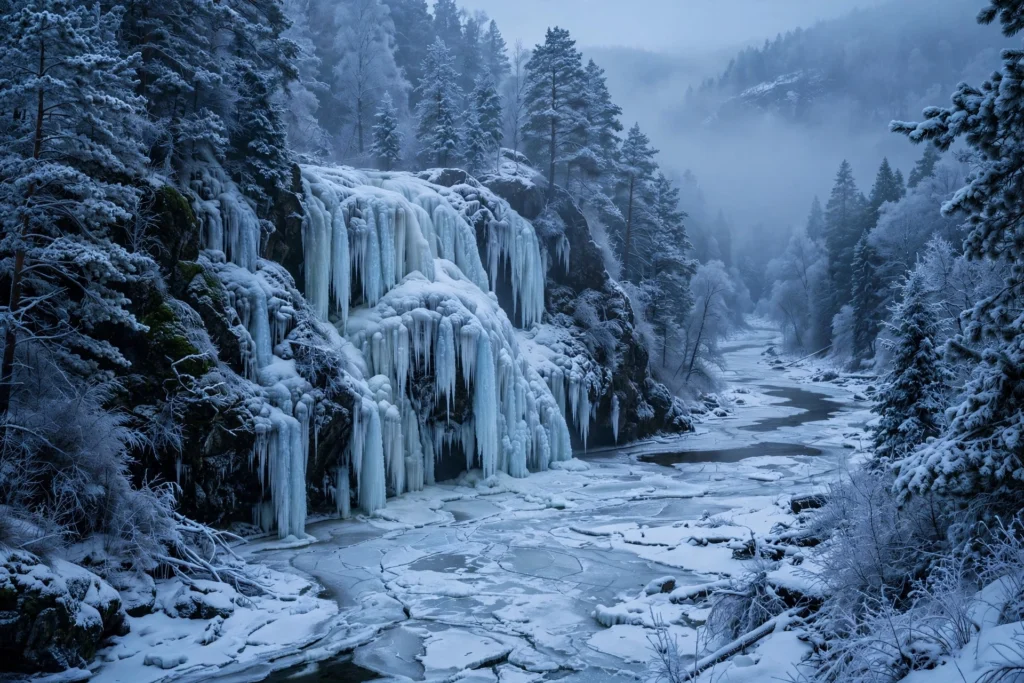
The area around Bessemer rewards a rest day, too. The Black River runs north to Lake Superior through a series of waterfalls, and the scenic byway along it is a short drive from the village. In deep winter the falls freeze into ice curtains, and the short trails to the overlooks are worth the cold walk. Copper Peak, the ski jump tower near Ironwood, runs an elevator to a viewing platform with a view across three states on a clear day, and it is the kind of odd, oversized roadside stop that makes a ski trip feel like a real trip instead of a lift-ticket purchase.
Getting There Without a Long Drive in a Storm
Most people drive. The resort sits about 25 miles south of Lake Superior, and the drive in from the east runs through the Ottawa National Forest on two-lane roads that drift shut in a real lake-effect storm. Give yourself an extra hour in winter, keep the tank full, and do not trust a phone map’s arrival time when the snow is falling sideways. The nearest real airport is in Ironwood, with limited service, and the bigger options are Duluth and Marquette, both a few hours away by car.
Pure Michigan’s Upper Peninsula guide has driving routes and winter trip ideas for the region if you want to build a longer loop around the ski weekend.
Arrive the night before you ski if you can. The first morning matters here, because the snow that falls overnight gets groomed before the lifts open, and the first two hours after opening are the best corduroy of the day. A 9 AM start from the village puts you on the far peak while the day-trippers are still parking. A noon arrival from a long drive puts you in the lift line with everyone else and a tracked-out hill.
Who This Mountain Fits and Who Should Drive Past
Powderhorn fits skiers who want a full day of skiing without the crowds, the prices, and the parking fight of a big resort. It fits families, because the learning area is separate, the terrain mix lets everyone ski together, and the village keeps kids close. It fits Indy Pass holders and Upper Peninsula regulars who measure a season in feet of lake-effect snow instead of vertical feet. It fits anyone who thinks a ski weekend should include a fire, a slow morning, and a second peak you have never skied.
It does not fit skiers chasing big vertical or steep terrain. Four hundred seventeen feet is a short pitch, and an expert who skis fast will lap the hill in minutes and want more. It does not fit anyone who needs high-speed lifts, a big village scene, or a guarantee of a specific opening date in December. And it does not fit a one-day drive from Chicago or Minneapolis in a storm, because the last two hours of that drive are the hard part.
My call: come in February, stay in the village, ski the far peak first, take the Nordic loop in the afternoon, and eat dinner in Ironwood. That is the weekend this mountain is built for, and it is a good one.
Questions I Get Asked About Powderhorn
Is Big Powderhorn Mountain good for beginners? Yes, and better than most small hills. The learning area has its own handle tow, about a third of the runs are beginner terrain, and the slow double chairs are easy to load. Book a lesson for the first morning and the rest of the weekend opens up.
How much snow does it get? About 200 inches in an average winter, almost all of it lake-effect snow off Lake Superior. The snow is light and dry for the Midwest, and the base builds deep by February.
Can I ski here on the Indy Pass? Yes, the mountain is on the Indy Pass. Check the pass site for how many days your pass includes and whether blackout dates apply before you plan around it.
Is there lodging at the mountain? Yes, condos and chalets in the base village, most of them ski-in, ski-out or a short walk to a lift. Ironwood and Bessemer have motels about five to ten minutes away if the village is full.
When does the season start? The resort does not set a date until the snow arrives, and the 2026-27 opening had not been announced when I wrote this. Check the resort site’s snow report before you book, and aim for late January through early March for the deepest base.
Go in February, Stay in the Village
Book the village condo for a February weekend, buy your tickets online, and plan to ski the far peak first thing. Bring a real face covering, take the Nordic loop when your legs quit, and eat one dinner in Ironwood. Powderhorn rewards the skier who slows down, and that is exactly the trip it is built for.