Arizona Snowbowl Opened Early, and the Slow Ski Day Was Worth the Wait
The lifts at Arizona Snowbowl Arizona started turning on Thursday, November 19, a full day earlier than the resort had planned, and I was on the road from Flagstaff before the sun cleared the San Francisco Peaks. Opening day ran on the Arizona Gondola alone, with six advanced runs open and no beginner terrain at all, which told me everything about how this mountain thinks about a season. I spent the day the slow way, one gondola lap at a time, and the mountain rewarded patience in a way the big Colorado resorts rarely do.
Opening Day at Arizona Snowbowl Arizona: Gondola Laps and Six Runs
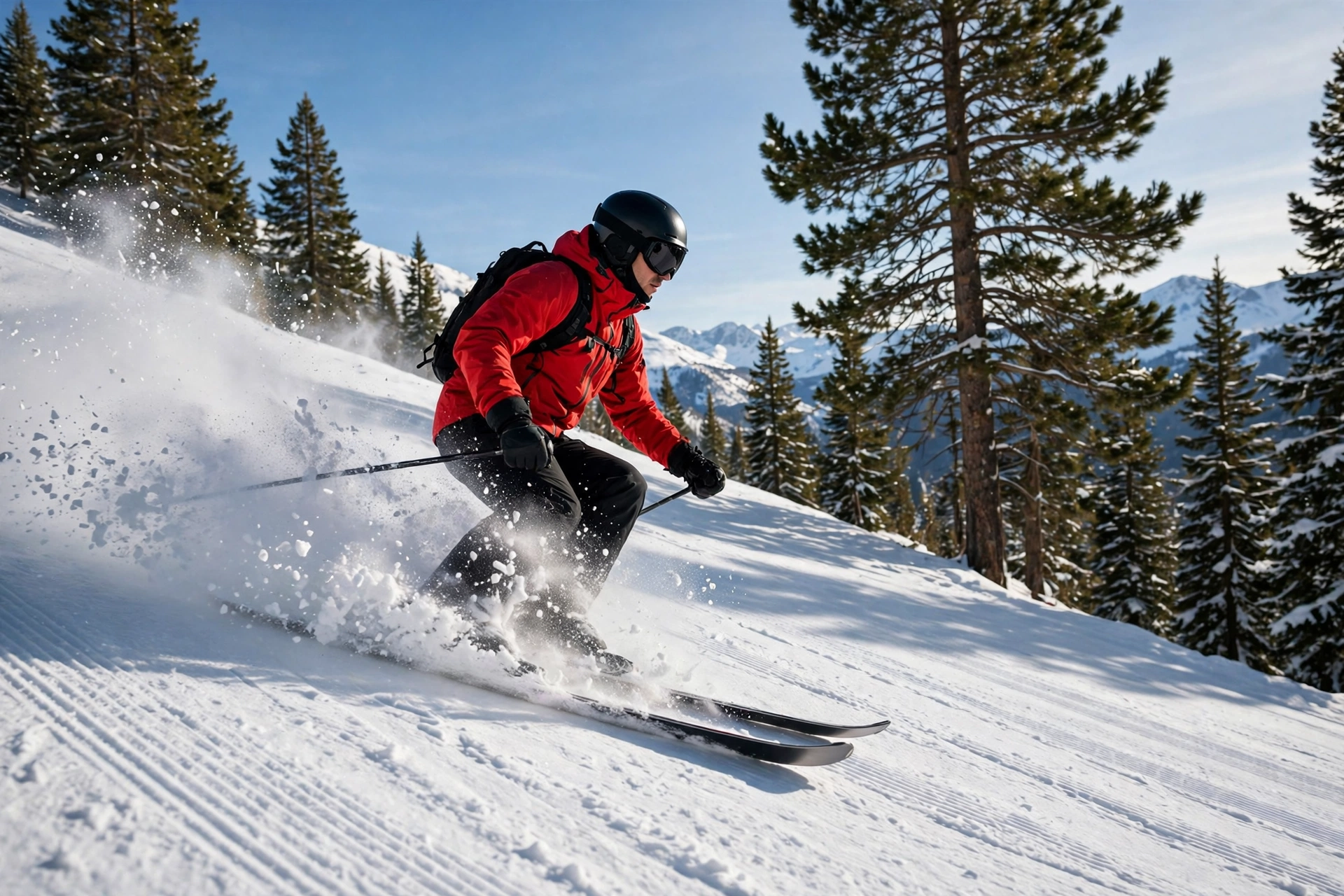
The first chair, or rather the first gondola cabin, left the base at 9 AM, and the line was short enough that I was on it within ten minutes. Snowbowl had announced 17 inches of preseason natural snow, with the snowguns running around the clock in the days before opening, and the cover on the upper mountain looked better than any opening day I have skied in the Southwest. The six runs open that first morning were Spur Catwalk, Frontier, Lower Bowl, Log Jam, Wild Turkey, and Round Up, all advanced terrain off the gondola. There was no beginner terrain, no bunny slope, no easy groomer to warm up on. If you showed up on opening day as a first-timer, you were out of luck, and the resort was honest about that in advance.
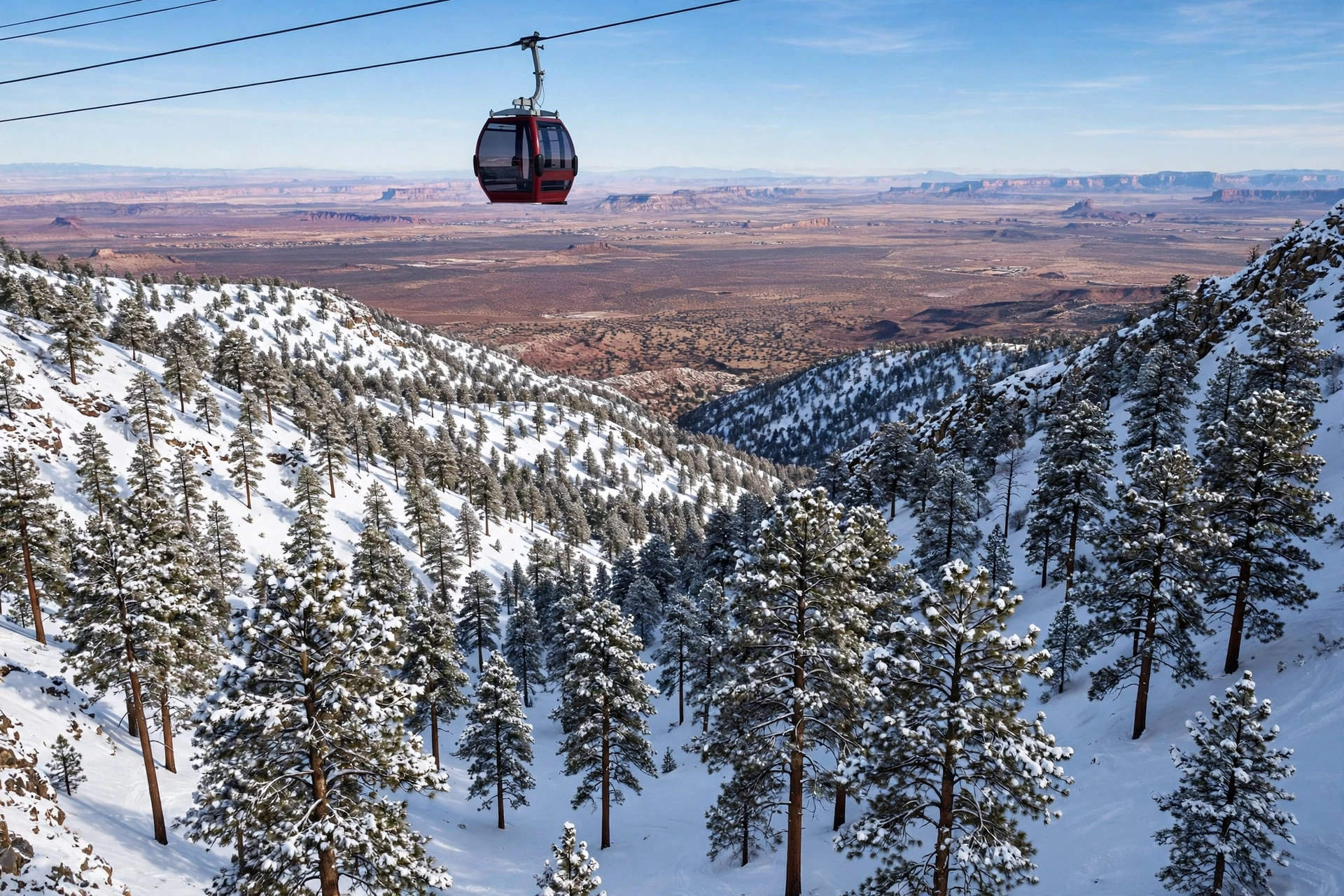
The gondola ride itself sets the tone. It climbs from the base at 9,200 feet toward the summit at 11,499 feet, and the San Francisco Peaks open up below you in a way no chairlift view matches. I rode it five times before lunch, and each lap felt unhurried. There were no lift lines to fight, no jostling at the maze, no pressure to squeeze in one more run before the light went. The mountain was quiet in the way only an early-season weekday can be quiet, and the snow, while thin in places, held an edge well enough to carve.
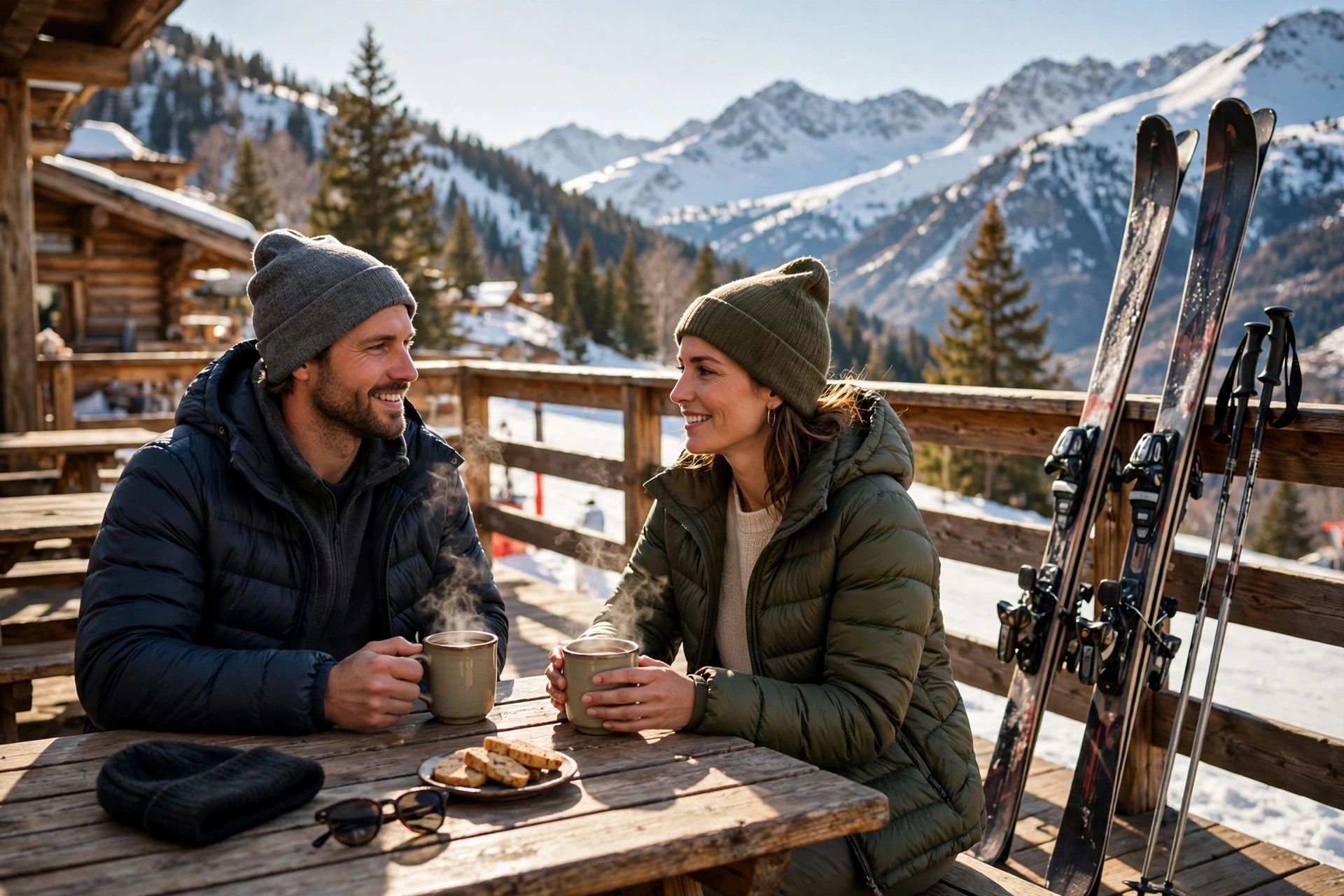
The opening-day extras were small and right. The first 100 people in line got free neck gaiters. The Agassiz Lodge deck had doughnuts, hot cocoa, and coffee, with a DJ playing to a crowd that was mostly locals in old shells and duct-taped gloves. Nobody was posing. That is the difference between Snowbowl and a resort that opens with a marketing event. This one opened like a mountain that wanted to ski.
The Mountain in Plain Numbers
Snowbowl sits on the western slope of the San Francisco Peaks, about 30 minutes north of Flagstaff on US 180 and Snowbowl Road, at 9300 N Snowbowl Road. The skiable area covers 777 acres. The base sits at 9,200 feet and the summit at 11,499 feet, which gives the mountain about 2,300 feet of vertical, the most of any ski area in Arizona. Nine lifts serve the mountain in a full season, and the Arizona Gondola is the one that matters most, carrying skiers from the base to the upper mountain in about 15 minutes.
New for this season is a 150-foot conveyor lift in the beginner area, paired with the Big Spruce and Little Spruce learning slopes. It was not running on opening day, since the beginner terrain was not open yet, but it matters for families planning a first trip later in the season. The resort also runs scenic gondola rides in winter from noon to 4 PM, weather permitting, for people who want the view without the skis. That is useful if you are travelling with someone who does not ski.
The mountain gets about 260 inches of natural snow in an average winter, which sounds generous until you remember the altitude and the sun. Snowbowl faces mostly west and southwest, so the afternoon sun works the snow hard. Morning corduroy is the best snow of the day here, and by 2 PM on a sunny day the lower runs soften fast. Plan your laps around that, not around the clock.
What the First Week Skis Like
By the time this article goes live on Tuesday, November 24, the opening-day picture will already be out of date. Terrain expands as conditions allow, and the resort adds runs through the first week as the snowguns catch up. Do not plan your trip around the six runs that were open on November 19. Check the snow report on the resort site the morning you drive up, and expect more terrain than opening day offered, not less.
What will not change is the character of the place. Snowbowl skis like a locals mountain with a big-mountain view. The runs off the gondola are long, rolling fall-line cruisers with enough pitch to keep an advanced skier interested, and the glades between them hold soft snow for days after a storm. The lower mountain, served by the Hart Prairie and Sunset lifts in a full season, is where intermediates spend their day, with wide groomers and a calmer pace. Beginners get the dedicated learning area at the base once it opens, and that is where the new conveyor lift will do its work.
The best snow I found on opening day was on the north-facing edges of the upper runs, where the sun had not touched it. The worst was the flat light in the bowl at midday, when the clouds thickened and the contrast went grey. That is a Snowbowl constant. Bring goggles with a low-light lens if you own one, and do not trust a bluebird forecast to hold past noon.
Getting Up the Mountain Without the Stress
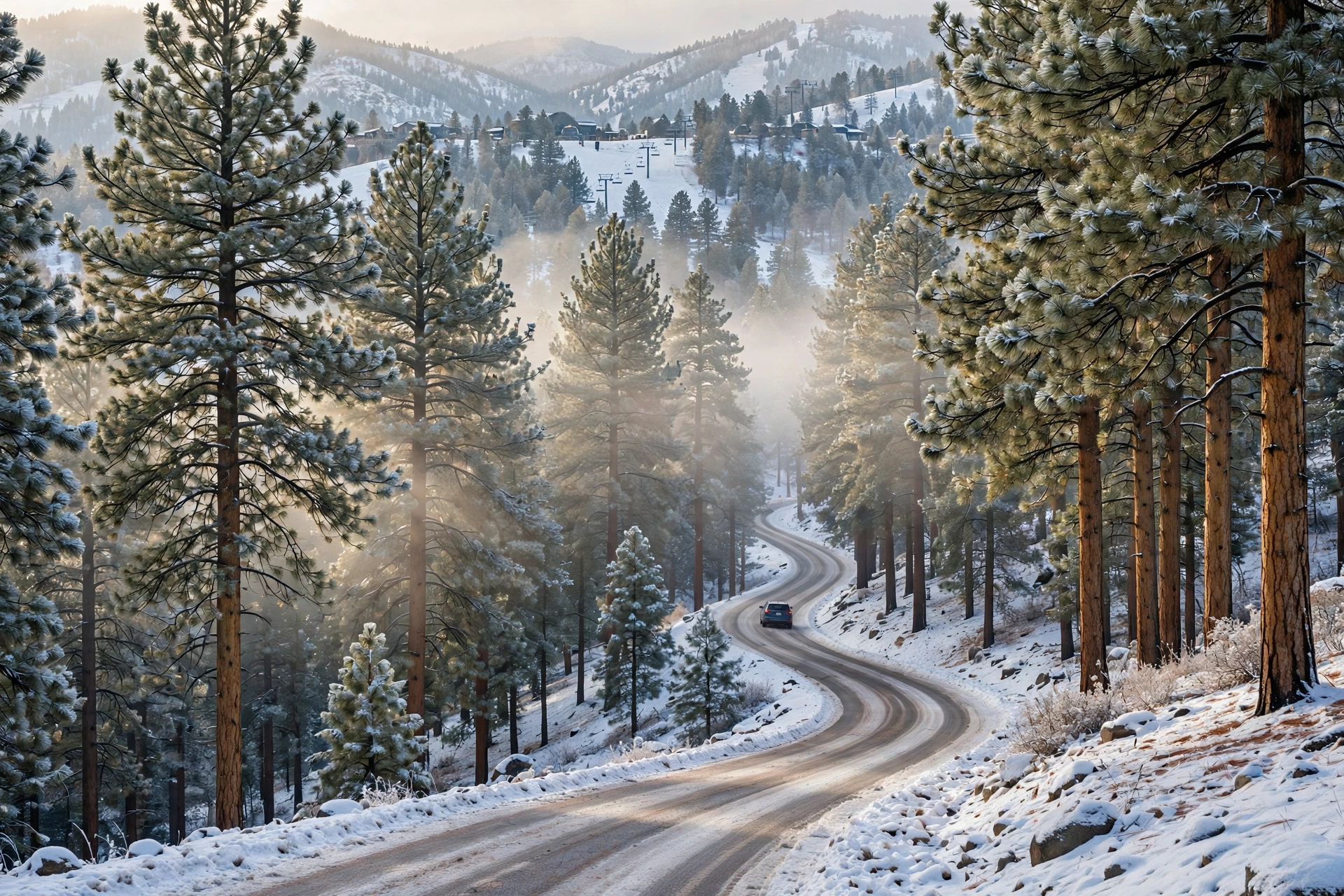
The drive from downtown Flagstaff takes about 30 minutes in good weather, and the road climbs steadily the whole way. US 180 is a two-lane highway, and it ices over in the shade. I left Flagstaff at 7:30 AM and had the road mostly to myself. By 9 AM the parking lots were filling, and by 10 the lower lot was full. Snowbowl parking is free, but it is not endless, and the mountain does not run a shuttle from town. Arrive before 8:30 if you want a close spot, and bring chains or a car with real winter tires if a storm is in the forecast. The resort posts road conditions on its site, and the Coconino National Forest page for the area is the other place I check before I leave town.
Altitude is the thing people underestimate here. The base is at 9,200 feet, which is higher than most Colorado base areas, and the summit pushes past 11,400. I felt it on my third lap, a light headache and short breath on the traverse back to the gondola. Drink water before you arrive, not after you feel bad, and take the first two runs easy. If you are coming from sea level, give yourself a night in Flagstaff first. The town sits at 7,000 feet, which is a gentler step up. The whole mountain sits inside the Coconino National Forest, and the Forest Service page for the area is worth a look before a winter drive.
What a Day Here Costs, and How to Pay Less
Tickets for Arizona Snowbowl Arizona are sold on a dynamic calendar, which means the price moves with the date and the demand, and the cheapest tickets are the ones bought online in advance. I am not printing a price here because the number you would see today is not the number you would see next week, and a stale price is worse than no price. Buy online, buy early, and check the resort site for the date you want. That is the whole trick.
Two deals change the math. Kids 12 and younger ski free with the Power Kids Pass, which makes Snowbowl one of the cheapest family ski days in the country if you have young kids. And if you stay at Basecamp at Snowbowl, the lodging at the base, you get two free lift tickets for every night you stay. That changes the math on a weekend fast, especially for a family of four.
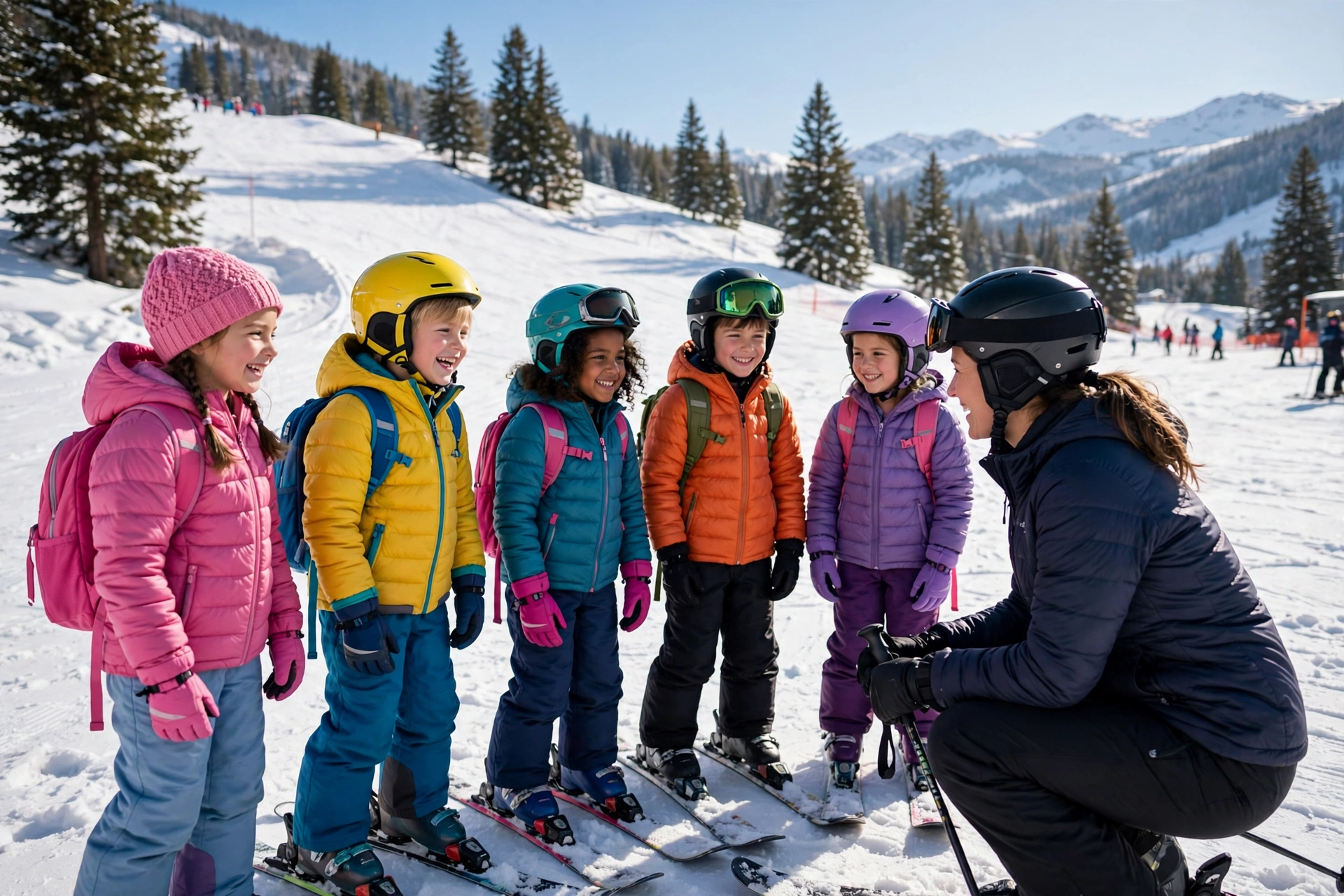
Rentals and lessons are sold through the resort, and first-time ticket buyers can get a free two-hour Snow Experience lesson. That is a real offer, not a teaser, and it is the best way to start if you have never skied. Book it ahead. The lesson groups fill up on weekends, and walk-up lessons are not a sure thing.
Where I Eat and Where I Stay
The Agassiz Lodge at the base is the mountain’s living room. The deck faces the slopes, the cocoa is hot, and the food is standard lodge fare at lodge prices. I ate a bowl of chili there on opening day and paid more than I would have in town, which is the deal you make at every ski area. Bring a sandwich if the price bothers you. Nobody will mind.
Flagstaff is the base town, and it is a good one. It has real restaurants, breweries, and hotels at every price, and the drive back down the mountain at the end of the day takes you straight into town. I stay in Flagstaff and drive up in the morning, which keeps the trip cheap and the evenings fun. If you want to wake up on the mountain, Basecamp is the only lodging at the base, and the free lift tickets that come with a night there are the reason to book it.
The town also gives you a backup plan. If the wind shuts the gondola, which happens a few days each winter, Flagstaff has a downtown worth walking, a brewery scene worth an afternoon, and the Museum of Northern Arizona a short drive north. A shut-down day at Snowbowl does not have to be a lost day.
The Honest Downsides
Snowbowl is not a big resort, and it does not pretend to be one. The vertical is real, but the lift system is small, and on a powder day the gondola line can stretch past 30 minutes by late morning. The mountain has nine lifts, but the upper mountain funnels through one gondola, and that is the bottleneck. Get your laps in before 11 AM and the problem mostly solves itself.
The wind is the other honest problem. The Peaks catch weather hard, and the gondola holds for wind more often than visitors expect. I have driven up twice in past seasons to find the upper mountain on wind hold and only the lower lifts turning. Check the snow report and the resort’s social posts before you leave Flagstaff. A wind-hold day is still skiable on the lower mountain, but it is not the day you dreamed about.
Early-season cover is thin, and opening week is not the time to ski the trees. The resort marks the thin spots, and the patrol does a good job, but rocks and stumps sit just under the snow in November. Stay on the groomed runs until the base builds, and save the glades for January.
Beginners should also know the truth about opening week. There was no beginner terrain on day one, and the learning area opens when the snow allows, not when the calendar says so. If you are bringing a first-timer, wait until the resort confirms the beginner area is open. A first day on a mountain with no easy slope is a first day that ends early.
What People Asked Me on the Gondola
Is Snowbowl worth the drive from Phoenix? Yes, if you go midweek and leave early. It is about two hours from north Phoenix to the base, and the drive up I-17 and through Flagstaff is easy. Go on a weekday, ski the morning, and drive home after lunch. A weekend trip needs a Flagstaff hotel, or the traffic and the lift lines eat the day.
Can I learn to ski here? Yes, once the beginner area opens. The new conveyor lift and the dedicated learning slopes make it a good place to start, and the free two-hour lesson for first-time ticket buyers is the best deal in Arizona skiing. Do not try to learn on opening week, when only advanced terrain is open.
What is the best month to come? February, in most years. The base is deepest, the storms are regular, and the days are longer than in December. January is second best. November is for the keen and the local, and the skiing is thin but the mountain is quiet.
Do I need chains or four-wheel drive? Not always, but carry chains from November through March and check the road report before you leave Flagstaff. The highway ices in the shade, and the resort does not control the road. A front-wheel-drive car with good tires handles it fine on a clear day.
Is there night skiing? No. Lifts run 9 AM to 4 PM, and the mountain goes dark after that. The town is where the evening happens.
My Call, One Week In
Snowbowl opened early, on a gondola and six runs, and that tells you the mountain is confident about its snowmaking and honest about its limits. It does not pretend to be the biggest ski area in the Southwest. It is a tall, sunny, wind-scoured mountain with a great view, a short drive from a good town, and a price that stays fair if you book ahead. Go midweek, go early, check the snow report the morning you leave, and ski the morning hard. That is the slow ski day, and it is worth the wait.
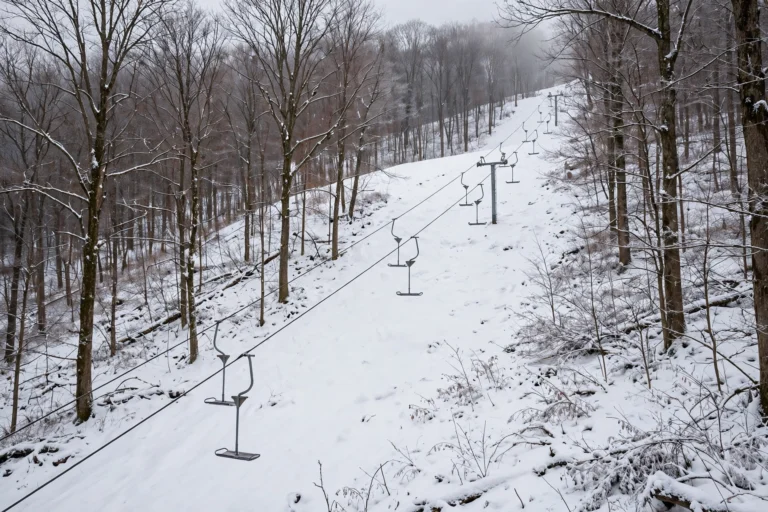
The closest thing to a sister hill for this kind of slow skiing is ascutney mountain vermont, a volunteer-run community hill with a T-bar and eight trails.