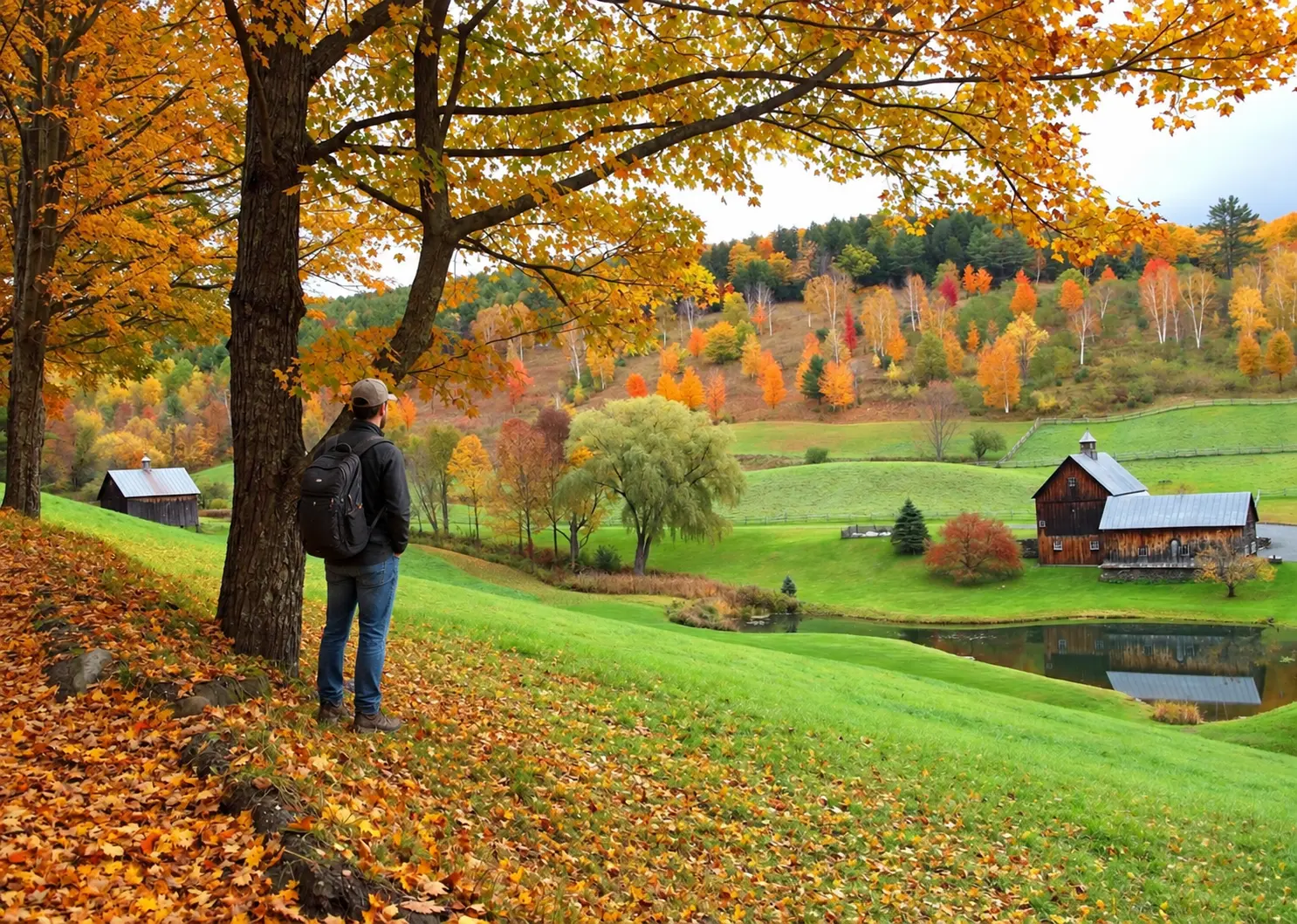
Nothing About Things to Do Woodstock Vermont Happened by Accident
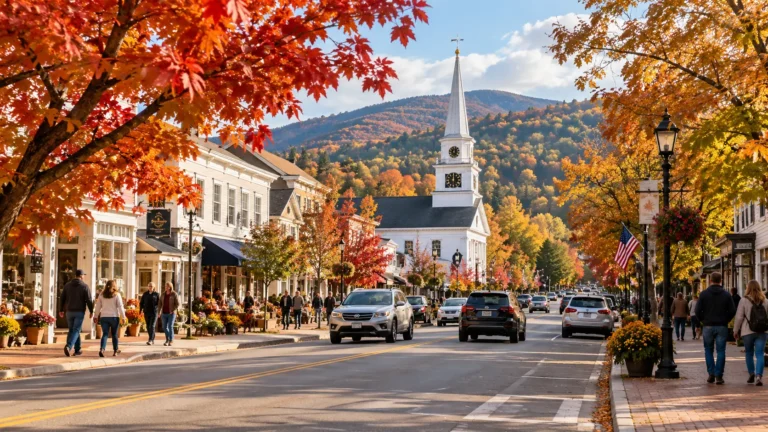
The village looks like it assembled itself over two centuries of good taste. It didn’t. Three men who owned the same hill spent 150 years deliberately shaping what you’re looking at, and the things to do Woodstock Vermont offers mostly trace back to one of them. Even American lift-served skiing started here, on a farmer’s pasture, because the innkeepers wanted a winter season.

Knowing that changes the visit. You stop photographing a pretty town and start reading a designed one.
Three Owners, One Hill, 150 Years
Mount Tom rises directly behind the village, and its ownership is the through-line for everything else.
George Perkins Marsh grew up beneath it in the early 1800s, watched Vermont hillsides get stripped by logging and sheep farming, and wrote a book arguing that humans were wrecking the land they depended on. It’s considered a founding text of American conservation.
Frederick Billings bought the property later that century and did something about it. He replanted the deforested slopes, laid out carriage roads through the new forest, and established a model dairy farm on scientific principles.
Laurance Rockefeller married Billings’ granddaughter, Mary French. The couple eventually donated the mansion and forest to the American people, creating Marsh-Billings-Rockefeller National Historical Park in 1992. Rockefeller also bought and rebuilt the Woodstock Inn and the local ski hill.
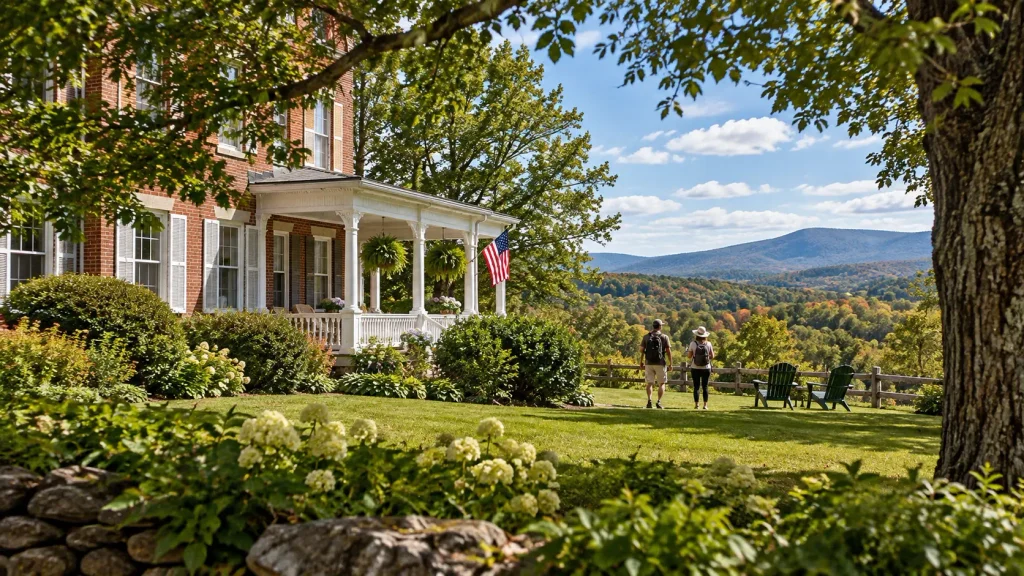
So the forest is planted, the carriage roads are engineered, the farm is a demonstration project, and the inn is a conservation philanthropist’s idea of what a New England village hotel should be. None of it is accidental.
Vermont’s Only National Park, and Most of It Is Free
Marsh-Billings-Rockefeller is the only National Park Service unit in Vermont, and it’s the only one in the system focused on conservation history and land stewardship.
The Carriage Roads Cost Nothing
Twenty miles of carriage roads and trails climb Mount Tom from the edge of the village, and almost no visitor walks them. They’re free, open year round, and gently graded because they were built for horse-drawn carriages rather than hikers.
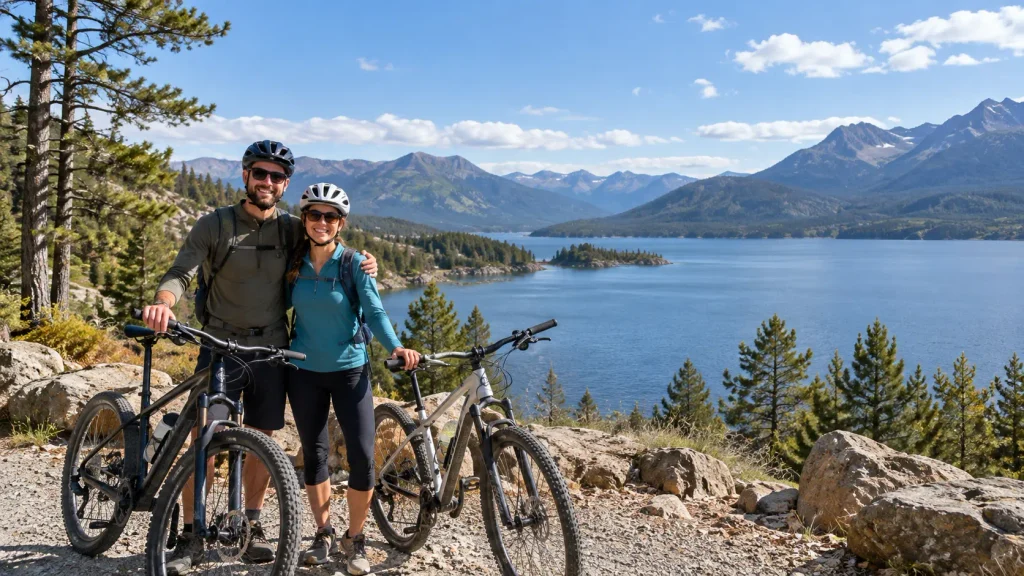
The South Peak summit gives you the classic view down over the village green and the Ottauquechee River valley. It’s roughly a mile and a half up from the Faulkner Trail trailhead near the village, on switchbacks so mellow they feel engineered, which they were.
Go at 8 a.m. and you’ll have it to yourself even in October.
The Mansion Requires a Ticket
The house tour runs seasonally with limited group sizes and does sell out on foliage weekends. Book ahead rather than walking up. Current hours and tour availability are at nps.gov/mabi.
The mansion holds a significant collection of American landscape paintings, which matters more than it sounds given that the whole property is an argument about how people see land.
One more thing inside the park boundary that people miss: the Forest Center and the Mount Tom Cabin, both reachable on foot, and the cabin serves light food on some winter weekends when the carriage roads are groomed for cross-country skiing.
Billings Farm Is Across the Street and Still Milking
Billings Farm and Museum operates as a working dairy with a registered Jersey herd, plus a restored 1890 farmhouse and exhibits on nineteenth-century Vermont agriculture.

It’s the best thing in town with children. Calves, draft horses, and a milking demonstration on a schedule, and none of it is staged the way farm attractions usually are. Ticketing is separate from the national park, though combination options exist. Details at billingsfarm.org.
Their pumpkin and apple programming in fall is well run, and it’s also when the parking lot is at its worst.
Where American Lift-Served Skiing Started
In January 1934, a group of ski enthusiasts rigged an endless rope tow on the pasture slope of Clinton Gilbert’s farm north of the village. It ran on a Ford Model T engine, used an 1,800-foot continuous rope over pulleys tied to a tree at the top, and cost around $500 to build from junked tires, scrap wood, and cedar posts.
It was the first rope tow in the United States. Before it, you climbed whatever you wanted to ski down.
The White Cupboard Skiway opened that month charging a dollar a day, or fifty cents for a half day. Wallace “Bunny” Bertram, a former Dartmouth ski coach who’d helped build the thing, soon leased it himself, swapped the Model T for an electric motor, and later moved operations to a steeper hill nearby.
That hill became Suicide Six, named after Bertram’s remark that skiing straight down its face would kill you. It’s now Saskadena Six, renamed in 2021, owned by the Woodstock Inn and Resort, and it’s a small family hill rather than a destination resort. Local kids learn to race there.
Gilbert’s Hill itself carries a Vermont historic site marker on Route 12, about a mile east of Pomfret Road. You can stand on the exact pasture. Almost nobody does.
Things to Do Woodstock Vermont Fits Into Its Village Green
The center is small enough to cover on foot in an afternoon, which is the correct way to do it.
- The Green is an oval common ringed by Federal and Georgian houses, and the whole village center sits on the National Register
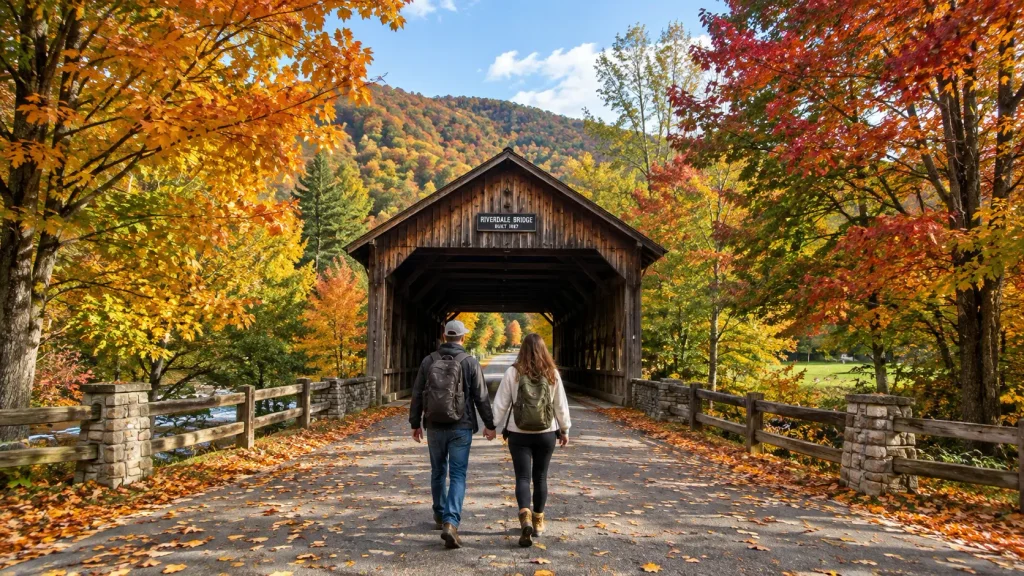
- The Middle Covered Bridge crosses the Ottauquechee right at the village edge and is newer than it looks, built in the late 1960s using traditional methods
- F.H. Gillingham and Sons has operated as a general store since 1886 and sells actual goods rather than souvenirs
- The Woodstock Farmers’ Market on Route 4 is a proper food store, and it’s where I’d buy lunch instead of sitting down for it
Skip the gift shops that sell the same maple products at a markup. Gillingham’s and the farmers’ market cover it.
The village is also compact enough that the whole thing is a National Historic Landmark District, which is why the architecture stays consistent and why nobody has built anything jarring on the Green.
The Road You Cannot Drive
Every fall, someone plans a Woodstock trip around a photograph of a red farmhouse on a dirt road. That’s Sleepy Hollow Farm on Cloudland Road in neighboring Pomfret, and it’s a private home.
The town closes the road to non-residents during peak foliage, with enforcement, after years of traffic that blocked emergency access and damaged property. Dates shift annually and get set in late summer.
Don’t build a day around it. The carriage roads on Mount Tom give you better views with nobody’s driveway in the frame.
Twenty Minutes in Any Direction
Quechee Gorge sits about six miles east on Route 4, and the bridge overlook takes five minutes. Quechee State Park manages access to the trails below, with details at Vermont State Parks. The Vermont Institute of Natural Science nearby runs raptor exhibits that are better than expected.
Simon Pearce in Quechee puts a glassblowing floor and a hydro-powered mill restaurant in the same building above a waterfall. Watch the glassblowing, which is free, then decide about the restaurant, which isn’t cheap.
Sugarbush Farm on a dirt road in Pomfret gives free cheese and maple tasting with no pressure to buy. Taftsville Covered Bridge is on the way. North toward Barnard, the Barnard General Store and Silver Lake State Park make a quiet half day.
Parking, Crowds, and When to Come
Woodstock’s village has very little parking, and October overwhelms it completely. That’s the single practical constraint on this trip.
- Arrive before 9 a.m. on fall weekends or accept circling
- Use the lot at the farmers’ market or the park visitor center rather than hunting a street space
- Book lodging four to six months out for October. Rates roughly double and inventory is fixed
- Late September through mid-October is peak color in this part of the Upper Valley, though it moves year to year
My honest preference is late May. The hills are green, the carriage roads are empty, the farm has calves, and you can park anywhere. Fall is better looking and considerably worse to experience.
Winter works too, with cross-country skiing on the carriage roads and Saskadena Six twenty minutes away.
Questions Visitors Send Before Coming
How many days do you need in Woodstock, Vermont? Two or three nights. One day for the village and Billings Farm, one for Mount Tom’s carriage roads and the national park, and a half day for Quechee Gorge and Simon Pearce. A single day means choosing between the town and the outdoors.
Is Marsh-Billings-Rockefeller National Historical Park free? The carriage roads and trails on Mount Tom are free and open year round. The mansion tour is ticketed, runs seasonally with limited group sizes, and sells out on foliage weekends. Billings Farm and Museum charges separate admission, though combination tickets exist.
What is Woodstock, Vermont known for? Its preserved village center, Marsh-Billings-Rockefeller National Historical Park, and Billings Farm. It’s also where lift-served skiing began in America, when the first US rope tow was rigged on Clinton Gilbert’s pasture in January 1934, powered by a Ford Model T engine.
Can you visit Sleepy Hollow Farm in Woodstock? No. The farm is a private home on Cloudland Road in neighboring Pomfret, and the town closes that road to non-residents during peak foliage with enforcement. Closure dates are set annually in late summer. Plan photography elsewhere, ideally on Mount Tom.
When is peak foliage in Woodstock? Late September through mid-October in most years, though timing shifts with the season and moves down in elevation over several weeks. There’s no single reliable weekend, so check Vermont’s foliage reports the week before rather than booking a specific date months out.
Is Woodstock worth visiting outside fall? Yes, and it’s a better experience. Late May and June bring green hills, empty carriage roads, calves at Billings Farm, and parking you can find. Winter adds cross-country skiing on the carriage roads and Saskadena Six. Fall photographs better and functions worse.
How far is Woodstock from Boston? Roughly two and a half to three hours by car, depending on traffic. New York runs about five hours. The closest airport is Lebanon, New Hampshire, around thirty minutes away, though most visitors fly into Boston and drive. You’ll want a car once you arrive.
Walk the Hill the Village Is Named For
Most lists of things to do Woodstock Vermont publish start at the Green and stay there. Start on Mount Tom instead. Take the Faulkner Trail up the carriage roads early, look down at the village from the South Peak, and come back into town understanding that the forest you just walked through was planted on purpose.
Then do Billings Farm, buy lunch at the farmers’ market, and give Quechee an afternoon. Skip Cloudland Road entirely. And if your dates are flexible, come in late spring instead, when the place belongs to the people who live there and you can still get a table.