Angel Fire Resort Gave Me Room to Ski at My Own Pace
I drove south from Taos expecting a smaller, quieter ski day, and angel fire resort gave me exactly that, plus a mountain I could read at a glance. The runs spread wide across the slope, the lift lines stayed short, and I spent my day skiing instead of waiting, planning, or dodging crowds. If you want steep, punishing terrain, look elsewhere. If you want a place to build confidence, ski with kids, or enjoy a full day without feeling rushed, this is the mountain to pick.
The Drive Over Palo Flechado Pass Sets the Tone
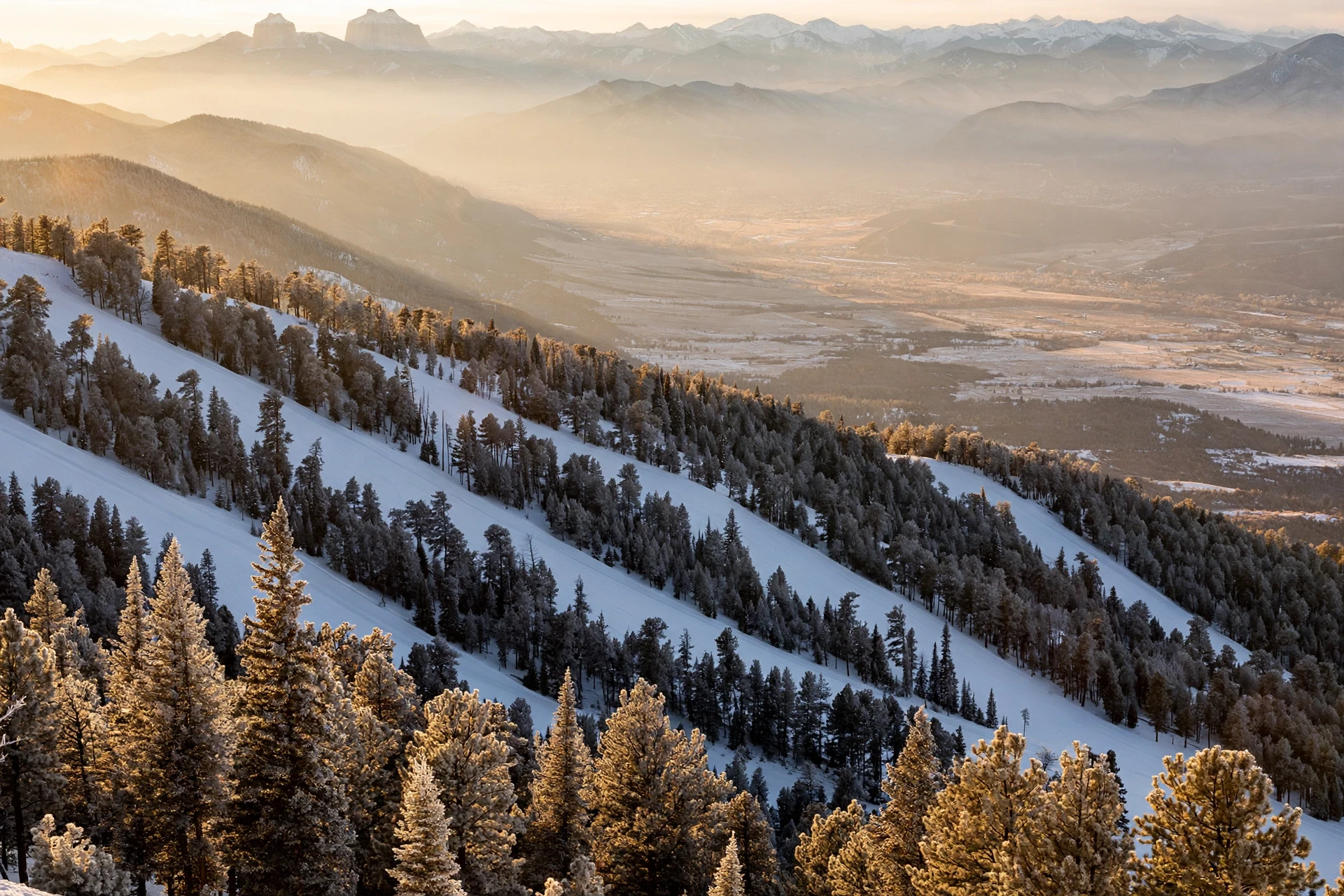
You reach Angel Fire from Taos on US-64, over Palo Flechado Pass, and the drive does half the work of slowing you down. The road climbs through pine forest, the valley opens out, and the village appears in the Moreno Valley on the eastern side of the Sangre de Cristo mountains, in the southern Rocky Mountains.
Wheeler Peak, the highest mountain in New Mexico, stands nearby and stays visible from the resort on clear days. It gives you a fixed point while you learn a new mountain. The base sits at about 8,600 feet, and the summit reaches 10,677 feet. Sources differ slightly on the base figure, with some listing 8,554 feet, so treat the base as approximate and check the trail map before you go.
The village base feels compact and practical. Parking sits close to the lifts, the ticket office is easy to find, and the base area has the shops, rentals, and food you need without a long walk in ski boots.
Why Angel Fire Resort Suits Progressing Skiers Better Than a Steep Mountain
The mountain reads as a broad progression hill, and that is its strength. The terrain mix runs about 23 percent easier, 48 percent more difficult, and 29 percent most difficult, so the middle of the mountain does the heavy lifting. Blue runs dominate the day, and they are wide enough to turn at your own pace without feeling squeezed by faster skiers. About 96 trails are listed, served by 8 lifts, though both figures should be checked against the current resort trail map, since counts change with conditions and new lifts.
That layout suits a specific skier. You have skied a few times, you can link turns, and you want longer runs that let you practice without a cliff edge of difficulty at every junction. You can lap the same blue run three times and notice your turns getting cleaner each time. You can move to a steeper pitch when you feel ready, then drop back to a cruiser when your legs ask for a break.
Strong skiers should know the trade-off up front. The expert terrain exists, and the summit pitch will wake up your legs, but a hard-charging expert will work through the hardest runs faster than at Taos Ski Valley, the steeper and better-known resort to the north. Angel Fire trades that edge for space, calm, and a family feel. I would not call it a compromise. I would call it a different kind of ski day, one built around mileage and comfort rather than bragging rights.
Skiable acreage is the one number I will not quote as settled fact. Published sources list it anywhere from 445 to 627 acres, a gap too wide to smooth over with a single figure.
What a Ski Day Feels Like From First Chair to Last Run
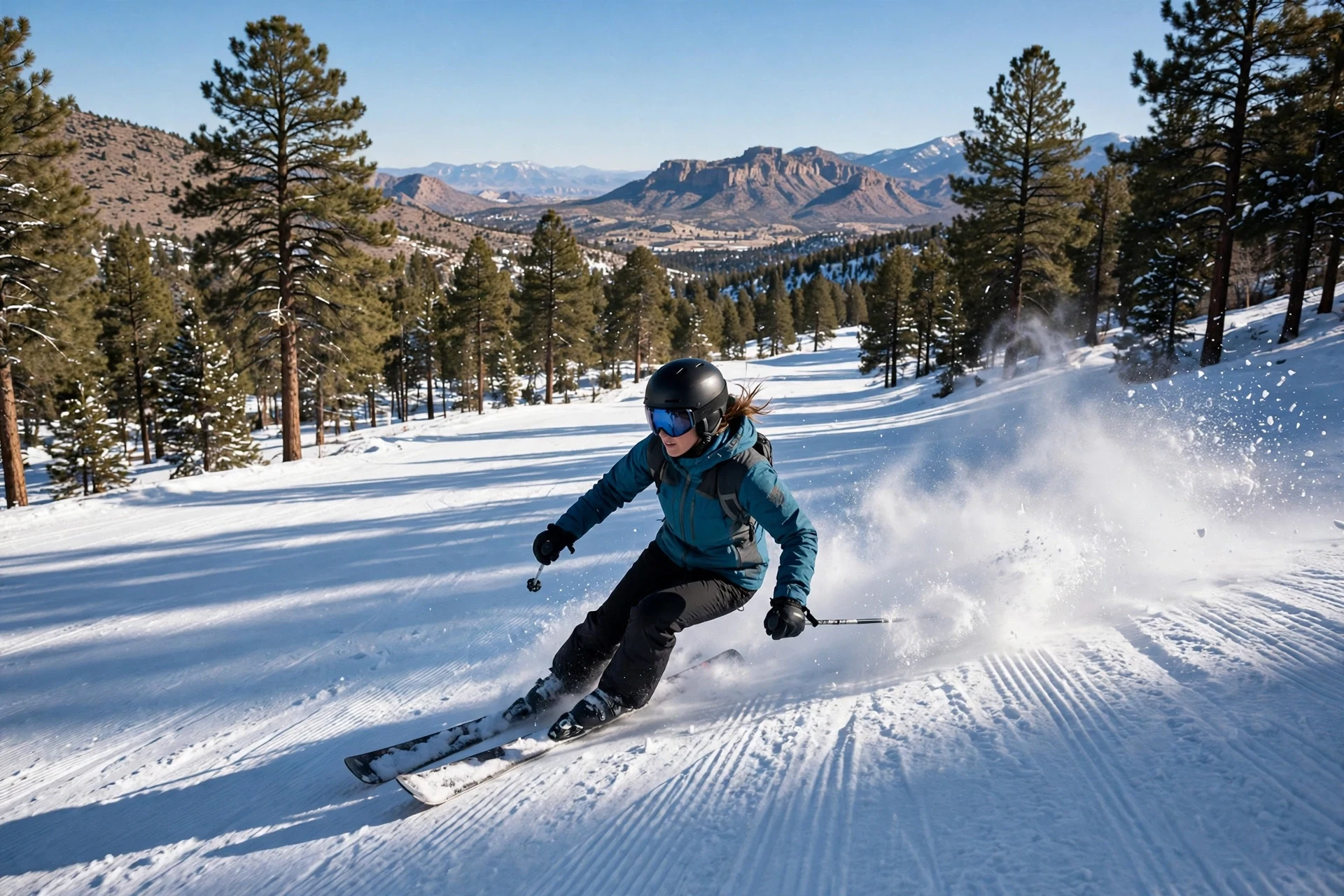
Lifts run daily from 9 AM to 4 PM in winter, and the 2026-27 season runs December 11, 2026 through March 21, 2027, according to the resort site. I arrived just before opening on my visit, clicked in at the base, and rode straight up with no line worth mentioning.
The resort is marking its 60th anniversary season in 2026-27, and it opened the season with a new lift, the Angel Express, described by the resort as New Mexico’s first high-speed six-pack chairlift. A faster lift means shorter rides, warmer legs, and more runs before lunch.
One change to know before you plan around evenings: night skiing is paused for the 2026-27 winter season, per the resort site. Plan your day around the 9 to 4 window, ski hard in the morning, take a real lunch break, and finish with a last run while the light is still good.
Snow conditions here reward a flexible plan. Morning corduroy on the groomed blues skis fast and clean. Afternoon sun softens the lower mountain, and the snow can get heavy near the base on warm days. I skied the upper mountain in the morning, worked the mid-mountain blues through midday, and saved a gentle cruiser for the final run, when my legs were tired and my turns were getting sloppy.
Lift Tickets, Lessons, and the Booking Order That Saves You Hassle
Buy your tickets before you drive up. The resort sells lift tickets online, and advance purchase pricing applies when you buy three or more calendar days ahead, according to the resort lift ticket page. Walk-up tickets are sold at the ticket office too, but the advance window is the simple way to pay less for the same day on snow. Check the Angel Fire Resort site for current prices before you book.
Your ticket loads onto a reusable Access Card this season, so keep the card for your next visit instead of tossing it. Pick it up at the pick-up boxes near the ticket office, slip it in a jacket pocket, and ride through the gates without digging it out each time.
Lessons belong in the same advance booking step. If you or your kids need instruction, book the lesson and the ticket together, and arrive early enough to sort rentals without rushing. The ski school meeting area sits at the base, and the beginner slope is close by, so a first-timer does not have to ride a long lift just to reach gentle snow.
Rentals follow the same rule. Reserve ahead when you can, bring your own socks and base layers, and try boots on with time to swap a pair that pinches. A bad boot ruins a ski day faster than bad snow. If you are flying in, pack your helmet and goggles in your carry-on, since your own helmet fits better than a loaner.

Where Beginners and Kids Get Their Footing
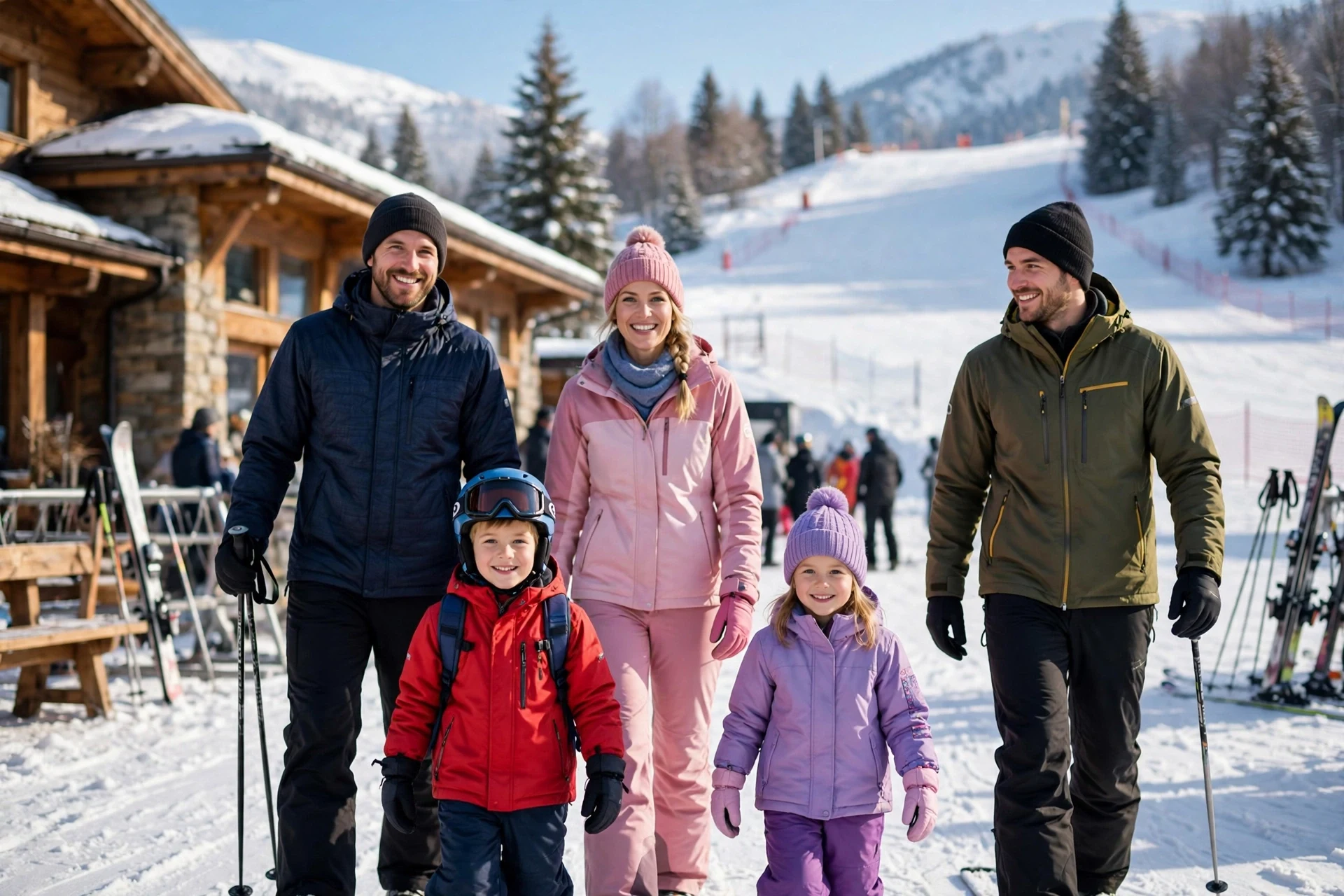
Angel Fire earns its family reputation on the lower mountain. The beginner area is wide, visible from the base, and easy to reach, which means a parent can watch a lesson from the lodge deck without skiing the same slope. Kids learn faster when the slope feels safe, and parents relax when they can see the whole learning zone at once.
The progression path is clear. A first-timer starts on the gentle base slope, moves to a green run with a real descent, then steps up to the easiest blues when turns feel steady. Each step adds length and pitch without a sudden jump. That matters for kids, who lose confidence fast after one scary run, and for adults returning to skiing after years away. Let the skier set the pace. Push a nervous skier onto a steeper run and you lose the rest of the day.
Families should also plan for the non-ski hours. The base village has food and a place to warm up, and the resort runs winter activities beyond downhill skiing, including tubing and other snow play, according to the state tourism listing. A kid who is done skiing at 2 PM still needs something to do.
The Best Time to Visit, Month by Month
December brings opening energy and holiday crowds. The season opens December 11, and the first week carries anniversary pricing and events, but early-season coverage can be thin if natural snow lags. Treat a December trip as a holiday ski trip, not a deep-powder trip, and check the snow report the week before you drive up.
January is the sweet spot for most skiers. The mountain is fully open, the base has built up, and the holiday crowds have gone home. Weekdays in January feel especially quiet. Cold mornings are real at this elevation, so layer well and warm up inside at midday.
February brings the best combination of snow depth and daylight. The snowpack is at its deepest, and the mountain skis at its most forgiving. This is the month I would pick for a first visit, especially for a family trip or a group with mixed ability. Book lodging early for February weekends.
March skis soft and sunny, with spring conditions on the lower mountain and firmer snow up top in the morning. The season ends March 21, 2027. If you like spring skiing, aim for the first two weeks of March and ski the upper mountain early.
Where to Stay Near the Mountain Without Overpaying for Location
Lodging near the resort centers on the village base, with condos, lodges, and vacation rentals within walking distance of the lifts. Staying at the base is the easy choice for families and first-timers, since you can walk to the slopes, drop gear at lunch, and let tired kids rest without a drive. Check the resort site for current lodging options and prices, since rates shift sharply around holidays and weekends.
Staying in the village also means you can skip the morning drive up the mountain road. That sounds small until you have driven a snowy mountain road in the dark with a car full of ski gear.
Taos works as a base too, if you want restaurants, galleries, and a town to walk around after skiing. The drive over Palo Flechado Pass adds a mountain pass to both ends of your ski day, and winter road conditions can slow it down. Stay in Taos if the town itself is part of your trip, and stay at the base if skiing is the main reason you came. Book early for holiday weeks and February weekends.
What to Skip, and What I Would Do Instead
Skip the idea that Angel Fire is a Taos substitute. It is a different mountain with a different crowd, and judging it by Taos standards misses what it does well. If you want the steepest terrain in New Mexico, go to Taos. If you want a relaxed mountain where you can ski all day with your family, stay here.
Skip the late start on a powder day or a holiday Saturday. The lift lines stay short on a normal weekday, but a fresh snowfall or a holiday weekend fills the base area fast. Arrive before the lifts open, ski the first two hours hard, and take your break when the midday crowd peaks.
Skip packing light on layers. The base sits near 8,600 feet, the summit tops 10,677 feet, and the temperature swing between the two can catch you off guard. I carried an extra layer in my pack on every run, and I used it on the lift more than once.
A Short Detour Worth Your Afternoon: The Enchanted Circle and Wheeler Peak Views
The resort sits on the Enchanted Circle, the scenic loop that runs from Taos through Eagle Nest and Red River and back through Questa. If you have a spare afternoon, drive part of the loop and look back at the range from the valley floor. The perspective flips. From the summit you look down at the valley. From the valley you look up at the whole range, with Wheeler Peak rising above the rest.
The Carson National Forest surrounds this country, covering about 1.5 million acres of northern New Mexico, with elevations rising from 6,000 feet to 13,161 feet at Wheeler Peak, according to the Forest Service. In summer the same mountain turns to mountain biking, golf, and zipline trips, but winter is when the valley feels most itself, quiet and white under a wide sky.
Questions I Kept Getting Asked After I Posted About This Trip
Is Angel Fire good for beginners?
Yes, and that is its clearest strength. The beginner slope sits at the base, the green runs are wide, and the progression to easy blues is gradual. A first-timer can learn here without riding a long lift to reach gentle snow.
How does it compare to Taos Ski Valley?
Taos is steeper, harder, and more famous for expert terrain. Angel Fire is wider, calmer, and more family-oriented, with a village base and shorter lift lines. Pick Taos for challenge, pick Angel Fire for a relaxed day with mixed-ability skiers.
When should I go for the best snow?
February is my pick for the deepest snowpack and the most forgiving conditions, with January a close second for quiet weekdays. December can be thin early in the season, so check the snow report before an early trip.
Do I need to book lift tickets in advance?
You can buy at the ticket office, but advance purchase three or more days ahead brings better pricing, per the resort lift ticket page. Book online as soon as your dates are firm, and keep your reusable Access Card for the next visit.
Can I stay at the base, or should I stay in Taos?
Both work. Base lodging puts you steps from the lifts and suits families and short trips. Taos suits travelers who want a town to explore after skiing, but it adds a mountain pass drive to each end of the day.

Book the Trip, Then Let the Mountain Set the Pace
Angel Fire rewards skiers who stop chasing the hardest line and start enjoying the run they are on. Book your tickets three days ahead, stay at the base if you can, ski the blues in the morning, and let the mountain set the pace. I left with tired legs and a simple plan: come back in February, bring the kids, and ski it all over again.