
I Gave the Denver Museum of Nature Science a Full Day, and the Dinosaurs Were Only the Start
I walked into the museum at 2001 Colorado Boulevard, Denver, CO 80205, on the east side of City Park, with a plan to stay two hours. I stayed until my feet told me to stop. The denver museum of nature science earns a full day because it keeps changing pace: giant bones, quiet gem cases, a dark planetarium, then sunlight and mountain air outside. This is how I would spend that day, in the order that worked.
The Dinosaurs Set the Pace, So Let Them
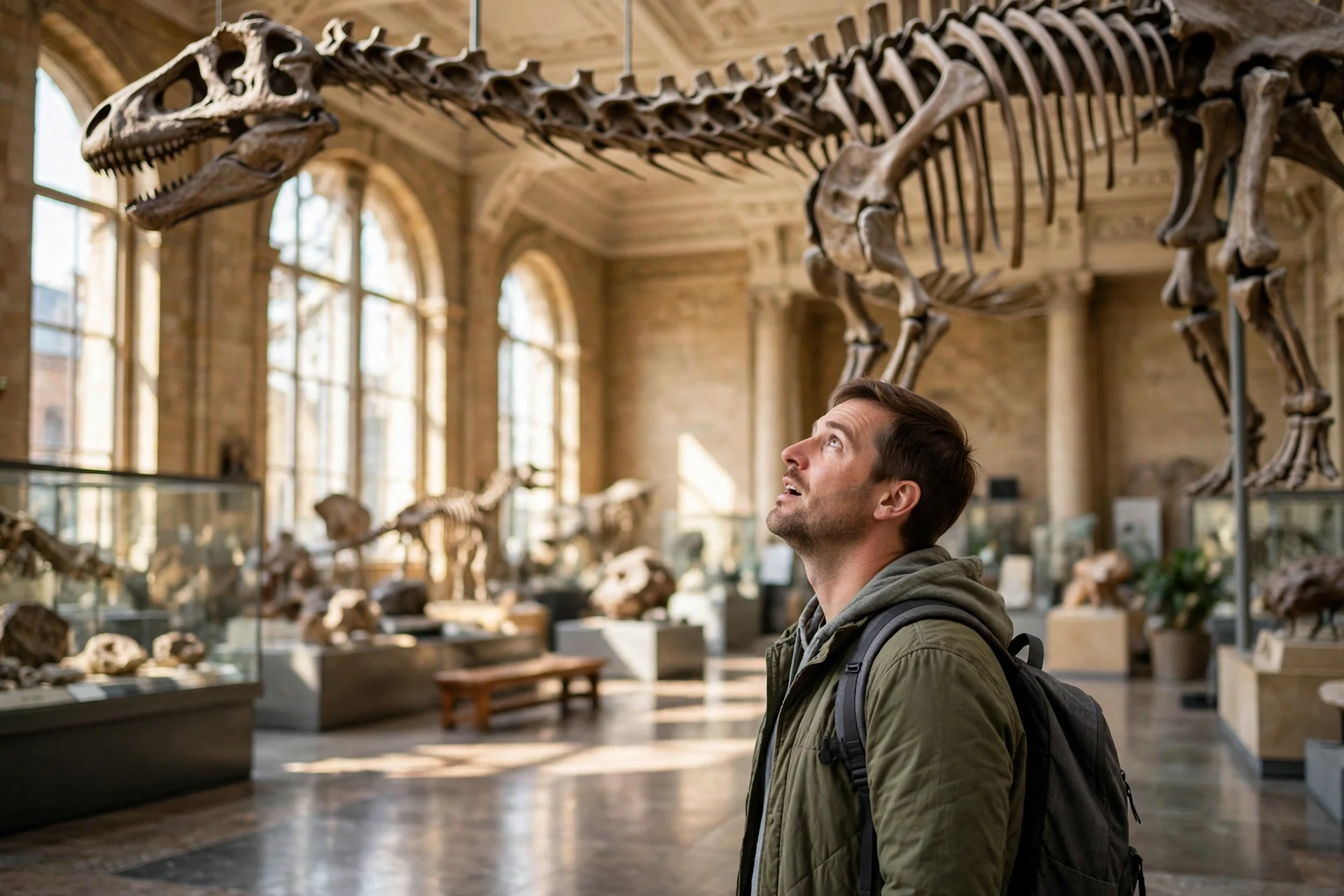
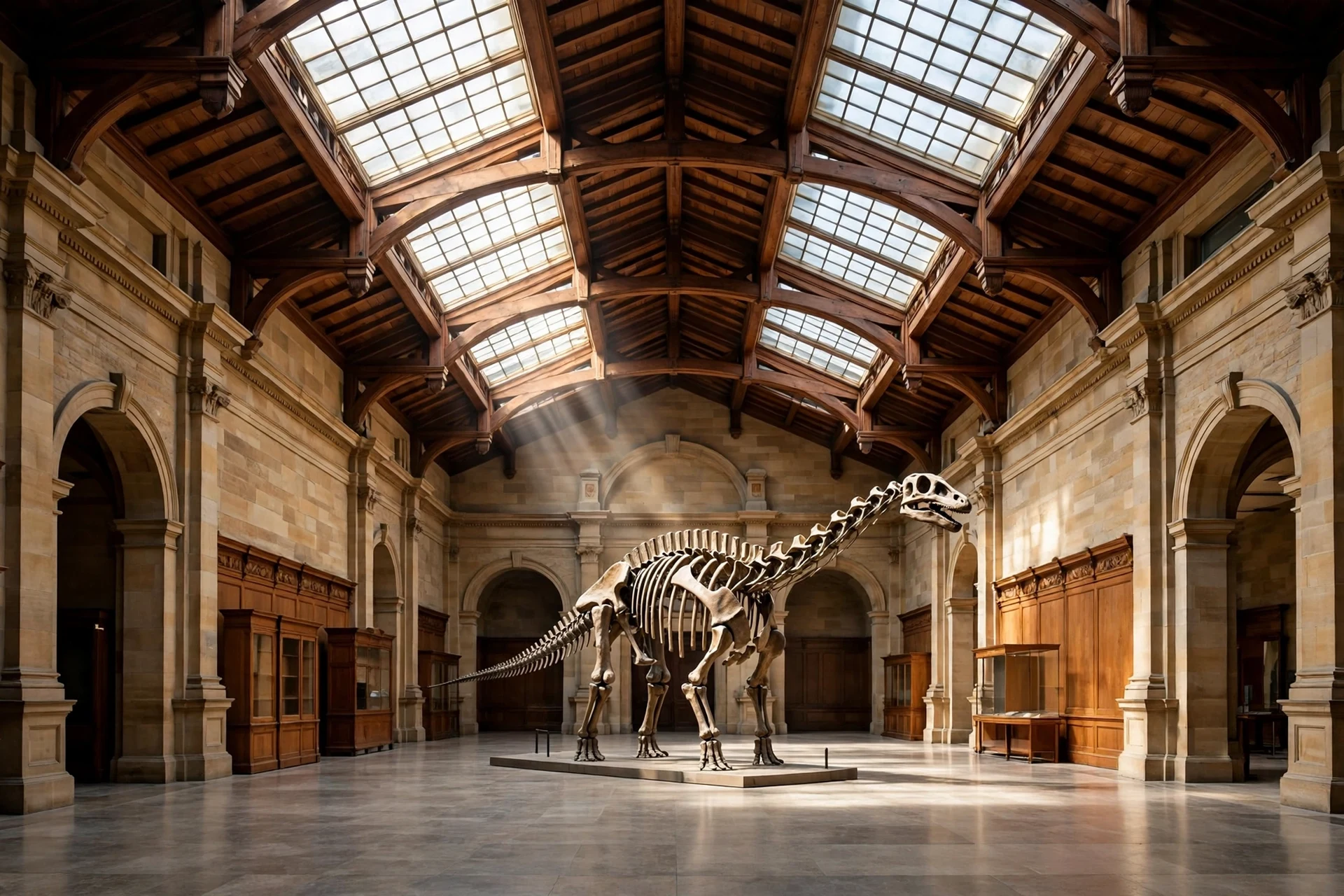
Start with Prehistoric Journey. Everyone does, and there is a reason. The hall opens up and the skeletons do the talking. I stood under the largest mount for a long time, the way you do when scale stops making sense, and watched kids point at teeth and ribs while their parents read the panels out loud. Go here first while your energy is high, because the hall rewards attention. Look at the feet, then the neck, then the whole animal. The mounts are posed in motion, not lined up like furniture, and that makes the room feel alive in a way a row of cases never could.
The working fossil preparation lab sits nearby, and it stopped me longer than I expected. Real scientists work behind glass, cleaning rock away from bone with tools that look far too small for the job. I watched one person spend minutes on a patch of matrix no bigger than my thumb. It changed how I looked at every skeleton after that. These animals did not arrive finished; someone found them in pieces and spent years putting them back together. If the lab window is busy, step aside and come back.
My one complaint about the dinosaur halls is the crowd pattern. School groups move through in waves, and a hall that felt open at 10 in the morning can feel packed by 11. Duck into a side gallery when a group arrives, then circle back. The bones are not going anywhere. The museum was founded in 1900. Take your time here. Rushing the first hall sets a rushed tone for the whole day, and you will miss the small fossils and quiet corners that make the big mounts land harder.
What the Denver Museum of Nature Science Gets Right in the First Hour
The first hour works when you make three decisions before you arrive. First, check the official museum site for current hours and ticket prices before you go, and buy your tickets there if the site offers it. When I looked up denver museum of nature science tickets before my visit, the prices in older guides no longer matched what the museum charges now, so I am not printing any price here. The museum site is the only source I trust for that, and it also lists which timed shows and special exhibitions need a separate ticket. Book the planetarium show and any big-screen film at the same time you buy entry, because the good time slots fill first.
Second, pick your route and stick to it loosely. I went dinosaurs, gems, mummies, wildlife halls, then the planetarium, with the kids zone saved for the afternoon dip. That order moves from loud wonder to quiet looking to sitting down in the dark, which is what tired legs want by midafternoon. Third, plan a break. Sit down before you feel tired, not after. Ten minutes on a bench near a window, looking out toward downtown Denver and the Front Range, does more for the rest of your visit than pushing through on sore feet.
The best time to visit is a weekday morning, right at opening, when the halls are calm and the light through the windows is at its best. Weekends and school holidays bring families in force, and the building handles them well, but the quiet rooms stop being quiet. If a weekday is out of reach, arrive at opening on a weekend and head straight for the halls you care about most. Denver sits a mile above sea level, so drink water through the day even though you are inside. I felt the dry air by hour three, and a bottle from the cafe fixed it fast.
The Gem Hall Slows Everyone Down
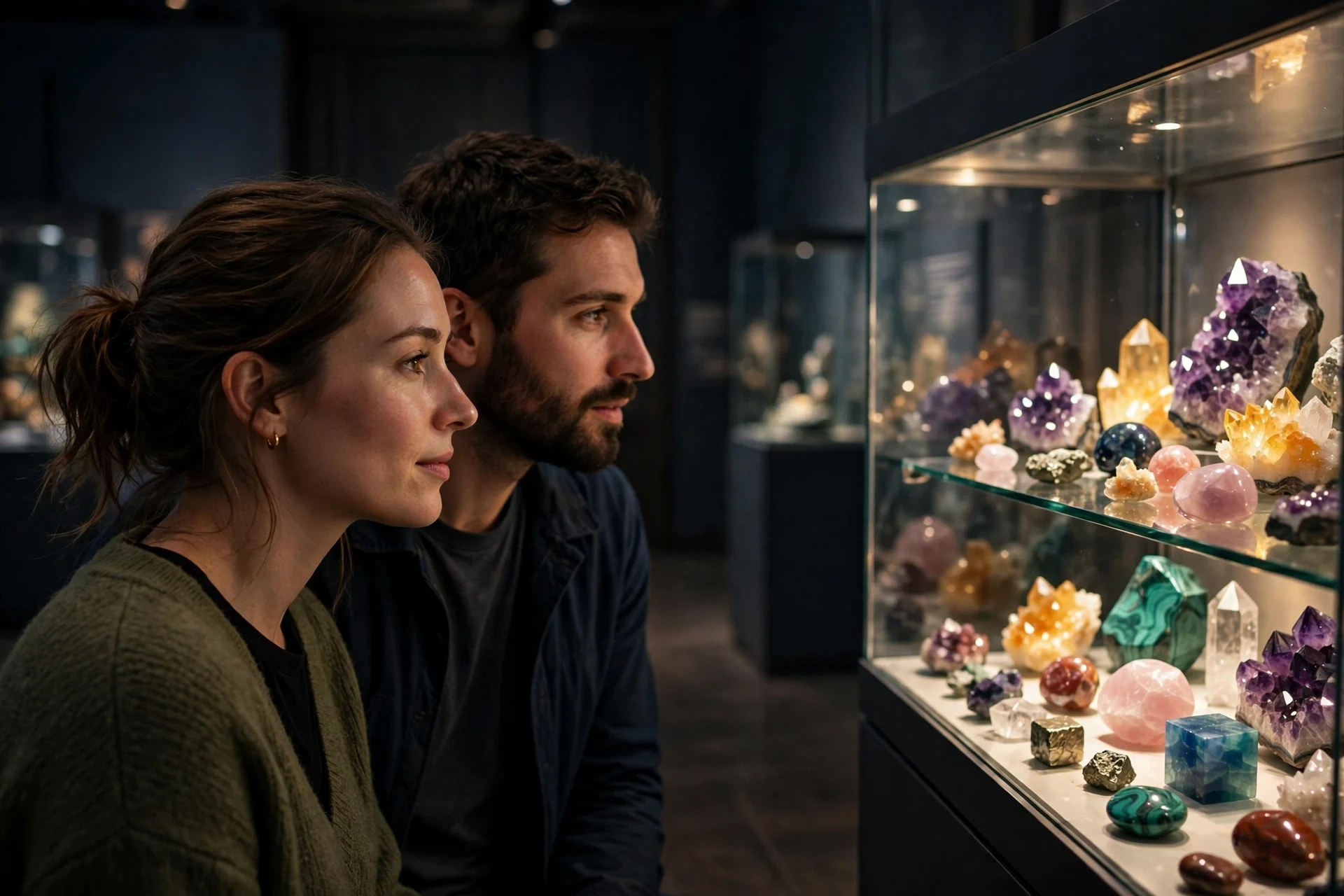
The gems and minerals hall is the room I underestimated most. I expected to walk through in ten minutes. I stayed for forty. The cases glow in the dark gallery, and each one holds stones that look too bright to be real: deep purple amethyst clusters, green malachite with bands like cut wood, gold crystals that catch the light from across the room. Couples lean in close together here, pointing at one stone and then the next, and I did the same with the stranger next to me at one case. The hall has that effect. It turns looking into a shared activity.
What makes the hall work is the mix of size and detail. Some specimens are boulders. Some are smaller than a coin and need you to bend close. Read two or three labels per case, not all of them. Pick the stones that stop you, read those, and keep moving.
If you travel with someone who likes rocks, budget extra time here and agree on a meeting point.
Mummies, Quiet Rooms, and Slow Feet
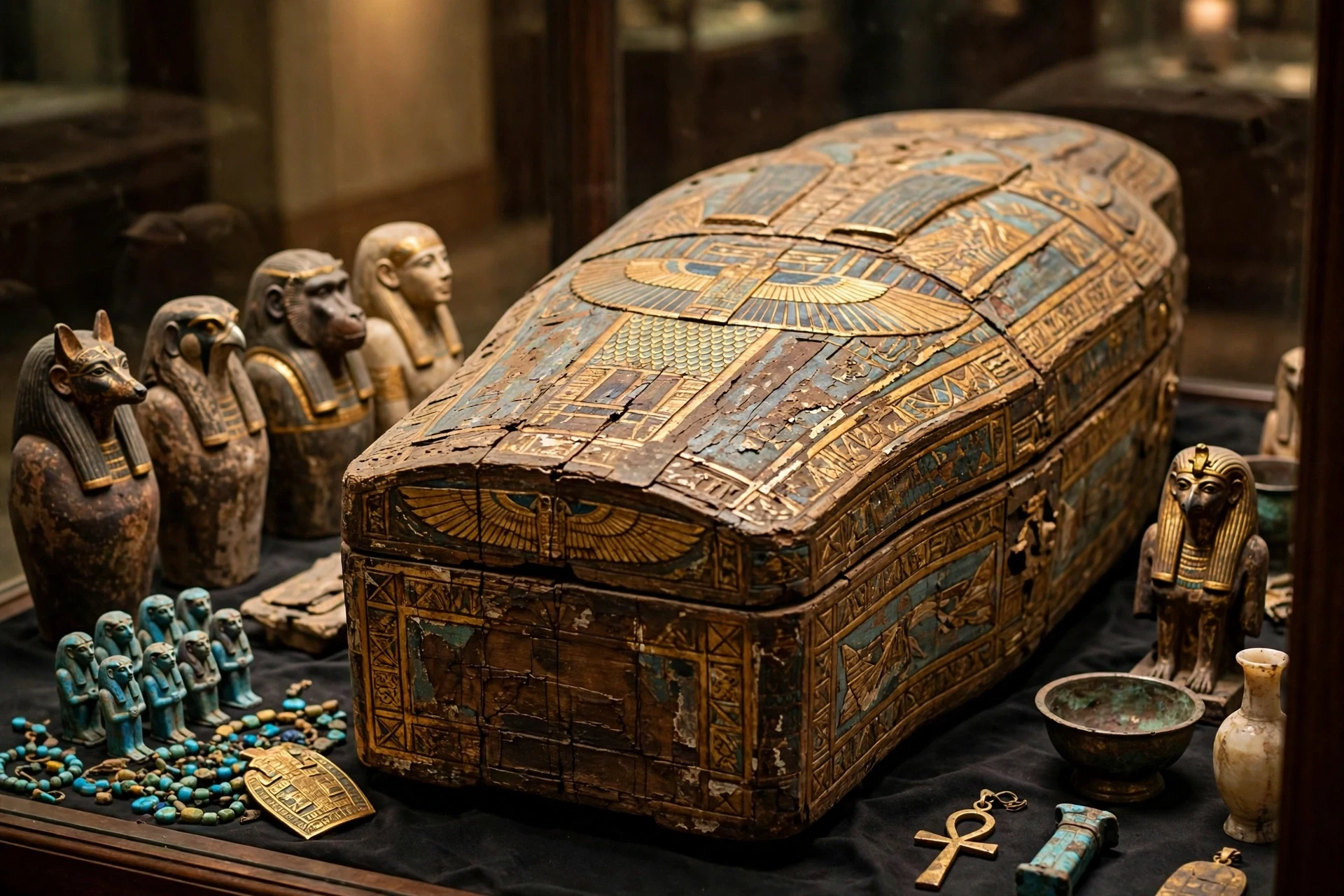
The Egyptian mummies sit in a darker, quieter part of the museum, and the mood shift is part of the experience. The painted cases are the first thing you notice, covered in figures and patterns in blue, gold, and red, worn at the edges in a way that makes their age feel real rather than abstract. Small objects fill the cases around them: beads, small statues, bowls, and amulets. I spent the longest time on the smallest things. A string of blue beads, made by hands thousands of years ago, held my attention more than the large cases did. That is a strange sentence to write, and it is true.
The wildlife halls sit in a different register. The North American wildlife dioramas show animals in painted landscapes, frozen mid step, and they feel old fashioned in the best way. You can tell these halls come from an earlier era of museum making, when the goal was to put you inside a place rather than in front of a screen. The dioramas reward a full minute per scene: the angle of an ear, the direction of a gaze, the painted sky behind a bison. Kids who race through the dinosaur halls often stop dead in front of these scenes, because the animals look close enough to touch.
Not every hall will be your hall. I skipped a gallery of mostly text panels after two minutes, because it would eat time I wanted for the planetarium. There is too much here for one day of careful looking, and choosing is part of the visit.
The Planetarium Is the Reset Button
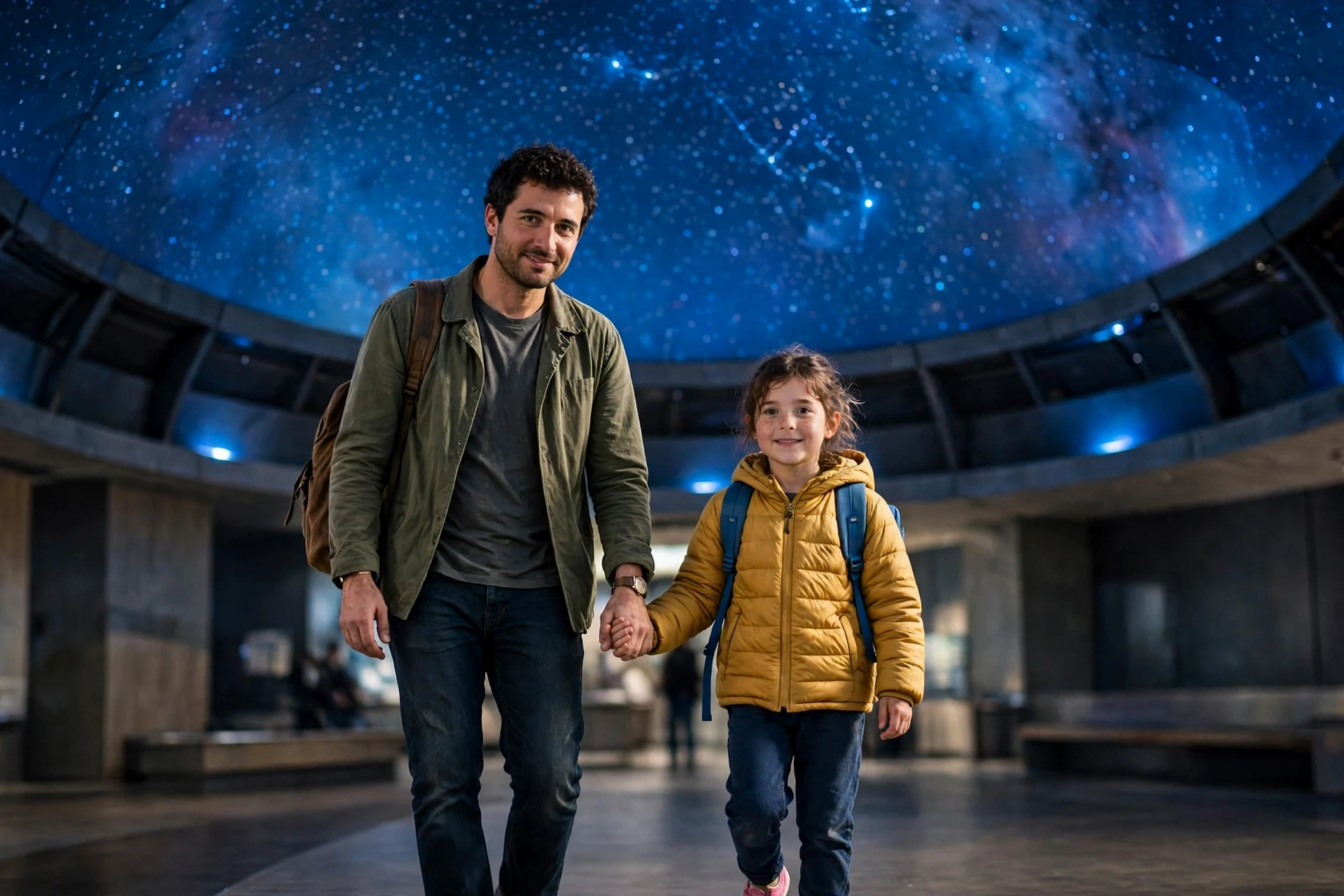
By midafternoon, my legs were tired and my attention was thinning. The Gates Planetarium fixed both. Sitting in the dark under a dome of stars, with a show rolling overhead, is the best rest a museum offers, because it feels like part of the visit rather than a break from it. The dome fills your whole field of vision, and for a while the only job is to look up. I went in tired and came out reset, ready for another hour of walking.
Space Odyssey pairs well with the planetarium. Do the gallery first and the show second if you can arrange it: the gallery gives you the objects and the ideas, and the dome gives you the scale. The big screen theater, now called the Sturm Infinity Theater on the museum site, works the same way for a different mood. Pick one big screen experience, not both. Two long shows back to back will eat your afternoon and leave the rest of the museum unseen.
A note on timing: check showtimes when you arrive, not just when you buy tickets. Shows shift, and the one you wanted at 2 in the afternoon may have a better seat available at 3. I asked at the desk and moved my planetarium slot by an hour, which let me finish the wildlife halls without rushing. The staff answered fast and knew the schedule by heart. Ask them. They do this all day, and their advice beats guessing.
Kids Run the Afternoon
The Discovery Zone is built for kids, and it shows in the best way. It is hands on, loud in a good way, and full of things to touch, build, and climb through. I watched a small child spend fifteen minutes moving water through a channel, completely absorbed, while a parent sat on a bench nearby with the look of someone who had found the best seat in the building. That is the zone working as designed. It gives kids something to do with their hands after hours of looking with their eyes.
If you visit with kids, save this zone for the afternoon, when their patience for quiet halls runs out. Let them lead here instead of steering them toward the exhibits you think matter most. They will remember what they found themselves longer than anything you pointed at. Bring a snack and water for the walk back, because the zone is a long way from the exit in kid distance.
Step Outside Before You Leave
Do not end your visit at the gift shop. Step outside first. The museum sits in City Park, and the park is free and open daily, which makes it the easiest add on in Denver. Walk toward the lake and turn back. The museum sits against the sky, the downtown towers rise behind it, and the Front Range runs along the horizon when the air is clear. I stood there for ten minutes and let the day settle. Inside, the museum had shown me deep time, distant space, and faraway deserts. Outside, the city and the mountains put it all in one frame.
Things to do near the museum start with the park itself. The paths suit a slow walk, a run, or a picnic on the grass. The Denver Zoo sits adjacent in the same park, and pairing the two makes a full day for families, though doing both properly takes stamina and an early start. I would not try the zoo and the full museum in one day with small kids. The park also holds the City Park Pavilion and Ferril Lake, both worth a short detour on your way out.
Parking deserves a line too. The museum draws a crowd, and the lots fill on busy days, so arrive early or use a rideshare and skip the hunt. Check the museum site for directions and parking the night before, along with current hours and ticket prices.
If you plan to pair the two, check the Denver Zoo site the same way.
Let VISIT DENVER round out the wider city plan if you are building a longer stay.

Answers I Kept Hearing in the Halls
How long should I plan for the museum? Give it a full day for the main halls, a planetarium show, and a slow walk in the park. Three to four hours covers the highlights at a steady pace, but you will skip things. Arrive at opening to get the most from the day.
Is the museum good for small kids? Yes, with a plan. Start with the dinosaurs, save the Discovery Zone for the afternoon, and build in a sit down break before lunch. Bring snacks and water. Strollers work in the wide halls, though busy galleries get tight when school groups pass through.
Do I need to buy tickets in advance? I recommend it, especially on weekends and holidays. Buying ahead locks in your entry time and lets you add planetarium and big screen shows in one step. Check the museum site for current prices and timed entry rules before you go.
What pairs well with the museum on the same day? City Park itself, for a walk and a picnic, is the easy answer. The Denver Zoo sits next door in the same park and makes a strong second stop for families with energy left. The Front Range views from the park round out the day without another admission fee.
What should I skip if I am short on time? Skip the text heavy galleries and save the second big screen show for another visit. Keep the dinosaurs, the gems, and the planetarium. Those three give you the range of the museum in the shortest time, and they are the rooms people talk about on the way out.
Walk Out Through the Park, Not the Gift Shop First
I left through the park, not the shop, and I am glad I did. The gift shop will still be there on your next visit, and the light on the lake will not wait. Sit on the grass for ten minutes. Look back at the building, then out toward the mountains. That is the last exhibit, and it costs nothing. The museum gives you dinosaurs, mummies, gems, and stars. The park gives you the city they all sit in. Take both, in that order. If you only have one day in Denver and you like museums at all, spend it here, arrive early, and let the building set the pace.