
Boiling Lake Caribbean Earned Every One of My Eight Muddy Miles
I stood at the rim with sweat running into my eyes, and the grey water below churned like a pot left too long on the stove. Boiling Lake Caribbean trips get sold as a bucket list hike, and the lake earns that label, but the day itself is long, wet, and hot in ways no photo shows. This is the hike as I walked it, stage by stage, with the parts I would change if I went back.
How Was Boiling Lake Formed?
The short answer is that rainwater and seawater seep down through cracks in the volcanic rock, meet hot magma far below, and rise again as steam and scalding water. The lake sits in a flooded fumarole, a vent in the earth where volcanic gases escape, inside Morne Trois Pitons National Park in Dominica. The park is a UNESCO World Heritage Site, and the lake is one of the reasons it earned that status. The official listing on the UNESCO page for Morne Trois Pitons National Park sets the scale better than any tour brochure.
The lake measures roughly 200 to 250 feet across, about 60 to 75 metres, which makes it the second largest hot lake in the world after Frying Pan Lake in New Zealand. Water at the edges runs 180 to 197 F, or 82 to 92 C, and the center boils outright. It is a cauldron, and the steam rising off it carries the sharp smell of sulfur that stays in your clothes for the rest of the day.
Dominica is a volcanic island, and the ground here still cooks from below. If that kind of landscape pulls you in, start with our guide to volcanoes to visit in the USA for a sense of how volcanic ground shapes a trip, then come back to Dominica for the version with no guardrails and no crowds. The lake level rises and falls with rainfall and underground activity, and in 2004 it nearly dried up. It is not a fixed postcard scene.
The first recorded sighting came in 1870, when Edmund Watt and Henry Alfred Alford Nicholls reached the lake. An investigation in 1875 measured the temperatures at the edges.
The Moment the Steam Hits Your Face
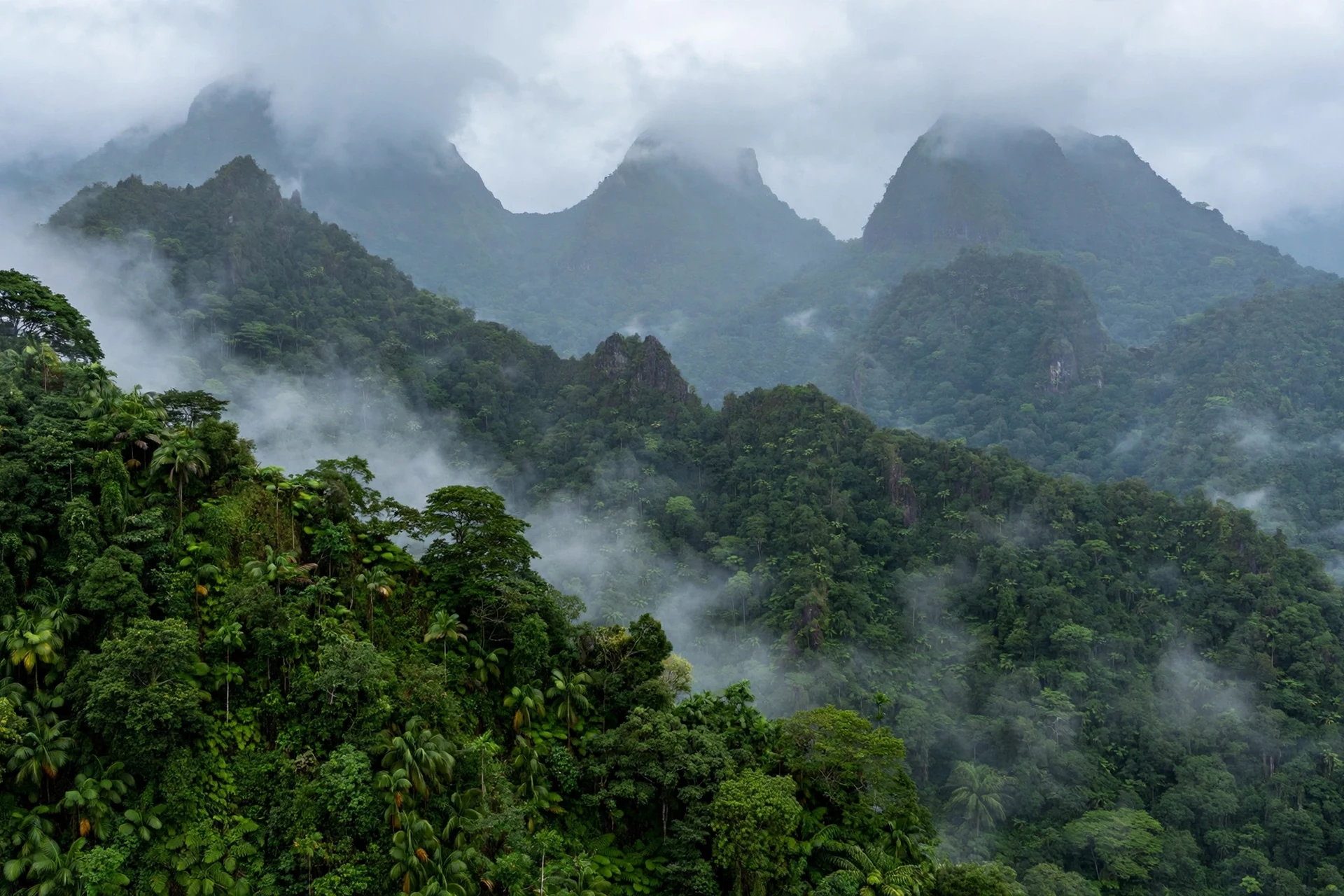
You hear the lake before you see it. The last stretch of trail drops toward a rim of grey rock, and the hiss grows louder with every step. Then the trees open and the whole basin sits below you, a wide circle of grey blue water rolling and bubbling under a low cloud of its own steam. The wind shifts and a wall of hot, wet air crosses your face. I stepped back without thinking, then forward again, because I had walked eight miles to stand right there.
The color surprised me. I had pictured blue water, and on a clear stretch it does show blue grey tones, but most of the time the surface looks milky and grey, churned by bubbles that break in the middle and roll outward. The center boils in a steady roar while the edges simmer. There is no beach and no safe edge to sit on. The rim is the viewpoint, and the rim is enough. There is no sand here at all. After a week of mud and sulfur, I was ready for the Caribbean beaches with white sand again, and that list starts with Grace Bay.
I stayed about half an hour. The heat and the sulfur wear on you fast, my shirt was soaked through, and the steam kept fogging my glasses every time the wind turned. I took my photos, drank water, ate the sandwich I had carried in, and watched the water boil. Then I turned around, because the walk back is just as long as the walk in, and the light goes fast under the rainforest canopy.
The Trail, Stage by Stage
The Boiling Lake Dominica hike runs about 8 miles, or 13 km, round trip, and most hikers need 6 to 8 hours. It starts near Titou Gorge by the village of Laudat, climbs over Morne Nicholls, drops into the Valley of Desolation, and then reaches the lake. Every stage feels like a different hike.
Titou Gorge and the Trailhead
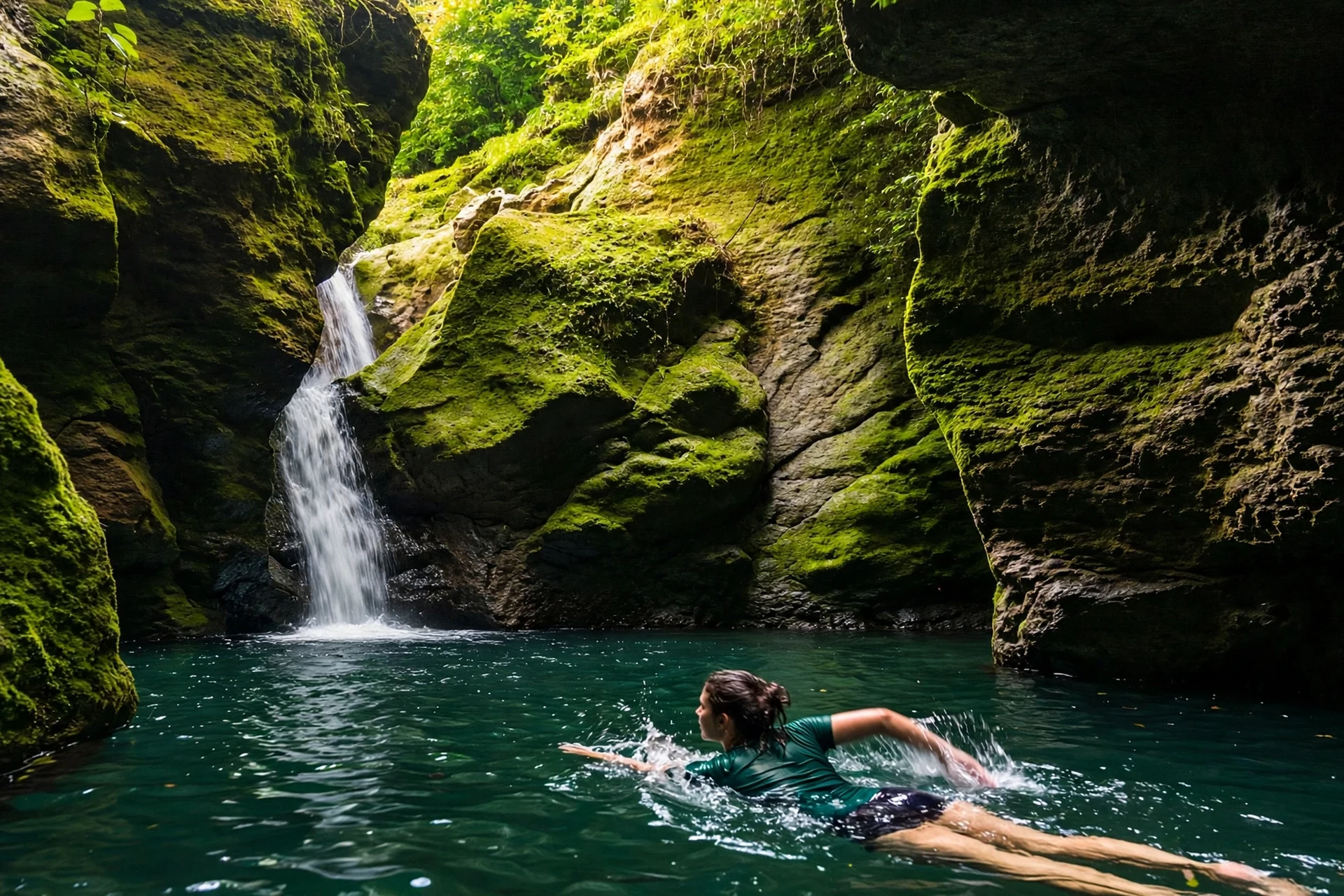
The trailhead sits near Titou Gorge, a narrow slot of rock and water close to Laudat, and the start feels almost too easy. The path leaves the road, enters green shade, and the air cools for a few minutes. That cool stretch does not last. The trail climbs, the humidity closes in, and your shirt sticks to your back before you have gone a mile. I stopped at a stream crossing early on to splash water on my neck.
The trail is muddy in places even when it has not rained that morning, and roots cross the path at ankle height. I wore trail runners with deep lugs, and I still slipped twice on wet roots in the first hour. Go slow on the descents. A twisted ankle out here turns a long day into a very long one.
Rainforest Climb Toward Morne Nicholls
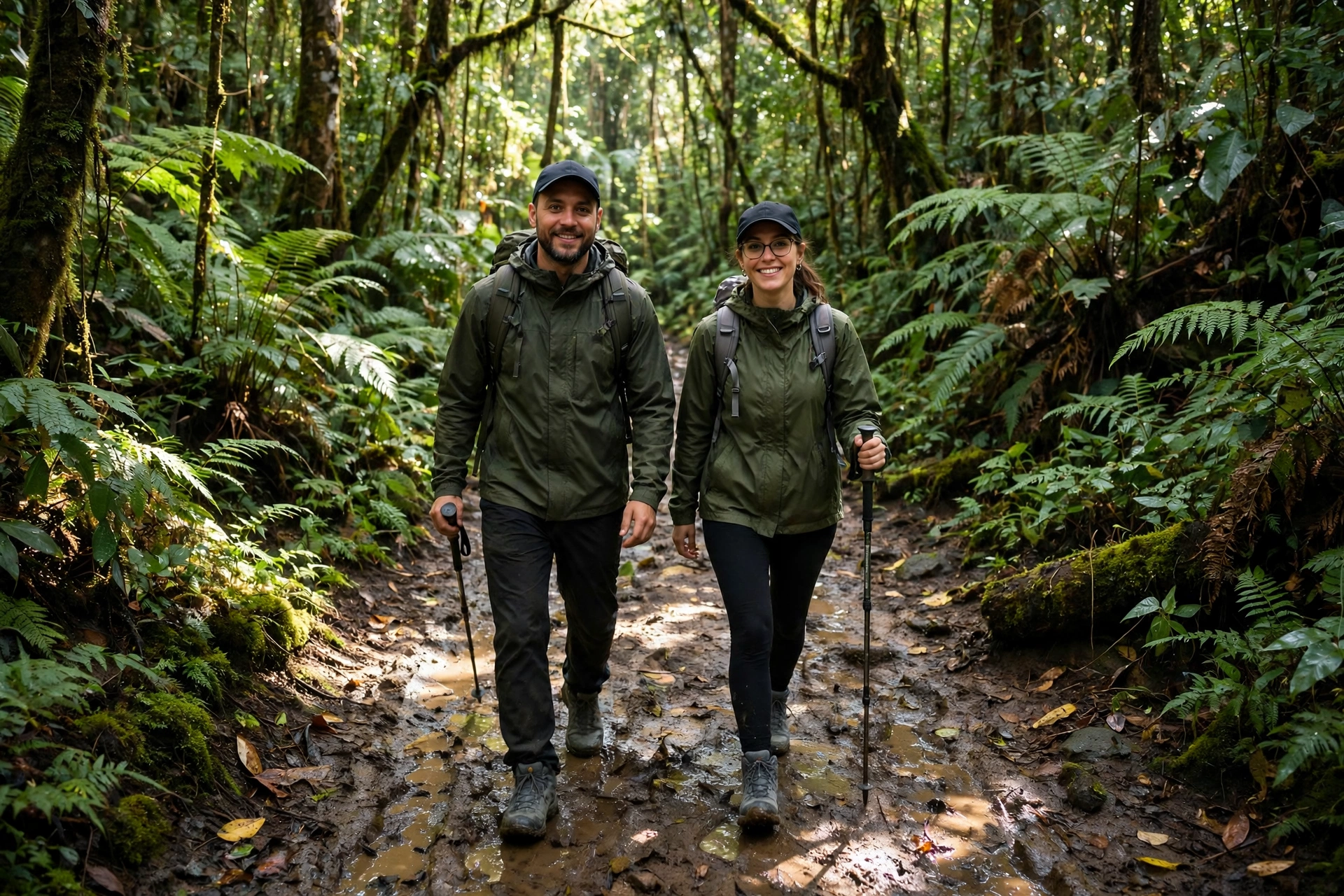
The middle stretch climbs through rainforest toward Morne Nicholls, and this is where the hike earns its reputation. The trail rises in steep pulls, levels off just long enough to let you breathe, then rises again. Ferns crowd the path, vines hang low, and the canopy keeps the sun off you while the humidity does the work instead. I stopped to drink on the worst pull, then started again.
Birdsong carries through the trees, and at one open point the forest drops away to show the green ridges rolling toward the coast. That view lasts about a minute, then the trees close in again. Keep your rain jacket handy even on a dry morning. Showers move through these mountains fast, and the trail turns slick within minutes of rain starting.
Into the Valley of Desolation
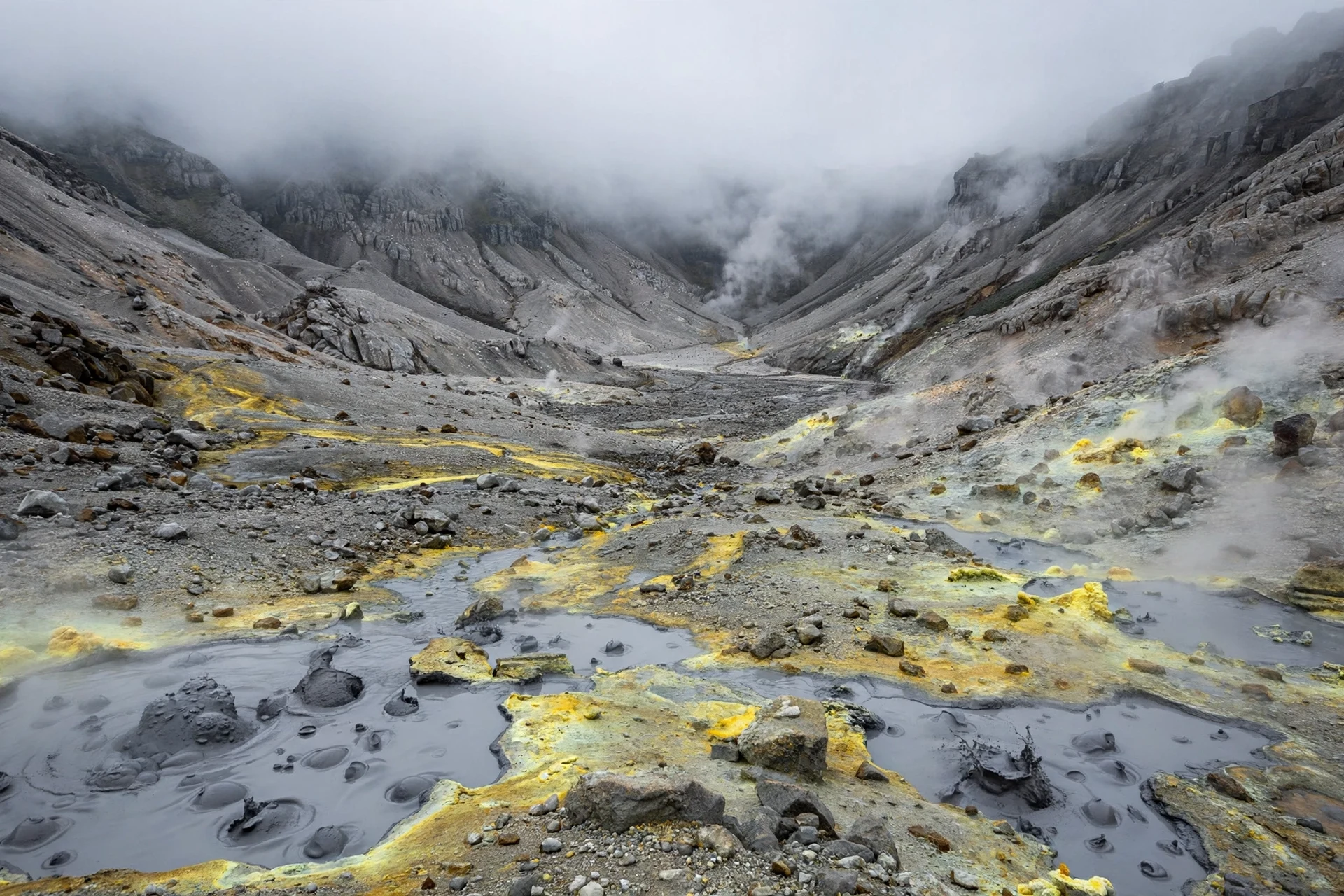
The descent into the Valley of Desolation in Dominica changes everything. The green rainforest ends, and you step into a grey, steaming basin of rock, sulfur stained earth, and bubbling pools. Hot streams cross the trail, steam rises from cracks in the ground, and the smell of sulfur sharpens with every step down.
Crossing the valley demands the most care. The streams are hot, and the rocks near the vents can burn through thin soles, so you follow your guide’s exact line and step where they step. I watched my footing the whole way and kept my hands free. The earth is loud here, hissing and bubbling, and you feel small in a way the rainforest never made me feel.
The climb out of the valley toward the lake is steep and exposed, with the sun hitting the grey rock hard. Take this stretch slowly. Drink before you start it, not after, and let the group spread out so nobody rushes you. The lake appears soon after you crest the rim, and the sound of boiling water hits like a wave.
Boiling Lake Caribbean Trail Difficulty and Who Should Skip It
Boiling lake trail difficulty is the question I get most, and the honest answer is that this is a strenuous hike by any measure. Eight miles sounds moderate on paper, but the trail climbs and drops hard, the mud slows you down, and the heat and humidity drain you faster than distance alone would suggest. Plan for the long end of the 6 to 8 hour range.
Skip this hike if you have bad knees, a heart condition, or any issue with heat. Skip it if you are not comfortable with steep, muddy descents and stream crossings on uneven rock. Skip it if you cannot walk uphill for an hour without long rests. There is no shortcut out and no easy bailout point once you pass the halfway mark. A guide can set the pace and pick the safe line through the valley, but no guide can carry you up Morne Nicholls.
Fit teenagers can do this hike, but I would not bring a young child or anyone who complains on a flat two mile walk. This is a full day of hard walking in heat, and the valley crossing needs a calm head and steady feet. If your group includes someone unsure, pick a shorter Dominica walk instead.
A local guide is strongly recommended, and I would call it essential in practice. The trail forks in places, the valley crossing needs local knowledge, and conditions change with rain and volcanic activity. My guide set the pace, pointed out the safe crossings, and knew when to push and when to rest the group. Book the guide before you arrive in Dominica, not the night before.
The Best Time to Hike Boiling Lake
The best time to hike Boiling Lake is the drier stretch of the year, roughly December through April, when rain is less frequent and the trail holds up better underfoot. I would still expect mud and at least one shower even then, because this is a rainforest mountain. The trail is at its worst after heavy rain, when the descents turn to slick clay and the streams in the valley run higher.
Start early. Do not start after 10 AM, and I would aim for a start between 7 and 8 AM. The hike takes 6 to 8 hours, and starting late means finishing in fading light under a thick canopy, which nobody wants on a muddy descent. An early start also beats the worst of the midday heat on the exposed climb out of the valley.
Check conditions with the Discover Dominica Authority before you set out, since trail access can change with weather and volcanic activity. Their site at discoverdominica.com lists current guidance for the island’s hikes and sites. I checked it the day before my hike and again the morning of. A trail that was fine last week can be a different trail after three days of rain.
What to Bring and How the Day Runs
Pack like the day will test you, because it will. Bring at least two liters of water per person, more if you sweat heavily, plus snacks you can eat on the move. I carried sandwiches, nuts, and an extra bottle I was glad to have on the climb back. A rain jacket, sun protection, and a dry bag for your phone belong in every pack. Trekking poles help on the descents.
Wear shoes with deep tread that you do not mind ruining. The mud stains, the sulfur stains, and the stream crossings soak everything. I wore quick dry clothing and changed into a dry shirt at the lake. Bring a small first aid kit with blister care, and carry any medication you need, since the nearest help is hours away on foot.
Logistics start in Roseau, the capital, about 6.5 miles west of the lake. Most hikers base in Roseau or in Laudat itself and drive to the trailhead in the morning. Plan your transport the day before, and confirm your pickup time with your guide or driver in person. For official visitor information, the Dominica government tourism site at tourism.gov.dm is the place to check entry details and island guidance before you travel.
A cable car to the lake, about 6.6 km long, has been announced, but I found no confirmed opening date, so I would not plan around it. For now the only way in is on foot, and that is part of the point. The lake rewards the walk, and the walk keeps the crowds thin.
Questions I Kept Getting After the Hike
Can you swim in Boiling Lake?
No, and do not try. The water at the edges runs 180 to 197 F, and the center boils. There is no safe entry point and no part of the lake you can touch without serious burns. The rim is the viewpoint, and the lake is for looking, not swimming.
How long does the hike take?
Plan for 6 to 8 hours round trip for the full 8 miles, including breaks and time at the lake. Fit hikers moving steadily can finish near the short end, but most groups land in the middle. Start early and carry enough water for the whole day.
Do I need a guide?
A local guide is strongly recommended, and I would treat it as essential. The trail forks, the Valley of Desolation crossing needs local knowledge, and conditions shift with rain and volcanic activity. A guide also sets a safe pace and knows the current state of the trail.
Is the hike safe?
It is safe for fit, prepared hikers with a guide and an early start, and risky for anyone who treats it like a casual walk. The real dangers are heat, dehydration, slips on muddy descents, and hot ground in the valley. Good shoes, enough water, and a guide cover most of the risk.
What happens if it rains?
Rain is common in these mountains, and a shower will not cancel the hike. Heavy rain makes the trail slick and the valley streams higher, so your guide may slow the pace or turn the group around. Check conditions the morning of the hike and carry a rain jacket regardless of the forecast.
Go Early, Hire the Guide, Earn the Steam
The Boiling Lake Caribbean hike asks a lot and gives back more. It asks for an early start, a full day of hard walking, and respect for ground that can burn you. It gives you a rainforest climb, a steaming valley that feels like another planet, and a lake that boils in front of you while you stand there sweating and grinning. I would do it again tomorrow, with the same guide and one extra bottle of water. It belongs on any list of Caribbean places to visit for adventure, and it is the hardest day I have had on any island.
If you go, book the guide first, start before 8 AM, and pack like the mountain means it. Then walk in, stand at the rim, and let the steam hit your face. That moment is the whole trip, and it is worth every muddy mile. Dominica was one stop on a longer trip, and if you are still deciding which Caribbean island to visit, start with the ranking I made before I booked anything.