How to Visit Vermont in Fall Without Missing Peak Color
If you want to visit Vermont in fall and actually catch peak foliage, book the last week of September through the second week of October, and pick your elevation instead of your dates. Color moves north to south and high to low, which means the same weekend can be past peak in one valley and still green forty miles away. The single biggest mistake I see is people locking a hotel in June and hoping the leaves cooperate. Here is how I plan it instead.
When Peak Foliage Actually Hits, Region by Region
Peak is not one weekend. It is a wave that crosses the state over roughly a month.
• Northeast Kingdom and high elevations: mid to late September
• Stowe, the Mad River Valley, and central Green Mountains: late September into the first week of October
• Woodstock, Quechee, and the Connecticut River valley: early to mid October
• Manchester, Brattleboro, and southern Vermont: mid to late October
That spread is your safety net. If you land a week early, drive north and gain elevation. If you land a week late, drive south and drop into the valleys. Either move buys you back three or four days of color.
The Vermont Department of Forests, Parks and Recreation posts a weekly report written by working foresters through September and October. It is the only source I check before finalizing a route. Start with the official Vermont foliage forecaster.
The Rule That Fixes Bad Timing: Chase Elevation, Not Dates
Temperature drops about 3.5 degrees Fahrenheit per 1,000 feet of elevation, and leaves turn on temperature. Mount Mansfield, Vermont’s highest peak at 4,393 feet, can be fully turned while Burlington on Lake Champlain is still green.
This is why a single mountain gap gives you two different seasons in twenty minutes of driving. Climb a notch road, and you move forward in the season. Drop into a river valley, and you move back.

Practical version: build your trip around a base town with both a valley and a ridge within a half hour drive. Then decide each morning which direction to go.
Four Drives I Actually Take
Route 100, but Not on a Saturday
Vermont Route 100 runs almost the full length of the state through Waterbury, Warren, and Killington. It deserves the reputation. It also carries most of the state’s foliage traffic on October weekends.
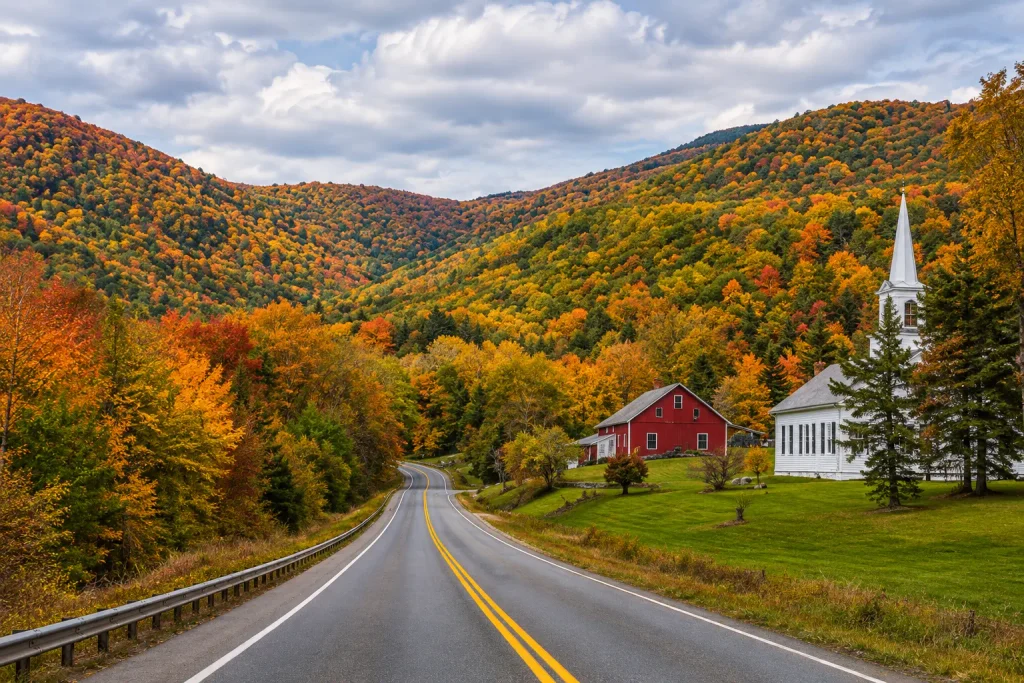
Drive it Tuesday through Thursday, or start before 8 a.m. The stretch between Waterbury and Warren through the Mad River Valley is the best section if you only have time for one.
Smugglers’ Notch on VT Route 108
The notch road climbs between Mount Mansfield and Spruce Peak through a gap so tight that boulders sit within a few feet of the pavement. Switchbacks are sharp and the road is closed to trailers, buses, and RVs.
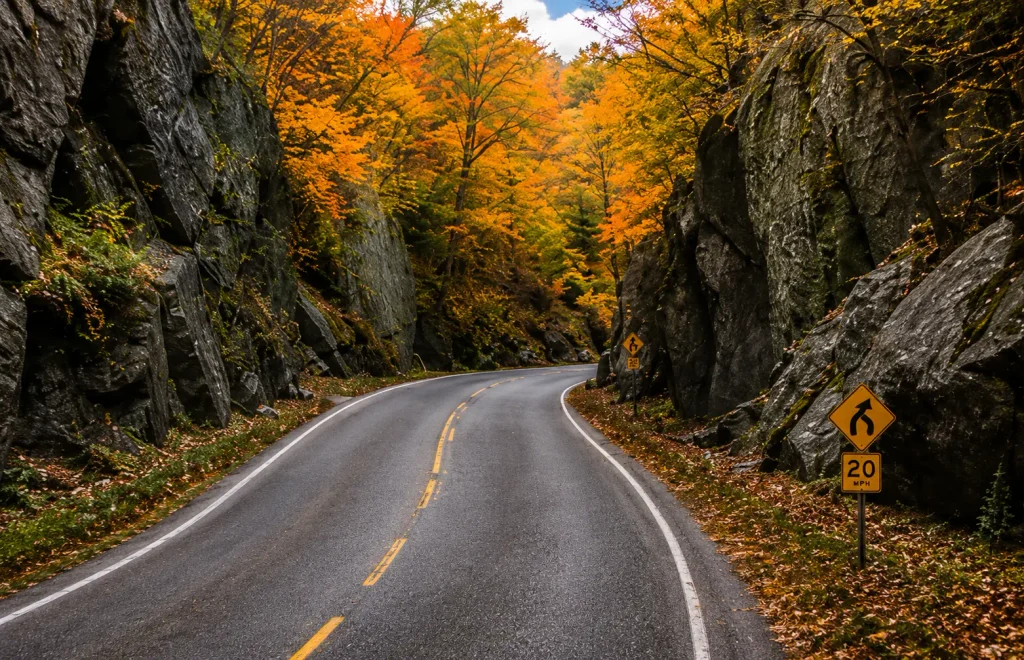
It is short, roughly ten miles from Stowe to Jeffersonville, and it is the most dramatic paved mile-for-mile drive in the state. The road closes for the winter once snow arrives, so late October is the end of the window.
The Northeast Kingdom Loop
The Northeast Kingdom covers Essex, Orleans, and Caledonia counties, and it turns two to three weeks before the rest of Vermont. Lake Willoughby sits in a glacial trough between Mount Pisgah and Mount Hor, with cliffs dropping straight to the water.

Add Peacham for the classic white-church-and-barn view, and East Burke if you want mountain biking on the Kingdom Trails network. This region rewards mid to late September, when the rest of the state is still weeks out.
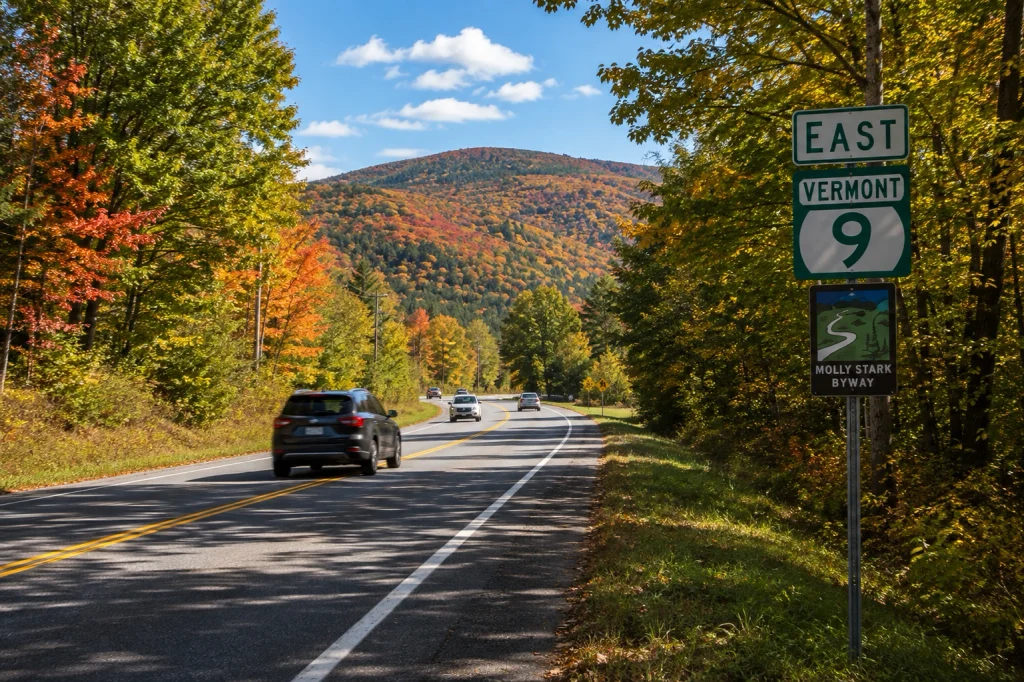
The Molly Stark Trail, VT Route 9
Vermont Route 9 crosses the southern Green Mountains between Brattleboro and Bennington. It peaks last, usually mid to late October, which makes it the fallback when you have arrived after the northern color has dropped.
The Roads You Cannot Drive Anymore
This is the part most guides leave out, and it will change your itinerary.
Cloudland Road, which runs between Pomfret and Woodstock past the private property known as Sleepy Hollow Farm, now closes to non-residents during peak foliage every year. Towns began the closures in 2023 after social media traffic overwhelmed a narrow dirt road. Residents reported blocked emergency access, cars towed out of ditches, trampled gardens, and people relieving themselves on private land.
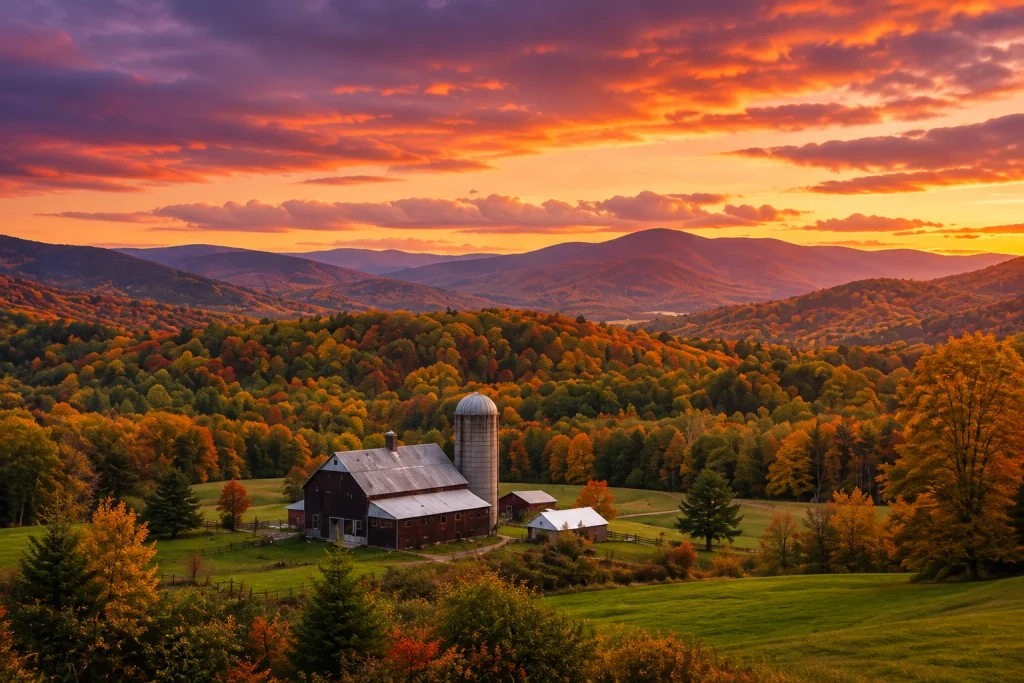
Jenne Road in Reading, which overlooks Jenne Farm, has closed on a similar schedule.
Closure dates shift year to year and are set by the Pomfret and Woodstock selectboards, usually approved in August for roughly a three-week window in late September and October. Check before you go, and do not plan a photo stop around either location.
The honest read: both are private homes. Neither was ever a public attraction. Woodstock has plenty that welcomes visitors, and that is where your time is better spent.
Best Towns to Base Yourself When You Visit Vermont in Fall
Pick one base and drive out from it. Vermont is small enough that this beats moving hotels every night.
Stowe gives you the best access to elevation, with Mount Mansfield, the notch road, and the Long Trail all within reach. It is also the most expensive and most crowded option.
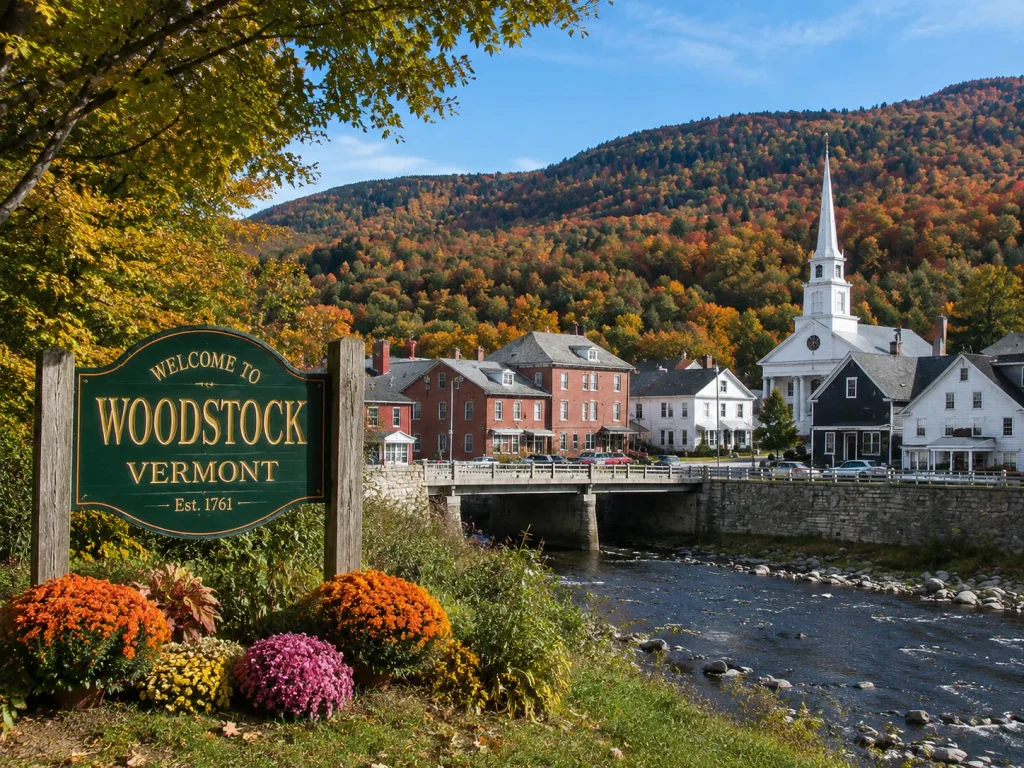
Woodstock is the picture-book choice. Marsh-Billings-Rockefeller National Historical Park sits in town and is Vermont’s only unit of the National Park Service, with carriage roads that make for easy walking under maples. Details and hours are on the park’s official page.
Waitsfield and Warren in the Mad River Valley are my pick for value. You get Route 100, the Appalachian Gap, and far fewer tour buses than Stowe.
Burke and the surrounding Northeast Kingdom work if you are traveling in September rather than October.
What It Costs and How Far Ahead to Book
Foliage season is Vermont’s peak rate period, and lodging behaves accordingly.
• Book six to nine months ahead for the first two weeks of October in Stowe or Woodstock. Inns in those towns fill earliest.
• Expect a two-night minimum on October weekends, and three nights over the Indigenous Peoples’ Day and Columbus Day weekend.
• Rates run well above summer pricing during peak weeks and drop sharply after the third week of October.
• Consider midweek. The same room on a Tuesday often costs meaningfully less than Saturday, and the roads are calmer.
• Look one town over. Staying in Waterbury instead of Stowe, or Quechee instead of Woodstock, cuts cost without adding much drive time.
Flying in, Burlington International Airport is the main gateway. Amtrak also runs the Vermonter and the Ethan Allen Express into the state, which is a reasonable car-free option if you are basing in Burlington or Middlebury. Schedules are on the Amtrak site.
Hikes That Earn the Climb
You do not need a summit push to get a view. These deliver the most color for the effort.
• Stowe Pinnacle, a short steep climb with a wide view across the Worcester Range toward Mansfield
• Mount Pisgah, above Lake Willoughby, with cliff-edge overlooks down to the water
• Quechee Gorge, a short walk along Vermont’s deepest gorge, roughly 165 feet down, right off US Route 4
• Mount Equinox near Manchester, reachable on foot or by the private toll road if you want the view without the effort
Trail conditions, parking, and campground status for state land are posted by Vermont State Parks. Several of these trailheads have small lots that fill by mid-morning on October weekends, so an early start matters more than an early season.
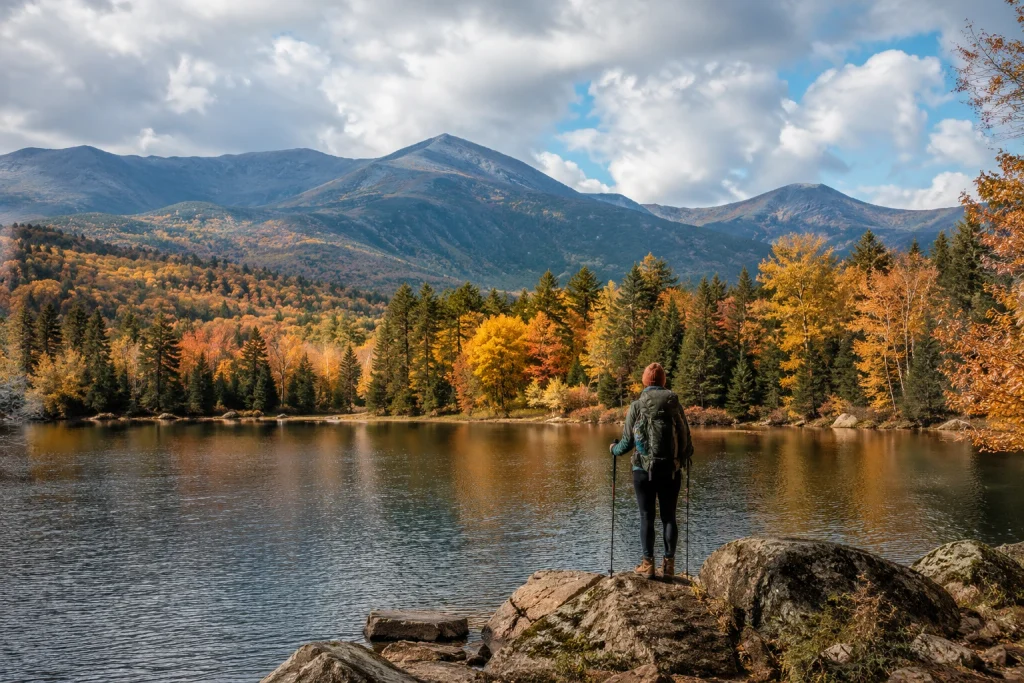
Much of the central spine of the state lies within the Green Mountain National Forest, which is managed separately from the state parks and has its own rules for dispersed camping and dog access. The Long Trail, the oldest long-distance hiking path in the country, runs 272 miles up that spine from the Massachusetts line to Canada, and short segments of it make excellent half-day walks in October.
Where I Tell People to Skip
• Any private-property photo location you found on TikTok. See the road closures above. This is the fastest way to make yourself unwelcome.
• Route 100 on a peak Saturday afternoon. You will spend the day in a line of cars looking at the bumper ahead of you.
• Woodstock village on Columbus Day weekend unless you have parking sorted. It is the single most congested spot in the state during that window.
• Booking a fixed itinerary months out. Color does not care about your reservation. Book lodging early, but leave the daily driving plan open.
What Vermont Weather Actually Does in October
Expect a 30-degree swing between morning and afternoon. Mornings frequently drop below freezing at elevation while afternoons reach the 60s.
Pack layers, waterproof shoes for muddy dirt roads, and a real jacket. Rain is common and often improves the color by deepening the reds. Fog in the river valleys at sunrise is the photographer’s window, not a problem.
FAQs
When is the best time to visit Vermont in fall?
Late September through the second week of October covers peak for most of the state. Go mid to late September for the Northeast Kingdom and high elevations. Go mid to late October for southern Vermont around Manchester and Brattleboro. Check the state foliage report the week before you travel.
How many days do you need in Vermont in the fall?
Four days is the sweet spot. That gives you two full driving days, one hiking day, and one town day without rushing. Three days works if you stay in a single region. A week lets you cover both the Northeast Kingdom and southern Vermont as color moves down the state.
Is Vermont expensive during foliage season?
Yes. Foliage is Vermont’s peak rate period, with two-night minimums standard on October weekends and three-night minimums over holiday weekends. Staying midweek, or basing one town away from Stowe or Woodstock, cuts the cost substantially without adding much driving.
Can you see fall foliage in Vermont without a car?
Partly. Amtrak reaches Burlington, Essex Junction, and other stops, and Burlington itself has walkable color along Lake Champlain. But the scenic byways, notch roads, and trailheads that make the trip worthwhile need a vehicle. Rent one if you can.
Is Sleepy Hollow Farm still open to visitors?
No. Cloudland Road in Pomfret closes to non-residents during peak foliage each year, and the closure is enforced by the county sheriff. Jenne Road in Reading closes similarly. Both are private properties. Plan your photography elsewhere.
What is the most scenic drive in Vermont in the fall?
Route 100 is the classic, particularly the Waterbury to Warren stretch through the Mad River Valley. For drama over distance, Smugglers’ Notch on VT Route 108 between Stowe and Jeffersonville is the better ten miles. Drive either midweek or early morning to avoid traffic.
Plan It This Way
Book lodging early, then leave your daily route undecided. Pick a base town with both a valley and a ridge nearby. Check the state foliage report the week you travel, and drive north and up if you are early, south and down if you are late.
Do that and your odds of hitting real color go from a coin flip to close to certain.