The Best Campgrounds Florida Has Are Won Months Before You Arrive
I have spent enough nights in Florida state park campgrounds to know the real contest starts long before you pitch a tent. The campgrounds Florida travelers dream about, from the white sand of Bahia Honda State Park to the oak shade of Anastasia State Park, book out months ahead, and the sites left over tell you plenty about what most people missed. This guide covers the best beach campgrounds in Florida I would return to, what each costs, and how far ahead to book.
The Campgrounds Florida Regulars Fight Over
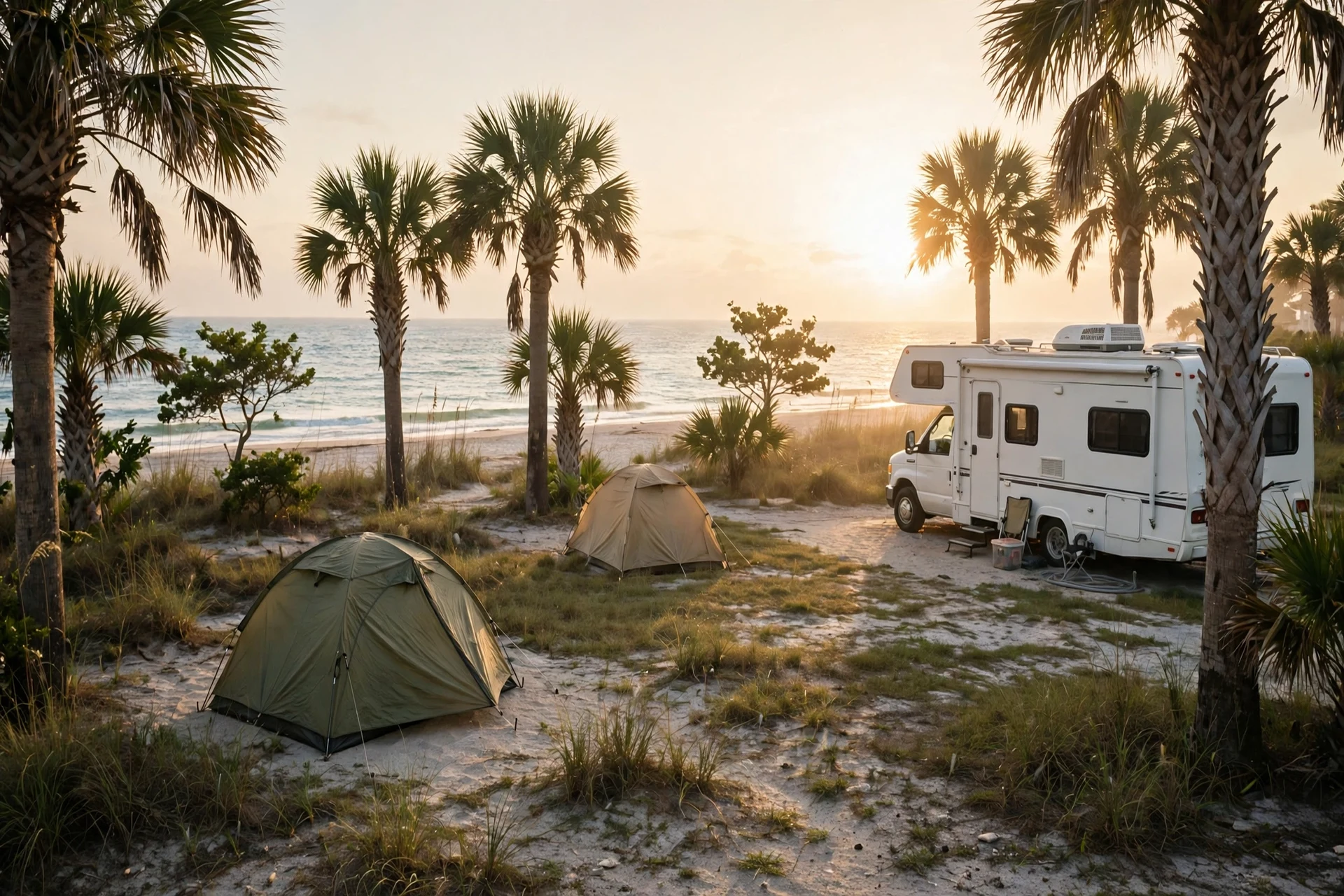
Florida runs one of the most competitive state park camping systems in the country, and winter makes it harder. Florida State Parks opens campsite reservations 11 months ahead for state residents and 10 months ahead for everyone else, with each new arrival date opening daily at 8 a.m. Eastern. I log in a few minutes early with my dates and payment ready, because waterfront sites can vanish within minutes.
Midweek stays in November and May give you the best odds. Weekends from December through April are the hardest dates in the system, and holiday weekends go first. If your dates are gone, check back for cancellations. I have picked up cancelled sites by checking the reservation site in the evening.
Most state park campsites run $26 to $36 a night plus tax, with a $6.70 reservation fee and a $7 nightly utility fee for RVs. Tent campers skip the utility fee.
Book Florida state park campsites through the official Florida State Parks reservation system
Bahia Honda State Park: the Keys Site Everyone Wants
Bahia Honda State Park sits at Mile Marker 37 on Big Pine Key, and it holds the widest stretch of natural sand beach in the Florida Keys. The old Flagler railroad bridge crosses the water beside it, and the Atlantic side stays clear and calm on most winter days.
The campground has 80 sites across three loops. Buttonwood, sites 1 through 48, takes tents and RVs with water and electric hookups. Sandspur, sites 49 through 72, sits closest to the beach and enforces a strict 23-foot hitch-to-bumper maximum, so measure your rig before you book. Bayside, sites 73 through 80, offers water only, no electric, and sits behind a bridge with 6-foot-8-inch clearance. Sandspur spent years closed after Hurricane Irma in 2017, which is one reason demand for it runs so high now.
Campsites cost $36 a night plus tax, plus the $6.70 reservation fee and a $7 nightly RV utility fee. Bring serious protection against no-see-ums, especially from March through May.
Anastasia State Park: Shade, Sand, and a Short Drive to St. Augustine
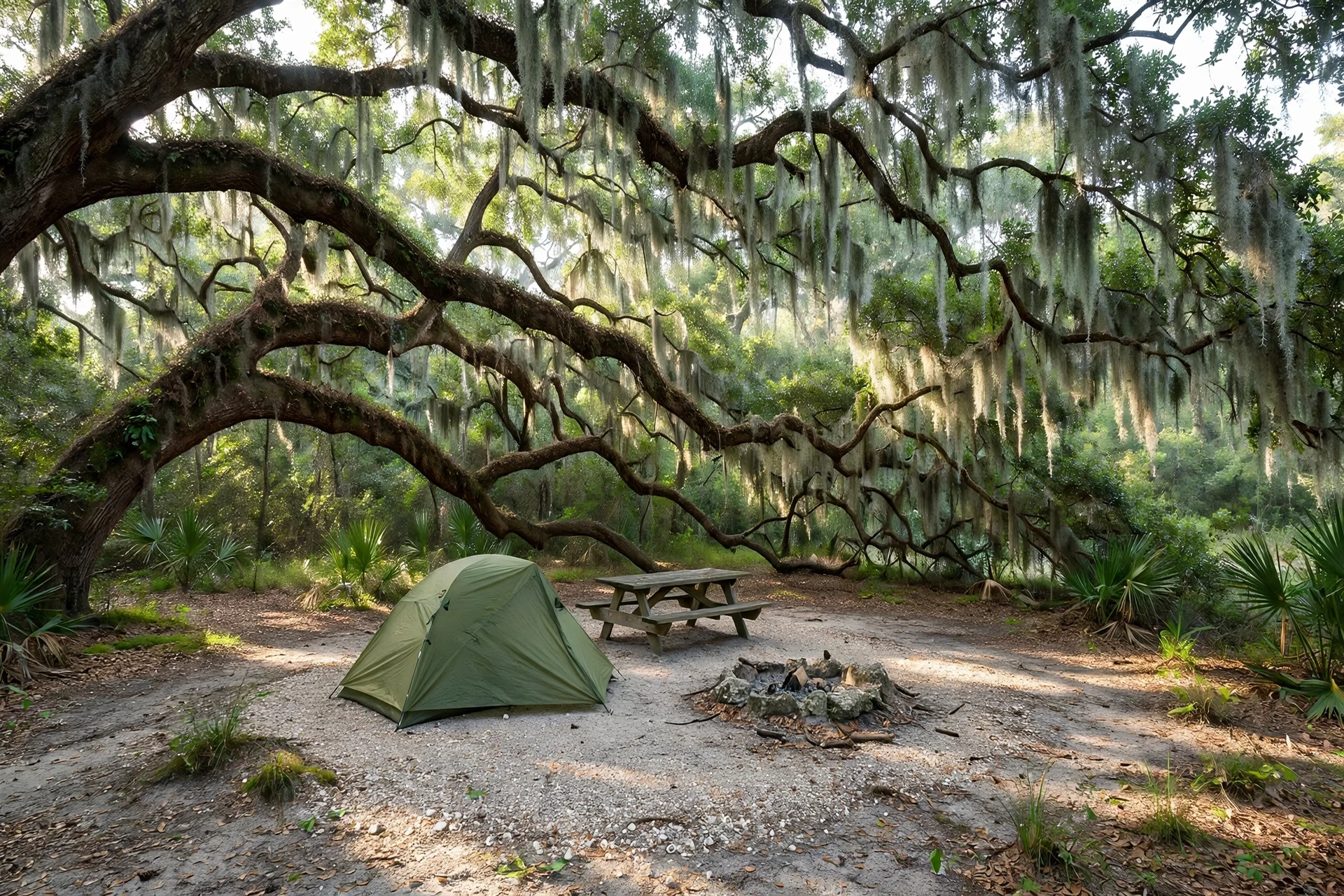
Anastasia State Park covers more than 1,600 acres on Anastasia Island in St. Augustine, and its campground sits inside a maritime hammock of live oaks draped with Spanish moss. All 139 sites have water and electric hookups, a picnic table, a grill, and a fire ring. No sewer hookups, but a dump station serves the campground.
The beach runs about four miles along the Atlantic, and you can walk or bike there from every loop. The maximum RV length is 38 feet, but only a handful of sites take a rig that large, so read the site record before you commit.
Campsites cost $28 a night plus tax, with the same fees as the rest of the system. One warning: the park sits close to the St. Augustine Amphitheatre, and concert nights carry sound straight into the campground. Check the schedule before you book a weekend stay.
Fort De Soto Park: Waterfront Pads on Tampa Bay
Fort De Soto Park is a Pinellas County park on Mullet Key in Tierra Verde, just south of St. Petersburg, and it delivers something rare in Florida: Gulf-front camping with full electric hookups and hot showers. The campground has 236 sites across three areas, each with water and 30 or 50-amp electric. None of the sites have sewer hookups, so plan your tank use around the central dump station.
Sites 1 through 85 suit tents and units under 16 feet, and sites 86 through 236 take larger rigs. Sites 86 through 164 form the pet loop, the only area where dogs stay overnight. North Beach, a short bike ride or drive from camp, has won national best-beach rankings more than once.
Rates run $45.77 to $53.68 a night including tax, depending on area and waterfront position. Reservations open six months ahead for non-residents and seven months ahead for Pinellas County residents, and winter weekends disappear fast. Check red tide status before a beach-focused trip, and check repair status before you book: hurricanes damaged parts of the park, and some sections have stayed closed while restoration runs into late 2026.
Check Fort De Soto Park camping details and reservations on the official Pinellas County page
Jonathan Dickinson State Park: River Camping in Southeast Florida
Jonathan Dickinson State Park protects 10,500 acres in Hobe Sound, about 30 minutes north of West Palm Beach, and the Loxahatchee River runs through it. That river became Florida’s first federally designated Wild and Scenic River, with wide water, pine flatwoods, scrub, and long trails.
Two family campgrounds serve the park. Pine Grove Campground has 90 sites near the ranger station, with water, electric, and sewer hookups on every site and a 40-foot maximum RV length. River Campground has 52 sites about four miles deep into the park near the river, with water and electric but no sewer, and a 36-foot maximum. Campsites cost $26 a night plus tax, plus the usual $7 RV utility fee. I preferred River Campground for shade and privacy, while Pine Grove felt newer and more open, with road sound carrying in from U.S. 1.
This is the largest state park in southeast Florida, so book early. Before you plan around the cabins or the rental concession, check the current status: the cabins were scheduled to close for renovations starting in October 2026, and the kayak and bike rental concession closed in summer 2026.

Myakka River State Park: Old Florida Under the Live Oaks
Myakka River State Park sits nine miles east of Interstate 75 near Sarasota, and it feels like the Florida that existed before the condos arrived. The park holds 90 campsites across three campgrounds, each with 50-amp electric, water, a fire ring, and a picnic table. Palmetto Ridge Campground has 42 RV sites with gravel pads and full hookups, including sewer. Big Flats and Old Prairie offer water and electric only, under a mature live oak canopy.
Big Flats sits near Upper Myakka Lake and the Myakka Outpost, best for tent campers and paddlers. Old Prairie has the most charm, with older trees and more shade, though the sites sit close together and lack vegetation buffers between them. The Myakka Canopy Walkway climbs through the oak canopy to a 74-foot tower, and the river holds alligators, wading birds, and otters. Keep small children and pets well back from the water.
Campsites cost $26 a night plus tax, plus the $7 RV utility fee. Check fire rules before you go, since a county burn ban stopped open flames here in October 2025.
Campgrounds Near Florida Keys When Bahia Honda Is Full
Bahia Honda turns away far more campers than it accepts, so bring a backup plan. Long Key State Park, up the road on Long Key, runs a smaller and quieter campground for campers who want to fish, paddle, and sleep without the Bahia Honda crowds. Its shoreline at sunrise is worth the early alarm.
Curry Hammock State Park in Marathon is another middle Keys option, on the same booking windows.
Private RV parks fill the gaps in the Keys, but the price jump stings. Private parks near Bahia Honda often charge $100 to $200 a night, against $36 at the state park, and many sit on tight gravel lots with far less shade.
For a different Keys trip, Dry Tortugas National Park lets you camp on Garden Key after arriving by ferry or seaplane. Sites are few, you carry in your water, and the snorkeling ranks among the best in the country. Federal campsites book through the federal system, not the state system.
Book federal campsites across Florida through Recreation.gov
RV Campgrounds in Florida: What Changes With a Rig
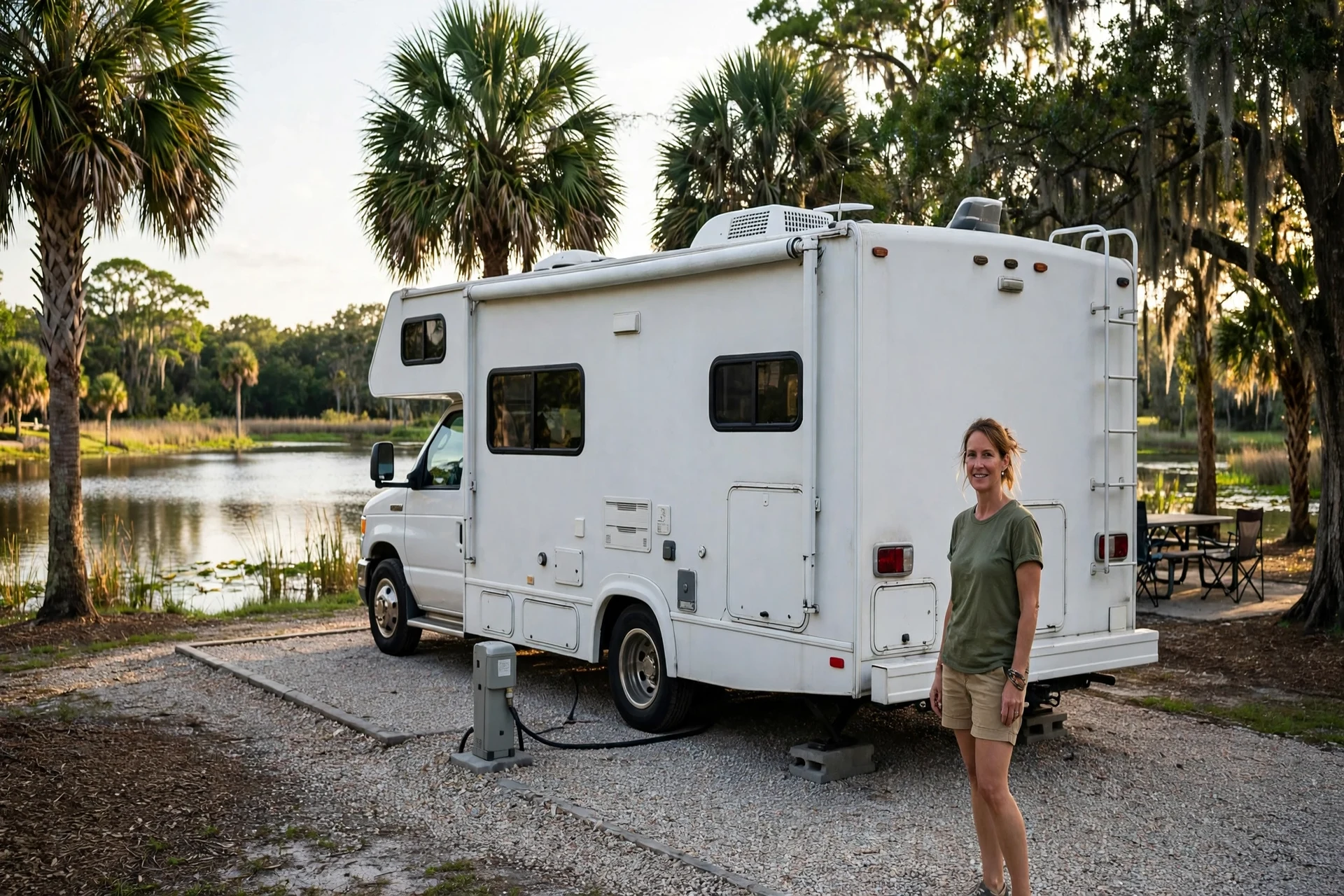
RV camping in Florida rewards campers who read the fine print. Length limits vary wildly between parks, and the number on the reservation page is the number the rangers enforce. Sandspur at Bahia Honda caps rigs at 23 feet. Anastasia caps them at 38 feet, with only a few sites taking the full length. Pine Grove at Jonathan Dickinson takes 40 feet, while River Campground stops at 36. Fort De Soto puts the larger pads in sites 86 through 236.
Sewer hookups are the exception, not the rule. Pine Grove and Palmetto Ridge have them. Most state park sites give you water and electric only, with a dump station near the exit. I plan around that: three or four nights per site, then a dump run on the way out. A full hookup site matters more on a two-week winter stay than on a weekend, so I pay for sewer only when the trip is long enough.
Bring a surge protector, a drinking-water hose, leveling blocks, and a sewer hose you trust. Florida pads range from crushed shell to gravel to dirt, and a rainy afternoon turns a dirt pad soft fast.
Winter Camping in Florida: the Season That Fills First
Winter camping draws snowbirds from across the country, and it shows in the booking windows. December through April brings dry air, mild days, and cool nights. January and February are the hardest months to book, and the holiday weeks around Christmas and New Year go first. By mid-January, the campgrounds Florida is famous for are booked solid on weekends, and midweek sites take real persistence to find.
November and May are the shoulder months I recommend most. The weather stays warm enough to swim on many days, and the booking windows open up. Summer is the opposite trade: sites sit open, prices stay flat, and the heat, humidity, afternoon storms, and mosquitoes test your patience.
Hurricane season runs June through November, and parks close overnight stays ahead of major storms. I check the park page the week before any summer or fall trip.
If winter has you heading south, Everglades National Park runs frontcountry campgrounds at Flamingo and Long Pine Key, plus backcountry sites you reach by canoe or on foot with a permit. Plan a Flamingo stay for the dry season, when the mosquitoes ease off.
Plan Everglades camping through the official National Park Service camping page
What I Would Skip, and the Mistakes That Cost a Trip
Skip the Bayside loop at Bahia Honda if you need electric hookups or drive a tall rig. Those eight sites offer water only and sit behind a low bridge. Skip Pine Grove at Jonathan Dickinson if quiet mornings matter to you. The sites are new and open, and highway sound carries across the campground.
Skip a summer Keys trip without serious bug protection. No-see-ums bite through a loose shirt and ruin an evening faster than rain, and the spring months from March through May are the worst of it.
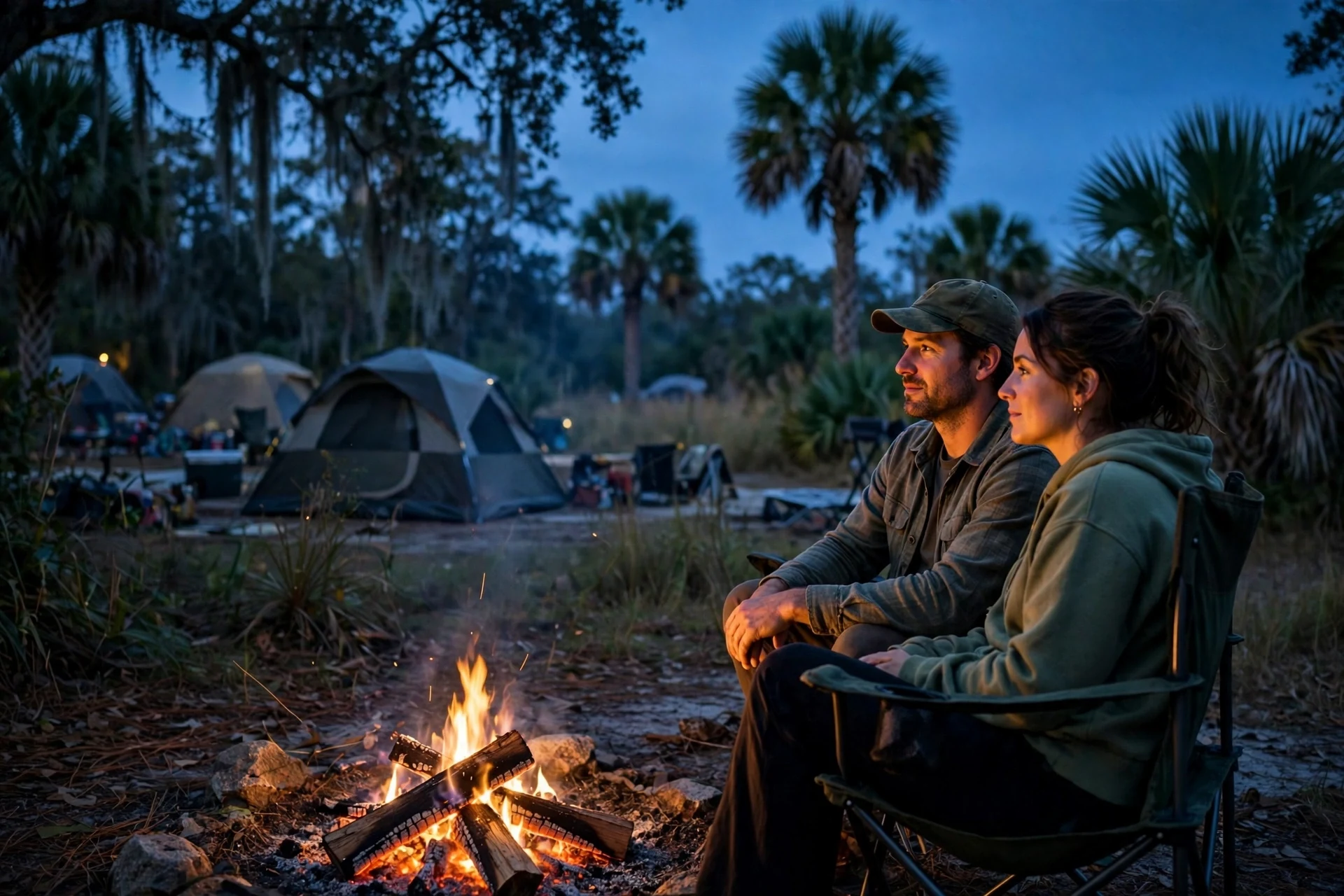
The costliest mistake I see is booking the wrong loop for the wrong rig. A 35-foot RV does not fit a 23-foot Sandspur site. The second mistake is arriving late without calling the park: gates close at sunset, and a late arrival with no warning can leave you locked out. Call before 5 p.m. on arrival day if your drive runs long.
Packing for a Florida Campsite
Florida camping asks for a different kit than a mountain trip. Pack for sun, bugs, rain, and sand.
- Bug spray with picaridin or DEET, plus a head net for still evenings in the Keys and the Everglades
- Sunscreen, a wide hat, and a long-sleeve sun shirt for midday paddling and beach walks
- A rain jacket and a tarp, because afternoon storms arrive fast from June through September
- Leveling blocks, a drinking-water hose, a surge protector, and a sewer hose for RV sites
- A printed copy of your reservation confirmation and the park phone number, since cell service drops in the big parks
Answers I Wish I Had Before My First Florida Trip
How far ahead should I book a Florida state park campsite?
Florida residents can book 11 months ahead and non-residents 10 months ahead, with new dates opening daily at 8 a.m. Eastern. For winter weekends at Bahia Honda, Anastasia, or Fort De Soto, book the moment your window opens. Set an alarm the night before.
What is the cheapest way to camp in the Florida Keys?
Book a state park. Bahia Honda costs $36 a night plus tax and fees, while private parks nearby often charge $100 to $200 a night. Long Key and Curry Hammock give you two more state park options. If all three are full, watch for cancellations before paying private park rates.
Can I camp right on the beach in Florida?
Most Florida campgrounds sit behind the dunes, not on the sand itself. Sandspur at Bahia Honda comes closest, with beachfront sites a short walk from the water. Anastasia and Fort De Soto keep campsites in the trees or on the bay side. Never pitch a tent on the open beach without checking park rules first.
Is winter really the best time to camp in Florida?
Yes, for most campers. December through April brings dry air, mild days, and cool nights, with far fewer mosquitoes than summer. The trade is competition: winter sites book out months ahead. If you want easier booking and warm weather, aim for November or May instead of January.
Book the Site, Then Build the Trip Around It
Florida camping rewards the camper who books first and plans second. Pick your park, set the alarm for the morning your window opens, and lock in the site. The beach, the river, and the oak shade will still be there when you arrive. The site will not wait for you. Once the site is locked in, I round out the trip with the best things to do in Florida so the days around camp feel planned, not improvised.