Most Populous Cities USA, Ranked by Census Data and by How Much They’re Worth Visiting
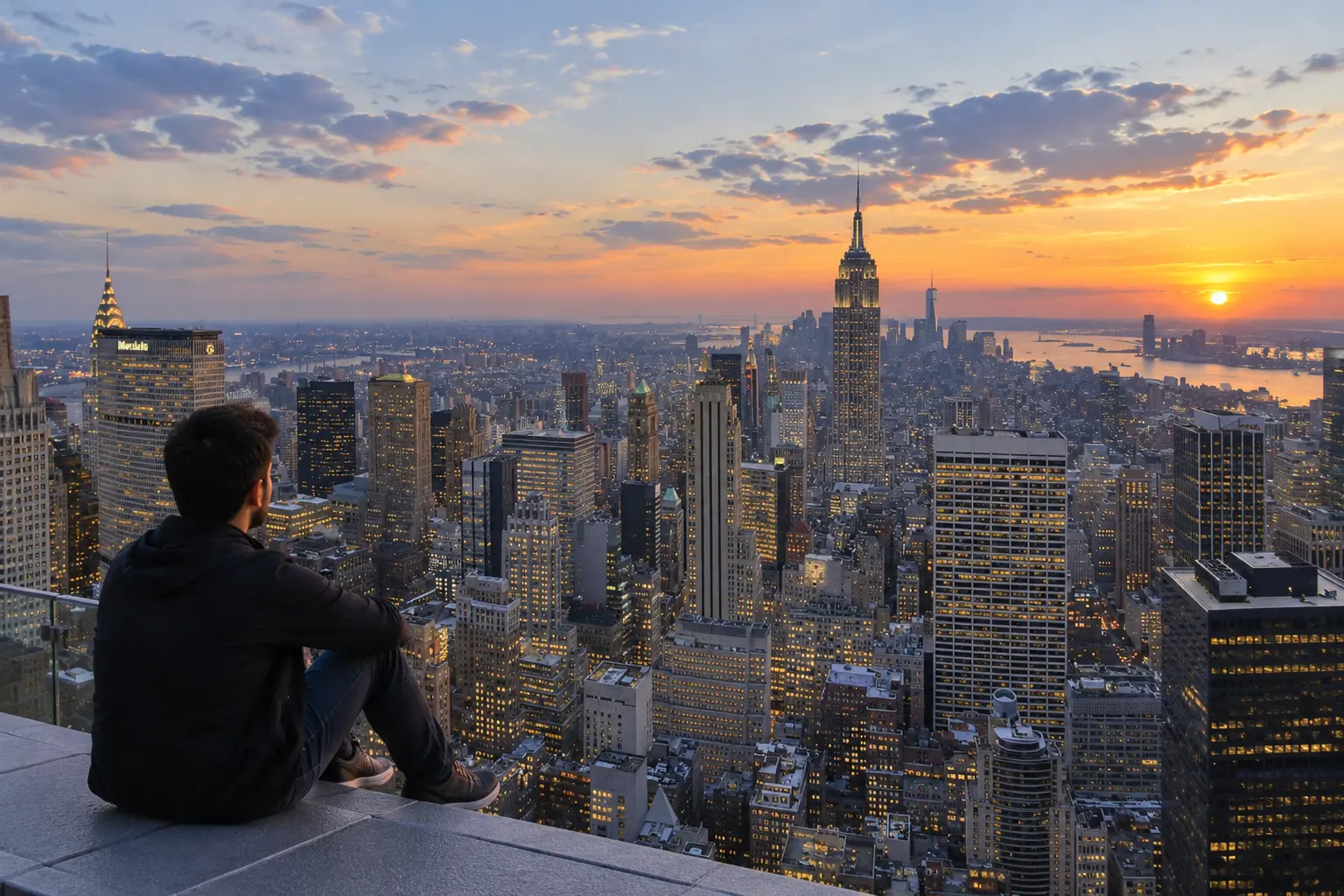
New York City leads the most populous cities USA list with 8,584,629 residents as of July 1, 2025, per the U.S. Census Bureau. Los Angeles, California (3,869,089) and Chicago, Illinois (2,731,585) follow, then Houston, Texas and Phoenix, Arizona.
Population rank doesn’t predict trip quality, though. I’ll give you the official top 15, then my own ranking of which ones deserve your vacation days.
Where the Most Populous Cities USA Stand Today, Ranked 1 to 15
These are the Census Bureau’s Vintage 2025 estimates, released May 14, 2026. They count people inside official city limits, not the surrounding metro area.
| Rank | City | State | Population (July 1, 2025) |
| 1 | New York | New York | 8,584,629 |
| 2 | Los Angeles | California | 3,869,089 |
| 3 | Chicago | Illinois | 2,731,585 |
| 4 | Houston | Texas | 2,397,315 |
| 5 | Phoenix | Arizona | 1,665,481 |
| 6 | Philadelphia | Pennsylvania | 1,574,281 |
| 7 | San Antonio | Texas | 1,548,422 |
| 8 | San Diego | California | 1,406,106 |
| 9 | Dallas | Texas | 1,329,491 |
| 10 | Fort Worth | Texas | 1,028,117 |
| 11 | Jacksonville | Florida | 1,017,689 |
| 12 | Austin | Texas | 1,002,632 |
| 13 | San Jose | California | 989,814 |
| 14 | Charlotte | North Carolina | 964,784 |
| 15 | Columbus | Ohio | 938,396 |
Twelve cities now top one million people. That answers the common “how many major cities are in the US” question: 12 at the million mark, and 39 with at least 500,000 residents.
Austin Just Hit One Million, and New York Just Shrank
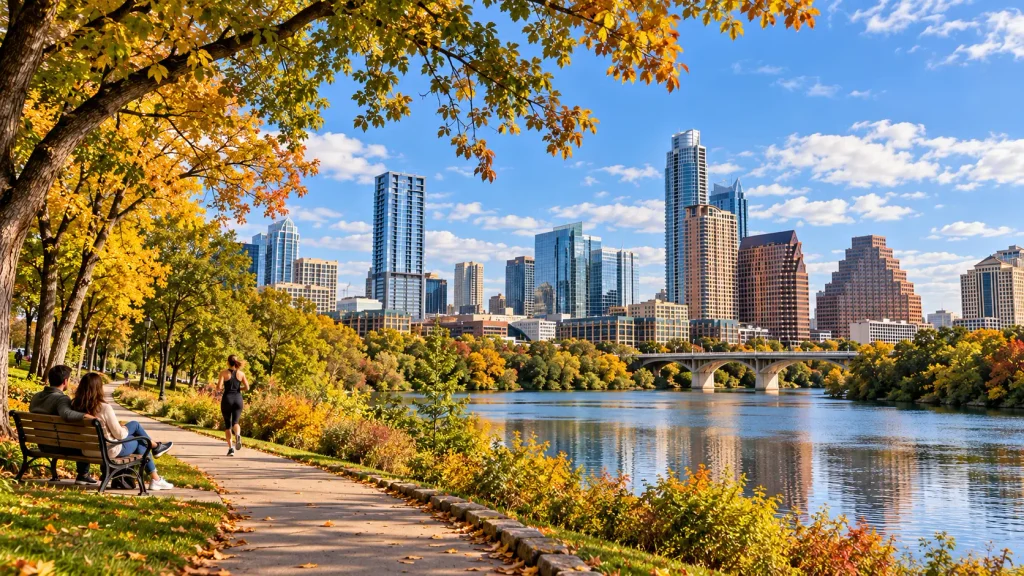
Austin, Texas crossed 1,000,000 between 2024 and 2025. Raleigh, North Carolina passed 500,000 in the same window, which pushed the 500,000-plus count to 39.
New York lost 12,196 residents in that year, the biggest numeric drop in the country. Charlotte, North Carolina went the other way. It added 20,731 people, more than any other city, and sits 14th. Fort Worth, Texas added 19,512 and now ranks 10th.
San Jose, California sits at 989,814, about 10,000 short of the million mark. Whether it crosses depends on the next estimates, and the Census Bureau won’t publish those until May 2027. Until then, Austin remains the newest member of the club.
The pattern is regional. The Census Bureau says the South claims 11 of the 12 largest numeric gains. Growth also cooled: cities of 250,000 or more averaged 0.3 percent growth from 2024 to 2025, down from 0.9 percent the year before.
For travelers, this matters in a practical way. Fast-growing Sun Belt cities mean construction, new hotels, and more traffic than the guidebooks suggest. Slower-growing Northeast cities, by contrast, offer stable, well-established transit.
Why Dallas Looks Small and Jacksonville Looks Big
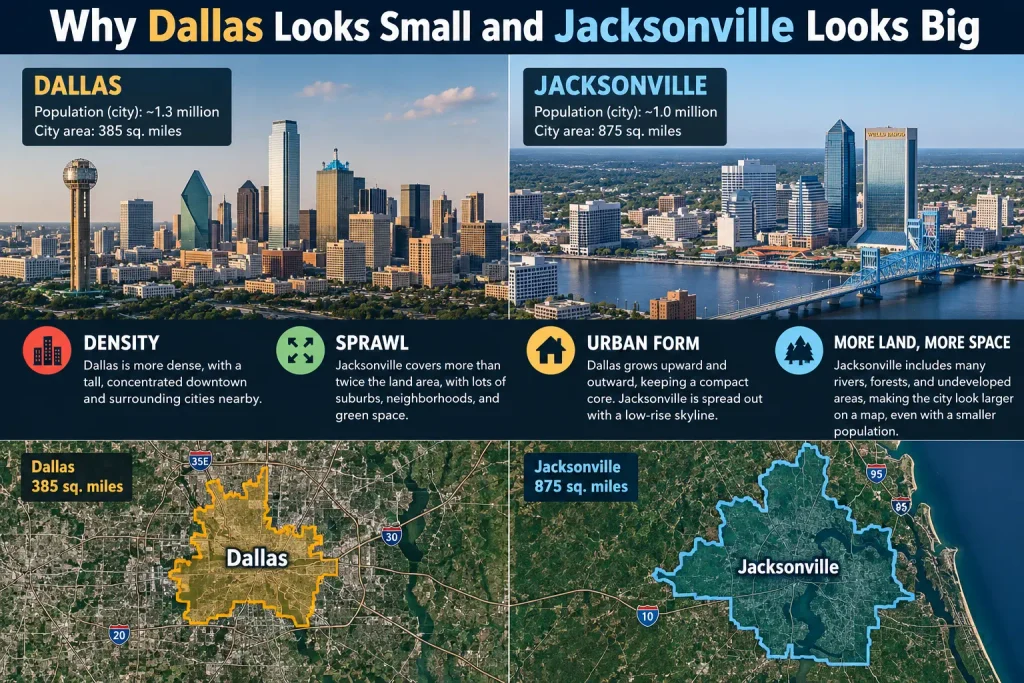
City rank and metro rank tell different stories. Dallas, Texas has 1,329,491 residents inside its limits, yet the Dallas-Fort Worth-Arlington metro area holds about 8.48 million. The metro, not the city, is what you feel when you drive across it.
The top metro areas by 2025 Census estimates:
- New York-Newark-Jersey City: about 20.1 million
- Los Angeles-Long Beach-Anaheim: about 12.8 million
- Chicago-Naperville-Elgin: about 9.4 million
- Dallas-Fort Worth-Arlington: about 8.5 million
- Houston-Pasadena-The Woodlands: about 7.9 million
Some famous metros don’t appear on the city list at all. Boston, Massachusetts, Miami, Florida, and Washington, D.C. are major regional hubs, but none cracks the top 15 inside city limits.
Boundaries also bend the rankings. Jacksonville, Florida is 11th partly because its city government merged with Duval County. The Census Bureau handles similar setups, like Nashville-Davidson, Tennessee, by listing a “balance” figure. Check which definition a source uses before you compare numbers.
Density explains the rest. New York packs roughly 28,500 people into each square mile, while Houston has about 3,700. That’s why New York works on foot and Houston works only with a car.
My Verdict on the Top 15: A Week, a Weekend, or Skip
Size and trip quality don’t track each other. Here’s how I’d spend my own time.
New York City, New York: Worth a Full Week
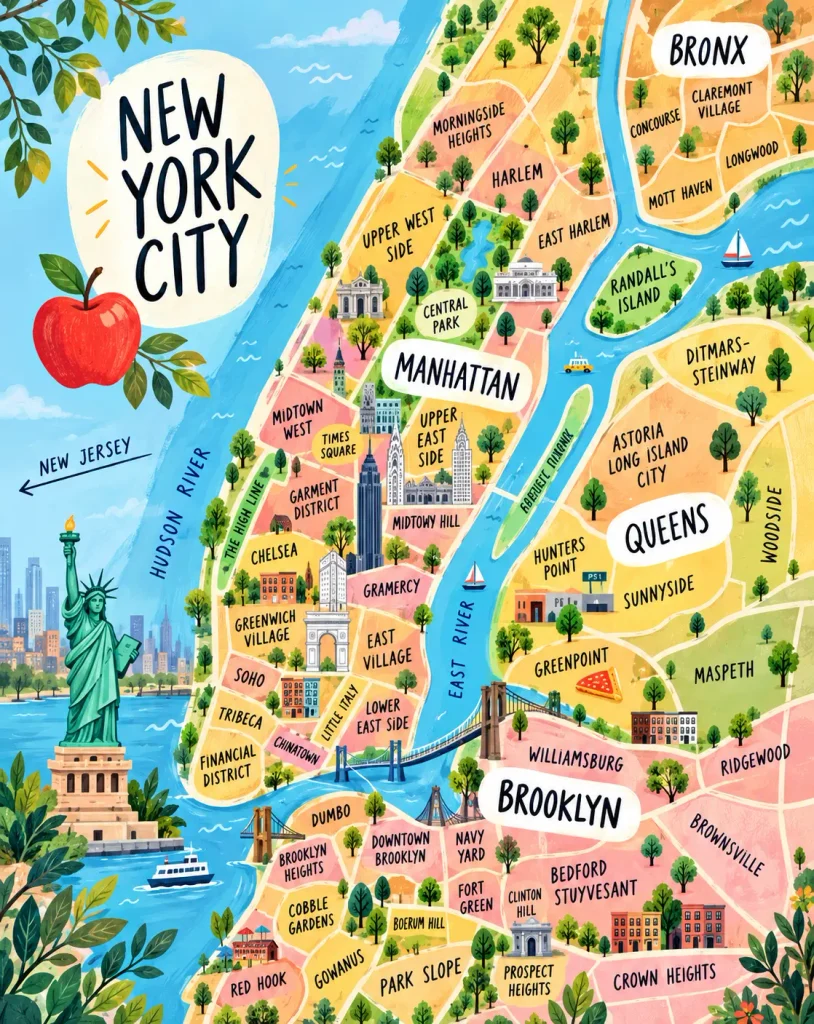
New York City spans five boroughs: Manhattan, Brooklyn, Queens, the Bronx, and Staten Island. The subway runs around the clock, and you can tap a card or phone at the turnstile through OMNY, the MTA’s official fare system. Ride the free Staten Island Ferry for a skyline view of the Statue of Liberty without a ticket.
Skip Times Square after one walk-through. It’s loud, crowded, and overpriced.
Los Angeles, California: Rent the Car or Skip It
The city of Los Angeles holds roughly 40 percent of Los Angeles County’s 9.7 million residents, so “LA” is really a sprawl of separate towns. You need a car, and the freeways clog at rush hour. At Griffith Observatory, admission is free, but the parking lot fills on weekends, so arrive early.
I’d skip the Hollywood Walk of Fame. It’s a sidewalk with crowds, and little else.
Chicago, Illinois: Best in Summer
Chicago works without a car. The Chicago Riverwalk and the architecture boat tours are the best first-day plan, and the Museum Campus (the Field Museum, Shedd Aquarium, and Adler Planetarium) suits kids. Winter is the catch: wind off Lake Michigan makes January walking miserable.
Houston, Phoenix, and Dallas: Pick by Season
Houston is huge and built around highways. Space Center Houston, the visitor center for NASA’s Johnson Space Center, is the one stop I’d plan a day around. Phoenix is a winter city: summer highs routinely pass 100 degrees F, so visit from November through April and hike before 8 a.m. Dallas works best for the Sixth Floor Museum at Dealey Plaza, then head west to the Fort Worth Stockyards, where a twice-daily cattle drive runs.
Philadelphia, San Antonio, San Diego, and Austin: Weekend Picks
- Philadelphia, Pennsylvania: Book timed tickets for Independence Hall through the National Park Service at nps.gov/inde. The Liberty Bell is free and needs no ticket. Amtrak from New York takes about 90 minutes.
- San Antonio, Texas: The Alamo is free but requires timed entry, so reserve on the official site. The San Antonio Missions are a UNESCO World Heritage site and quieter than the River Walk.
- San Diego, California: Spend a day in Balboa Park. Expect gray skies in May and June (“June Gloom”), so aim for September.
- Austin, Texas: The Congress Avenue Bridge bat flight runs in warm months. Hotel rates spike during SXSW in March.
Jacksonville, San Jose, Charlotte, and Columbus: Skip Unless You Have a Reason
I wouldn’t build a vacation around these four. San Jose, California is a base for Silicon Valley business. Charlotte and Columbus, Ohio are strong for work trips and family visits. Jacksonville has Atlantic beaches, but you’ll drive everywhere.
Seattle, Nashville, and Atlanta: Fast Risers Just Outside the Top 15
Three cities below the million mark added thousands of residents last year, and I’d rank all three above Jacksonville or Columbus for a vacation. The Census Bureau counted Seattle, Washington at 784,777 (up 11,572), Nashville-Davidson, Tennessee at 721,074 (up 9,244), and Atlanta, Georgia at 529,110 (up 8,350).
Seattle is my pick of the three. You can walk Pike Place Market in the morning, then ride a Washington State Ferries boat to Bainbridge Island for the views. Nashville is loud and fun for a long weekend on Broadway, though the honky-tonk strip gets rowdy fast. Atlanta is mostly a hub: Hartsfield-Jackson Atlanta International Airport is the one you’ll use, and the Georgia Aquarium is the reason to leave it.
The Weather Trap: Phoenix in July, Houston in August, Chicago in January
Weather ruins more big-city trips than crowds do. Here are the worst months, and the fix:
- Phoenix: July and August. Go in winter.
- Houston: August, with heat and humidity. Go October through April.
- Chicago: January and February. Go May through September.
- New York City: Mid-summer humidity. Go in fall.
- San Diego: Late spring gray. Go in September.
For fewer crowds in any of them, visit Tuesday through Thursday and reach the big attractions at opening time. Weekend lines at the Alamo, Independence Hall, and Griffith Observatory are noticeably longer, and parking at the observatory fills first.
How to Combine These Cities Without Renting a Car Twice
Group them by region. The Northeast Corridor links New York and Philadelphia by Amtrak, so skip the car there entirely. Texas is the opposite: Houston, Dallas, Fort Worth, Austin, and San Antonio sit hours apart, so rent once and drive.

I’d pair Los Angeles with San Diego (about two hours apart in light traffic) and keep Chicago as its own trip. If you’d rather build a Midwest leg, Chicago also pairs well with a longer stop elsewhere in the region, and a list of things to do in Kansas City can help you decide whether it’s worth adding.
With ten days, I’d do New York, Philadelphia, and Chicago: the first two by train, the third by a short flight, and no rental car at all. You’d cover three of the six largest cities, and each one works on transit. Add Washington, D.C. by train if you want a fourth stop.
Five Free Stops That Cut the Cost of a Big-City Trip
Big cities drain budgets through hotels, so spend smart on everything else. These stops cost nothing or close to it:
- The Staten Island Ferry in New York City
- Griffith Observatory admission in Los Angeles
- The Liberty Bell in Philadelphia
- The Alamo in San Antonio (free, with timed entry)
- The grounds of Balboa Park in San Diego
Timing saves more than any single stop. Skip SXSW week in Austin. Phoenix hotels are typically cheaper in summer, but that discount comes with 100-degree afternoons. Seats on Amtrak between New York and Philadelphia cost less booked early.
Quick Answers Before You Quote a City Ranking
What is the biggest city in the US by population?
New York City is the biggest, with 8,584,629 residents as of July 1, 2025, according to the Census Bureau’s Vintage 2025 estimates. Los Angeles ranks second at 3,869,089. New York holds more than twice the population of Los Angeles, and it also leads every metro area by a wide margin.
What are the top 10 US cities by population?
The top 10 are New York, Los Angeles, Chicago, Houston, Phoenix, Philadelphia, San Antonio, San Diego, Dallas, and Fort Worth. Fort Worth edged past Jacksonville for the 10th spot in the 2025 estimates. All ten sit above one million residents, using Census Bureau city-limit counts.
How many US cities have over a million people?
Twelve US cities exceed one million residents, based on Census Bureau estimates for July 1, 2025. Austin joined the group between 2024 and 2025. The other eleven are New York, Los Angeles, Chicago, Houston, Phoenix, Philadelphia, San Antonio, San Diego, Dallas, Fort Worth, and Jacksonville.
Is a bigger city a better trip?
No. Size predicts crowds, traffic, and prices more reliably than trip quality. New York and Chicago reward a full week, while Philadelphia, San Antonio, and San Diego shine on a long weekend. Jacksonville, Charlotte, and Columbus usually don’t justify a dedicated vacation.
When do the rankings change?
The Census Bureau publishes city estimates each May. The next release, covering July 1, 2026 data, is scheduled for May 2027, per the official release schedule. Each release revises earlier years, so compare numbers only within the same vintage. A 2026 figure from another source usually isn’t comparable.
Choose One Giant and One Riser, Then Book Both
Pick one top-three city for the skyline and one fast-growing mid-size city for contrast. I’d pair Chicago with Austin, or New York with Philadelphia. Check the Census list before you quote any number, then book flights.